The electric tea kettle wasn’t invented by a single person but evolved through decades of innovation. Early patents in the late 1800s laid the groundwork, but it wasn’t until the 1920s that practical, commercially viable models emerged. Today’s sleek, fast-boiling kettles are the result of cumulative engineering advances and changing consumer needs.
Have you ever stood in your kitchen, waiting for water to boil on the stove, only to realize there’s a much faster way? That’s where the electric tea kettle comes in—a quiet hero of modern kitchens. It heats water in minutes, often with the push of a single button, and has become a daily necessity for millions. But have you ever stopped to wonder: who actually invented the electric tea kettle?
The answer isn’t as simple as pointing to one genius in a lab coat. Unlike the lightbulb or the telephone, the electric tea kettle wasn’t the brainchild of a single inventor. Instead, it’s the result of a long, gradual evolution—spanning over a century—of ideas, patents, and technological improvements. From early experiments with electric heating to the sleek, smart kettles we use today, the story of the electric tea kettle is one of innovation, adaptation, and global influence.
In this article, we’ll take you on a journey through time to uncover the origins of the electric tea kettle. We’ll explore the early pioneers who laid the groundwork, the companies that brought it to the masses, and the modern advancements that make today’s kettles smarter and safer than ever. Whether you’re a tea lover, a history buff, or just curious about kitchen appliances, you’ll discover how this humble device changed the way we prepare hot beverages—and why it’s still evolving.
Key Takeaways
- No single inventor: The electric tea kettle was developed over time through multiple patents and improvements by various inventors and companies.
- Early patents in the 1800s: Thomas Edison and others experimented with electric heating elements, but practical kettles came later.
- 1922 breakthrough: The Swan Company in the UK created one of the first commercially successful electric kettles.
- Post-war popularity: Electric kettles became household staples in the 1950s and 1960s, especially in the UK and Japan.
- Modern innovations: Today’s kettles feature temperature control, rapid boil, and smart connectivity.
- Global impact: The electric kettle revolutionized tea and coffee culture, saving time and energy worldwide.
- Safety and design: Modern kettles include auto-shutoff, boil-dry protection, and ergonomic designs for daily use.
📑 Table of Contents
The Roots of Electric Heating: 19th Century Foundations
To understand who invented the electric tea kettle, we need to go back to the 19th century—a time when electricity was still a novelty. While people were used to boiling water over fire or gas, the idea of using electricity to heat water was revolutionary. The groundwork for electric heating was laid by inventors like Thomas Edison and Nikola Tesla, who explored the possibilities of electric current.
One of the earliest concepts related to electric heating came from Edison himself. In the 1880s, he was working on electric lighting and power systems. He understood that electricity could generate heat, and he even patented early heating elements. However, his focus was on lighting, not kitchen appliances. Still, his work paved the way for others to experiment with electric heating in everyday objects.
Around the same time, other inventors began filing patents for electric heating devices. In 1893, a Canadian-American inventor named Thomas Ahearn patented an electric oven—yes, an oven—that used electric coils to generate heat. This was a major step forward, showing that electricity could safely and effectively cook food. Ahearn’s design used a simple heating element inside a metal chamber, a concept that would later be adapted for kettles.
Meanwhile, in Europe, scientists and engineers were also exploring electric heating. In the UK, the Swan Electric Light Company (founded by Joseph Swan, who independently developed the incandescent lightbulb) began experimenting with electric appliances. They saw potential beyond lighting—especially in the kitchen.
These early efforts weren’t about tea kettles specifically, but they were crucial. They proved that electricity could be used to heat water and food safely. Without these foundational inventions, the electric tea kettle might never have been possible.
Early Patents and Prototypes
As the 20th century approached, inventors started filing patents specifically for electric water heaters. One of the earliest known patents for an electric kettle was filed in 1891 by a man named William S. Hadaway. His design featured a metal container with an internal heating element powered by electricity. While it was a prototype and never mass-produced, it showed that the idea was technically feasible.
Another important early patent came from the German inventor Carl Wilhelm Siemens in 1894. Siemens, a pioneer in electrical engineering, developed an electric immersion heater—a device that could be placed directly into water to heat it. This was a key innovation because it eliminated the need for an open flame or stove. The immersion heater could be used in any container, including kettles.
These early designs were limited by the technology of the time. Electrical systems were unreliable, and safety was a major concern. There was also little public demand for electric appliances—most people still relied on gas or coal for heating. But the patents were there, and the ideas were spreading.
The Role of Electricity Adoption
One reason the electric tea kettle didn’t take off immediately was the slow adoption of household electricity. In the late 1800s and early 1900s, most homes didn’t have electric wiring. Even in cities, electricity was often reserved for lighting, not appliances. It wasn’t until the 1910s and 1920s that electrical grids expanded, and more homes gained access to reliable power.
This shift was critical. Without widespread electricity, there was no market for electric kettles. But as homes began to electrify, manufacturers saw an opportunity. They started designing appliances that could take advantage of this new energy source—appliances that were cleaner, safer, and more convenient than their gas-powered counterparts.
The stage was now set for the electric tea kettle to move from concept to reality.
The 1920s Breakthrough: Swan and the First Commercial Kettle
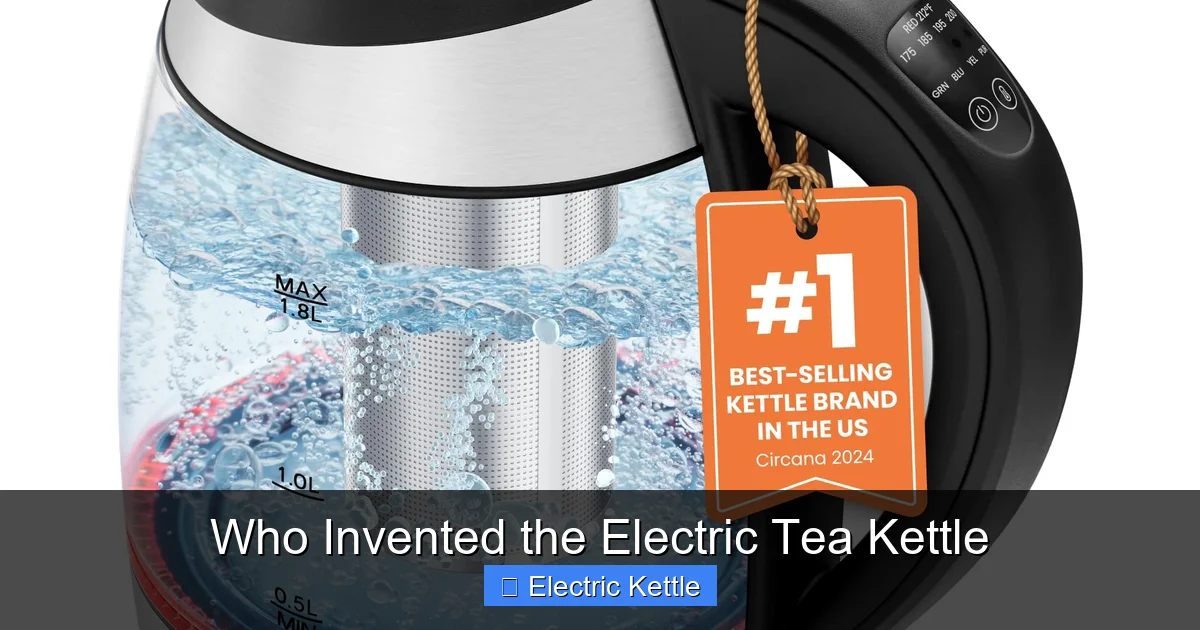
Visual guide about Who Invented the Electric Tea Kettle
Image source: m.media-amazon.com
The real turning point for the electric tea kettle came in the 1920s. While early patents existed, it wasn’t until this decade that a company successfully brought an electric kettle to market. That company was the Swan Company in the United Kingdom.
In 1922, Swan launched what is widely considered the first commercially successful electric kettle. It was a simple but effective design: a metal container with an internal heating element at the bottom, connected to a power cord. When plugged in, the element heated the water directly, bringing it to a boil in minutes.
This was a game-changer. Unlike stovetop kettles, which required constant monitoring and took longer to heat, the electric kettle was fast and hands-off. You could plug it in, walk away, and return to boiling water—perfect for busy households.
Why the UK Led the Way
You might wonder why the electric tea kettle first took off in the UK. The answer lies in culture and infrastructure. The British have a deep-rooted tea culture—tea is more than a drink; it’s a daily ritual. Boiling water quickly and efficiently was always a priority.
Additionally, the UK had one of the earliest and most advanced electrical grids in the world. By the 1920s, many urban homes had reliable electricity, making electric appliances practical. The combination of cultural demand and technological readiness created the perfect environment for the electric kettle to thrive.
Swan’s kettle was an instant hit. It was marketed as a modern, time-saving device—perfect for the fast-paced lifestyle of the 1920s. Advertisements emphasized speed, safety, and convenience. Unlike gas stoves, there was no flame, no smoke, and no risk of burning yourself on a hot handle.
Design and Functionality
The original Swan kettle was made of polished steel and had a simple on/off switch. It didn’t have automatic shut-off or temperature control—those features came later. But it worked reliably and was easy to use. The heating element was submerged in the water, which allowed for rapid heating.
One limitation was that the kettle had to be unplugged to pour, since the cord was permanently attached. This was a safety feature to prevent electrical hazards, but it also made the design less convenient. Still, for the time, it was a major improvement over stovetop methods.
Over the next decade, other companies began producing similar kettles. In the US, companies like General Electric and Westinghouse started offering electric kettles, though they were slower to gain popularity. In the UK, however, the electric kettle became a kitchen staple.
Post-War Boom: The 1950s and 1960s
After World War II, the electric tea kettle experienced a surge in popularity. This was due to several factors: economic growth, technological advances, and changing lifestyles.
The 1950s were a time of prosperity in many Western countries. More families could afford modern appliances, and manufacturers began mass-producing electric kettles at lower costs. At the same time, improvements in materials and design made kettles safer and more efficient.
Automatic Shut-Off and Safety Features
One of the biggest advancements during this period was the introduction of automatic shut-off. Early kettles had to be monitored to prevent overheating or boiling dry—a serious fire hazard. But in the 1950s, engineers developed thermostats that could detect when water reached boiling point and turn off the heating element.
This was a major safety breakthrough. It meant users could leave the kettle unattended without risk. It also reduced energy waste and extended the life of the appliance.
Another improvement was the development of boil-dry protection. If the kettle was turned on without water, the heating element would overheat and potentially catch fire. New designs included sensors that detected low water levels and shut off the power automatically.
These safety features made electric kettles much more appealing to consumers. They were no longer just convenient—they were also safe for everyday use.
Design Evolution
The 1950s and 1960s also saw a shift in design. Kettles began to feature plastic handles, cordless bases, and more ergonomic shapes. The iconic “whistling” kettle—popular on stovetops—was adapted for electric models, though many electric kettles didn’t whistle since they had automatic shut-off.
In Japan, electric kettles became especially popular. Japanese manufacturers like Zojirushi and Tiger began producing high-quality kettles with advanced features. Japan’s culture of precision and efficiency influenced kettle design, leading to innovations like temperature control and保温 (hōon, or heat retention).
By the 1960s, the electric tea kettle was no longer a novelty—it was a standard kitchen appliance in many households, especially in the UK, Japan, and parts of Europe.
Modern Innovations: The 21st Century Kettle
Today’s electric tea kettles are a far cry from the simple models of the 1920s. Thanks to advances in materials, electronics, and user-centered design, modern kettles are faster, safer, and smarter than ever.
Temperature Control and Precision Brewing
One of the most significant modern innovations is variable temperature control. Different teas and coffees require different water temperatures for optimal flavor. Green tea, for example, brews best at around 175°F (80°C), while black tea needs near-boiling water at 212°F (100°C).
Modern kettles allow users to select precise temperatures with the touch of a button. This is especially popular among tea enthusiasts and coffee lovers who want to extract the best flavor from their beverages.
Some high-end models even have preset programs for different types of tea—oolong, white, herbal, etc.—making it easy for anyone to brew like a pro.
Rapid Boil and Energy Efficiency
Today’s kettles can boil water in under three minutes—sometimes even faster. This is thanks to high-wattage heating elements (often 1500W or more) and improved thermal design.
At the same time, manufacturers have focused on energy efficiency. Many kettles now use insulated walls to retain heat, reducing the need to reboil water. Some models also have eco-modes that use less power for smaller amounts of water.
This combination of speed and efficiency makes modern kettles ideal for busy lifestyles. Whether you’re making a quick cup of tea or preparing water for pasta, the electric kettle delivers fast results without wasting energy.
Smart Kettles and Connectivity
The latest trend in electric kettles is smart technology. Some models can connect to Wi-Fi and be controlled via smartphone apps. You can start boiling water from your bed, adjust the temperature remotely, or receive notifications when it’s ready.
Brands like Breville, Smarter, and Xiaomi have introduced smart kettles with features like voice control (compatible with Alexa or Google Assistant), scheduling, and usage tracking. These kettles are especially popular with tech-savvy users who want maximum convenience.
While not essential, smart features add a new level of control and personalization. They also reflect broader trends in home automation and the Internet of Things (IoT).
Materials and Aesthetics
Modern kettles come in a wide range of materials: stainless steel, glass, plastic, and even ceramic. Each has its pros and cons.
Stainless steel is durable and retains heat well. Glass kettles allow you to see the water boiling—a satisfying visual experience. Plastic is lightweight and affordable, though some users worry about chemical leaching (look for BPA-free models).
Design has also become a major selling point. Sleek, minimalist kettles fit well in modern kitchens, while retro-style models appeal to vintage lovers. Some brands even collaborate with designers to create limited-edition kettles that double as art pieces.
Global Impact and Cultural Significance
The electric tea kettle has had a profound impact on how people around the world prepare hot beverages. It’s not just a kitchen tool—it’s a cultural symbol.
In the UK, the electric kettle is practically a national icon. It’s used not just for tea, but for instant coffee, soup, and even sterilizing baby bottles. The phrase “put the kettle on” is a common expression for taking a break or starting a conversation.
In Japan, electric kettles (called *denki kyūsu*) are essential in homes and offices. They’re often used with traditional tea ceremonies or for making instant ramen. Japanese kettles are known for their precision and quiet operation.
In the US, electric kettles were slower to catch on, partly because of the dominance of drip coffee makers. But in recent years, they’ve gained popularity among tea drinkers, students, and people living in small spaces like dorm rooms or apartments without stoves.
Even in countries where tea is less common, electric kettles are used for convenience. They’re popular in offices, hotels, and hospitals for quickly heating water for coffee, soup, or medical purposes.
Environmental and Health Benefits
Electric kettles are also more environmentally friendly than stovetop methods. They use less energy because they heat water directly and efficiently. Studies show that electric kettles can be up to 80% more energy-efficient than gas stoves.
They’re also safer. There’s no open flame, no risk of gas leaks, and no need to monitor the stove. This reduces the chance of accidents, especially in homes with children.
From a health perspective, electric kettles help preserve the nutrients in tea. By allowing precise temperature control, they prevent over-boiling, which can destroy delicate compounds in green and white teas.
Choosing the Right Electric Kettle for You
With so many options on the market, how do you pick the right electric kettle? Here are some practical tips:
- Consider capacity: Most kettles hold between 1 and 1.7 liters. Choose based on your household size—smaller for individuals, larger for families.
- Look for temperature control: If you drink different types of tea, a variable-temperature kettle is worth the investment.
- Check wattage: Higher wattage (1500W+) means faster boiling. Ideal for quick use.
- Prioritize safety: Ensure the kettle has auto shut-off and boil-dry protection.
- Think about material: Stainless steel is durable; glass is stylish; plastic is lightweight. Choose based on your needs.
- Consider cordless design: Cordless kettles are easier to pour and store.
- Read reviews: Check user feedback for reliability, noise level, and ease of cleaning.
Conclusion
So, who invented the electric tea kettle? The honest answer is: no one person. It was a collective effort—spanning over a century—of inventors, engineers, and companies who built upon each other’s ideas. From early patents in the 1800s to Swan’s breakthrough in 1922, and from post-war safety improvements to today’s smart, precision kettles, the electric tea kettle is a testament to human ingenuity.
What started as a novel experiment has become an essential part of daily life for millions. It saves time, reduces energy use, and enhances the ritual of making tea and coffee. And as technology continues to evolve, so will the electric kettle—becoming smarter, safer, and more personalized.
The next time you press the button on your kettle and hear the gentle hum of heating water, take a moment to appreciate the long journey that brought it to your kitchen. It’s more than just an appliance—it’s a piece of history, innovation, and everyday comfort.
Frequently Asked Questions
Who invented the first electric tea kettle?
The first commercially successful electric tea kettle was introduced by the Swan Company in the UK in 1922. While earlier patents existed, Swan’s model was the first to be widely sold and used in homes.
Was Thomas Edison involved in inventing the electric kettle?
Thomas Edison did not invent the electric tea kettle, but his work on electric heating and power systems in the 1880s laid important groundwork for later developments in electric appliances.
When did electric kettles become popular?
Electric kettles gained popularity in the 1950s and 1960s, especially in the UK and Japan, as household electricity became widespread and safety features like auto shut-off were introduced.
What are the benefits of an electric kettle over a stovetop one?
Electric kettles boil water faster, use less energy, and are safer due to automatic shut-off and boil-dry protection. They also allow for precise temperature control, which is ideal for different types of tea.
Can electric kettles be used for purposes other than tea?
Yes, electric kettles are commonly used to heat water for coffee, instant soup, oatmeal, and even sterilizing baby bottles. They’re versatile and convenient for many kitchen tasks.
Are smart electric kettles worth the extra cost?
Smart kettles offer convenience features like remote control and scheduling, but they’re not essential. If you value precision and automation, they can be a great investment—otherwise, a standard model may suffice.