Electric kettles are a staple in homes worldwide, yet they’re noticeably absent in most American kitchens. The real reason isn’t a lack of demand—it’s a mix of electrical standards, cultural habits, and historical preferences.
Key Takeaways
- Voltage differences: Most countries use 220–240V electricity, while the U.S. uses 110–120V, making traditional electric kettles slower and less efficient.
- Stovetop dominance: Americans have long relied on stovetop kettles or microwaves to boil water, reducing the need for electric models.
- Kitchen culture: Tea drinking isn’t as central to American daily life as it is in Europe, Asia, or the UK, lowering demand for fast-boil kettles.
- Appliance preferences: Americans favor multi-functional appliances like coffee makers and instant hot water dispensers over single-use devices.
- Market availability: While electric kettles are sold in the U.S., they’re often marketed as “premium” or “specialty” items rather than everyday essentials.
- Safety and regulations: U.S. electrical codes and safety standards require different design features, which can increase cost and complexity.
- Growing interest: With rising tea consumption and interest in energy efficiency, electric kettles are slowly gaining traction in American homes.
📑 Table of Contents
- The Great Electric Kettle Mystery: Why Aren’t They Everywhere in America?
- Understanding the Global Love for Electric Kettles
- The Voltage Divide: America’s Electrical System Explained
- Cultural Habits: Tea, Coffee, and the American Kitchen
- Market Availability and Consumer Perception
- The Rise of Electric Kettles in America: A Slow but Steady Trend
- Practical Tips for Using an Electric Kettle in the U.S.
- Conclusion: The Future of Electric Kettles in America
The Great Electric Kettle Mystery: Why Aren’t They Everywhere in America?
If you’ve ever traveled outside the United States—especially to the UK, Europe, or parts of Asia—you’ve probably noticed something curious: electric kettles are everywhere. In homes, offices, and even hotel rooms, these sleek, fast-boiling appliances are as common as toasters. But come back to the U.S., and you’ll likely find yourself waiting for a pot of water to boil on the stove or zapping a mug in the microwave. So why are there no electric kettles in America?
It’s not that Americans don’t want them. In fact, many who try one become instant converts. The real answer lies in a fascinating mix of electrical infrastructure, cultural habits, historical development, and market dynamics. While electric kettles are slowly making their way into American kitchens—especially among tea lovers, coffee enthusiasts, and minimalist cooks—they’re still far from mainstream.
This article dives deep into the reasons behind this curious absence. We’ll explore how America’s electrical system differs from the rest of the world, why stovetop boiling remains the norm, and how cultural preferences shape our appliance choices. We’ll also look at the growing trend of electric kettles in the U.S. and what it means for the future of American kitchens.
Understanding the Global Love for Electric Kettles
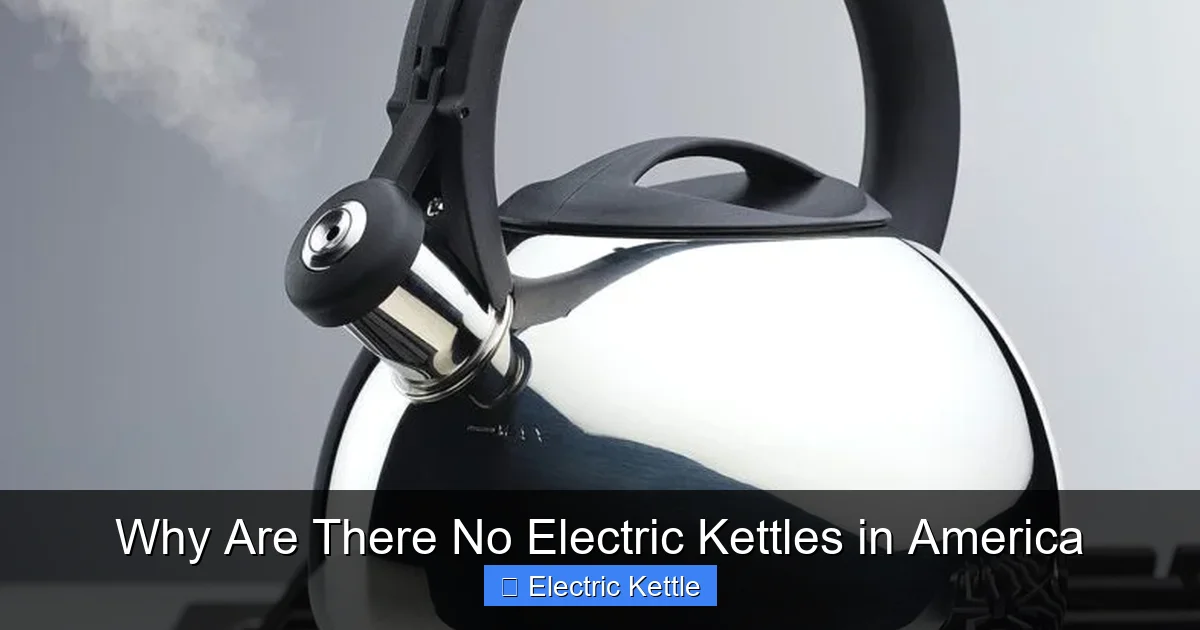
Visual guide about Why Are There No Electric Kettles in America
Image source: stainlesssteelteakettles.com
Before we can understand why electric kettles aren’t common in America, it helps to see why they’re so popular elsewhere. In countries like the United Kingdom, Japan, Australia, and much of Europe, electric kettles are a daily necessity. They’re used to make tea, instant coffee, oatmeal, and even instant noodles. Their speed, efficiency, and convenience make them indispensable.
An electric kettle works by using an internal heating element to boil water quickly—often in under three minutes. Unlike stovetop kettles, which rely on gas or electric burners, electric kettles heat water directly and shut off automatically when it reaches boiling point. This not only saves time but also reduces energy waste.
In the UK, for example, it’s not unusual for someone to boil water multiple times a day. Tea is deeply embedded in British culture, with “tea time” being a cherished ritual. The electric kettle supports this habit perfectly—fast, quiet, and reliable. Similarly, in Japan, electric kettles (called *denki kyūzui*) are used not just for tea but also for preparing precise water temperatures for green tea, which requires lower heat to avoid bitterness.
Even in offices and shared spaces, electric kettles are common. They’re compact, easy to clean, and don’t require a stove. In many ways, they represent a perfect blend of function and form.
But when you cross the Atlantic, that convenience seems to vanish. So what changed?
The Voltage Divide: America’s Electrical System Explained
The most significant barrier to widespread electric kettle adoption in the U.S. is the country’s electrical infrastructure. Most of the world operates on a 220–240-volt electrical system, while the United States uses 110–120 volts. This difference has a huge impact on how appliances perform.
How Voltage Affects Heating Speed
Electric kettles rely on high power to boil water quickly. In a 230V system, a typical electric kettle might use 2,000 to 3,000 watts of power. This allows it to boil a liter of water in under three minutes. But in the U.S., where voltage is roughly half that, the same kettle would need to draw significantly more current (amps) to achieve the same power output.
Power (watts) = Voltage (volts) × Current (amps)
To get 3,000 watts at 120 volts, a kettle would need to draw 25 amps. That’s more than most standard U.S. kitchen outlets can safely handle. Most American homes have 15- or 20-amp circuits, and running a 25-amp appliance would trip the breaker or overload the circuit.
As a result, electric kettles designed for the U.S. market are typically limited to 1,500 watts or less. This means they take longer to boil water—often five to seven minutes for a full kettle. That’s not much faster than a stovetop pot, and in some cases, it’s even slower.
The Challenge of High-Wattage Appliances
High-wattage appliances like electric kettles, space heaters, and hair dryers are common in the U.S., but they’re usually designed with lower power ratings to match the 120V system. For example, a typical American hair dryer runs at 1,875 watts, and a microwave might use 1,200 watts. These are already pushing the limits of a 15-amp circuit.
Adding a 3,000-watt electric kettle to the mix would require a dedicated 20- or 30-amp circuit—similar to what’s used for an oven or clothes dryer. That’s expensive and impractical for most homes. As a result, manufacturers either downsize the kettle’s power or design it to work within existing electrical constraints.
Some premium electric kettles sold in the U.S. do offer faster boiling times, but they often come with a higher price tag and may require special wiring. This limits their appeal to the average consumer.
Global Design vs. American Reality
Many electric kettles sold in the U.S. are actually imported models adapted for American voltage. These “dual-voltage” kettles can switch between 110V and 220V, but when used at 110V, they lose much of their speed and efficiency. A kettle that boils water in 90 seconds in the UK might take over five minutes in the U.S.
This performance gap makes it harder for electric kettles to compete with stovetop methods, which don’t depend on voltage. A gas stove, for instance, can boil water just as quickly in America as it can in Europe.
Cultural Habits: Tea, Coffee, and the American Kitchen
Beyond electricity, cultural preferences play a major role in why electric kettles haven’t taken off in the U.S. Unlike many countries where tea is a daily ritual, Americans have historically favored coffee—and they’ve developed appliances to match.
The Coffee Culture Dominance
Coffee is deeply ingrained in American life. According to the National Coffee Association, over 60% of Americans drink coffee daily. This has shaped kitchen appliance trends for decades. Drip coffee makers, French presses, espresso machines, and single-serve pod systems like Keurig dominate countertops.
These appliances are designed to heat water and brew coffee in one step, eliminating the need for a separate kettle. Even instant coffee, which requires hot water, is often made using a microwave or a coffee maker’s hot water dispenser.
In contrast, tea consumption in the U.S. is growing but still lags behind coffee. While 84% of Americans drink tea at least occasionally, only about 20% drink it daily. And when they do, many use tea bags in mugs with microwaved water or steep tea in a pot on the stove.
This lack of a strong tea culture reduces the perceived need for a dedicated water-boiling appliance. Why buy a kettle when you can just use the microwave?
The Stovetop Tradition
Americans have long relied on stovetop kettles or saucepans to boil water. This method is simple, requires no special outlet, and works with any heat source—gas, electric, or induction. It’s also deeply familiar. Many Americans grew up watching their parents or grandparents boil water on the stove for tea, pasta, or instant meals.
Stovetop kettles, especially those with a whistle, are still sold in the U.S., though they’re less common than in the past. They’re often made of stainless steel or glass and are seen as nostalgic or rustic rather than modern.
Microwaves have also become a go-to for heating water. While not ideal for tea (microwaved water can superheat and erupt), they’re fast and convenient for coffee, oatmeal, or instant noodles. A quick 2–3 minute zap in the microwave is often faster than waiting for a stovetop pot to boil.
Appliance Minimalism and Counter Space
American kitchens, especially in urban apartments, often prioritize space efficiency. Many households avoid single-purpose appliances—those that do only one thing. An electric kettle, which is used solely to boil water, may seem like an unnecessary addition when a microwave or stovetop can do the same job.
In contrast, multi-functional appliances are more popular. For example, a coffee maker with a hot water dispenser can brew coffee and heat water for tea. An instant pot can cook, steam, and boil. This “one appliance, many uses” mindset reduces the appeal of a dedicated kettle.
Market Availability and Consumer Perception
Even though electric kettles aren’t mainstream, they’re not impossible to find in the U.S. Major retailers like Amazon, Target, and Williams Sonoma sell a variety of models. Brands like Cuisinart, Breville, and Hamilton Beach offer electric kettles designed for American voltage.
So why aren’t they flying off the shelves?
Positioning as a “Premium” or “Niche” Product
In the U.S., electric kettles are often marketed as specialty items—geared toward tea connoisseurs, minimalist cooks, or tech-savvy consumers. They’re rarely advertised as everyday essentials. This positioning affects consumer perception. If a product isn’t seen as necessary, people are less likely to buy it.
Compare this to the UK, where electric kettles are sold in supermarkets, department stores, and even discount retailers. They’re available at every price point, from $10 plastic models to $100+ smart kettles. In the U.S., the cheapest models start around $25–$30, and high-end versions can cost $100 or more.
This price gap, combined with limited marketing, keeps electric kettles in the “nice-to-have” category rather than “must-have.”
Lack of Familiarity and Education
Many Americans simply don’t know how convenient electric kettles can be. They may assume they’re slow, unsafe, or unnecessary. Without firsthand experience, it’s hard to justify the purchase.
Retailers and manufacturers could do more to educate consumers. For example, highlighting the energy efficiency of electric kettles—boiling only the water you need—could appeal to eco-conscious buyers. Or emphasizing the precision temperature control in modern models could attract tea and coffee lovers.
But until that messaging becomes widespread, electric kettles will remain a niche product.
Safety and Regulatory Hurdles
The U.S. has strict electrical safety standards enforced by organizations like Underwriters Laboratories (UL). Appliances must meet specific requirements for insulation, grounding, and automatic shut-off features.
Electric kettles, especially those with exposed heating elements or high power draws, must undergo rigorous testing. This can increase manufacturing costs and limit design flexibility. Some international models can’t be sold in the U.S. without significant modifications.
Additionally, concerns about scalding, electrical faults, or fire risks make consumers cautious. While modern kettles are generally safe, the perception of risk—especially with high-wattage devices—can deter buyers.
The Rise of Electric Kettles in America: A Slow but Steady Trend
Despite these challenges, electric kettles are gaining ground in the U.S. Several factors are driving this shift:
Growing Tea and Specialty Coffee Culture
Tea consumption in the U.S. has been rising steadily, especially among younger generations. According to the Tea Association of the USA, over 159 million Americans drink tea daily, with green, herbal, and specialty teas leading the trend. These teas often require precise water temperatures, which electric kettles with variable temperature settings can provide.
Similarly, the third-wave coffee movement—focused on quality, brewing methods, and flavor—has increased demand for precise water heating. Pour-over coffee, for example, requires water just off the boil (around 200°F). An electric kettle with temperature control makes this easy.
Energy Efficiency and Convenience
Electric kettles are more energy-efficient than stovetops or microwaves because they heat water directly and only boil what you need. This appeals to environmentally conscious consumers and those looking to reduce energy bills.
They’re also faster than stovetop methods in many cases—especially when using a high-wattage model. For busy professionals, students, or parents, that speed is a major selling point.
Smart and Stylish Designs
Modern electric kettles come in sleek designs with features like LED indicators, keep-warm functions, and cordless bases. Brands like Fellow, with their popular Stagg EKG kettle, have positioned electric kettles as stylish, functional additions to the modern kitchen.
These kettles are often used as much for aesthetics as for function—displayed on countertops like a piece of art.
Online Communities and Influencer Marketing
Social media platforms like Instagram, TikTok, and YouTube have helped popularize electric kettles. Tea enthusiasts, minimalist lifestyle influencers, and coffee experts showcase their kettles in daily routines, making them aspirational.
Online reviews and unboxing videos also help demystify the product, showing real-world performance and ease of use.
Practical Tips for Using an Electric Kettle in the U.S.
If you’re considering buying an electric kettle in America, here are some tips to get the best experience:
- Choose a 1,500-watt model: This is the highest power most standard outlets can handle safely. It will boil water faster than lower-wattage models.
- Look for temperature control: If you drink tea or pour-over coffee, a kettle with variable temperature settings (e.g., 160°F for green tea, 212°F for black tea) is ideal.
- Check for UL certification: Ensure the kettle meets U.S. safety standards.
- Consider cordless designs: These are easier to pour and store.
- Use filtered water: This reduces mineral buildup and improves taste.
- Clean regularly: Descale your kettle every few months to maintain performance.
Conclusion: The Future of Electric Kettles in America
So, are there truly no electric kettles in America? Not quite. They exist, but they’re not as common as in other parts of the world. The reasons are complex—rooted in electrical standards, cultural habits, and market dynamics.
But change is coming. As Americans embrace tea, specialty coffee, and energy-efficient appliances, electric kettles are finding their place. They’re no longer just for expats or tea snobs—they’re becoming tools for anyone who values speed, precision, and convenience.
The journey may be slower than in Europe or Asia, but the trend is clear: electric kettles are no longer a foreign curiosity. They’re a growing part of the American kitchen—one boil at a time.
Frequently Asked Questions
Why don’t Americans use electric kettles?
Americans don’t widely use electric kettles due to differences in electrical voltage (110–120V vs. 220–240V elsewhere), cultural preferences for coffee over tea, and reliance on stovetops or microwaves for boiling water. These factors have made electric kettles less practical and less popular in the U.S.
Can you use a European electric kettle in the U.S.?
Only if it’s a dual-voltage model. Most European kettles are designed for 220–240V and will be very slow or not work at all on U.S. 110–120V outlets. Always check the label or manual before plugging in.
Are electric kettles safe in America?
Yes, as long as they’re UL-listed and designed for U.S. voltage. Modern electric kettles have safety features like automatic shut-off and boil-dry protection, making them safe when used properly.
Do electric kettles use a lot of electricity?
No, they’re actually more energy-efficient than stovetops or microwaves because they heat water directly and only boil what you need. A typical 1,500-watt kettle uses about the same energy as a microwave for 2–3 minutes.
What’s the best electric kettle for the U.S.?
Look for a 1,500-watt model with temperature control, UL certification, and a cordless design. Brands like Fellow, Cuisinart, and Breville offer reliable options suited for American kitchens.
Will electric kettles become more popular in the U.S.?
Yes, as tea and specialty coffee consumption grows, and consumers seek faster, more efficient appliances, electric kettles are expected to gain wider acceptance in American homes.