Ever wondered why your electric kettle makes noise when heating water? It’s not broken—it’s physics! The sounds come from bubbles forming, steam escaping, and mineral buildup. Understanding these noises helps you maintain your kettle and enjoy quieter, safer brewing.
Have you ever stood in your kitchen, waiting for your morning tea, only to be startled by a loud rumbling, hissing, or even a high-pitched whine coming from your electric kettle? You’re not alone. Most people assume that a noisy kettle is a sign something’s wrong—maybe it’s overheating, malfunctioning, or about to break. But the truth is, **electric kettles are supposed to make noise**. In fact, those sounds are often a natural part of the heating process.
Think about it: you’re rapidly heating water from room temperature to boiling point in just a few minutes. That’s a lot of energy transfer happening fast. Water molecules are getting excited, turning into steam, and moving around vigorously. All that activity creates sound. Whether it’s a low gurgle, a sharp whistle, or a rhythmic clicking, these noises are usually just your kettle doing its job. Of course, some sounds are louder or more frequent than others, and that’s where understanding the science and mechanics behind the noise becomes helpful.
In this article, we’ll dive deep into why electric kettles make noise, breaking down the physical processes, mechanical factors, and environmental influences that contribute to those familiar kitchen sounds. We’ll also share practical tips to reduce unwanted noise and keep your kettle running smoothly. By the end, you’ll know exactly what’s going on inside your kettle—and why you shouldn’t panic the next time it starts rumbling like a tiny engine.
Key Takeaways
- Noise is normal: Electric kettles make sounds due to boiling water, steam, and internal components—this is expected and not a sign of malfunction.
- Bubble formation causes rumbling: As water heats, tiny bubbles form and collapse, creating the familiar rumbling or gurgling noise.
- Limescale buildup increases noise: Mineral deposits from hard water amplify sounds and reduce efficiency—regular descaling helps.
- Heating element vibrations contribute: The metal coil or disc vibrates slightly when electricity flows, adding to the overall noise.
- Steam release creates whistling or hissing: Especially in older models, steam escaping through vents or spouts produces audible sounds.
- Kettle design affects sound levels: Materials, insulation, and build quality influence how loud your kettle gets—some models are engineered for quiet operation.
- Maintenance reduces unwanted noise: Cleaning, descaling, and proper usage can significantly lower kettle noise over time.
📑 Table of Contents
Understanding the Science Behind Kettle Noise
At its core, the noise from an electric kettle is the result of rapid energy transfer and phase changes in water. When you flip the switch, electricity flows through the heating element—usually a coiled wire or a flat disc at the base of the kettle. This element heats up quickly, transferring thermal energy to the water sitting above it. As the water temperature rises, something fascinating happens at the molecular level.
Water molecules begin to move faster. When they reach around 70–80°C (158–176°F), tiny vapor bubbles start forming at the bottom of the kettle, right where the heating element is hottest. These bubbles are pockets of steam trying to escape into the cooler water above. But here’s the catch: the surrounding water is still below boiling point, so the bubbles collapse almost instantly. This rapid formation and collapse of bubbles is called **cavitation**, and it’s one of the main sources of the rumbling or crackling sound you hear in the early stages of heating.
As the water continues to heat, more bubbles form and rise. Once the entire body of water reaches boiling temperature (100°C or 212°F at sea level), the bubbles can survive their journey to the surface and burst, releasing steam into the air. This is when the sound often shifts from a low rumble to a steady hiss or gurgle. The entire process—from quiet heating to loud boiling—is a symphony of physics in action.
It’s also worth noting that the noise isn’t just about water. The heating element itself can vibrate slightly as electrical current passes through it. This is due to a phenomenon called the **magnetostriction effect**, where magnetic materials change shape when exposed to a magnetic field. Since the heating element is part of an electrical circuit, it experiences alternating current, which creates a fluctuating magnetic field. This causes tiny expansions and contractions in the metal, leading to subtle vibrations that contribute to the overall sound.
So, in short: your kettle is noisy because it’s working hard. The combination of boiling water, collapsing bubbles, steam release, and mechanical vibrations all add up to the familiar soundtrack of your morning routine. And while it might seem loud, it’s usually nothing to worry about.
Types of Sounds and What They Mean
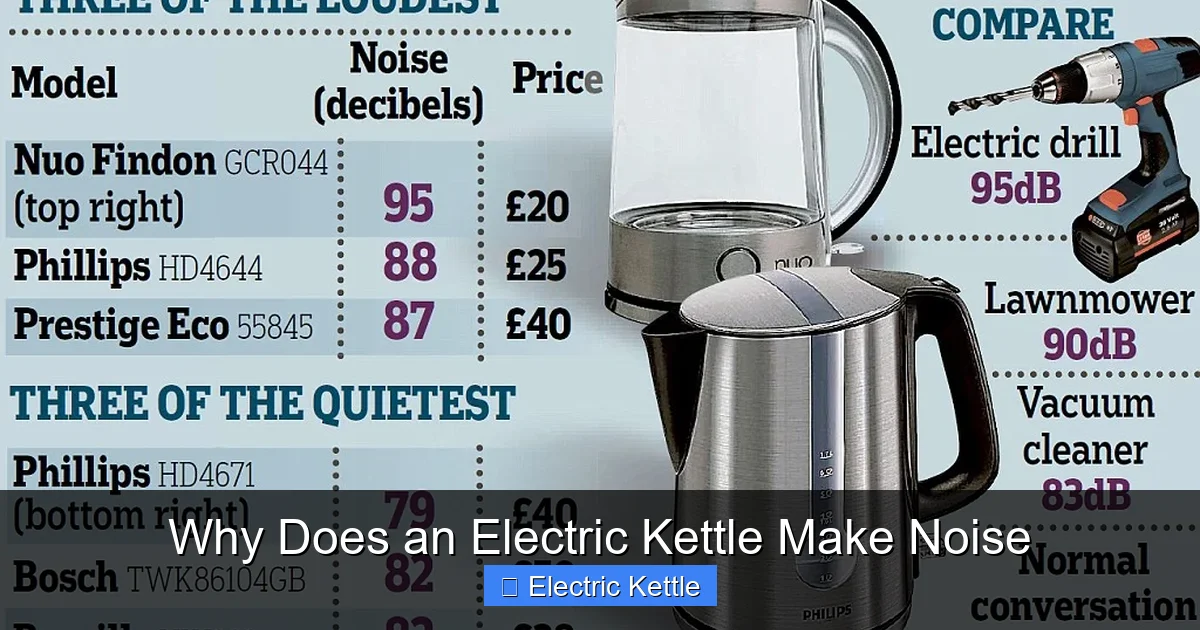
Visual guide about Why Does an Electric Kettle Make Noise
Image source: easylifeelectronic.com
Not all kettle noises are the same. Depending on the stage of heating, the design of the kettle, and the quality of your water, you might hear a variety of sounds—each with its own meaning. Learning to identify these sounds can help you understand what’s happening inside your kettle and whether any action is needed.
Low Rumbling or Gurgling
This is one of the most common sounds, especially in the first few minutes of heating. It’s caused by the formation and collapse of steam bubbles near the heating element. As mentioned earlier, these bubbles can’t rise far before the cooler water above causes them to implode. The result is a deep, rhythmic rumble that gradually increases in intensity as the water heats up. This sound is completely normal and indicates that your kettle is efficiently transferring heat to the water.
High-Pitched Whistling or Hissing
You’re most likely to hear this during the final stages of boiling, especially if your kettle has a spout or steam vent. As steam builds up pressure and escapes through narrow openings, it creates a high-frequency sound. Some older kettles are designed with built-in whistles that activate when steam passes through them—similar to a stovetop kettle. Even without a whistle, the rush of steam can produce a sharp hiss. This is also normal, though excessively loud hissing could indicate a blockage in the steam vent.
Clicking or Ticking Sounds
These are often mechanical noises coming from the thermostat or internal switches. Electric kettles use thermostats to monitor water temperature and automatically shut off when boiling is reached. As the thermostat heats and cools, its internal components may expand and contract, causing a clicking or ticking sound. You might hear this at the beginning and end of the heating cycle. Again, this is typically harmless and part of the kettle’s safety system.
Banging or Popping
Occasional banging or popping noises can be more concerning, but they’re not always a sign of trouble. In some cases, they’re caused by **limescale buildup** on the heating element. When water with high mineral content (hard water) is heated repeatedly, calcium and magnesium deposits form a crust on the element. This crust insulates the metal, causing hot spots. When steam finally breaks through these spots, it can create sudden bursts of sound—like mini explosions. While occasional popping is normal with hard water, frequent or loud banging may mean it’s time to descale your kettle.
Humming or Vibrating
A low hum or vibration might come from the kettle’s base or the heating element itself. This is often due to electrical current flowing through the element and causing slight vibrations in the metal. If the kettle is placed on an uneven surface or a material that conducts vibration (like a metal countertop), the sound can be amplified. Using a silicone mat or placing the kettle on a wooden surface can help reduce this effect.
Understanding these sounds helps you distinguish between normal operation and potential issues. Most of the time, the noise is just your kettle doing its job. But if you notice a sudden change in sound—like louder banging, screeching, or silence when the kettle should be boiling—it might be time to investigate further.
The Role of Limescale and Water Quality
One of the biggest contributors to kettle noise—especially in areas with hard water—is limescale. If you live in a region where tap water contains high levels of calcium and magnesium, you’ve probably noticed a white, chalky buildup inside your kettle over time. This is limescale, and it’s more than just an eyesore—it directly affects how your kettle sounds and performs.
How Limescale Forms
When hard water is heated, the minerals in it—primarily calcium carbonate—precipitate out of solution and stick to surfaces, especially the heating element. Over time, this creates a thick, insulating layer. Think of it like putting a blanket over your kettle’s heating coil. The element has to work harder and hotter to transfer heat to the water, which leads to several problems.
Increased Noise and Reduced Efficiency
Limescale acts as a barrier between the heating element and the water. Because heat can’t transfer as efficiently, the element gets hotter than it should. This causes localized boiling—tiny pockets of water superheat and then violently turn to steam, creating loud popping or banging sounds. The uneven heating also leads to more cavitation and bubble collapse, amplifying the rumbling noise.
In severe cases, the limescale can crack or flake off, creating even more noise as pieces move around inside the kettle. This not only makes your kettle louder but also shortens its lifespan. The constant overheating can damage the element, thermostat, or internal wiring.
How to Prevent and Remove Limescale
The good news is that limescale is preventable and removable. Here are some practical tips:
– **Descale regularly:** Use a mixture of white vinegar and water (1:1 ratio) to soak the kettle for 30 minutes to an hour, then scrub gently and rinse thoroughly. For heavy buildup, repeat the process or use a commercial descaling solution.
– **Use filtered water:** If your tap water is very hard, consider using filtered or distilled water in your kettle. This reduces mineral content and slows limescale formation.
– **Empty the kettle after use:** Don’t let water sit in the kettle for long periods, especially if it’s hard water. Residual minerals can settle and start forming scale.
– **Wipe the interior:** After each use, wipe the inside with a soft cloth to remove any water spots or early mineral deposits.
By maintaining your kettle and managing water quality, you can significantly reduce noise and extend the life of your appliance. A clean kettle doesn’t just sound better—it heats faster, uses less energy, and is safer to use.
Design and Build Quality: How Kettles Are Made
Not all electric kettles are created equal—and that includes how loudly they operate. The design, materials, and engineering of your kettle play a major role in the sounds it makes. Some kettles are built for speed and power, while others prioritize quiet operation and energy efficiency.
Heating Element Type
There are two main types of heating elements in electric kettles: **immersed** and **encapsulated**.
– **Immersed elements** are exposed directly to the water. They heat up quickly and are common in budget models. However, because they’re in direct contact with water, they’re more prone to limescale buildup and can produce louder bubbling and popping sounds.
– **Encapsulated elements** are sealed under a stainless steel plate at the base of the kettle. They’re less likely to accumulate scale and tend to heat more evenly, resulting in quieter operation. Premium kettles often use this design for better performance and durability.
Material Choices
The material of the kettle’s body also affects noise levels:
– **Plastic kettles** are lightweight and affordable but can amplify sound due to their hollow construction. They may also retain heat less efficiently, causing the heating element to cycle more often.
– **Stainless steel kettles** are durable and retain heat well. They often have better insulation, which can help dampen noise. However, thin steel walls may vibrate and create a ringing sound.
– **Glass kettles** offer a modern look and allow you to see the water boiling. They’re generally quieter than plastic but can be fragile. Some models include noise-reducing features like double walls or silicone bases.
Insulation and Dampening Features
Higher-end kettles often include design elements to reduce noise:
– **Double-wall construction** traps air between layers, acting as a sound barrier.
– **Silicone or rubber feet** absorb vibrations and prevent the kettle from “dancing” on the countertop.
– **Sound-dampening coatings** or internal baffles can minimize echo and resonance.
If quiet operation is important to you, look for kettles marketed as “quiet boil” or “low-noise.” These models are engineered to minimize the sounds of boiling, making them ideal for open-plan kitchens or early-morning use.
Practical Tips to Reduce Kettle Noise
Even if your kettle isn’t the quietest model on the market, there are several steps you can take to minimize noise and improve your overall experience.
Use the Right Amount of Water
Overfilling or underfilling your kettle can increase noise. Too much water means the heating element has to work longer, creating more bubbling and steam. Too little water can cause the element to overheat, leading to louder popping and potential damage. Always fill your kettle to between the minimum and maximum markers.
Place It on a Soft Surface
Hard surfaces like granite or metal countertops can amplify vibrations and sound. Try placing your kettle on a wooden cutting board, silicone mat, or trivet. This simple change can make a noticeable difference in noise levels.
Keep It Clean and Descaled
As discussed earlier, limescale is a major noise culprit. Regular descaling not only reduces sound but also improves heating efficiency and extends the life of your kettle. Aim to descale every 1–3 months, depending on your water hardness.
Avoid Rapid Temperature Changes
Don’t pour cold water into a hot kettle or vice versa. Sudden temperature shifts can cause the metal to expand or contract quickly, leading to cracking sounds or stress on internal components. Let the kettle cool slightly before refilling.
Check for Loose Parts
Over time, screws, lids, or internal components may loosen, causing rattling or buzzing. If your kettle starts making new or unusual noises, inspect it for loose parts and tighten them if safe to do so.
Upgrade to a Quieter Model
If noise remains a persistent issue, consider investing in a newer, quieter kettle. Look for features like encapsulated heating elements, double-wall insulation, and noise-reducing designs. Brands like Bosch, Russell Hobbs, and Breville offer models specifically engineered for quiet operation.
By combining good habits with smart maintenance, you can enjoy a quieter, more efficient kettle—no matter what model you own.
When to Worry: Unusual Noises and Safety Concerns
While most kettle noises are harmless, some sounds may indicate a problem that needs attention. Knowing when to worry can help you avoid safety hazards and costly repairs.
Screeching or Squealing
A high-pitched screech is not normal and could signal a mechanical issue, such as a failing motor (in kettles with built-in grinders or stirrers) or a damaged thermostat. If you hear this, stop using the kettle and have it inspected.
Continuous Loud Banging
Occasional popping from limescale is normal, but if your kettle produces loud, frequent bangs—especially after descaling—it could mean the heating element is damaged or the thermostat is malfunctioning. This can lead to overheating and pose a fire risk.
No Sound at All
If your kettle heats up silently when it usually makes noise, it might seem like a good thing—but it could indicate a problem. For example, if the heating element is coated in thick limescale, it may not be transferring heat properly, leading to silent overheating. Alternatively, a faulty thermostat might not be triggering the boiling process correctly.
Smoke or Burning Smell
This is a serious red flag. If you see smoke or smell burning, immediately unplug the kettle and stop using it. This could be due to electrical faults, overheating, or melted internal components.
Water Leaking or Steam Escaping from Unusual Places
Steam should only escape through the spout or designated vents. If you notice leaks around the base or lid, or steam coming from the handle, there may be a seal failure or crack in the kettle body.
If you experience any of these issues, it’s best to stop using the kettle and contact the manufacturer or a qualified technician. Safety should always come first.
Conclusion
So, why does an electric kettle make noise? The answer lies in a combination of physics, engineering, and everyday use. From the formation of steam bubbles to the vibrations of the heating element, the sounds your kettle makes are a natural part of the boiling process. While some noise is inevitable, understanding its causes helps you maintain your appliance and enjoy a quieter, more efficient experience.
Factors like limescale buildup, water quality, kettle design, and usage habits all influence how loud your kettle gets. By descaling regularly, using filtered water, and choosing a well-designed model, you can significantly reduce unwanted noise. And if you ever hear something unusual—like screeching, continuous banging, or smoke—it’s important to investigate promptly to ensure safety.
At the end of the day, your electric kettle is a hardworking kitchen hero. It heats your water quickly, safely, and reliably—sometimes with a little fanfare. Instead of seeing the noise as a nuisance, think of it as a sign that your kettle is doing its job. With a little care and attention, you can keep it running smoothly and quietly for years to come.
Frequently Asked Questions
Is it normal for an electric kettle to make noise?
Yes, it’s completely normal. The sounds come from boiling water, steam release, and internal components like the heating element and thermostat. These noises are part of the heating process and not a sign of malfunction.
Why does my kettle make a loud banging sound?
Loud banging is often caused by limescale buildup on the heating element. The scale creates hot spots, causing steam to burst through suddenly. Regular descaling can reduce or eliminate this noise.
Can hard water make my kettle louder?
Yes, hard water increases limescale formation, which leads to louder popping, banging, and rumbling sounds. Using filtered water and descaling regularly can help minimize noise.
How can I make my electric kettle quieter?
Use a silicone mat under the kettle, descale regularly, avoid overfilling, and consider upgrading to a model with noise-reducing features like double-wall insulation or an encapsulated heating element.
Should I be concerned if my kettle stops making noise?
Yes, if your kettle usually makes noise but suddenly goes silent, it could indicate a problem like a faulty thermostat or severe limescale buildup. Have it checked to ensure safe operation.
Do all electric kettles whistle when boiling?
No, only some models—especially older or stovetop-style kettles—have built-in whistles. Most modern electric kettles don’t whistle but may hiss as steam escapes through the spout.