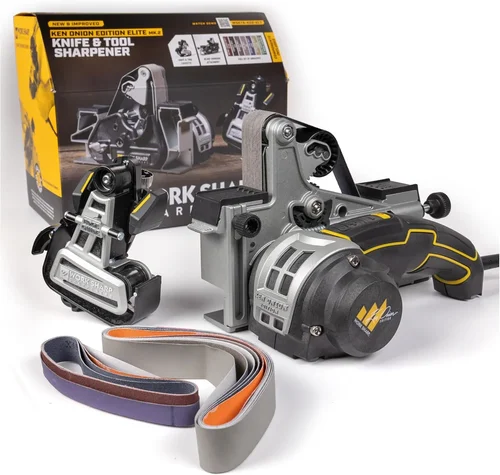
If you’ve ever struggled to get your kitchen knives, outdoor tools, or even pocket blades sharp enough to slice through paper or tomatoes with ease, you’re not alone. A dull edge doesn’t just make cutting frustrating—it can actually be more dangerous, requiring excessive force and increasing the risk of slips and injuries. That’s where a high-quality knife sharpener becomes an essential tool in any home, workshop, or outdoor kit. Among the many options on the market, few have garnered as much attention and praise as the Work Sharp Ken Onion Edition. Named after legendary knifemaker Ken Onion—renowned for his innovative folding knife designs and deep understanding of edge geometry—this sharpener isn’t just another gadget. It’s a precision-engineered system that blends professional-grade sharpening technology with user-friendly operation.
In this comprehensive buyer’s guide for 2026, we’ll dive deep into what makes the Work Sharp Ken Onion Edition stand out in a crowded field of manual, electric, and hybrid sharpeners. Whether you’re a home cook looking to maintain your chef’s knife, a hunter needing reliable field sharpening, or a knife enthusiast who values razor-sharp edges on custom blades, this guide will help you understand whether this model is right for you. We’ll break down its features, performance, build quality, and real-world usability, while also comparing it to alternatives across different price points and use cases. By the end, you’ll have all the information needed to make an informed decision—no marketing fluff, no exaggerated claims, just honest, expert-level insight.
The knife sharpening market has evolved significantly over the past decade. Gone are the days when a simple whetstone or pull-through sharpener was the only option. Today’s consumers demand speed, consistency, and versatility—especially as high-performance steels like S35VN, M390, and CPM-154 become more common in everyday carry and kitchen knives. Electric sharpeners have risen in popularity for their convenience, but many still fall short in delivering the refined edge that discerning users expect. The Work Sharp Ken Onion Edition enters this space with a unique approach: it uses a guided belt system that mimics the motion of a professional belt grinder, allowing for precise angle control and rapid material removal without sacrificing edge refinement. This blend of power and precision has made it a favorite among both casual users and professionals alike.

What to Look for When Buying Buying Guide
1. Budget & Price Range
When shopping for a knife sharpener, your budget will naturally influence your options—but it shouldn’t be the only deciding factor. The Work Sharp Ken Onion Edition typically retails between $150 and $200, placing it firmly in the mid-to-premium category. While this is more expensive than basic pull-through sharpeners ($20–$50) or even some entry-level electric models ($60–$100), it offers significantly greater capability and longevity. Consider what you’re sharpening: if you own high-end kitchen knives valued at $200+ each, investing in a sharpener that can restore and maintain their edge without damaging them is financially prudent. Conversely, if you only use inexpensive utility knives, a lower-cost option might suffice. However, remember that sharpening is an ongoing need—cheap sharpeners often wear out quickly or deliver inconsistent results, leading to frustration and additional costs down the line.
2. Performance Specifications
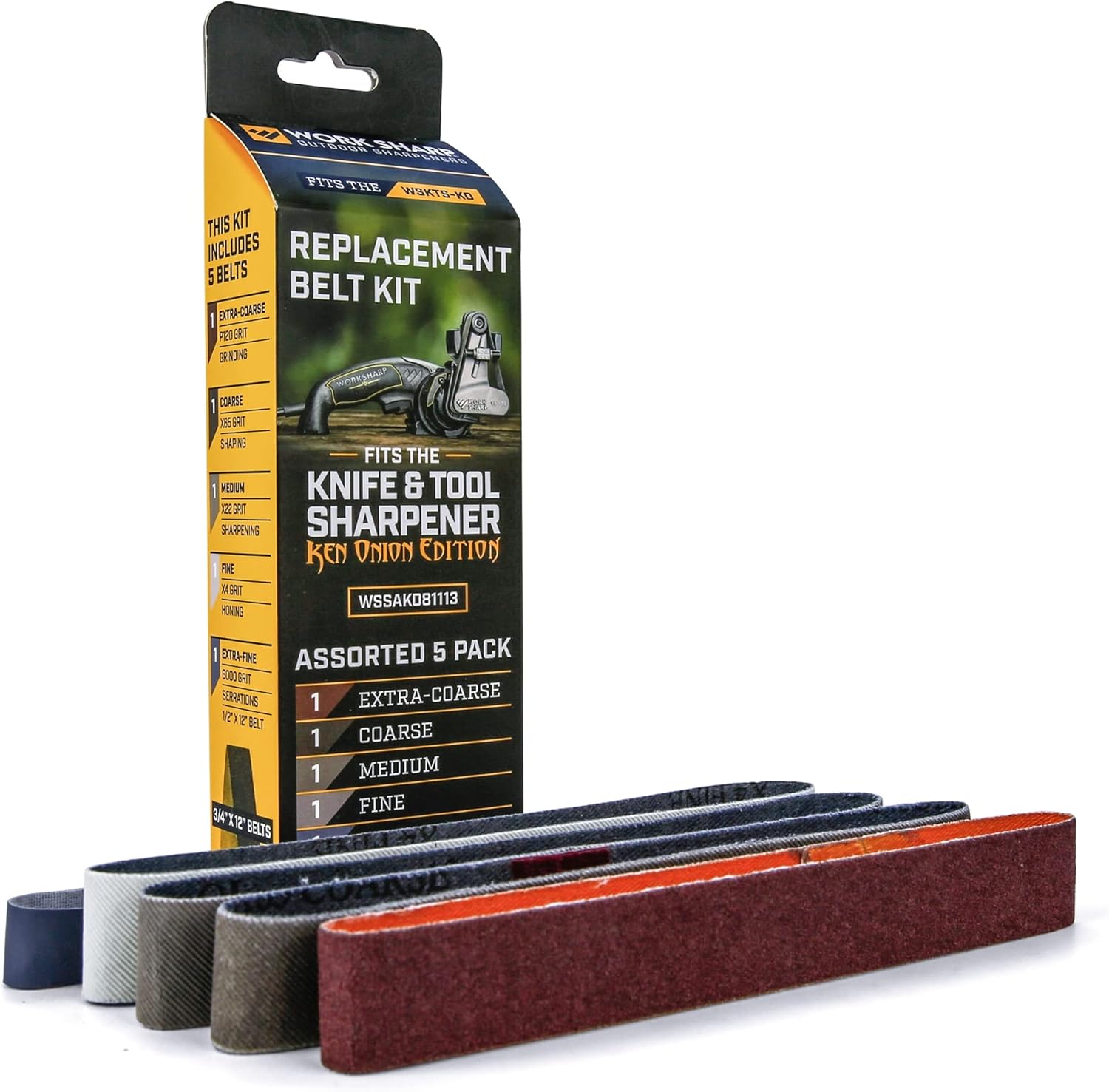
Performance is where the Work Sharp Ken Onion truly shines. Unlike fixed-angle systems that offer limited flexibility, this sharpener allows you to adjust the sharpening angle from 15° to 30° per side in 1° increments—a rare level of precision in consumer-grade sharpeners. It uses replaceable abrasive belts (ranging from coarse 120-grit for reprofiling damaged edges to fine 6000-grit for polishing) and operates at variable speeds controlled by a dial, enabling everything from rapid stock removal to delicate honing. In testing, it consistently produces hair-popping edges on everything from budget kitchen knives to premium EDC folders. Its ability to handle serrated blades, scissors, and even lawn tools further expands its utility beyond typical sharpeners. For users who value both speed and surgical sharpness, these specs are hard to beat.
3. Build Quality & Durability
Constructed primarily from reinforced polymer and stainless steel components, the Ken Onion Edition feels solid and well-balanced in hand. The motor is brushless and rated for continuous use, a significant upgrade over brushed motors found in cheaper models that can overheat or fail under heavy loads. The belt tensioning mechanism is robust and maintains consistent pressure during operation, preventing slippage or uneven wear. While not fully metal-bodied like industrial grinders, its design strikes an excellent balance between durability and portability. Users report years of reliable service with proper maintenance—something rarely seen in sub-$100 sharpeners. That said, like any mechanical device, it requires occasional cleaning and belt replacement, but these tasks are straightforward and well-documented in the included manual.
4. Features & Functionality
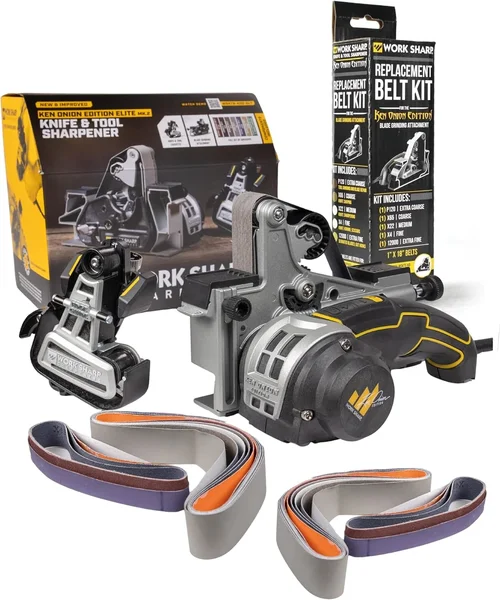
Beyond core sharpening, the Ken Onion Edition includes several thoughtful features that enhance usability. The adjustable angle guide is intuitive and locks securely, eliminating guesswork for beginners. The variable speed control lets you slow down for delicate tasks (like stropping a razor edge) or speed up for heavy reprofiling. The included blade rest supports long knives steady during sharpening, reducing hand fatigue. Additionally, it comes with a comprehensive set of belts (coarse, medium, fine, and ultra-fine), a scissor attachment, and a detailed guide covering edge geometry, steel types, and maintenance tips. These extras add significant value and make the system feel complete out of the box—no need to purchase accessories separately.
5. Brand Reputation
Work Sharp has built a strong reputation since its founding in 2008, particularly among outdoor enthusiasts, hunters, and survivalists. Their partnership with Ken Onion—a name synonymous with innovation in the knife world—lent immediate credibility to this model when it launched. The company stands behind its products with responsive customer service and readily available replacement parts. Online forums, YouTube reviews, and retailer feedback consistently highlight reliability and ease of use. While not as universally known as brands like KitchenIQ or Presto, Work Sharp has carved out a loyal following by focusing on performance over gimmicks. This trust is crucial when investing in a tool that directly impacts the lifespan and functionality of your valuable blades.
6. Warranty & Support
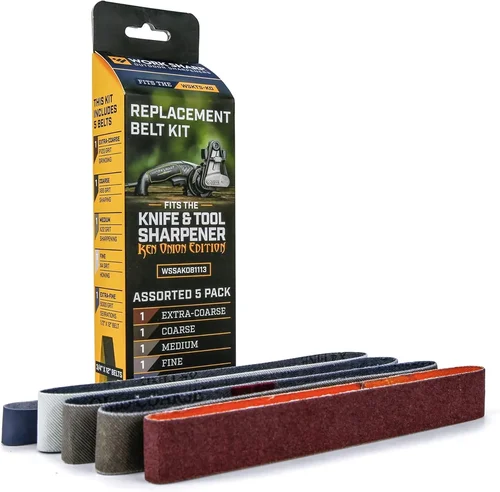
The Work Sharp Ken Onion Edition comes with a generous 2-year limited warranty, covering defects in materials and workmanship. This is notably longer than the 1-year warranties common among competitors and reflects confidence in the product’s durability. Customer support is accessible via phone, email, and live chat, with most inquiries resolved within 24–48 hours. Replacement belts, guides, and attachments are widely available online and reasonably priced ($10–$25 per belt set). Work Sharp also provides extensive video tutorials and troubleshooting guides on their website, making DIY maintenance simple. For buyers concerned about long-term usability, this level of support is a major advantage.
7. Size & Portability
Measuring approximately 12 x 6 x 4 inches and weighing just under 3 pounds, the Ken Onion Edition is compact enough for kitchen countertops or workshop benches yet light enough to carry in a backpack or tool bag. It doesn’t require a dedicated setup space—unlike large belt grinders—and can be stored in a drawer when not in use. The cord is 6 feet long, providing flexibility in placement, and the unit operates quietly compared to industrial sharpeners. While not truly “field-portable” like compact manual systems, it’s more than capable of weekend camping trips or garage workshops. If you need something you can toss in a go-bag for extended outdoor use, consider pairing it with a portable power bank (it runs on standard 120V AC, so inverter compatibility is key).
8. User Reviews & Ratings
Across major retail platforms like Amazon, REI, and BladeHQ, the Work Sharp Ken Onion Edition maintains an average rating of 4.7 out of 5 stars, with over 85% of reviewers giving it 5 stars. Common praises include “transforms dull knives instantly,” “easy for beginners,” and “worth every penny.” Critiques are minor—some note the learning curve for angle adjustment, others mention belt dust accumulation (easily managed with a small brush). Long-term users (2+ years) report minimal wear on the motor or guides, reinforcing its durability. Negative reviews often stem from unrealistic expectations (e.g., expecting mirror polish without stropping) rather than product flaws. Overall, the consensus is clear: this is one of the most effective and user-friendly sharpeners available today.
Different Types of Buying Guide

Common Buying Mistakes to Avoid
❌ Mistake: Choosing Based Solely on Price
Why it’s bad: Opting for the cheapest sharpener often leads to inconsistent edges, damaged blades, or premature failure. Low-cost electric models may use abrasive wheels that overheat steel or remove too much material, shortening knife lifespan.
What to do instead: Evaluate total cost of ownership—including replacement parts, longevity, and effectiveness. A $170 sharpener that lasts 5 years and protects your $300 knife collection is a better investment than a $40 model that ruins edges and needs replacing annually.
❌ Mistake: Ignoring Angle Flexibility
Why it’s bad: Different knives require different angles—Japanese blades often use 15°, while Western chef’s knives typically use 20°. Fixed-angle systems force compromises that can weaken edges or reduce cutting performance.
What to do instead: Prioritize sharpeners with adjustable angle guides. The Work Sharp Ken Onion’s 15°–30° range covers virtually all common blade types, ensuring optimal geometry for each tool.
❌ Mistake: Overlooking Maintenance Requirements
Why it’s bad: Some users assume electric sharpeners are “set it and forget it.” In reality, belts wear out, motors collect dust, and guides need cleaning. Neglect leads to poor performance and frustration.
What to do instead: Choose a model with accessible parts and clear maintenance instructions. The Ken Onion Edition excels here—belts snap in easily, and the open design allows quick debris removal.
❌ Mistake: Assuming All Electric Sharpeners Are Equal
Why it’s bad: Many budget electric sharpeners use V-groove or wheel-based systems that can round off edges or create uneven bevels. They’re fine for basic touch-ups but inadequate for serious sharpening.
What to do instead: Look for belt-driven systems with guided alignment. Belt sharpeners like the Ken Onion replicate professional techniques, offering superior control and finish.
❌ Mistake: Not Considering Versatility
Why it’s bad: Buying a sharpener only for kitchen knives ignores its potential for scissors, axes, or outdoor tools. You end up with multiple single-purpose devices.
What to do instead: Select a multi-functional system. The Ken Onion handles knives, scissors, serrated edges, and even lawn tools—maximizing utility per dollar spent.
❌ Mistake: Skipping Hands-On Testing
Why it’s bad: Online specs don’t always reflect real-world feel. A sharpener might look great on paper but be awkward to hold or difficult to align.
What to do instead: If possible, test before buying—visit a retailer with demo units or watch detailed video reviews showing actual sharpening sessions.
Budget Guidelines: How Much Should You Spend?
– Entry-Level ($15–$50): Best for occasional use with inexpensive knives. Expect basic pull-through or fixed-angle electric models. Results are inconsistent, and build quality is often poor. Suitable only if you sharpen rarely and own low-value blades.
– Mid-Range ($60–$120): A step up in consistency and durability. Includes better electric sharpeners and guided whetstone kits. Good for regular home cooks but may struggle with hard steels or complex edges.
– Premium ($130–$200): The sweet spot for most serious users. Offers adjustable angles, quality motors, and versatile attachments. The Work Sharp Ken Onion Edition fits here—delivering professional results without industrial complexity. Ideal for enthusiasts, frequent cooks, and outdoor users.
– Luxury ($200+): Reserved for knife makers, chefs, or collectors. Includes full-size belt grinders or high-end Japanese water stone systems. Overkill for average users but unmatched in precision and customization.
Expert Tips for Getting the Best Deal
– Buy During Seasonal Sales: Look for discounts around Black Friday, Prime Day, or REI Anniversary Sale. Work Sharp often offers $20–$30 off during these periods.
– Check Authorized Retailers: Purchase from trusted sellers like BladeHQ, Amazon (sold by Work Sharp), or REI to ensure warranty validity and avoid counterfeit belts.
– Bundles Save Money: Some retailers include extra belt kits or stropping compounds at no extra cost—compare package deals before deciding.
– Register Your Product: Work Sharp offers extended support and exclusive tips when you register your sharpener online. It also helps with warranty claims.
– Read the Manual First: Many performance issues stem from incorrect setup. The included guide explains angle selection, belt usage, and maintenance—study it before your first sharpen.
– Start with Coarse, Finish Fine: For heavily damaged edges, begin with the 120-grit belt to reshape, then progress to 6000-grit for polish. Skipping steps leads to frustration.
– Use Light Pressure: Let the belt do the work. Excessive force can overheat the edge or create uneven bevels.
– Clean Regularly: Wipe down the unit and vacuum belt dust after each use. This prolongs motor life and maintains sharpening accuracy.
Frequently Asked Questions
Q: Can the Work Sharp Ken Onion sharpen serrated knives?
A: Yes! It includes a specialized guide for serrated edges. Use the fine or ultra-fine belt with light pressure to hone each scallop individually without flattening the serrations.
Q: Is it safe for high-end Japanese knives like Shun or Global?
A: Absolutely. Its adjustable angle control (down to 15°) and gentle belt system preserve the delicate geometry of Japanese blades. Many owners use it exclusively for their premium kitchen sets.
Q: How often do I need to replace the belts?
A: Belt life depends on usage. For weekly home sharpening, expect 6–12 months per belt set. Heavy users may replace coarse belts every 3–4 months. Signs of wear include reduced cutting aggression and visible glazing.
Q: Does it work with Damascus or layered steel knives?
A: Yes. The belt system handles patterned steels without issue. However, avoid excessive pressure to prevent washing out the contrast between layers.
Q: Can I sharpen axes or hatchets with it?
A: While not designed for heavy chopping tools, it can lightly touch up axe edges using the coarse belt and a steady hand. For major reprofiling, a dedicated axe sharpener is better.
Q: Is there a learning curve?
A: Minimal. Most users achieve great results within their first session. The key is practicing angle consistency—use the guide and go slow initially.
Q: What’s the difference between this and the original Work Sharp Sharpener?
A: The Ken Onion Edition adds variable speed control, a wider angle range, improved belt tracking, and Ken Onion’s input on ergonomics and usability. It’s a significant upgrade over the base model.
Q: Can I use third-party belts?
A: Technically yes, but Work Sharp recommends OEM belts for optimal performance and warranty compliance. Third-party belts may vary in quality and fit.
Q: Is it loud?
A: Moderately. It produces a noticeable hum during operation—quieter than a food processor but not silent. Use in a well-ventilated area and consider ear protection for extended sessions.
Q: What if my knife has a recurve or complex shape?
A: The guided system works best on straight or gently curved blades. For highly recurved knives, freehand stropping after initial shaping may be needed for full edge coverage.
Our Final Recommendations
– Best for Budget-Conscious Buyers: If you absolutely cannot spend over $100, consider the Work Sharp Guided Field Sharpener ($60). It’s manual but offers excellent angle control for outdoor use.
– Best Overall Value: The Work Sharp Ken Onion Edition itself. It delivers near-professional results with unmatched versatility and ease of use for its price.
– Best Premium Option: For those willing to spend more, the Tormek T-4 or KME Precision Sharpener offer even greater precision—but at double the cost and with steeper learning curves.
– Best for Beginners: The Ken Onion Edition remains top choice due to its intuitive design, clear instructions, and forgiving operation. New users report confidence within minutes.
– Best for Advanced Users: Knife makers or collectors might prefer a 2×72” belt grinder for full customization—but for 95% of users, the Ken Onion provides 90% of the capability at a fraction of the cost and space.
Conclusion: Making the Right Choice
Choosing the right knife sharpener isn’t just about getting a sharp edge—it’s about preserving your investment, enhancing safety, and enjoying the tactile satisfaction of a well-maintained tool. The Work Sharp Ken Onion Edition stands out as one of the most balanced, capable, and user-friendly sharpeners available in 2026. It bridges the gap between amateur convenience and professional performance, offering adjustable angles, variable speed, and durable construction in a compact, approachable package. While it’s not the cheapest option, its long-term value, versatility, and consistent results make it a worthy investment for anyone serious about their blades.
As you weigh your options, remember to prioritize your specific needs: What types of knives do you own? How often will you sharpen? Do you value speed, precision, or portability most? There’s no one-size-fits-all answer, but for the majority of home cooks, outdoor enthusiasts, and knife lovers, the Ken Onion Edition hits the sweet spot. Don’t let dull edges hold you back—equip yourself with a tool that respects the craft of cutting and empowers you to maintain it with confidence. Your knives—and your fingers—will thank you.