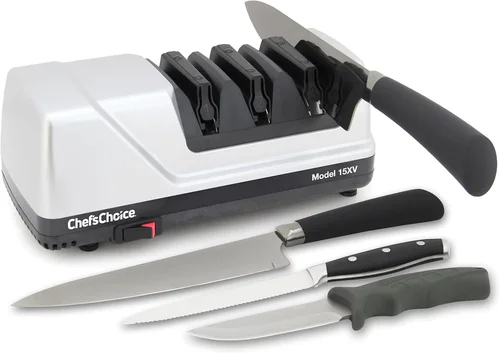
If you’re serious about keeping your kitchen knives razor-sharp, you’ve likely come across two dominant names in the electric knife sharpening world: Work Sharp and Chef’sChoice. Both brands have built strong reputations over decades, offering tools that promise to restore dull blades with speed, precision, and consistency. But with so many models, features, and price points to consider, choosing between them can feel overwhelming—especially when a subpar sharpener can actually damage your prized cutlery instead of improving it.
This guide is designed to cut through the noise. Whether you’re a home cook looking to maintain your everyday kitchen set or a culinary professional who relies on precision edge geometry, understanding the nuances between Work Sharp and Chef’sChoice will help you make an informed decision. We’ll dive deep into performance, build quality, usability, value, and real-world results—so you don’t end up with a gadget that gathers dust in your drawer. By the end of this comprehensive comparison, you’ll know exactly which brand (and model) aligns with your sharpening needs, budget, and lifestyle.
The electric knife sharpener market has evolved significantly in recent years. Gone are the days when manual pull-through sharpeners were the only option for quick touch-ups. Today’s electric systems offer advanced angle control, multi-stage grinding, and even specialty settings for Japanese-style blades, serrated edges, and outdoor tools like axes or machetes. Work Sharp and Chef’sChoice sit at the forefront of this innovation, but they approach sharpening from different philosophies. Work Sharp emphasizes versatility and rugged utility—often catering to outdoor enthusiasts, hunters, and DIYers—while Chef’sChoice leans into precision engineering tailored specifically for kitchen knives, with a focus on consistent, repeatable results. This fundamental difference shapes everything from design to functionality, and it’s crucial to understand before making your purchase.
What to Look for When Buying Buying Guide
1. Budget & Price Range
Your budget is often the first filter when selecting an electric knife sharpener. Work Sharp and Chef’sChoice both offer models across a wide spectrum—from under $50 to over $300—but their pricing structures reflect different priorities. Entry-level Work Sharp units like the Ken Onion Edition Compact Sharpener start around $60 and are built for casual users who need occasional sharpening for kitchen, hunting, or utility knives. In contrast, Chef’sChoice’s most affordable model, the Model 4643, typically retails near $80 and is laser-focused on kitchen knife maintenance.
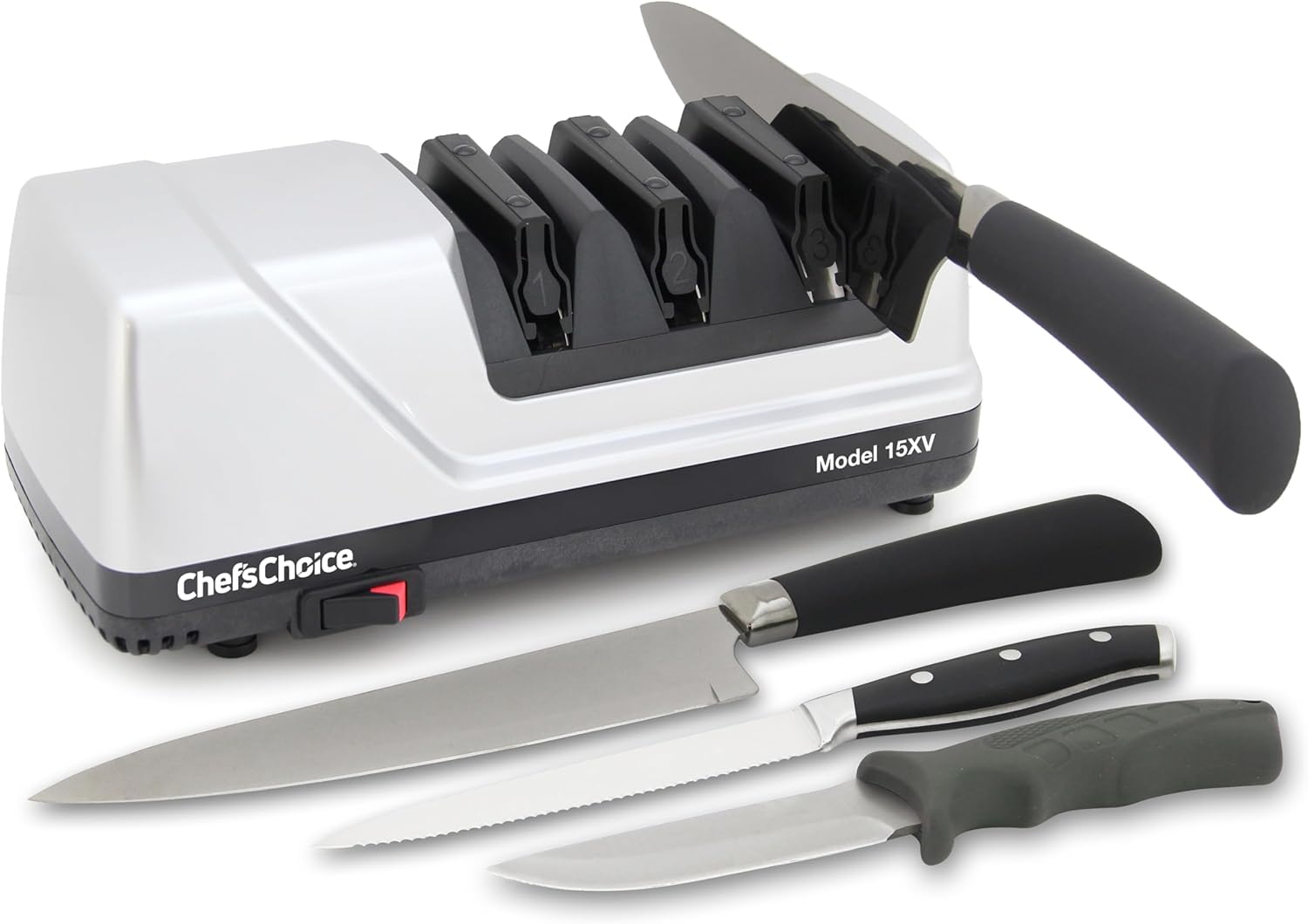
Mid-range options ($100–$150) from both brands deliver significantly better performance. Work Sharp’s Ken Onion Edition Belt Sharpener ($130–$150) uses a flexible abrasive belt system that mimics professional belt grinders, allowing for aggressive material removal and custom edge angles. Chef’sChoice’s Model 1520 ($120–$140) features a two-stage system with diamond abrasives and a patented stropping/polishing stage, optimized for creating ultra-sharp, durable edges on Western and Asian-style knives.
At the premium end ($200+), Chef’sChoice dominates with models like the Trizor XV EdgeSelect ($250), which converts 20° edges to 15° and includes three stages of sharpening plus a leather stropping wheel. Work Sharp’s flagship, the Tool Grinder Attachment for the Ken Onion Edition ($200+ when bundled), offers industrial-grade versatility but requires more user skill. If you’re investing in high-end Japanese knives or professional cutlery, spending more upfront can pay dividends in edge longevity and performance.
2. Performance Specifications
Performance isn’t just about how sharp a knife gets—it’s about consistency, speed, edge retention, and adaptability. Work Sharp excels in raw material removal thanks to its belt-driven system. The Ken Onion Edition, for example, uses 1″ x 18″ abrasive belts (ranging from 80 to 600 grit) that can reshape heavily damaged edges or reprofile angles in seconds. This makes it ideal for restoring chipped hunting knives or reviving old pocket knives.
Chef’sChoice, on the other hand, prioritizes precision over aggression. Most of its sharpeners use fixed-angle guides and rotating abrasive disks (often diamond-coated) that ensure every pass follows the exact same path. The result? A highly repeatable edge with minimal risk of over-grinding. Models like the 1520 and Trizor XV are engineered to produce micro-serrations and polished finishes that enhance slicing performance—especially on delicate tasks like slicing tomatoes or sashimi.
Another key spec is angle adjustability. Work Sharp allows users to manually set angles from 15° to 30° per side, giving advanced users full control. Chef’sChoice typically offers preset angles (e.g., 20° for Western knives, 15° for Asian), though the Trizor XV includes a conversion feature. If you own a mix of knife types, this flexibility matters. Also consider motor power: Work Sharp’s belt system runs on a variable-speed motor (up to 450 SFPM), while Chef’sChoice uses lower-torque motors optimized for fine finishing rather than heavy grinding.
3. Build Quality & Durability
Durability separates hobbyist tools from long-term investments. Work Sharp’s designs lean toward ruggedness. The Ken Onion Edition features a powder-coated steel frame, rubberized grips, and a robust motor housing that withstands workshop conditions. Its belt mechanism is serviceable—you can replace belts easily, and some users even retrofit third-party abrasives. However, the plastic guide arms on older models have been known to wear over time with heavy use.
Chef’sChoice builds its sharpeners with a focus on precision engineering. The housings are typically high-impact ABS plastic with metal internal components, and the abrasive modules are sealed to prevent contamination. While not as “industrial” as Work Sharp, Chef’sChoice units are designed for thousands of sharpening cycles with minimal maintenance. The diamond abrasive disks last significantly longer than sandpaper belts—often 5–10 years with regular home use.
One durability consideration often overlooked: heat generation. Aggressive sharpening creates friction, which can overheat steel and ruin temper. Work Sharp’s belt system dissipates heat better due to continuous motion, but prolonged use on one spot can still cause issues. Chef’sChoice’s slower, controlled process generates less heat overall, reducing the risk of blade damage. For collectors or professionals working with high-carbon or Damascus steel, this thermal safety is critical.
4. Features & Functionality
Modern electric sharpeners pack impressive features, but their usefulness depends on your use case. Work Sharp shines in versatility. Many models support attachments for scissors, axes, hatchets, and even garden tools. The Ken Onion Edition’s modular design lets you swap in a tool rest for sharpening chisels or plane blades—making it a favorite among woodworkers. Some newer versions even include LED lighting and angle protractors for precision setup.
Chef’sChoice focuses almost exclusively on kitchen knives, but within that niche, it offers sophisticated functionality. The EdgeSelect series includes preset programs for different knife types (e.g., “Asian,” “Western,” “Serrated”), and the Trizor XV automatically adjusts tension and speed during the stropping phase. Several models also feature a “re-sharpening” mode that maintains existing edges without removing excess material—ideal for frequent maintenance.
Ease of use varies significantly. Chef’sChoice sharpeners are largely “set it and forget it”: insert the knife, pull through, done. Work Sharp requires more hands-on involvement—adjusting angles, selecting belts, and controlling pressure. This learning curve can be intimidating for beginners but rewarding for those who want customization. Additionally, noise levels differ: Chef’sChoice units are whisper-quiet, while Work Sharp’s belt system produces a noticeable hum—something to consider in shared living spaces.
5. Brand Reputation
Both brands enjoy strong reputations, but they cater to different audiences. Chef’sChoice has been a household name in kitchen electrics since the 1980s, originally known for food processors before pivoting to sharpening. Its reputation rests on reliability, consistency, and innovation in edge geometry. Professional chefs and culinary schools frequently recommend Chef’sChoice for its ability to maintain factory-level sharpness on high-end knives.
Work Sharp, founded in 2009 and later partnered with knife legend Ken Onion, carved out a niche in the outdoor and tactical communities. Its branding emphasizes durability, adaptability, and “real-world” performance. Hunters, survivalists, and tradespeople trust Work Sharp for keeping field tools in peak condition. The brand also benefits from Ken Onion’s credibility as a custom knife maker, lending authenticity to its products.
Customer loyalty is high for both, but reviews reveal subtle differences. Chef’sChoice users praise its “set-and-forget” simplicity and consistent results, while Work Sharp fans appreciate the ability to tackle diverse tasks beyond kitchen knives. However, some Work Sharp critics note that improper use can lead to uneven edges or over-grinding—highlighting the importance of user skill.
6. Warranty & Support
A solid warranty reflects a manufacturer’s confidence in its product. Chef’sChoice offers a generous 3-year limited warranty on most sharpeners, covering defects in materials and workmanship. Their customer service is widely regarded as responsive and knowledgeable, with readily available replacement parts and troubleshooting guides. Many retailers also include extended warranty options.
Work Sharp provides a 1-year limited warranty, which is standard for tools in its category but shorter than Chef’sChoice’s offering. That said, their support team is accessible via phone and email, and they maintain an active YouTube channel with tutorial videos. Replacement belts and accessories are easy to source online, though proprietary parts (like guide arms) may require direct purchase from Work Sharp.
Consider return policies too. Amazon, Bed Bath & Beyond, and specialty kitchen stores often allow 30-day returns for Chef’sChoice products. Work Sharp is commonly sold through outdoor retailers like REI and Cabela’s, which also offer flexible return windows. Always check the seller’s policy before buying, especially for higher-end models.
7. Size & Portability
Kitchen counter space is precious, so size matters. Chef’sChoice sharpeners are generally compact and lightweight. The Model 1520 measures just 9″ x 5″ x 5″ and weighs under 3 pounds, making it easy to store in a drawer or cabinet. Its low profile and cord management features enhance kitchen integration.
Work Sharp units are bulkier due to their belt mechanisms and motor assemblies. The Ken Onion Edition stands about 12″ tall and weighs nearly 6 pounds—better suited for a workshop bench than a crowded countertop. However, its portability shines in field applications. Many users keep it in their garage, toolbox, or camping kit for on-the-go sharpening.
If you travel frequently or sharpen knives at multiple locations (e.g., a hunting cabin or job site), Work Sharp’s rugged design offers an advantage. For urban dwellers with limited space, Chef’sChoice’s streamlined footprint is more practical. Some Work Sharp models do offer collapsible or modular designs, but they still require more room than typical kitchen appliances.
8. User Reviews & Ratings
Aggregated user feedback provides valuable real-world insights. On Amazon, Chef’sChoice models consistently earn 4.5+ stars, with praise for ease of use, quiet operation, and reliable results. Common complaints focus on limited angle options and difficulty sharpening very thick or damaged blades. The Trizor XV receives particular acclaim for transforming dull knives into “scary sharp” tools.
Work Sharp enjoys similarly high ratings (4.4+ stars), with users highlighting its power, versatility, and ability to revive neglected knives. Negative reviews often mention the steep learning curve, occasional belt slippage, and the need for careful technique to avoid overheating. Outdoor enthusiasts frequently cite it as “the only sharpener I need” for knives, tools, and axes.
Professional reviews echo these sentiments. Wirecutter and Serious Eats recommend Chef’sChoice for home cooks seeking hassle-free maintenance. Field & Stream and Blade Magazine favor Work Sharp for its adaptability in non-kitchen environments. Importantly, both brands have loyal followings—switching from one to the other usually stems from a change in use case (e.g., moving from city living to rural homesteading), not dissatisfaction.
Different Types of Buying Guide

Common Buying Mistakes to Avoid
❌ Mistake: Choosing Based Solely on Price
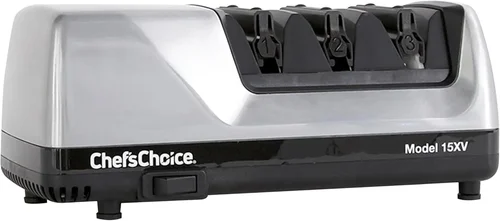
Why it’s bad: Opting for the cheapest sharpener might save money upfront, but low-cost models often use inferior abrasives, lack angle control, and can create uneven edges that damage knives over time. A $40 sharpener may seem like a bargain until it ruins a $200 chef’s knife.
What to do instead: Align your purchase with your knife collection’s value and usage. If you own quality cutlery, invest in a sharpener that preserves its integrity—even if it costs more.
❌ Mistake: Ignoring Knife Type Compatibility
Why it’s bad: Not all sharpeners handle serrated, ceramic, or Japanese-style knives well. Using the wrong system can strip serrations, crack ceramic blades, or create overly aggressive edges on delicate Japanese steel.
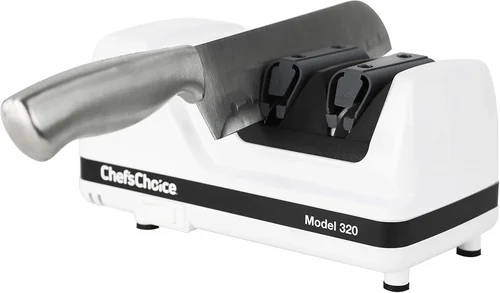
What to do instead: Check manufacturer specs before buying. Chef’sChoice offers dedicated slots for serrated knives; Work Sharp requires manual technique adjustments. When in doubt, choose a model with multiple stages or adjustable angles.
❌ Mistake: Overlooking Maintenance Requirements
Why it’s bad: Some sharpeners need frequent belt changes, cleaning, or calibration. Neglecting maintenance leads to poor performance and shortened lifespan.
What to do instead: Factor in ongoing costs and effort. Chef’sChoice diamond disks last years; Work Sharp belts need replacement every 6–12 months with regular use. Choose based on your willingness to maintain the tool.
❌ Mistake: Assuming All Electric Sharpeners Are Equal
Why it’s bad: Electric doesn’t automatically mean effective. Some budget models use dull abrasives or inconsistent guides, producing mediocre results compared to manual whetstones.
What to do instead: Read expert and user reviews. Look for mentions of edge consistency, noise level, and ease of use. A well-reviewed $100 sharpener often outperforms a poorly designed $150 unit.
❌ Mistake: Buying Without Considering Long-Term Use
Why it’s bad: Your needs may evolve. A kitchen-only sharpener won’t help if you later take up hunting or woodworking.
What to do instead: Think ahead. If you anticipate diversifying your tool collection, consider a versatile system like Work Sharp’s modular platform, even if it’s overkill today.
❌ Mistake: Skipping the Warranty Check
Why it’s bad: Electronics can fail. Without a solid warranty, a malfunctioning motor or broken guide could leave you with a paperweight.
What to do instead: Always verify warranty length and coverage. Chef’sChoice’s 3-year policy offers peace of mind; Work Sharp’s 1-year plan may warrant extra caution or third-party protection.
Budget Guidelines: How Much Should You Spend?
- Entry-Level ($50–$80): Suitable for occasional use with basic kitchen knives. Expect limited angle options, shorter lifespans, and less precision. Chef’sChoice Model 4643 fits here—simple, reliable, but not for heavy-duty tasks.
- Mid-Range ($80–$150): The sweet spot for most home users. Models like Chef’sChoice 1520 and Work Sharp Ken Onion Compact deliver excellent results, durability, and useful features without breaking the bank.
- Premium ($150–$250): Ideal for enthusiasts, frequent cooks, or owners of high-end knives. These sharpeners offer advanced angle control, multi-stage systems, and superior edge refinement. Chef’sChoice Trizor XV and Work Sharp Ken Onion Full Kit fall here.
- Luxury ($250+): Reserved for professionals, collectors, or those with extensive tool collections. Expect industrial-grade motors, full customization, and accessories for non-knife items. Work Sharp’s Tool Grinder Attachment exemplifies this tier.
Expert Tips for Getting the Best Deal
- Shop during holiday sales: Black Friday, Cyber Monday, and Prime Day often feature 20–30% discounts on both brands. Chef’sChoice deals appear at kitchen retailers; Work Sharp pops up at outdoor outlets.
- Buy directly from manufacturer websites: Work Sharp and Chef’sChoice occasionally offer exclusive bundles, extended warranties, or free shipping not available elsewhere.
- Check refurbished or open-box options: Amazon Renewed, Best Buy Outlet, and manufacturer-certified refurbished units can save 15–25% with full warranty coverage.
- Read the fine print on returns: Ensure you can test the sharpener risk-free. Some retailers charge restocking fees for electronics.
- Watch for bundle deals: Work Sharp often sells sharpeners with extra belts or guides; Chef’sChoice sometimes includes knife storage cases.
- Join brand newsletters: Both companies send promo codes to subscribers—perfect for first-time buyers.
- Consider long-term value: A $130 sharpener that lasts 10 years costs less per use than a $70 model that fails in 2.

Frequently Asked Questions
Q: Can I sharpen Japanese knives with these systems?
A: Yes, but with caveats. Chef’sChoice models like the 1520 and Trizor XV have preset 15° angles ideal for Japanese blades. Work Sharp requires manual angle adjustment—set it to 15° per side for best results. Avoid aggressive belts on high-carbon Japanese steel to prevent overheating.
Q: Will these sharpeners work on serrated knives?
A: Chef’sChoice includes a dedicated serrated knife slot on most models. Work Sharp can handle serrations manually by carefully following the existing edge profile, but it’s trickier and not recommended for beginners.
Q: How often should I sharpen my knives?
A: It depends on use. Home cooks may need sharpening every 3–6 months; professionals weekly. Use a sharpness test (e.g., paper slice) to gauge need. Regular honing with a steel extends intervals.
Q: Do electric sharpeners remove too much metal?
A: Aggressive systems like Work Sharp can if misused. Chef’sChoice is gentler, especially in “re-sharpening” mode. Always follow manufacturer guidelines and avoid excessive pressure.
Q: Can I use Work Sharp for tools other than knives?
A: Absolutely. With optional attachments, it sharpens axes, chisels, plane blades, and even garden shears. Chef’sChoice is strictly for knives.
Q: Are these sharpeners noisy?
A: Chef’sChoice is very quiet—comparable to a food processor. Work Sharp produces a noticeable motor and belt sound, more akin to a small sander.
Q: What’s the difference between diamond and abrasive belt systems?
A: Diamond abrasives (Chef’sChoice) are durable, consistent, and low-maintenance but less aggressive. Belts (Work Sharp) remove material faster and allow grit customization but wear out quicker.
Q: Can beginners use these sharpeners safely?
A: Chef’sChoice is beginner-friendly with guided slots. Work Sharp requires practice to master angle control and pressure. Start with cheaper knives to build confidence.
Q: Do they come with instructions?
A: Yes—both include detailed manuals and online video tutorials. Work Sharp’s YouTube channel is especially helpful for technique demos.
Q: Which brand offers better customer support?
A: Chef’sChoice edges out with longer warranties and responsive service. Work Sharp support is competent but less comprehensive.
Our Final Recommendations
- Best for Budget-Conscious Buyers: Chef’sChoice Model 4643 – Reliable, quiet, and effective for basic kitchen knives under $80.
- Best Overall Value: Chef’sChoice Model 1520 – Combines precision, durability, and ease of use at a fair price ($120–$140).
- Best Premium Option: Chef’sChoice Trizor XV EdgeSelect – Converts edges, polishes, and delivers professional results for serious cooks ($250).
- Best for Beginners: Chef’sChoice 1520 – Foolproof operation with consistent outcomes—no learning curve.
- Best for Advanced Users: Work Sharp Ken Onion Edition Belt Sharpener – Full control over angles and abrasives for custom edge profiles ($130–$150).
- Best for Outdoor & Multi-Tool Use: Work Sharp Ken Onion Edition – Unmatched versatility for knives, axes, and tools beyond the kitchen.
Conclusion: Making the Right Choice
Choosing between Work Sharp and Chef’sChoice ultimately comes down to your priorities. If your focus is kitchen knives—and you value simplicity, quiet operation, and consistent results—Chef’sChoice is the clear winner. Its engineered precision ensures your blades stay sharp with minimal effort, making it ideal for daily cooking routines. On the other hand, if you need a workhorse that handles everything from chef’s knives to hatchets, Work Sharp’s modular, belt-driven system offers unparalleled flexibility for outdoor adventurers, craftsmen, and multi-tool households.
Neither brand is universally “better”—they’re better for different people. Assess your knife collection, sharpening frequency, space constraints, and willingness to learn. Read reviews, watch demo videos, and don’t hesitate to start mid-range; it’s where most users find the perfect balance of performance and value. Remember: a great sharpener doesn’t just save time—it protects your investment in quality cutlery and elevates every slice, chop, and dice.
Now that you’re armed with expert insights, take the next step. Compare your top contenders side by side, check current prices, and choose the sharpener that fits your life—not the other way around. Your knives (and your meals) will thank you.