
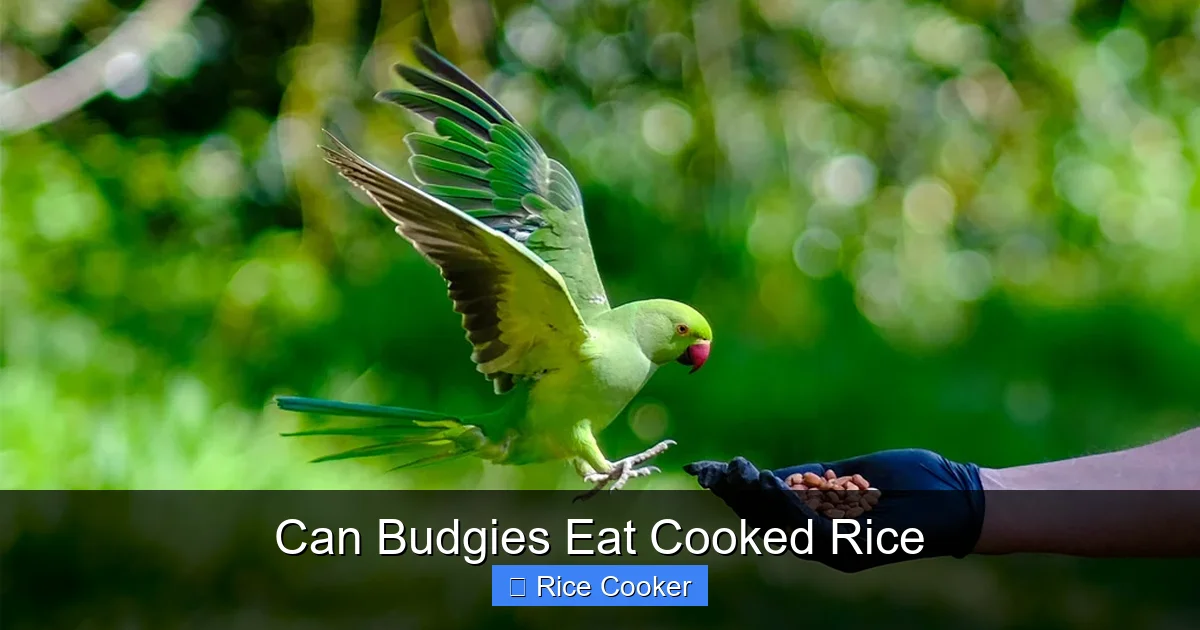
Yes, budgies can eat cooked rice—but only plain, unseasoned, and properly prepared. Cooked rice is not toxic to budgies and can be a safe occasional treat when offered in small amounts. However, it lacks essential nutrients and should never replace their main diet of high-quality pellets and fresh vegetables. Always serve rice cooled and free from salt, oil, or spices to avoid digestive upset. Think of it as an occasional snack, not a meal.
Key Takeaways
- Cooked rice is non-toxic to budgies: Plain, well-cooked rice poses no immediate danger and can be safely consumed in moderation.
- No seasoning or additives: Never feed rice with salt, butter, garlic, or spices—these can be harmful to your budgie’s sensitive digestive system.
- Small portions are key: Offer rice as an occasional treat, not a regular food item, due to its low nutritional value.
- Proper preparation matters: Rice should be boiled without seasonings and allowed to cool before serving to prevent burns or choking.
- Watch for digestive issues: If your budgie eats rice and shows signs of discomfort like diarrhea or lethargy, stop feeding it and consult an avian vet.
- Rice is not a complete diet: While safe, rice alone won’t meet your budgie’s dietary needs—stick to pellets, seeds, fruits, and veggies as the foundation.
- Alternative healthy treats: Consider offering cooked quinoa, millet, or finely chopped leafy greens instead of rice for more balanced nutrition.
📑 Table of Contents
- Introduction: A Common Question for Budgie Owners
- Understanding Budgie Nutrition: Why Food Matters
- Is Cooked Rice Safe for Budgies?
- Nutritional Value of Cooked Rice: What’s in It?
- How to Safely Feed Cooked Rice to Your Budgie
- Common Mistakes to Avoid
- Healthier Alternatives to Cooked Rice
- Signs Your Budgie Might Be Eating Too Much Rice
- The Bottom Line: Is Cooked Rice Worth It?
Introduction: A Common Question for Budgie Owners
If you’re a proud budgie parent, chances are you’ve found yourself scrolling through pet forums or asking friends, “Can budgies eat cooked rice?” It’s a simple question that hides a deeper curiosity—about what’s safe, what’s nourishing, and how to keep your little birdie happy and healthy. After all, budgies are intelligent, social creatures who thrive on variety, and their owners love experimenting with new foods to keep meals interesting.
Rice is a pantry staple in many households, so it makes sense that someone would wonder if sharing a tiny portion with their pet bird is okay. The short answer? Yes, but with important caveats. Cooked rice isn’t toxic to budgies, but it’s not exactly a superfood either. In this article, we’ll dive deep into everything you need to know about feeding cooked rice to your budgie—from safety and nutrition to preparation tips and healthier alternatives. Whether you’re preparing a homemade treat or cleaning up after a spill, you’ll want to know how to do it responsibly.
Understanding Budgie Nutrition: Why Food Matters
Visual guide about Can Budgies Eat Cooked Rice
Image source: vetadvises.com
Before we get into the specifics of cooked rice, let’s talk about why nutrition is so important for budgies. These tiny parakeets have fast metabolisms and high energy needs. Every bite they take plays a role in their overall health—affecting feather quality, immune function, and even mood.
A balanced diet for a budgie should include:
- Pellets: High-quality seed-based or pellet mixes should make up 60–70% of their daily intake. These are scientifically formulated to provide essential vitamins and minerals.
- Fresh vegetables: Leafy greens like kale, spinach, and endive offer fiber and vitamins A and K. Offer these daily in small amounts.
- Occasional fruits: Berries, apples, and melons can be given as treats—no more than a few times a week due to sugar content.
- Protein sources: Cooked legumes, eggs (scrambled), or small pieces of tofu can support muscle development.
With this in mind, you can see why rice, while safe, doesn’t belong in the “must-eat-daily” category. It’s mostly starch and lacks protein, fat, and key micronutrients. But that doesn’t mean it has no place in your budgie’s life—just like humans, birds enjoy variety and occasional indulgences.
Is Cooked Rice Safe for Budgies?
Let’s cut to the chase: yes, plain cooked rice is not poisonous to budgies. Unlike some foods such as avocado, chocolate, or onions—which are outright toxic—rice falls into the “safe but not ideal” category. The human body and a budgie’s body process carbohydrates differently, but cooked grains like rice are generally well-tolerated when introduced properly.
However, safety depends entirely on how the rice is prepared. Raw rice, especially uncooked or undercooked rice, can swell in a budgie’s digestive tract and cause blockages—so always ensure it’s fully cooked. Also, avoid any rice that’s been seasoned, fried, or mixed with sauces. Salt, garlic, onion, and excessive oils can lead to gastrointestinal distress, dehydration, or even liver damage in birds.
When served correctly, cooked rice can act like a neutral base—similar to what many commercial bird foods use. It’s bland, easy to digest, and can even help absorb excess moisture if your budgie has had too much watery fruit. Still, it’s best used sparingly.
What About Brown Rice vs. White Rice?
Both types are acceptable, though brown rice offers slightly more fiber and nutrients due to its bran layer. That said, the difference isn’t significant enough to make one clearly superior for budgies. Just remember: whether white or brown, it must be plain and cooked without additives.
How Much Is Too Much?
A general rule of thumb is to offer cooked rice no more than once or twice a month, and only in very small quantities—think half a teaspoon or less per serving. Overfeeding rice can displace more nutritious foods and lead to imbalances. Your budgie’s primary diet should always come from proven staples like pellets and fresh produce.
Nutritional Value of Cooked Rice: What’s in It?
To understand why rice isn’t a cornerstone of a budgie’s diet, let’s break down its nutritional profile. A single gram of cooked white rice contains approximately:
- Calories: ~1–2 kcal
- Carbohydrates: ~28 grams
- Protein: <1 gram
- Fat: Negligible
- Fiber: ~0.4 grams
Compared to a budgie’s natural foraging diet—which includes seeds, nectar, insects, and plant matter—rice is essentially empty calories. While it provides quick energy, it doesn’t support long-term health goals like feather growth, egg production, or immune resilience.
That said, rice does contain trace amounts of B vitamins and minerals like phosphorus and magnesium. But again, these are minimal and better obtained from whole grains like millet or quinoa, or from fresh vegetables.
Why Budgies Need More Than Just Carbs
Budgies require a delicate balance of macronutrients and micronutrients. For example:
- Calcium: Essential for strong bones and egg development. Found in cuttlebone, dark leafy greens, and calcium supplements.
- Protein: Crucial for tissue repair and feather regrowth. Sources include cooked beans, eggs, and lean meats (in moderation).
- Omega-3 fatty acids: Support skin and feather health. Can be supplemented with flaxseed or fish oil (vet-approved dosage).
Rice simply doesn’t contribute meaningfully to these needs. It’s not that it’s bad—it’s just not enough.
How to Safely Feed Cooked Rice to Your Budgie
Even though cooked rice is safe, preparation and presentation matter. Here’s how to do it right:
Step 1: Cook It Plain
Boil rice in water—no salt, no butter, no herbs. Rinse cooked rice briefly if using instant or pre-seasoned varieties to remove excess sodium.
Step 2: Cool Completely
Hot food can burn a budgie’s mouth or crop. Let the rice sit until it’s lukewarm or room temperature.
Step 3: Serve Small Portions
Use tweezers or your fingers to offer a tiny piece (about the size of a pea). Observe your budgie’s reaction—do they nibble curiously or show disinterest?
Step 4: Clean Up Promptly
Remove uneaten rice within 30 minutes to prevent mold or bacterial growth, which can harm your bird’s respiratory system.
Step 5: Watch for Reactions
After feeding, monitor your budgie for 24 hours. Signs of digestive upset include soft droppings, lethargy, or reduced appetite. If any symptoms appear, stop feeding rice and contact your avian veterinarian.
Common Mistakes to Avoid
Many budgie owners accidentally feed rice incorrectly without realizing it. Here are some frequent errors:
- Using leftover restaurant rice: Often contains garlic, onion, or heavy sauces. Never share table scraps!
- Offering rice with gravy or sauce: Even a little bit can be too salty or greasy for a small bird.
- Mixing rice with other unsafe foods: Combining rice with chocolate chips or nuts defeats the purpose—both are toxic.
- Assuming all grains are equal: Corn, oats, barley, and rice each have different risks and benefits. Stick to proven safe options.
Another mistake is thinking that because rice is safe, it’s beneficial. Remember: safety ≠ nutrition. Just because something won’t kill your budgie doesn’t mean it’s good for them.
Healthier Alternatives to Cooked Rice
If you’re looking for nutritious, engaging treats, there are far better options than rice. Here are some top picks:
Cooked Quinoa
Packed with complete proteins and iron, quinoa is easier to digest than rice and more filling. Cook it plain and cool it before serving.
Millet Sprays
These are a favorite among budgies. Hang millet sprays in the cage for mental stimulation and physical activity.
Steamed Vegetables
Try broccoli, carrots, or zucchini—steamed until tender. They’re rich in vitamins and hydrating.
Plain Oatmeal (Unsweetened)
Avoid sugary versions. Plain oats can be a tasty, grain-based treat.
Small Pieces of Cooked Egg
High in protein and easy to digest. Scramble lightly and chop finely.
Fruit Chunks (in Moderation)
Apples (without seeds), blueberries, or papaya make sweet, vitamin-rich snacks—but limit to once or twice a week.
By rotating these foods, you’ll keep your budgie engaged and nourished.
Signs Your Budgie Might Be Eating Too Much Rice
While rare, over-reliance on rice (or any single food) can signal nutritional gaps. Look out for:
- Dull or brittle feathers
- Weight loss or gain
- Lethargy or decreased vocalization
- Dry skin or beak abnormalities
- Egg-binding in females (a serious condition)
If you notice any of these, consult a vet and reassess your bird’s diet. A healthy budgie should have bright eyes, smooth feathers, and active behavior.
The Bottom Line: Is Cooked Rice Worth It?
So, can budgies eat cooked rice? Absolutely—but only as an occasional novelty, not a staple. Think of it like giving your dog a piece of plain toast once in a while. It won’t hurt them, and they might enjoy the texture, but it’s not part of their core nutritional plan.
The real key to a happy, healthy budgie lies in consistency, variety, and informed choices. Prioritize high-quality pellets, daily fresh vegetables, and safe treats like millet or steamed greens. Use cooked rice sparingly, and always prepare it with care.
And remember—your bird looks to you for guidance. When you offer food thoughtfully, you build trust and strengthen your bond. So next time rice ends up on the floor, you’ll know exactly how to handle it.
Frequently Asked Questions
Can budgies eat uncooked rice?
No, uncooked rice is dangerous for budgies because it can expand in their digestive system and cause blockages. Always serve fully cooked, cooled rice only.
Is brown rice better than white rice for budgies?
Brown rice has slightly more fiber and nutrients, but both types are safe when plain and cooked without seasonings. The difference is minor for birds.
How often can I feed my budgie cooked rice?
Limit rice to once every two weeks at most, and only in tiny portions. It should never replace their main diet of pellets and fresh foods.
What happens if my budgie eats seasoned rice?
Seasoned rice with salt, garlic, onion, or oil can cause digestive upset, dehydration, or poisoning. If your budgie consumes it, watch for symptoms and contact a vet.
Can cooked rice help with digestion?
Yes, plain cooked rice can act like a mild binding agent if your budgie has had too much watery food. But it’s not a treatment—consult a vet for persistent issues.
Are there grains that are unsafe for budgies?
Yes—avoid raw beans, avocado, chocolate, caffeine, and highly processed human foods. Stick to plain, well-cooked grains like rice, quinoa, or millet.