
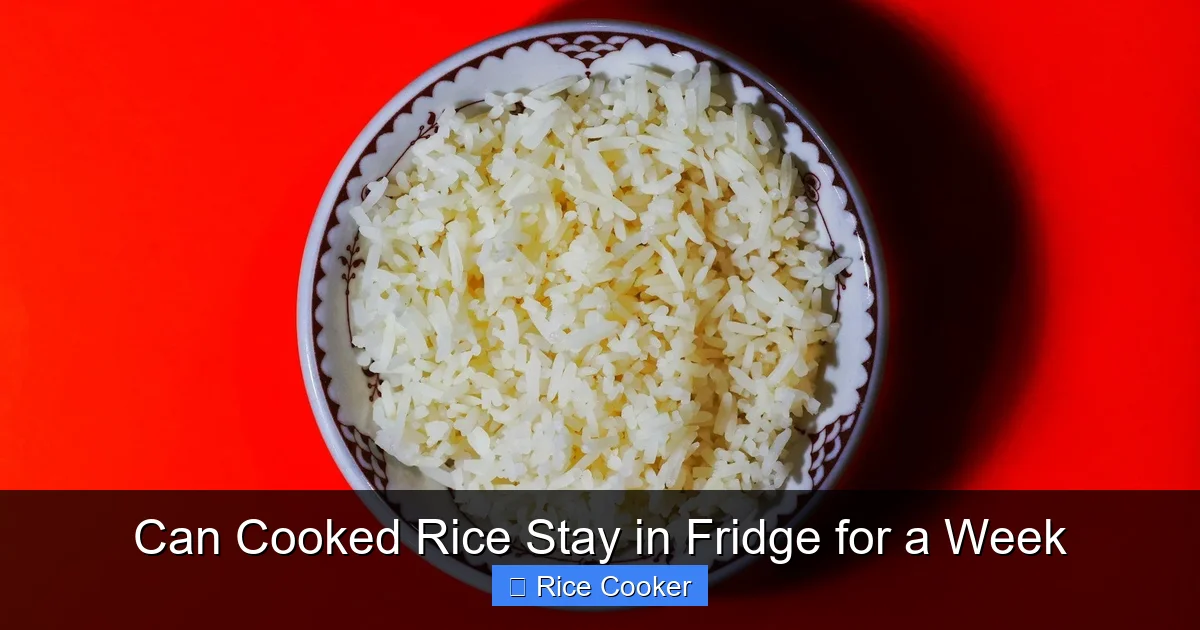
Yes, cooked rice can safely stay in the fridge for up to 5 days, but not a full week. Storing rice beyond that increases the risk of harmful bacteria like Bacillus cereus, which thrives in improperly cooled rice. To keep your rice fresh and safe, cool it quickly, store it in shallow containers, and reheat thoroughly. A good rice cooker makes reheating easy and consistent.
Key Takeaways
- Safe Refrigeration Window: Cooked rice should not be stored in the fridge for more than 5 days. Beyond that, bacterial growth becomes dangerous.
- Proper Cooling is Crucial: Don’t leave rice at room temperature for more than 2 hours. Use ice baths or shallow containers to speed up cooling.
- Use Airtight Containers: Store rice in sealed, airtight containers to prevent odor absorption and moisture loss.
- Reheating Matters: Always reheat rice to at least 165°F (74°C) to kill potential bacteria. A rice cooker with reheat mode makes this easy.
- Watch for Signs of Spoilage: If rice smells off, feels slimy, or has mold, discard it immediately—even if it looks fine.
- Freezing Extends Life: For longer storage, freeze rice for up to 6 months. Thaw and reheat properly when ready to eat.
- Rice Cooker Helps: Modern rice cookers often include a warming or reheat function, helping maintain safe temperatures without overcooking.
📑 Table of Contents
- Can Cooked Rice Stay in Fridge for a Week? The Truth About Leftover Rice Safety
- Understanding Food Safety Risks in Cooked Rice
- How Long Can Cooked Rice Actually Last in the Fridge?
- Best Practices for Storing Cooked Rice Safely
- How to Reheat Cooked Rice Safely
- Can You Freeze Cooked Rice? Yes, and It’s Great for Meal Prep
- Does Cooking Method Affect Rice Shelf Life?
- Common Myths About Rice Storage Debunked
- How Your Rice Cooker Can Save Your Leftovers
- Conclusion: Keep Your Rice Safe and Delicious
Can Cooked Rice Stay in Fridge for a Week? The Truth About Leftover Rice Safety
You just finished a delicious meal of fried rice, biryani, or plain steamed rice, and you’re left with a generous portion. Instead of tossing it out, you decide to save it for tomorrow—or maybe even the rest of the week. But then comes the big question: Can cooked rice stay in the fridge for a week?
Many people assume that as long as rice is refrigerated, it’s perfectly safe to eat. But the truth is more nuanced. While refrigeration slows bacterial growth, it doesn’t stop it completely. Certain bacteria, like Bacillus cereus, can survive in refrigerated conditions and produce toxins that cause food poisoning—even after reheating.
In this guide, we’ll break down everything you need to know about storing cooked rice safely, how long it lasts, signs of spoilage, and how your rice cooker can help keep your leftovers tasty and safe. Whether you’re meal prepping, saving dinner for later, or just curious about food safety, this article will give you clear, practical answers.
Understanding Food Safety Risks in Cooked Rice
Cooked rice may seem harmless, but it hides a sneaky danger under the surface. The problem lies in a bacterium called Bacillus cereus, which naturally lives in soil and can cling to rice grains before cooking. When rice is cooked, the bacteria die—but their spores survive. These spores can regrow into active bacteria if the rice is left sitting at room temperature for too long.

Visual guide about Can Cooked Rice Stay in Fridge for a Week
Image source: realsimple.com
The Danger Zone: Room Temperature Storage
Most people don’t realize that leaving cooked rice out on the counter for just a few hours is risky. The “danger zone” for food is between 40°F and 140°F (4°C to 60°C), where bacteria multiply fastest. If you let rice sit in this range for more than 2 hours (or 1 hour if it’s hot outside), you’re inviting trouble.
Even if you refrigerate the rice within that window, improper cooling can still allow bacteria to grow. That’s why fast, safe cooling is essential.
How Bacteria Behave in the Fridge
Once in the refrigerator, most bacteria are slowed down, but Bacillus cereus is stubborn. It can continue to reproduce in cold environments, especially if the rice was contaminated earlier. The toxins it produces aren’t destroyed by normal reheating, meaning you could eat rice that looks and smells fine but still make you sick.
This is why experts recommend not keeping cooked rice in the fridge for more than 5 days.
How Long Can Cooked Rice Actually Last in the Fridge?
The short answer: No, cooked rice should not stay in the fridge for a full week. The USDA and other food safety organizations recommend using cooked rice within 5 days of preparation.
The Science Behind the 5-Day Rule
After cooking, rice begins to lose moisture and nutrients. At the same time, residual starches can promote bacterial growth. Within 5 days, even refrigerated rice reaches a point where bacterial activity increases enough to pose a health risk.
Studies show that while refrigeration significantly extends shelf life, it doesn’t eliminate all risks after 5–7 days. The texture and taste may also degrade, making old rice less appealing even if it’s technically still edible.
Signs Your Rice Has Gone Bad
Trust your senses. If your rice shows any of these signs, throw it away:
- Off smell: Sour, rancid, or ammonia-like odors.
- Slimy texture: Gooey or sticky feel—unlike normal cooked rice.
- Mold: Visible spots, fuzz, or discoloration.
- Unusual taste: Bitter, metallic, or strange flavors.
Even if the rice passes the smell and touch test, err on the side of caution if it’s been in the fridge for over 5 days.
Best Practices for Storing Cooked Rice Safely
To maximize freshness and minimize risk, follow these storage guidelines:
Cool Quickly, Then Refrigerate
Never put hot rice directly into the fridge. This raises the internal temperature and affects other foods. Instead:
- Spread rice in a thin layer on a baking sheet or in shallow containers.
- Place containers in an ice bath for 15–20 minutes to speed cooling.
- Refrigerate once cooled to below 40°F (4°C).
Use Airtight Containers
Transfer cooled rice to clean, airtight containers or resealable plastic bags. This prevents freezer burn (if freezing), keeps out odors, and maintains moisture.
Label and Date Everything
Write the date on the container so you know exactly when it was made. This helps you track freshness and avoid confusion later.
Portion Control Helps
Store smaller portions rather than one big batch. This way, you only reheat what you plan to eat, reducing waste and exposure to air and bacteria.
How to Reheat Cooked Rice Safely
Reheating is where many people go wrong. Simply microwaving rice without checking the temperature can leave cold spots where bacteria survive. Here’s how to do it right:
Microwave Method
- Place rice in a microwave-safe dish.
- Add a tablespoon of water to prevent drying.
- Cover with a damp paper towel to retain steam.
- Heat in 30-second intervals until steaming hot throughout.
- Let stand for 1 minute before eating.
Stovetop Reheating
For even heat, reheat rice in a skillet over medium-low heat. Stir frequently and add a splash of water or broth to restore moisture. Cover to trap steam.
Using a Rice Cooker
This is where your rice cooker shines. Many modern models have a “Keep Warm” or “Reheat” mode that gently warms rice without overcooking it. Simply place the container in the cooker, select the reheat function, and wait. This method ensures even heating and helps maintain texture.
A rice cooker also keeps rice at a safe temperature (around 140°F) for extended periods, reducing the chance of bacterial regrowth—especially useful for buffets or potlucks.
Can You Freeze Cooked Rice? Yes, and It’s Great for Meal Prep
If you want to extend the life of your rice beyond 5 days, freezing is your best bet. Properly frozen rice can last up to 6 months without significant quality loss.
Steps to Freeze Rice Safely
- Cool rice completely.
- Divide into portion-sized amounts.
- Place in airtight freezer bags or containers.
- Remove as much air as possible to prevent freezer burn.
- Label with the date.
- Store in the freezer at 0°F (-18°C) or lower.
- Thaw in the fridge overnight or reheat directly from frozen (adding a bit of water first).
Tips for Frozen Rice
- Flavor is best when used within 2–3 months.
- Mix frozen rice with fresh ingredients (like vegetables or sauces) to mask texture changes.
- Use in soups, casseroles, or stir-fries where texture isn’t critical.
Does Cooking Method Affect Rice Shelf Life?
Absolutely. How you cook rice influences how long it stays safe and fresh.
Plain Boiled Rice vs. Fried or Curried Rice
Plain boiled rice dries out faster and has fewer fats or oils, which can spoil quicker. Fried or curried rice, with added oil, spices, and proteins, may last slightly longer due to preservative effects of salt, acidity, and fat.
Impact of Ingredients
Adding dairy, eggs, or creamy sauces drastically reduces shelf life—often to just 2–3 days. Vegetables also introduce moisture and microbes, speeding up spoilage.
So while plain rice can last 5 days, a creamy rice pudding or egg fried rice should be eaten sooner.
Restaurant-Style vs. Home-Cooked Rice
Restaurants often cook large batches and keep rice at warm temperatures all day—a major food safety violation. At home, controlling portion size and cooling speed gives you far better results.
Common Myths About Rice Storage Debunked
Let’s clear up some misconceptions:
- Myth: “Rice can last forever if refrigerated.”
Fact: No food lasts forever in the fridge. Rice degrades in texture and safety after 5 days. - Myth: “If I boil rice again, it kills all bacteria.”
Fact: Boiling won’t destroy toxins produced by Bacillus cereus. Only high heat during initial cooking kills spores. - Myth: “Leftover rice is always safe to eat.”
Fact: Visual and olfactory cues are key. If it smells bad, don’t eat it—regardless of how long it’s been stored. - Myth: “Freezing ruins rice.”
Fact: Freezing preserves rice well if done correctly. Texture may change slightly, but safety and flavor are maintained.
How Your Rice Cooker Can Save Your Leftovers
Your rice cooker isn’t just for cooking. Its reheating and warming functions are game-changers for leftover rice.
Built-In Reheat Functions
Many advanced rice cookers feature a dedicated reheat mode. This gently circulates hot air or steam to warm rice evenly without drying it out. It’s perfect for reviving day-old rice with minimal effort.
Maintaining Safe Temperatures
The “keep warm” setting maintains rice at around 140°F—well above the danger zone but not hot enough to overcook. This is ideal for serving rice at parties or keeping it warm for family meals.
Energy Efficiency
Unlike microwaves, rice cookers use minimal energy to reheat rice. They’re also gentler on texture, preserving the fluffy consistency of fresh rice.
Smart Features
Some smart rice cookers connect to apps, allowing you to schedule reheating or monitor food safety via temperature alerts. These features help prevent overheating or underheating—keeping your rice both safe and delicious.
Conclusion: Keep Your Rice Safe and Delicious
So, can cooked rice stay in the fridge for a week? The honest answer is no—not safely. While refrigeration helps, it only buys you about 5 days before risks increase. Beyond that, even a perfectly stored rice dish can harbor dangerous bacteria.
By following simple steps—cooling quickly, storing in airtight containers, reheating thoroughly, and trusting your senses—you can enjoy leftover rice with confidence. And when you invest in a good rice cooker, you get not just great-tasting rice, but powerful tools for reheating and warming leftovers safely.
Whether you’re meal prepping for the week, packing lunches, or just saving dinner, smart storage habits make all the difference. Remember: when in doubt, throw it out. Better safe than sorry when it comes to food poisoning.
Next time you cook rice, think ahead. Cool it fast, store it right, and use your rice cooker to bring it back to life. Your future self (and your stomach) will thank you.
Frequently Asked Questions
Is it safe to eat rice that’s been in the fridge for 7 days?
No, cooked rice should not be consumed after 5 days in the fridge. After that, the risk of bacterial growth, including Bacillus cereus, increases significantly, even if the rice looks and smells fine.
How do I know if my rice has gone bad?
Signs of spoiled rice include a sour or off smell, slimy texture, visible mold, or unusual discoloration. If any of these are present, discard the rice immediately—do not taste it.
Can I reheat rice more than once?
It’s best to reheat rice only once. Repeated reheating increases the risk of bacterial contamination and can degrade texture and flavor. Always ensure rice reaches 165°F (74°C) during reheating.
Does freezing rice affect its taste?
Freezing doesn’t ruin rice, but it can alter texture slightly after thawing. For best results, use frozen rice within 2–3 months and mix it with sauces or in dishes where texture isn’t critical.
Why does my rice taste weird after a few days?
Old rice may develop off-flavors due to oxidation, moisture loss, or bacterial byproducts. This is common after 5+ days in the fridge. If it tastes odd, it’s safer to throw it out.
Can a rice cooker help keep rice safe?
Yes! Many rice cookers have reheat and keep-warm functions that gently maintain rice at safe temperatures without overcooking. This helps preserve texture and reduces the risk of bacterial regrowth.