
Can I cook quinoa like rice? Absolutely! With the right ratio and technique, you can use your rice cooker to prepare nutritious, fluffy quinoa just like you would with white or brown rice. It’s quick, easy, and requires minimal effort. Whether you’re meal-prepping or making dinner in 15 minutes, this method saves time and ensures perfect results every time.
Key Takeaways
- Yes, you can cook quinoa like rice: Quinoa is a grain-like seed that cooks similarly to rice, making it easy to prepare in a rice cooker.
- Use the right water-to-quinoa ratio: The ideal ratio is 2:1 (cups of water to cups of quinoa) for fluffy results.
- Rinse quinoa before cooking: Rinsing removes bitter saponins and prevents clumping during cooking.
- Soaking is optional but helpful: Soaking quinoa for 15–30 minutes can reduce cooking time and improve texture.
- A rice cooker makes it foolproof: No constant stirring or monitoring needed—just add ingredients and press start.
- Quinoa is a complete protein: Unlike most grains, quinoa contains all nine essential amino acids, making it a superfood.
- Great for meal prep and versatility: Use cooked quinoa in salads, bowls, soups, or even desserts.
📑 Table of Contents
- Can I Cook Quinoa Like Rice? The Simple Answer Is Yes!
- The Basics: What Makes Quinoa Different from Rice?
- Why Use a Rice Cooker for Quinoa?
- How to Cook Quinoa Like Rice: Step-by-Step Guide
- Tips for Perfect Quinoa Every Single Time
- Quinoa vs. Rice: Nutritional Comparison
- Creative Ways to Use Cooked Quinoa
- Common Mistakes People Make (And How to Avoid Them)
- Frequently Asked Questions About Cooking Quinoa Like Rice
Can I Cook Quinoa Like Rice? The Simple Answer Is Yes!
Have you ever stood at your kitchen counter, staring at a bag of quinoa, wondering how on earth to cook it? You know you want fluffy, light grains—like rice—but every recipe seems to require extra steps. Don’t worry. The good news is: yes, you can absolutely cook quinoa like rice. In fact, using a rice cooker is one of the easiest, most foolproof methods available. No fancy tools. No guesswork. Just a few simple ingredients and your trusty appliance.
Quinoa has gained massive popularity over the past decade thanks to its impressive nutritional profile and versatility. But despite being called a “superfood,” many people still treat it like an exotic mystery ingredient. That ends today. Whether you’re new to quinoa or just looking for a faster way to prepare it, learning how to cook quinoa like rice opens up a world of easy, healthy meals. From breakfast porridge to dinner bowls, quinoa fits into nearly any diet. And with a rice cooker, you don’t need to stand over a pot or worry about burning it. Just add water, press start, and walk away. Sounds too good to be true? Let’s break it down.
The Basics: What Makes Quinoa Different from Rice?
Before we dive into the how-to, let’s talk about what makes quinoa special—and why it behaves differently (but not too differently) from regular rice.
Quinoa (pronounced “keen-wah”) is technically a seed from the Chenopodium plant, native to the Andes. It’s often grouped with grains because of how it’s used in cooking, but botanically, it’s more closely related to spinach and beets. Unlike rice, which comes in long-grain, short-grain, and wild varieties, quinoa is classified by color—red, black, and white being the most common. Each has a slightly different texture and cooking time, but they all work great in a rice cooker.
One key difference between quinoa and rice lies in its structure. Quinoa has a tough outer coating called saponin, which gives it a naturally bitter taste. This is why rinsing quinoa under cold water is essential. Without rinsing, your finished dish might taste soapy or unpleasant. On the other hand, rice doesn’t have this layer, so skipping the rinse step won’t affect flavor.
Another important distinction is protein content. Quinoa is unique among plant foods because it’s a complete protein—meaning it contains all nine essential amino acids your body needs but can’t produce on its own. Rice, by contrast, lacks some of these amino acids. While quinoa isn’t a perfect substitute for meat in terms of protein bioavailability, it’s still a fantastic option for vegetarians, vegans, and anyone looking to diversify their plant-based intake.
Despite these differences, quinoa and rice share similar cooking behaviors. Both absorb liquid, swell as they cook, and become tender when heated. That’s why the same principles that work for cooking rice—like measuring water carefully and using consistent heat—apply perfectly to quinoa.
Why Use a Rice Cooker for Quinoa?
You might be thinking: Can I just boil quinoa on the stovetop? Sure, you can. But here’s why a rice cooker is a better choice:
Consistency Every Time
Rice cookers are designed to monitor temperature and moisture automatically. Once the water evaporates, the machine switches to “keep warm” mode, preventing overcooking or drying out. With a stovetop method, you have to watch the pot constantly—especially if you’re distracted while chopping vegetables or answering the doorbell.
Hands-Off Convenience
Add your rinsed quinoa and water, press a button, and forget about it. You can go do laundry, scroll social media, or prep a salad while your quinoa cooks. Most rice cookers take about 15–20 minutes to finish, depending on the type of quinoa.
No Stirring Required
Unlike pasta or oatmeal, quinoa doesn’t need constant stirring. A rice cooker keeps things moving gently without risking splatters or sticking to the bottom.
Energy Efficiency
Rice cookers use less energy than keeping a pot on the stove for extended periods. Plus, many models come with insulated pots that retain heat well after cooking.
Perfect Texture Guaranteed
The gentle, consistent heat of a rice cooker helps achieve evenly cooked, fluffy grains every time—no more mushy clumps or undercooked centers.
Whether you have a basic rice cooker or a high-end model with multiple settings, quinoa adapts beautifully. Just remember to adjust the water slightly based on your desired consistency.
How to Cook Quinoa Like Rice: Step-by-Step Guide
Ready to get started? Follow these simple steps, and you’ll have restaurant-quality quinoa in under 20 minutes.
Gather Your Ingredients and Tools
You’ll need:
– 1 cup uncooked quinoa (any color)
– 2 cups water or broth (for extra flavor)
– Fine-mesh strainer (or cheesecloth)
– Measuring cups
– Rice cooker
Step 1: Rinse the Quinoa Thoroughly
Place the quinoa in a fine-mesh strainer and run it under cool, running water for at least 60 seconds. Swirl the quinoa around with your fingers to help remove the saponins. You’ll notice a film or residue washing off. Discard this water—it’s full of bitterness.
Tip: If you don’t have a fine-mesh strainer, you can use cheesecloth or even coffee filters, though rinsing may take longer.
Step 2: Measure Water Accurately
For fluffy, separate grains, use a 2:1 ratio of water to quinoa. So for 1 cup of quinoa, use 2 cups of liquid. You can stick with plain water, but vegetable or chicken broth adds amazing flavor—especially if you’re meal-prepping for the week.
Step 3: Add Everything to the Rice Cooker Pot
Pour the rinsed quinoa and liquid into the inner pot of your rice cooker. Give it a quick stir to distribute evenly.
Step 4: Close the Lid and Press Start
Secure the lid and turn on your rice cooker. Most will automatically detect the liquid level and begin the cycle. If your model has different settings (like “white rice” or “brown rice”), choose “white rice” since it uses similar timing and heat.
Step 5: Let It Sit After Cooking
Once the cooker switches to “warm,” let the quinoa sit for 5–10 minutes with the lid closed. This allows steam to finish cooking the grains evenly and makes fluffing easier.
Step 6: Fluff and Serve
Open the lid and fluff the quinoa gently with a fork. Break up any clumps and serve immediately. Store leftovers in an airtight container in the fridge for up to 5 days.
Pro Tip: For even creamier quinoa, replace half the water with milk or coconut milk and add a pinch of salt. Great for breakfast or dessert!
Tips for Perfect Quinoa Every Single Time
Even though cooking quinoa in a rice cooker is straightforward, a few small tweaks can elevate your results from “good” to “wow.”
Don’t Skip the Rinse—Seriously
We mentioned this earlier, but it bears repeating. Unrinsed quinoa tastes bitter and leaves a soapy aftertaste. Always rinse until the water runs clear.
Adjust Water Based on Desired Texture
Want softer, chewier quinoa? Increase water slightly (e.g., 2.25 cups per 1 cup quinoa). Craving firm, separate grains? Stick closer to 1.75 cups. Experiment to find your preference.
Try Different Types of Quinoa
White quinoa cooks fastest and has a mild flavor. Red quinoa holds its shape better and has a nuttier taste. Black quinoa is denser and earthier—great in grain bowls. All work well in a rice cooker.
Soak for Faster Cooking (Optional)
Soaking quinoa for 15–30 minutes reduces cooking time by about 5 minutes and improves digestibility. Just drain and rinse again before adding to the cooker.
Add Flavor During Cooking
Toss in a bay leaf, garlic clove, or sprig of thyme while the quinoa cooks. Remove them afterward, or leave in if you prefer subtle seasoning.
Fluff Immediately After Warming Mode
Resist the urge to open the lid too soon. Wait until the “warm” indicator appears, then fluff right away for best texture.
Reheat Properly
Leftover quinoa dries out if microwaved straight from the fridge. Add a splash of water or broth, cover loosely, and microwave in 30-second bursts, stirring between each.
Quinoa vs. Rice: Nutritional Comparison
While both quinoa and rice are excellent sources of carbohydrates, they offer very different nutritional profiles.
Protein Content
Quinoa wins hands down. One cup of cooked quinoa provides about 8 grams of protein—more than most grains. Brown rice offers only about 3 grams per cup. That makes quinoa ideal for athletes, growing kids, or anyone needing extra protein without animal products.
Fiber
Both types provide fiber, but quinoa edges ahead. One cup of cooked quinoa contains roughly 5 grams of fiber, compared to 3.5 grams in brown rice. Higher fiber supports digestion and keeps you feeling full longer.
Micronutrients
Quinoa is rich in magnesium, iron, potassium, and B vitamins. It also contains antioxidants like quercetin and kaempferol, which support immune health. White rice, especially refined versions, loses much of its nutrient content during processing.
Glycemic Index
Brown rice has a lower glycemic index (around 50–55) than white rice (over 70), meaning it causes a slower rise in blood sugar. Quinoa sits even lower, around 53, making it a better choice for diabetics or those managing weight.
Calorie Count
Per cup, cooked quinoa and brown rice are nearly identical in calories—about 220–250 kcal. White rice is slightly lower at around 200 kcal, but it lacks the protein and fiber punch.
Sustainability
Quinoa farming is generally more sustainable than rice, especially in water usage. However, global demand has driven up prices and raised concerns about export restrictions from Bolivia and Peru.
In short: If you’re choosing between quinoa and rice for health reasons, quinoa is the superior option. If you’re watching calories or cost, rice still works—but you miss out on key nutrients.
Creative Ways to Use Cooked Quinoa
Now that you know how to cook quinoa like rice, let’s talk about how to actually eat it.
Breakfast Bowls
Top cooked quinoa with fresh fruit, nuts, seeds, and a drizzle of honey or maple syrup. Add a dollop of Greek yogurt or almond butter for creaminess. Sprinkle cinnamon for warmth.
Meal Prep Power Bowls
Combine quinoa with roasted veggies, grilled chicken, avocado, and tahini dressing. Portion into containers for grab-and-go lunches all week.
Soups and Stews
Stir cooked quinoa into minestrone, chili, or lentil soup. It adds heartiness without heaviness. Quinoa absorbs flavors beautifully.
Salads
Use quinoa as a base for Mediterranean salads with cucumbers, tomatoes, olives, feta, and lemon-oregano vinaigrette. Or try a Tex-Mex version with black beans, corn, lime, and cilantro.
Desserts
Believe it or not, quinoa can be sweet! Blend cooked quinoa into smoothies for added thickness and nutrition. Or mix it into muffin batter for extra protein and fiber.
Burgers and Patties
Mix mashed quinoa with mashed potatoes, breadcrumbs, and spices to make vegan patties. Pan-fry or bake until golden.
Snack Bars
Combine cooled quinoa with dates, almonds, and dark chocolate chips. Press into a pan, chill, and cut into bars for healthy snacks.
The possibilities are endless. Quinoa is neutral enough to pair with bold flavors yet hearty enough to stand alone.
Common Mistakes People Make (And How to Avoid Them)
Even experienced home cooks sometimes struggle with quinoa. Here are the most frequent errors—and how to fix them.
Mistake #1: Not Rinsing Enough
Result: Bitter, soapy taste.
Fix: Rinse until water runs clear. Use a fine-mesh strainer for best results.
Mistake #2: Using Too Much Water
Result: Mushy, glue-like texture.
Fix: Stick to 2:1 ratio. Adjust next time based on your preference.
Mistake #3: Skipping the Resting Period
Result: Unevenly cooked grains.
Fix: Let quinoa sit in the cooker after it switches to warm mode. It finishes cooking internally.
Mistake #4: Overfilling the Rice Cooker
Result: Poor heat distribution and inconsistent results.
Fix: Never exceed the max fill line (usually marked on the inner pot).
Mistake #5: Not Fluffing After Cooking
Result: Clumpy, dense quinoa.
Fix: Always fluff with a fork before serving.
Mistake #6: Storing in Open Containers
Result: Dried-out, stale-tasting leftovers.
Fix: Store in airtight containers and reheat with a splash of liquid.
Mistake #7: Buying Pre-Washed Quinoa
Result: Still bitter!
Fix: Even if labeled “pre-washed,” give it a quick rinse yourself. Better safe than sorry.
Avoid these pitfalls, and you’ll never have bad quinoa again.
Frequently Asked Questions About Cooking Quinoa Like Rice
How much water do I use for quinoa in a rice cooker?
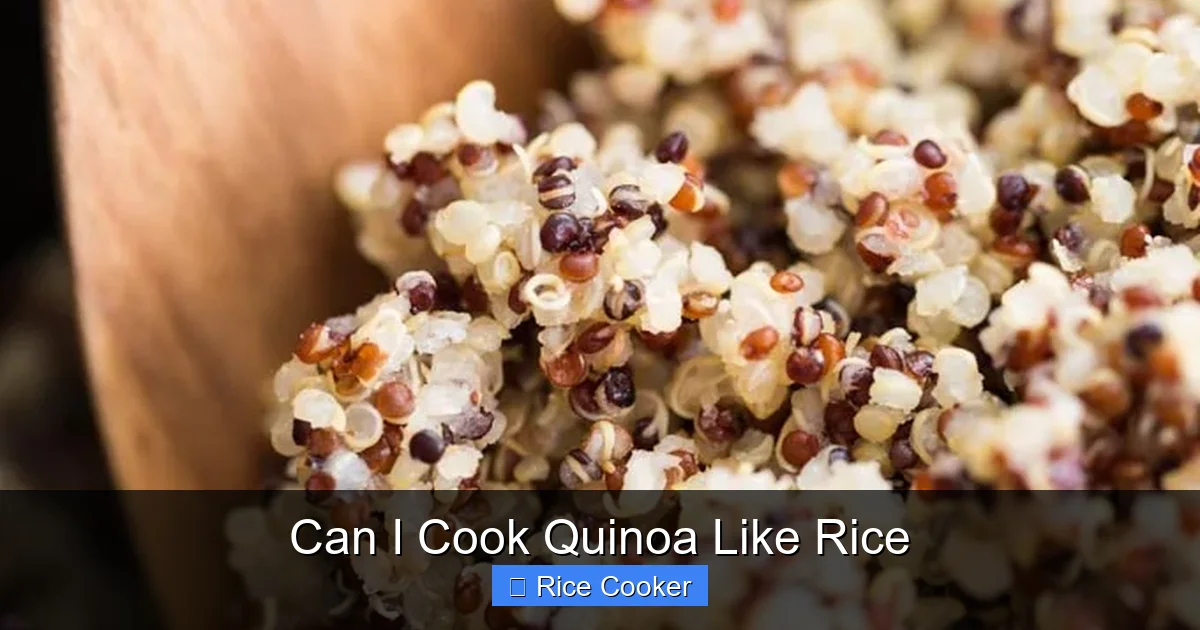
Use 2 cups of water for every 1 cup of quinoa. This 2:1 ratio yields fluffy, separate grains. Adjust slightly up or down depending on whether you prefer softer or firmer texture.
Visual guide about Can I Cook Quinoa Like Rice
Image source: recipeforperfection.com
Can I use broth instead of water?
Absolutely! Vegetable, chicken, or mushroom broth adds rich flavor. Just make sure it’s low-sodium if you’re watching your salt intake.
How long does quinoa take to cook in a rice cooker?
Most rice cookers take 15–20 minutes to cook quinoa. After that, it rests in warming mode for several minutes before you open the lid.
Do I need to soak quinoa before cooking?
Soaking is optional. It can reduce cooking time and improve digestibility, but it’s not required. Simply rinse thoroughly either way.
Can I cook quinoa directly in the dry pot without pre-rinsing?
No. Always rinse quinoa before cooking to remove saponins. Skipping this step leads to bitter, unpleasant-tasting quinoa.
Is quinoa gluten-free?
Yes! Quinoa is naturally gluten-free and safe for people with celiac disease or gluten sensitivity. Just ensure it’s certified gluten-free if you have severe allergies.
Frequently Asked Questions
How much water do I use for quinoa in a rice cooker?
Use 2 cups of water for every 1 cup of quinoa. This 2:1 ratio yields fluffy, separate grains. Adjust slightly up or down depending on whether you prefer softer or firmer texture.
Can I use broth instead of water?
Absolutely! Vegetable, chicken, or mushroom broth adds rich flavor. Just make sure it’s low-sodium if you’re watching your salt intake.
How long does quinoa take to cook in a rice cooker?
Most rice cookers take 15–20 minutes to cook quinoa. After that, it rests in warming mode for several minutes before you open the lid.
Do I need to soak quinoa before cooking?
Soaking is optional. It can reduce cooking time and improve digestibility, but it’s not required. Simply rinse thoroughly either way.
Can I cook quinoa directly in the dry pot without pre-rinsing?
No. Always rinse quinoa before cooking to remove saponins. Skipping this step leads to bitter, unpleasant-tasting quinoa.
Is quinoa gluten-free?
Yes! Quinoa is naturally gluten-free and safe for people with celiac disease or gluten sensitivity. Just ensure it’s certified gluten-free if you have severe allergies.