
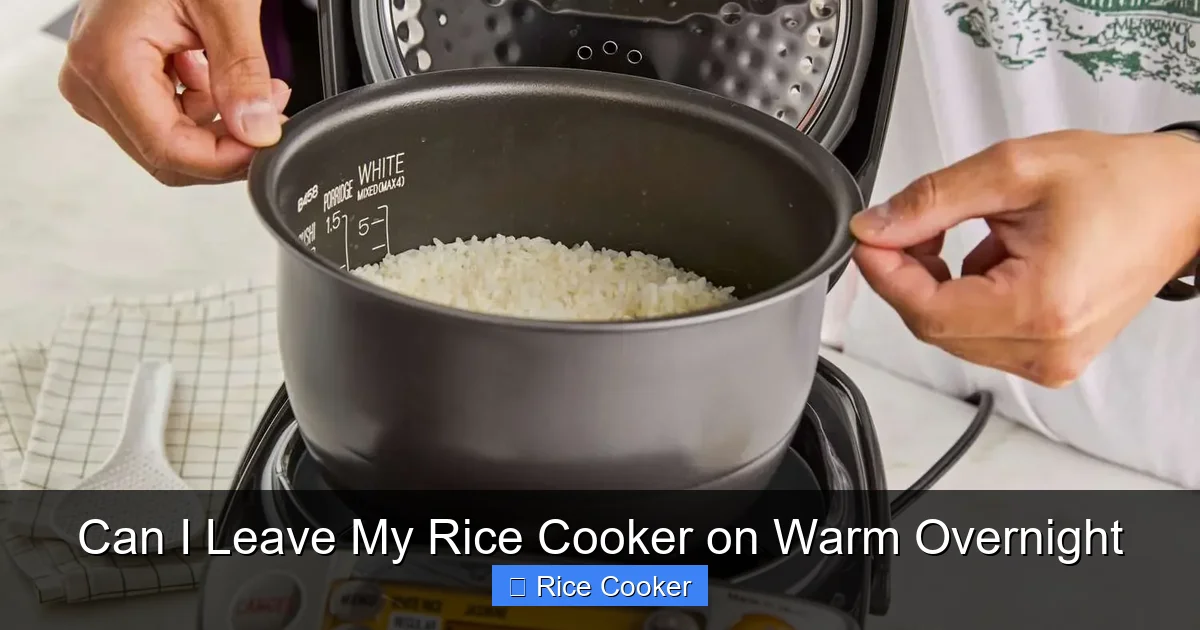
Can you leave your rice cooker on warm overnight? Most modern rice cookers are designed to maintain a safe temperature without overheating. However, safety depends on your model, quality of ingredients, and kitchen environment. Always check your user manual and follow manufacturer guidelines to prevent foodborne illness or electrical hazards.
Have you ever come home to perfectly steamed rice ready to eat, still warm from last night? It’s a small luxury, isn’t it? But behind that convenience lies a common kitchen question: Can I leave my rice cooker on warm overnight? You’re not alone. Many home cooks rely on their rice cookers for quick meals, and the “keep warm” function sounds like a time-saver. Still, safety concerns linger—especially when it comes to food safety, electrical risks, and appliance longevity.
In this article, we’ll dive deep into what happens when you leave your rice cooker on warm overnight, whether it’s safe, and how to do it responsibly. Whether you’re a busy parent, a college student, or someone who just loves having dinner ready when they get home, understanding your rice cooker’s behavior is key. We’ll cover everything from how the “warm” setting actually works to what your appliance is really doing while you sleep.
By the end, you’ll know exactly when it’s okay—and when it’s not—to leave your rice cooker running through the night. Let’s get started.
Key Takeaways
- Modern rice cookers often have automatic shut-off features that prevent overheating, making overnight warmth relatively safe for short periods.
- Staying in “warm” mode doesn’t mean constant heating—it maintains a low, steady temperature (typically 140–170°F) to keep food from spoiling.
- Not all rice cookers are created equal—older models may lack safety sensors and are more likely to overheat if left unattended.
- Rice and other grains can develop bacterial growth if left too long, even in warm mode, especially in humid environments.
- Proper storage matters—use airtight containers and refrigerate within 2 hours to reduce risk if you must store cooked rice.
- Always inspect your appliance before use—check cords, buttons, and inner pots for damage that could pose fire or electrical risks.
- Consider your kitchen setup—if you’re away from home, unplugging the cooker eliminates any chance of malfunction.
Quick Answers to Common Questions
Can I leave my rice cooker on warm overnight if it has a “keep warm” feature?
It can be safe for up to 10–12 hours if the rice was freshly cooked and the appliance is modern and well-maintained. However, food safety experts recommend transferring cooked rice to a sealed container and refrigerating it within 2 hours for maximum safety.
Does leaving rice cooker on warm use a lot of electricity?
No, the “warm” function uses very little power—usually less than 50 watts. It cycles on and off to maintain temperature, so energy consumption remains low even over several hours.
What temperature does the warm setting keep rice at?
The warm setting typically maintains a temperature between 140°F and 170°F (60°C to 77°C), which is above the danger zone for bacterial growth.
Can I leave rice cooker on warm for more than 24 hours?
It’s not recommended. Most manufacturers design the warm function for short-term use (up to 12 hours). Leaving it on longer increases the risk of spoilage and appliance strain.
Should I unplug my rice cooker after cooking?
Yes, especially overnight. Unplugging reduces fire risks, saves energy, and extends the life of your appliance. Modern units have safety features, but removing power is always safer.
📑 Table of Contents
- How Does the “Warm” Setting Actually Work?
- Is It Safe to Leave Your Rice Cooker on Warm Overnight?
- Risks of Leaving Your Rice Cooker on Overnight
- Best Practices for Using the Warm Function Safely
- Alternatives to Leaving Rice Cooker On Overnight
- Signs Your Rice Cooker Might Be Unsafe
- Real-Life Examples and Scenarios
How Does the “Warm” Setting Actually Work?
Before we talk about leaving your rice cooker on overnight, it helps to understand what the “warm” setting is supposed to do. Most rice cookers aren’t designed to reheat food. Instead, once the rice is fully cooked, the appliance switches to a low-power mode to maintain temperature.
The “warm” function typically keeps food between 140°F and 170°F (60°C to 77°C). This range is above the danger zone for bacterial growth (40°F to 140°F), which means food stays safe longer than if it were sitting at room temperature.
But here’s the catch: it doesn’t constantly reheat the rice. Instead, the cooker cycles on and off, using minimal energy to maintain that temperature. Think of it like a thermostat—on for a few minutes, then off for longer. This prevents the rice from drying out or getting soggy, while also conserving energy.
Some advanced models even monitor internal temperature and adjust power automatically. That’s why newer rice cookers are generally safer for short-term holding—but not necessarily for overnight use without caution.
The Science Behind Temperature Control
Rice cookers use thermostats and sensors to regulate heat. When you press the “cook” button, the heating element turns on until the internal temperature reaches boiling point (around 212°F or 100°C). Once the water evaporates and the rice is done, the thermostat detects the drop in moisture and switches to “warm” mode.
In warm mode, the heating element doesn’t go full blast. It pulses briefly to counteract heat loss due to ambient temperature. For example, if the room is cold, the cooker might run for 5 minutes every 20 minutes. In a warm kitchen, it might only cycle for 2 minutes every 30 minutes.
This intermittent heating is crucial. If the cooker stayed on continuously, it would dry out the rice and possibly overheat the container or the unit itself. So, while the rice stays warm, it’s not being actively cooked—just preserved.
What Happens If You Leave It On Too Long?
Even though the “warm” setting is designed for short-term holding (usually 10–12 hours max), leaving rice in the cooker overnight can increase the risk of bacterial growth, especially if the food was already sitting at room temperature before cooking.
For instance, if you added cold rice or broth directly from the fridge and pressed “cook,” the outer layers might stay cooler while the center heats up. Then, when it switches to “warm,” those cooler zones could enter the danger zone (40°F–140°F) where bacteria thrive.
Additionally, moisture from the rice can condense inside the cooker, creating a humid environment ideal for mold or mildew if the unit isn’t cleaned regularly.
Is It Safe to Leave Your Rice Cooker on Warm Overnight?
Visual guide about Can I Leave My Rice Cooker on Warm Overnight
Image source: down-my.img.susercontent.com
So, back to the big question: Can you leave your rice cooker on warm overnight? The short answer is: sometimes. But let’s unpack that.
For most modern electric rice cookers made in the last decade, leaving it on warm for an extended period—like overnight—is usually fine **as long as**:
– The cooker has a reliable auto-shutoff feature.
– The rice was freshly cooked that day.
– The kitchen isn’t extremely hot or humid.
– You don’t plan to store the rice for more than 1–2 days.
However, safety experts—including the U.S. Food and Drug Administration (FDA) and food safety organizations—recommend against keeping cooked rice in any appliance for more than 10–12 hours, even in “warm” mode.
Why? Because no matter how good your rice cooker is, it’s not a refrigerator. Bacteria like *Bacillus cereus*, which causes food poisoning, can grow rapidly in warm, moist environments—even if the temperature stays above 140°F.
When Is It Probably Okay?
Here are scenarios where leaving your rice cooker on warm overnight is likely safe:
– You cooked fresh jasmine rice earlier in the day and switched to “warm” around 6 PM. By morning, it’s been 8–10 hours.
– Your rice cooker has a “24-hour delay timer” and you used it to start cooking at 9 PM.
– You live in a climate-controlled apartment with consistent room temperature.
In these cases, the rice has remained in the safe zone and hasn’t been exposed to contaminants.
When Should You Avoid It?
Avoid leaving rice cooker on warm overnight if:
– You cooked rice with meat, dairy, or eggs—these spoil faster.
– The rice sat uncovered at room temperature for more than 2 hours before cooking.
– Your cooker is old, makes unusual noises, or doesn’t have a clear “warm” indicator.
– You smell something off—like sourness or unusual odors—when you open the lid.
Also, if you’re away from home all night (e.g., working late or traveling), it’s best to unplug the cooker. Power surges or minor malfunctions could pose a fire hazard.
Risks of Leaving Your Rice Cooker on Overnight
Visual guide about Can I Leave My Rice Cooker on Warm Overnight
Image source: m.media-amazon.com
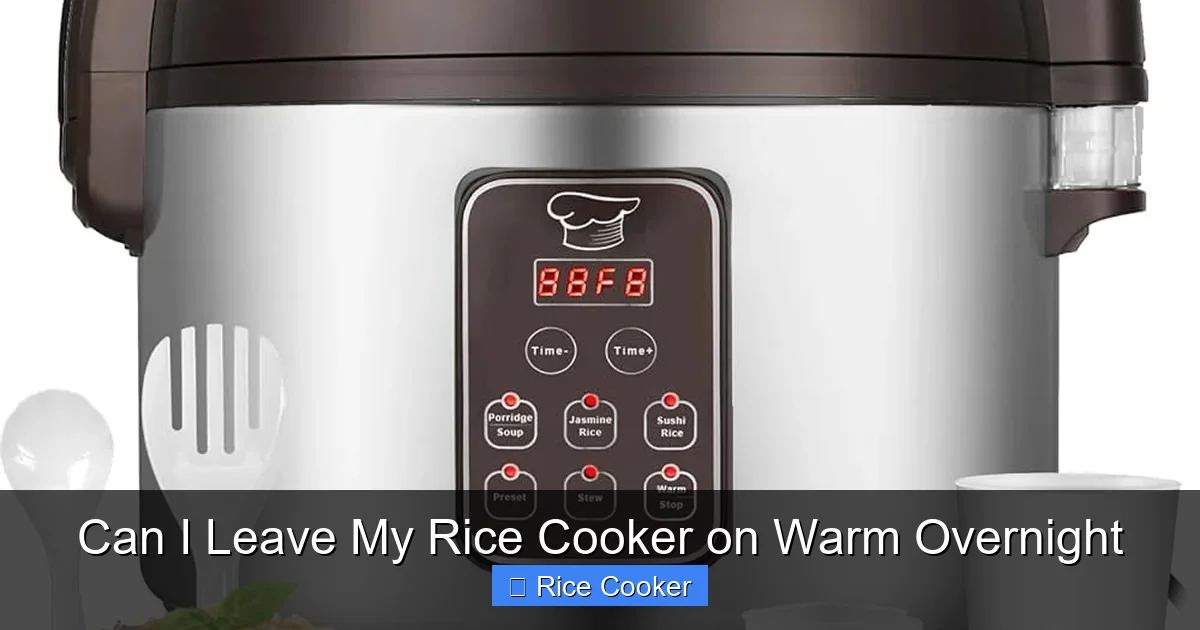
Even with modern technology, there are risks involved. Let’s go over them so you can weigh the pros and cons.
Food Safety Risks
As mentioned, bacterial growth is the biggest concern. While the warm setting avoids the danger zone, it doesn’t eliminate it entirely. If moisture accumulates or the temperature fluctuates (due to a faulty sensor), parts of the rice could cool down.
Additionally, if you reuse leftover rice that’s already been stored in the fridge, placing it back in the cooker increases the risk of cross-contamination.
Appliance Damage and Fire Hazards
Older rice cookers may not have proper thermal cutoffs. If the thermostat fails, the heating element could overheat, warping the inner pot or melting plastic components.
Also, leaving appliances plugged in unnecessarily can lead to energy waste and increase wear on circuits. While rare, electrical faults in damaged cords or outlets can cause fires.
Reduced Lifespan of Your Rice Cooker
Running the warm function nonstop for days stretches the motor and internal wiring. Manufacturers design these units for occasional use, not continuous operation. Over time, this can shorten the lifespan of your appliance.
Best Practices for Using the Warm Function Safely
Want to enjoy the convenience of warm rice in the morning without worrying? Follow these best practices:
Cook Fresh Rice Each Day
Never reheat leftover rice in the cooker unless you’ve cooled and refrigerated it first. Instead, warm it gently on the stove or microwave.
Switch to Warm Promptly
Once the rice is done cooking, press the “warm” button immediately. Don’t let it sit in the cooking phase longer than necessary—this keeps moisture levels stable.
Use Airtight Containers for Storage
If you must store rice overnight, transfer it to a sealed container and place it in the fridge within two hours. Bring it to room temperature before eating.
Clean Your Rice Cooker Regularly
Residue buildup can affect temperature control and promote bacterial growth. Clean the inner pot and lid weekly with mild soap and warm water. Never submerge the base in water.
Check for Recalls
Manufacturers occasionally recall models with faulty thermostats or heating elements. Check websites like CPSC.gov if your model is affected.
Unplug When Not in Use
Especially overnight, unplugging reduces energy use and eliminates potential electrical risks.
Alternatives to Leaving Rice Cooker On Overnight
If you’re unsure about leaving your rice cooker on, consider these safer alternatives:
Use a Slow Cooker (Crock-Pot)
Many slow cookers have a “warm” setting that’s more reliable for holding food. Just be sure to set it after cooking, not during.
Try a Smart Plug
A smart plug lets you schedule when your rice cooker turns on. You can program it to start cooking at 7 PM and switch to warm mode at 8 PM—no need to leave it on all night.
Prep Ahead with Portion Control
Cook a big batch on Sunday, portion it into meal-sized servings, and freeze what you won’t eat soon. Reheat individual portions in the microwave when needed.
Invest in a Programmable Rice Cooker
Some high-end models allow you to set both cooking time and warm duration. Look for ones with stainless steel inner pots and dual thermostats.
Signs Your Rice Cooker Might Be Unsafe
Knowing when to stop using your rice cooker is as important as knowing when to use it. Watch for these warning signs:
– Strange smells (burning plastic, sourness)
– Smoke or sparks
– Unusual noises (buzzing, clicking)
– The “warm” light stays on even after unplugging
– Rice sticks to the bottom or burns
If you notice any of these, unplug the unit immediately and stop using it. Contact the manufacturer for repair or replacement.
Regular Maintenance Tips
To keep your rice cooker safe and efficient:
– Wipe the exterior daily with a damp cloth.
– Descale monthly if you use hard water.
– Replace worn-out cords or plugs.
– Store in a dry place away from heat sources.
Real-Life Examples and Scenarios
Let’s look at a few real-world situations to see how these rules apply.
Scenario 1: The Working Mom
Maria uses her rice cooker every night. She sets it to cook brown rice at 6 PM, then switches to “warm” at 7 PM. She leaves it on overnight and eats breakfast rice at 7 AM. Her cooker is 3 years old, has a “warm” light, and no recalls. Based on our guidelines, this is likely safe—she cooked fresh rice, used a reliable model, and kept it for under 12 hours.
Scenario 2: The College Student
Jake lives in a dorm and uses his cheap rice cooker to make instant ramen and steamed rice. He often leaves it on warm all night because he’s too tired to clean it. After a week, he notices a weird odor. This is risky—low-quality appliances plus poor hygiene can lead to mold or electrical issues.
Scenario 3: The Tech-Savvy Chef
Priya owns a programmable Zojirushi rice cooker with a 24-hour timer. She sets it to cook quinoa at 8 PM and switches to “warm” at 9 PM. She also uses a smart plug to monitor power usage. She never leaves it on overnight but enjoys hot rice every morning. This is the safest approach.
Frequently Asked Questions
Is it safe to leave rice cooker on warm overnight?
It can be safe for up to 10–12 hours if the rice was freshly cooked and the appliance is in good condition. However, transferring rice to a sealed container and refrigerating it within 2 hours is the safest practice.
How long can rice stay in a rice cooker on warm?
Rice should not stay in the cooker on warm for more than 10–12 hours. Beyond that, the risk of bacterial growth increases, even at safe temperatures.
Can leaving rice cooker on overnight cause a fire?
It’s unlikely with modern models, but older or damaged units may overheat if the thermostat fails. Always inspect cords and components, and unplug when not in use.
Should I clean my rice cooker before leaving it on warm overnight?
Yes. Clean the inner pot and lid before use to prevent mold and bacterial buildup. Residue can affect temperature control and food safety.
What type of rice cooker is best for overnight warming?
Look for models with reliable auto-shutoff, stainless steel inner pots, and clear warm indicators. Brands like Zojirushi, Panasonic, and Cuckoo offer high-quality options with better temperature regulation.
Can I leave cooked rice in the rice cooker for breakfast?
If it’s been less than 10–12 hours and the rice was freshly cooked, it’s generally okay. But for peace of mind, refrigerate leftovers within 2 hours and reheat properly before eating.