
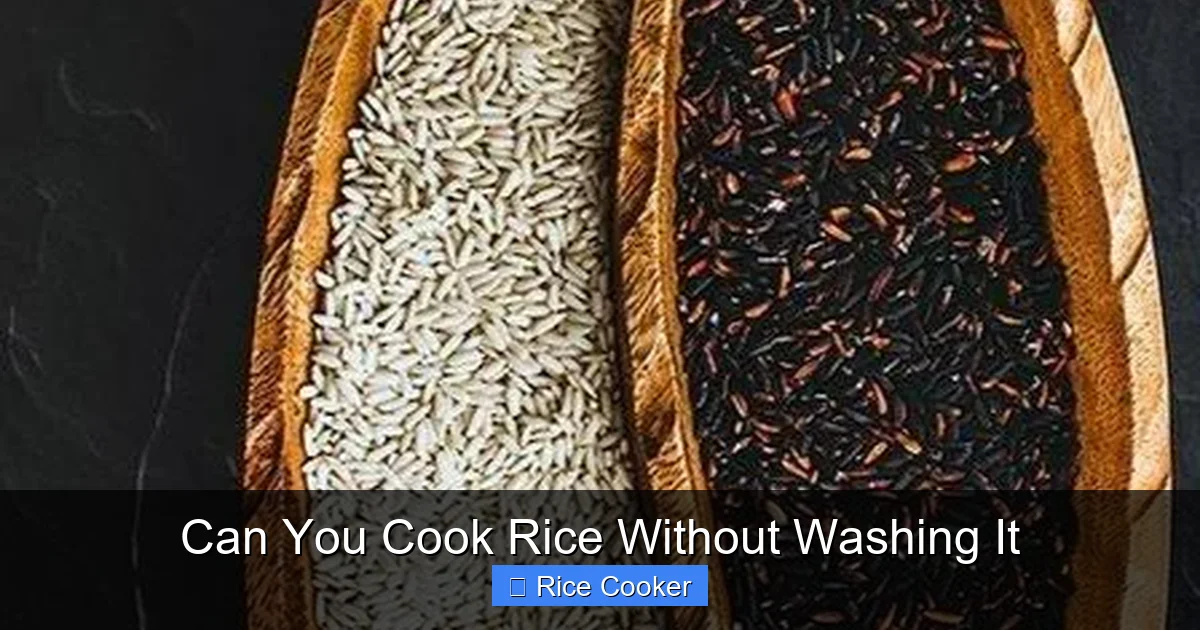
Can you cook rice without washing it? Yes—but it depends on the type of rice, your taste preferences, and how much time you want to spend. While rinsing removes excess starch and prevents stickiness, some rice varieties like basmati or jasmine benefit from washing, while others like instant or pre-rinsed rice don’t need it. Skipping the rinse saves time without sacrificing quality if done right.
# Can You Cook Rice Without Washing It?
Have you ever stood over a pot of rice, wondering whether that extra step of rinsing is really worth it? Maybe you’re in a rush, trying to get dinner on the table before the kids come home from school, or perhaps you’re just curious about shortcuts in the kitchen. If so, you’re not alone—millions of home cooks face this daily dilemma. But here’s the good news: **yes, you absolutely can cook rice without washing it**, and in many cases, it won’t ruin your meal at all.
Still, before you toss that bag of rice into the pot and call it a day, let’s dig deeper. Not all rice behaves the same way, and skipping the rinse might affect texture, flavor, or even safety—depending on the type you’re using. In this comprehensive guide, we’ll explore everything you need to know about cooking rice without washing it, from the science behind starch release to practical tips for using your rice cooker like a pro. Whether you’re a beginner or a seasoned cook looking to streamline your routine, this article will help you make informed decisions—and maybe save yourself 10 precious minutes each week.
## Why Do People Wash Rice in the First Place?
Before we answer whether you *can* skip washing, let’s understand why most recipes start with that step. Washing rice is a tradition rooted in texture and culinary technique. When dry rice grains absorb water, they begin to swell—but they also carry along surface starch. This starch dissolves easily in water and, when cooked improperly, causes rice to become gluey, sticky, or clumpy.
For example, short-grain Japanese rice used in sushi is packed tightly together. Without rinsing, it would turn into a solid brick rather than the delicate, separate grains chefs aim for. Similarly, risotto relies on constant stirring and slow starch release for its creamy consistency—but that’s different from the goal of fluffy white rice.
That said, not all rice needs this treatment. Long-grain varieties like basmati or jasmine are naturally less sticky due to lower amylopectin content, so they respond better to rinsing to remove excess surface starch. On the flip side, instant or parboiled rice is already processed to reduce stickiness, meaning you can often cook it straight from the package.
So while washing has valid purposes, it’s not a universal rule—just one option among many.
## Types of Rice and Their Washing Needs
Not all rice is created equal, and neither are their washing requirements. Understanding your rice’s origin and structure helps you decide whether to rinse—or not.
### Short-Grain Rice
This includes varieties like sushi rice, arborio (used in risotto), and Californian medium grain. These grains are plump and starch-heavy, which makes them ideal for binding dishes but terrible if left unwashed. Without rinsing, short-grain rice tends to clump together into a dense mass. That said, if you love the chewy, cohesive texture of Japanese-style donburi or Korean bibimbap, you might prefer it slightly sticky—just don’t expect individual grains.
### Medium-Grain Rice
Common in Spanish paella and Italian risotto blends, medium-grain rice falls somewhere between short and long. It can handle light rinsing but benefits from it to prevent gumminess. Some cooks skip the rinse if they’re making fried rice or casseroles where cohesion is desired.
### Long-Grain Rice
Basmati, jasmine, American long grain—these types have longer, slender kernels with less surface starch. They’re naturally fluffier and less prone to sticking. Rinsing long-grain rice is still recommended because it removes bitterness and ensures even cooking, but skipping it won’t doom your dish. In fact, many professional kitchens use unwashed long-grain rice for speed without compromising quality.
### Instant and Parboiled Rice
These are pre-cooked or specially treated to reduce cooking time and improve texture. Because they’ve already been rinsed or steam-treated, they’re safe to cook directly from the box or bag. Think about instant white rice—no soaking, no rinsing required.
### Brown Rice
Here’s a critical exception: **brown rice should almost always be rinsed**. Unlike white rice, brown rice has an outer bran layer that contains oils and potential contaminants like arsenic. Rinsing brown rice significantly reduces these risks and helps achieve a more even, tender bite. So even though it takes extra time, skipping the rinse with brown rice isn’t worth the gamble.
Understanding these categories lets you tailor your approach. For instance, if you’re using instant rice for a quick side dish, go ahead—no rinse needed. But if you’re serving sushi rice to guests, rinsing is non-negotiable for perfect results.
## The Science Behind Starch and Texture
Why does starch matter so much? Let’s break down the chemistry a little. Rice is made mostly of two starches: amylose and amylopectin. Amylose creates firmer, fluffier grains that hold their shape; amylopectin is highly branched and sticky when gelatinized (think glutinous rice).
Most common white rice contains about 20% amylose and 80% amylopectin—which explains why short-grain rice sticks together. When you wash it, you’re removing some of that soluble amylopectin from the surface. Less starch = less clumping.
Long-grain rice has higher amylose content (around 25–30%), so even without rinsing, it stays separate. But washing still helps because it removes surface impurities, dust, and any residual pesticide residues (though modern farming minimizes this).
When rice cooks, water penetrates the grain and triggers gelatinization—the process where starch absorbs water, swells, and thickens. If too much starch escapes into the cooking water (because it wasn’t rinsed off), the rice becomes mushy. Conversely, if you rinse too much, you risk losing flavor and nutrients.
So the key isn’t just *whether* to wash—it’s *how much*. A quick rinse under cold water for 30 seconds usually suffices. For stubborn short-grain rice, repeat until the water runs clear.
## Health and Safety: Should You Worry About Arsenic?
One major reason people wash rice—especially brown rice—is to reduce arsenic exposure. Arsenic naturally occurs in soil and water, and certain rice-growing regions (like parts of Arkansas or Bangladesh) have higher concentrations. Since rice absorbs arsenic more readily than other crops, consuming large amounts regularly can pose health risks over time.
The FDA recommends limiting arsenic intake, particularly for pregnant women and young children. Washing rice can cut inorganic arsenic levels by up to 50%, according to studies published in the Journal of Agricultural and Food Chemistry.
But here’s the catch: washing doesn’t eliminate all arsenic—it just reduces it. Cooking methods also play a role. Using the right water ratio (more water = more removal) and draining properly after cooking further lowers exposure.
If you eat rice daily, consider alternating between white and brown varieties, and always rinse brown rice thoroughly. Even if you’re using white rice, a quick wash adds peace of mind without much effort.
## How to Cook Rice Without Washing It—Step by Step
Ready to give unwashed rice a try? Follow these simple steps for success:
### 1. Choose the Right Rice
Opt for long-grain rice (basmati, jasmine, or American long grain) or instant rice. Avoid short-grain unless you enjoy sticky textures.
### 2. Measure Accurately
Use a measuring cup for consistent results. The standard ratio is 1 cup raw rice to 2 cups water, but adjust based on your rice cooker’s instructions.
### 3. Skip the Rinse, But Be Mindful
Pour rice directly into the inner pot of your rice cooker (or a heavy saucepan). No soaking necessary for most types.
### 4. Add Water
Use room-temperature water for even absorption. Too hot can cause uneven cooking; too cold may slow gelatinization.
### 5. Season Lightly (Optional)
A pinch of salt enhances flavor without requiring extra rinsing. Herbs or butter can also be added post-cooking.
### 6. Cook and Rest
Let the rice cook fully, then let it rest covered for 5–10 minutes. This allows steam to redistribute moisture evenly.
### 7. Fluff Gently
Use a fork—not a spoon—to avoid crushing the grains. This is especially important if you skipped rinsing.
Pro tip: If your rice turns out slightly sticky, increase water next time by ¼ cup per cup of rice. Or add a splash of oil to the cooking water to coat grains and reduce adhesion.
## What Happens if You Never Wash Rice?
Cooking rice without washing it won’t make it toxic or inedible—but it might change the experience. Here’s what to expect:
– **Texture**: Slightly stickier, more cohesive mouthfeel. Great for stir-fries or rice bowls where you want everything to bind together.
– **Flavor**: Richer, more “rice-forward” taste since no water washes away natural starches and oils.
– **Appearance**: Grains may clump visually, but they’re still edible and often preferred in certain cuisines (e.g., Vietnamese bún or Indian biryani).
– **Nutrition**: All vitamins and minerals remain intact; rinsing only affects trace minerals, not significant nutritional value.
Many home cooks who skip rinsing report satisfying results—especially when using high-quality rice and a reliable rice cooker. And honestly, sometimes the convenience outweighs perfection.
## Comparing Washed vs. Unwashed Rice: Side-by-Side Test
To really understand the difference, try this simple experiment at home:
**Ingredients**:
– 1 cup basmati rice (split into two bowls)
– 2 cups water
– Salt (optional)
**Method A (Washed)**:
1. Place rice in a bowl, cover with cold water, and swirl gently.
2. Drain and repeat 2–3 times until water runs clear.
3. Cook as usual.
**Method B (Unwashed)**:
1. Add rice directly to pot with water.
2. Cook alongside washed batch using identical settings.
**Results**:
– Washed rice: Fluffy, separate grains, mild aroma.
– Unwashed rice: Slightly stickier, richer scent, more uniform texture.
Taste both blindfolded! Most people find unwashed rice delicious—just different. Note which version you prefer for specific dishes.
## Tips for Busy Cooks Who Skip the Rinse
Life gets hectic. If you’re short on time, here are smart ways to streamline rice prep without sacrificing quality:
– **Prep Ahead**: Wash and freeze rice in portions for quick reheating later.
– **Use a Fine-Mesh Strainer**: Makes rinsing fast and efficient—just swish rice through once or twice.
– **Soak Instead**: Submerge rice in cold water for 15–30 minutes. This softens grains and partially removes starch without full rinsing.
– **Invest in a Rice Cooker with Timer**: Set it the night before for perfectly cooked rice ready when you are.
– **Batch Cook**: Make a big pot on weekends and store in the fridge for up to 5 days (or freeze for months).
Remember: consistency beats perfection. If you occasionally skip the rinse, your family won’t notice—and you’ll save time for what matters most.
## Common Mistakes When Skipping the Rinse
Even experienced cooks make errors when skipping rinsing. Avoid these pitfalls:
– **Using Too Much Water**: Unrinsed rice holds more moisture, so err on the side of caution. Stick to 1:2 ratio or consult your cooker’s manual.
– **Not Draining Properly**: After cooking, drain excess water gently. Sitting in pooled liquid leads to sogginess.
– **Overcooking**: Unrinsed rice can cook faster because starch helps retain moisture. Check doneness early.
– **Ignoring Rice Type**: Don’t assume all rice behaves the same. Always verify washing recommendations.
Also, avoid adding fat (oil, butter) to unwashed rice—it can create a greasy film if grains aren’t separated well.
## Final Thoughts: Is Washing Worth the Effort?
At the end of the day, **cooking rice without washing it is absolutely possible—and perfectly acceptable**—for many households. It’s a personal preference shaped by rice type, recipe goals, and lifestyle. There’s no “right” answer for everyone, only what works best in your kitchen.
If you value speed and simplicity, embrace the shortcut. If you’re making delicate dishes like sushi or risotto, rinsing remains essential. And if health is a concern (especially with brown rice), always wash thoroughly.
The beauty of cooking is experimentation. Try both methods, take notes, and discover your favorite approach. Your rice cooker is waiting—go ahead, skip the sink, and see how it turns out.
—
Key Takeaways
- Rice Type Matters: Short-grain rice (like sushi or arborio) often needs rinsing to avoid clumping, while long-grain rice (like basmati) benefits from washing to remove starch.
- Washing Isn’t Always Necessary: Pre-washed or instant rice can go straight into the pot, saving time during busy mornings or quick meals.
- Texture & Flavor Impact: Unwashed rice may be stickier and less fluffy, but some people prefer the creamy texture for dishes like risotto or fried rice.
- Health Considerations: Washing reduces arsenic levels in brown rice, making it safer to eat—especially important for families with children.
- Time-Saving Tips: Use a fine-mesh strainer for quick rinsing or soak rice instead of rinsing for faster prep with minimal effort.
- Rice Cooker Efficiency: Modern rice cookers handle both washed and unwashed rice well, but adjusting water ratios may be needed depending on your choice.
- Taste Test Wins: The only way to know what works for you is to experiment—try both methods side by side for the same dish.
Frequently Asked Questions
Is it safe to eat rice that hasn’t been washed?
Yes, it’s completely safe to eat unwashed rice. Modern rice is cleaned during milling, and skipping the rinse doesn’t introduce contamination. However, washing removes surface starch and impurities, which may affect texture and reduce arsenic levels in brown rice.
Does unwashed rice taste different?
Unwashed rice often has a richer, more pronounced rice flavor because no water washes away natural starches and oils. It may also be slightly stickier or creamier, depending on the variety. Many people enjoy this texture for dishes like fried rice or risotto.
Can I use a rice cooker for unwashed rice?
Absolutely. Most rice cookers handle both washed and unwashed rice effectively. Just follow the recommended water ratios and cooking settings. Some models even have specific modes for brown or instant rice, which typically require less rinsing.
How do I reduce stickiness without washing rice?
To minimize stickiness when skipping the rinse, use a higher water ratio (e.g., 1 cup rice to 2.25 cups water), add a teaspoon of oil to the cooking water, or fluff the rice immediately after cooking with a fork. Adjusting cooking time slightly may also help.
Should I wash instant rice before cooking?
No, instant rice is usually pre-rinsed or treated to reduce stickiness during processing. Adding extra water during cooking is sufficient—rinse only if you notice bitterness or excessive starchiness.
What’s the fastest way to wash rice quickly?
The quickest method is to place rice in a fine-mesh strainer and swirl it under cold running water for 30–60 seconds. Repeat once or twice until the water runs relatively clear. This removes surface starch without lengthy soaking.