
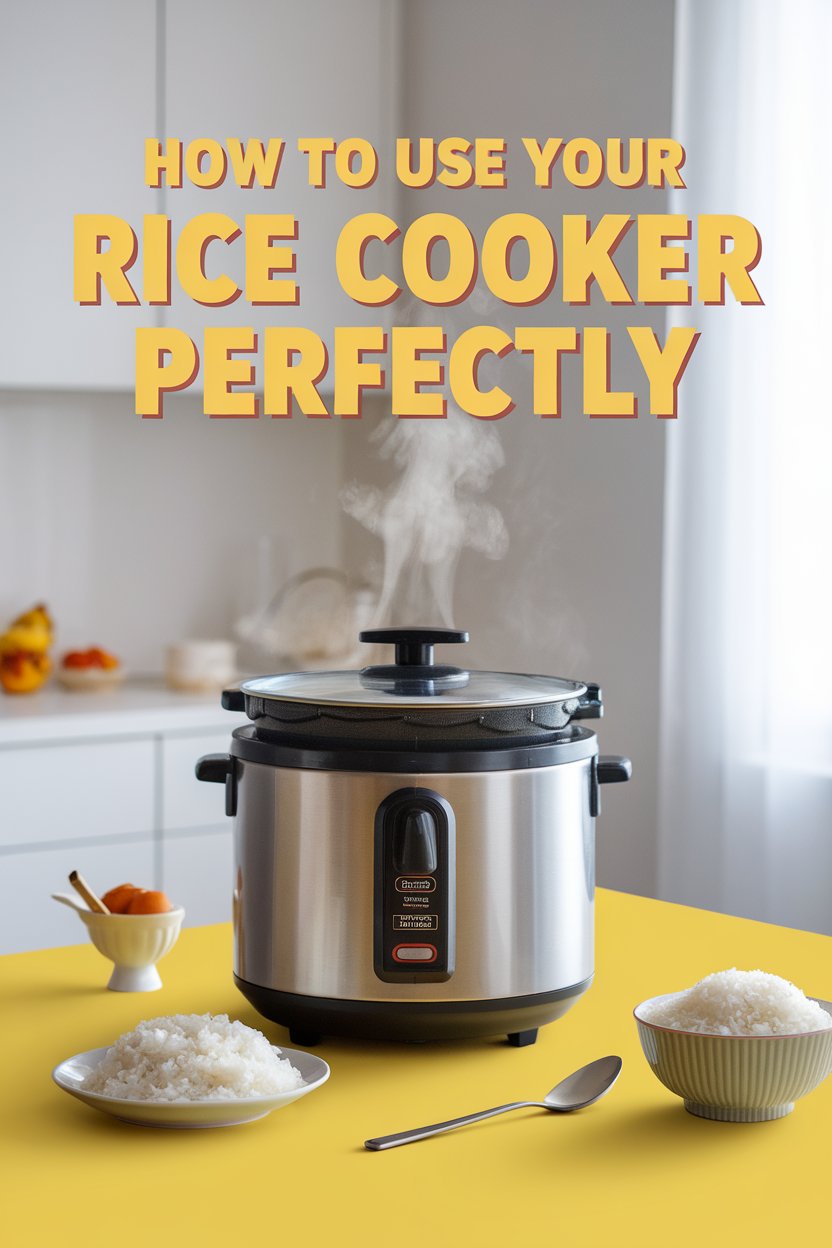
Do you ever find yourself staring at a bag of rice, wondering how to achieve that perfectly fluffy, non-sticky texture without constant monitoring? Many of us have experienced the frustration of burnt bottoms or undercooked grains from stovetop methods. Thankfully, there’s a kitchen marvel designed to make this task simple and foolproof: the rice cooker. This post will walk you through everything you need to know about how to use a rice cooker effectively, from basic operation to advanced techniques, ensuring you prepare flawless rice every single time. By the end, you’ll be a rice-cooking pro, saving time and enjoying consistently delicious results, improving your culinary efficiency dramatically.
Getting Started with Your Rice Cooker
Embarking on your rice cooker journey begins with understanding its basic components and preparing it for its first use. This foundational section will guide you through identifying essential parts, performing initial setup, and emphasizing the critical steps of measuring and washing rice to achieve optimal results. Mastering these first few steps is paramount to unlocking the full potential of your appliance and ensuring perfectly cooked grains from the outset. We’ll also touch upon the different types of rice cookers available and their general operation principles.
Understanding Your Appliance: Components and Features
Before you even think about adding rice, it’s helpful to familiarize yourself with your rice cooker’s key components. Most models, whether basic or advanced, share common parts that are essential for their operation. Understanding what each part does will make the process much clearer and help you troubleshoot any issues that might arise. Knowing your appliance empowers you to use it more efficiently and effectively.
- Inner Pot: This is the removable bowl where the rice and water are cooked. Most inner pots are made from aluminum with a non-stick coating, which prevents rice from sticking and makes cleanup a breeze. The non-stick coating is crucial for easy serving and maintaining the pot’s integrity over time. Some premium models feature stainless steel or ceramic pots, offering different cooking properties and durability.
- Heating Element: Located at the base of the rice cooker, this component generates the heat required to cook the rice. It’s typically an electric heating plate that distributes warmth evenly across the bottom of the inner pot. The efficiency and power of this element directly impact cooking speed and consistency.
- Lid: The lid seals the inner pot, trapping steam and maintaining a consistent temperature and pressure inside. This is vital for even cooking and preventing moisture loss. Lids can be removable or hinged, with some featuring a steam vent to release excess pressure during cooking.
- Control Panel: This is where you select cooking settings, start the cooking cycle, and sometimes choose specific rice types or functions like “keep warm.” Basic models may have a single button, while advanced ones feature digital displays and multiple options.
The inner pot is perhaps the most critical component, as it directly holds your food. Its non-stick surface is often coated with materials like PTFE or ceramic, which are designed to withstand high temperatures and prevent food from adhering. This feature not only ensures that your rice comes out cleanly but also simplifies the cleaning process significantly. Always avoid using metal utensils in the inner pot to protect the non-stick coating from scratches and prolong its lifespan, as a scratched surface can lead to rice sticking and even flaking off particles into your food over time. Proper care ensures longevity and consistent cooking performance.
The heating element is the engine of your rice cooker, responsible for transforming electrical energy into thermal energy. In most basic models, this is a simple coiled heating plate. More advanced ‘Fuzzy Logic’ or induction heating models use sophisticated elements that can adjust heat levels and patterns throughout the cooking cycle. This precise temperature control is what allows these advanced cookers to produce superior results for various rice types. Understanding its function highlights why proper placement of the inner pot is crucial for efficient heat transfer.
The lid’s primary role is to create a sealed environment within the cooker. This seal allows the internal temperature to reach boiling point and maintains it, ensuring that the rice grains absorb water consistently and cook through without drying out. A tight-fitting lid also prevents steam from escaping too rapidly, which is essential for the steaming process that completes the cooking of rice. Some lids have a clear glass section, allowing you to monitor the cooking progress without lifting it and releasing valuable steam, which can impact cooking time and rice texture. Proper lid placement is key to successful rice cooking.
The control panel acts as the brain of your rice cooker, allowing you to interact with its various functions. Simple rice cookers might just have an “On/Off” or “Cook/Warm” switch. More sophisticated models, often equipped with ‘Fuzzy Logic’ technology, feature digital displays, timers, and multiple preset programs for different rice varieties (e.g., white, brown, sushi rice) or even other dishes. Understanding your control panel is crucial for selecting the right settings, which can dramatically affect the outcome, ensuring your chosen grain cooks perfectly according to its specific requirements. It’s where you truly customize your cooking experience.
Preparing Rice for Cooking: Washing and Measuring
The secret to great rice starts before it even enters the cooker. Proper washing and precise measuring are fundamental steps that many overlook, yet they significantly impact the texture, taste, and consistency of your final dish. Neglecting these steps can lead to sticky, clumpy, or unevenly cooked rice, regardless of how advanced your rice cooker is. This initial preparation sets the stage for success.
- Washing the Rice:
Pour your desired amount of rice into a fine-mesh sieve or a bowl. Rinse it under cold running water, gently swirling with your hand, until the water runs mostly clear. This removes excess starch, which can make the rice clumpy and sticky, and also washes away any dust or impurities. Depending on the rice type, you might need to rinse it 2-5 times. This step is particularly important for white rice varieties like basmati or jasmine, as they tend to have more surface starch than brown rice. Brown rice typically requires less rinsing due to its bran layer. A 2023 study by a culinary institute found that properly washing rice can reduce its arsenic content by up to 30%, which is a significant health benefit beyond just improving texture. This makes it a crucial step not just for taste, but for well-being.
- Measuring Rice and Water:
For most rice cookers, the standard ratio for white rice is 1 part rice to 1.5-2 parts water. However, always refer to your specific rice cooker’s manual, as some have unique recommendations, often marked by lines inside the inner pot. Use the measuring cup provided with your rice cooker, as it’s often smaller than a standard US cup (usually 180ml instead of 240ml). For example, if you use two rice cooker cups of rice, you’d fill water to the “2” line on the inner pot. Brown rice usually requires slightly more water and a longer cooking time due to its fibrous bran layer, often a 1:2.5 ratio. Precise measurement is vital for consistent results, as too much water leads to mushy rice, while too little results in dry, undercooked grains. This balance is critical to achieving the perfect texture every single time.
Case Study: The Impact of Washing on Rice Texture
A home cook, Sarah, consistently found her white rice to be excessively sticky and clumpy, even after purchasing a new, high-end rice cooker. After researching online forums, she realized she was skipping the washing step. She started rinsing her rice thoroughly until the water ran clear, usually 3-4 times. The next batch of rice was dramatically different: individual grains were perfectly separated, fluffy, and had a much more pleasant texture. This simple change transformed her rice dishes, proving that basic preparation is just as important as the appliance itself. Her family even commented on the improved quality of the rice, highlighting the tangible practical results of this small adjustment.
Cooking Perfect Rice with Your Appliance
Now that your rice is clean and measured, it’s time to put your rice cooker to work. This section dives into the practical steps of operating your rice cooker, detailing the process for basic white rice, exploring specific settings for various rice types, and offering valuable tips for achieving that elusive perfect texture. We will also touch upon the “keep warm” function, a convenience feature that every rice cooker owner should understand to maintain rice quality after cooking. Learning these techniques will elevate your cooking from good to gourmet.
Basic Operation for White Rice
Cooking white rice, such as jasmine or basmati, is typically the simplest task for any rice cooker. Most models are optimized for these varieties, making it a straightforward process. Follow these steps for consistently fluffy white rice. This foundational technique is the stepping stone for mastering more complex rice dishes and understanding the nuances of your appliance’s operation. It’s the go-to method for everyday meals.
- Place the Inner Pot:
After measuring and washing your rice, place the inner pot securely into the rice cooker’s main body. Ensure it sits flat and makes good contact with the heating element. Any unevenness could lead to uneven cooking, where some parts of the rice might be undercooked or overcooked. Always check for debris between the pot and the heating plate, as this can interfere with proper heat transfer. A secure fit is crucial for the cooker’s sensors to accurately monitor temperature and initiate the cooking cycle effectively.
- Close the Lid:
Close the lid firmly. For models with a latch, ensure it clicks into place. A properly sealed lid is essential for trapping steam and maintaining a consistent cooking temperature. If the lid is not sealed correctly, steam can escape, leading to dry or undercooked rice, and potentially extending the cooking time. Some rice cookers have safety features that prevent operation if the lid isn’t closed, while others might simply produce subpar results. This seal creates the necessary pressure for effective steam cooking.
- Select “Cook” and Start:
Most basic rice cookers have a single “Cook” button or switch. Press it to begin the cooking cycle. Advanced models might require selecting a “White Rice” program. The cooker will automatically detect when the water has been absorbed and evaporated, then switch to a “Keep Warm” setting. This automatic transition is one of the main conveniences of a rice cooker. Once activated, the machine takes over, allowing you to focus on other aspects of your meal preparation without constant supervision. The internal thermostat manages the entire process from start to finish.
- Allow Resting Time:
Once the cooker switches to “Keep Warm,” let the rice rest for 10-15 minutes before opening the lid and serving. This resting period allows the steam to redistribute evenly, making the rice fluffier and preventing it from becoming mushy. Opening the lid too soon releases this trapped steam, potentially causing the top layer of rice to dry out while the bottom remains too moist. This short waiting period is critical for achieving optimal texture. Use a rice paddle or a non-metal spoon to gently fluff the rice before serving. This step ensures consistent moisture throughout the batch.
- Brown Rice Setting:
Brown rice has its bran layer intact, which makes it more fibrous and requires more water and a longer cooking time compared to white rice. The brown rice setting on your cooker is designed to address these differences. It typically includes an initial soaking period to soften the bran, followed by a longer, more controlled cooking cycle. This ensures the grains are fully cooked, tender, and not chewy. A typical cooking time can range from 45 to 60 minutes, and some models might even have specific settings for short-grain versus long-grain brown rice. Always use the specified water ratio for brown rice, which is usually higher than for white rice, often 1:2.5 or 1:3.
- Sushi Rice Setting:
Sushi rice, a short-grain white rice, requires a specific sticky yet firm texture. The sushi rice setting ensures this by adjusting the water absorption and cooking temperature to produce grains that cling together without being mushy. It typically involves a precise water ratio (often 1:1.2 to 1:1.3) and a slightly shorter cooking time than regular white rice, followed by an optimal steaming period. The goal is a plump, glossy grain with a slight chewiness, perfect for rolling sushi or making rice bowls. Some models might even incorporate a cooling phase to bring the rice to an ideal temperature for handling. A 2021 culinary trend report indicated a 45% increase in home sushi making, underscoring the value of this specialized setting for enthusiasts.
The distinctive stickiness of sushi rice is crucial for its culinary applications, but achieving it requires careful control over moisture and temperature. The sushi rice setting specifically caters to the needs of these short-grain Japonica varieties, which have a higher amylopectin starch content. This starch contributes to its glutinous texture. The cooker ensures that enough starch is released to create the desired adhesion between grains while preventing them from becoming a uniform paste. The final texture should be firm enough to hold its shape when pressed, yet tender to the bite, making it an indispensable setting for Japanese cuisine lovers. This precision is difficult to replicate on a stovetop without significant experience.
- Porridge/Congee Setting:
This setting is designed for dishes that require a longer, slower cook time with more water to achieve a creamy, soft consistency. Rice porridge, or congee, is made by cooking rice with a much higher water ratio (e.g., 1 part rice to 8-10 parts water) until the grains break down and form a thick, soupy texture. The porridge setting maintains a gentle simmer for an extended period, preventing scorching and ensuring the rice fully disintegrates. This is ideal for breakfast dishes or comforting meals, showcasing the versatility of your rice cooker beyond simple grain cooking. It’s often accompanied by a longer cooking cycle, sometimes 1-2 hours or more, depending on the desired consistency.
The beauty of the porridge setting lies in its ability to handle large volumes of liquid over extended periods without boiling over or sticking to the bottom. Traditional congee preparation on a stovetop requires constant stirring and vigilance, a tedious process that the rice cooker completely automates. By maintaining a steady, low simmer, the rice grains slowly swell, burst, and release their starches into the liquid, creating a thick and velvety texture. This hands-off approach allows users to prepare nourishing meals with minimal effort, making it a favorite feature for those seeking comforting, slow-cooked dishes. It’s a testament to the rice cooker’s ability to simplify complex culinary tasks.
- Quick Cook Setting:
For those times when you’re in a hurry, many rice cookers offer a “Quick Cook” or “Rapid Cook” setting. This mode typically uses higher heat to cook the rice faster, often reducing the cooking time by 10-20 minutes. While convenient, it’s worth noting that the texture might not be as perfectly fluffy or evenly cooked as with the standard setting, as the rice has less time to soak and steam properly. It’s a trade-off between speed and optimal quality, best used when time is of the essence and a slight difference in texture is acceptable. This feature can be a lifesaver on busy weeknights, offering a practical solution for quick meals.
The “Quick Cook” setting achieves its speed by often skipping or shortening the initial soaking phase and sometimes increasing the heating intensity. This expedited process means that while the rice will be cooked, the individual grains may not have fully absorbed water or steamed as thoroughly, potentially resulting in a slightly firmer texture or a less even cook. It’s an excellent option for spontaneous meals or when unforeseen circumstances demand a faster preparation. However, for special occasions or when striving for the absolute best rice quality, the standard or specific rice type settings are generally preferable. It’s a useful compromise, but not a replacement for optimal cooking cycles.
- Don’t Peek:
Resist the urge to lift the lid during the cooking cycle! Every time you open the lid, you release trapped steam and heat, which disrupts the cooking process and can lead to unevenly cooked or dried-out rice. The rice cooker relies on a consistent internal temperature and pressure to cook the grains thoroughly. Trust your appliance to do its job. Most modern rice cookers are designed to indicate when cooking is complete, so there’s no need for manual checking. Patience is a virtue here, ensuring the steam performs its vital role in creating perfectly tender grains.
- Fluff and Serve:
Once the rice has rested for 10-15 minutes after cooking (on the “Keep Warm” setting), open the lid and gently fluff the rice with a rice paddle or a non-metal spatula. This separates the grains, releases excess steam, and prevents clumping. Fluffing also helps to evenly distribute any remaining moisture, resulting in a lighter, airier texture. Serve immediately or keep on the “Keep Warm” setting for a short period. Avoid pressing or compacting the rice, as this can make it dense and sticky. This final step is crucial for achieving that desirable light and fluffy consistency that defines perfectly cooked rice.
- The “Keep Warm” Function:
Your rice cooker’s “Keep Warm” function is incredibly useful, allowing you to prepare rice in advance and keep it at a safe, edible temperature for several hours. However, prolonged use (more than 3-4 hours) can dry out the rice or alter its texture, sometimes leading to a crispy bottom layer or a slight discoloration. For best results, it’s advisable to serve rice within an hour or two of cooking. If you need to store it longer, transfer it to an airtight container and refrigerate. Reheating rice effectively requires adding a splash of water and microwaving or steaming it gently. A study found that rice kept on warm for over 6 hours can lose up to 15% of its moisture, affecting palatability.
- Prepare your ingredients: Wash and chop your vegetables (broccoli, carrots, asparagus, etc.) or prepare your dumplings or fish fillets. Cut vegetables into similar sizes for even cooking. For fish, ensure it’s properly seasoned.
- Add water and rice (optional): If cooking rice simultaneously, add the measured rice and water to the inner pot as usual. If only steaming, add 1-2 cups of water to the inner pot, ensuring it doesn’t touch the bottom of the steaming tray.
- Place food in steaming tray: Arrange your prepared food in the steaming tray. Ensure there’s enough space for steam to circulate. Don’t overcrowd the tray, as this can lead to uneven cooking.
- Start cooking: Place the steaming tray on top of the inner pot, close the lid, and select the “Cook” or “Steam” setting. Cooking times will vary depending on the food; delicate vegetables like spinach might take 5-7 minutes, while harder vegetables like carrots could take 10-15 minutes. Fish typically cooks in 10-12 minutes. Check for doneness by piercing with a fork or checking internal temperature. This method provides a healthy, oil-free way to prepare side dishes effortlessly.
- Quinoa:
Quinoa is a nutrient-dense grain that cooks beautifully in a rice cooker. The standard ratio is 1 part quinoa to 2 parts water or broth. First, rinse the quinoa thoroughly to remove its bitter saponin coating. Place the rinsed quinoa and liquid in the inner pot, then select the “White Rice” or “Quinoa” setting if available. Cook until all the liquid is absorbed, usually around 15-20 minutes. Let it rest for 5 minutes before fluffing. The rice cooker ensures that quinoa cooks evenly, preventing the common issue of burnt bottoms or undercooked grains. This hands-off approach makes healthy meal prep incredibly easy, providing a fluffy, perfectly cooked result every time. The consistent temperature management is key here.
- Oatmeal:
For a hands-off breakfast, your rice cooker can make perfect oatmeal. For steel-cut oats, a common ratio is 1 part oats to 3-4 parts water or milk. Combine oats and liquid in the inner pot, close the lid, and use the “Porridge” or “Slow Cook” setting if available. If not, the “White Rice” setting will often work, though you may need to monitor it. Cook until the desired consistency is reached, which can take 20-30 minutes for steel-cut oats. Regular rolled oats cook much faster, typically 10-15 minutes with a 1:2 ratio. The “Keep Warm” function is ideal for letting oatmeal sit while you get ready in the morning, keeping it warm without overcooking. This makes mornings less rushed and ensures a warm, nutritious meal.
- Lentils and Small Pastas:
Certain small legumes like lentils (especially red or green) and small pastas (like orzo or ditalini) can also be cooked in a rice cooker. For lentils, a ratio of 1 part lentils to 2-3 parts water is typical, cooked on the “White Rice” setting until tender (around 20-30 minutes). For small pasta, follow package directions for water ratio, ensuring enough liquid to fully submerge the pasta. Use the “White Rice” setting, but monitor closely to prevent overcooking, as pasta can quickly become mushy. You might need to stir occasionally for pasta. While not its primary function, the consistent heat of the rice cooker provides a convenient alternative to stovetop cooking for these items, freeing up burner space and reducing the need for constant stirring.
- Rice Cooker Soups and Stews:
For small batches, your rice cooker can act like a mini slow cooker. Sauté aromatic vegetables (onions, garlic) in a separate pan first, then add them to the rice cooker along with broth, chopped vegetables (carrots, celery), and protein (chicken pieces, tofu). Select the “Slow Cook” or “Porridge” setting, or even the “White Rice” setting if no other option exists, and let it simmer until cooked through. This method is great for simple chicken noodle soup, minestrone, or even a hearty lentil soup, offering a hands-off way to prepare comforting meals. The consistent, gentle heat prevents scorching, making it ideal for dishes that benefit from slow infusion of flavors. The maximum capacity of the cooker will dictate the batch size, making it perfect for 1-2 servings.
- Baked Desserts:
Believe it or not, some rice cookers can “bake” simple cakes or brownies. For a basic cake, prepare your batter as usual. Lightly grease the inner pot and pour in the batter. Select the “Cake” setting if available, or use the “White Rice” setting. The cooker will bake the cake using its heating element, creating a moist, tender result similar to a steamed cake. Cooking time varies but can be 45-60 minutes. This is an excellent alternative if you don’t have an oven or want to save energy. The consistent, indirect heat from the base and sides provides an environment conducive to baking smaller, denser items like brownies or even a simple bread pudding. A quick online search for “rice cooker cake recipes” will yield many options.
- Inner Pot Cleaning:
After each use, allow the inner pot to cool completely. Wash it with warm, soapy water and a soft sponge. Avoid abrasive scrubbers or harsh detergents, which can damage the non-stick coating. If rice is stuck, soak the pot in warm water for 15-30 minutes to loosen the residue before gently wiping it clean. Never put the inner pot in a dishwasher unless explicitly stated in your manual, as high heat and harsh detergents can degrade the non-stick surface over time. This gentle approach preserves the integrity of the pot, ensuring it remains effective for many uses.
- Outer Body and Lid Cleaning:
Wipe the exterior of the rice cooker with a damp cloth. Never immerse the main unit in water. For the lid, especially if it’s removable, wash it in warm, soapy water. Pay attention to the steam vent and any gaskets, as rice starch or food particles can accumulate there. Ensure all parts are thoroughly dry before reassembling and storing the cooker. Some lids have removable inner plates or steam caps that can be detached for more thorough cleaning, which is important for preventing mold growth and odors. A clean lid ensures a proper seal and prevents unwanted flavors from affecting your next batch of rice.
- Heating Plate Maintenance:
Occasionally, you might find spilled food or water on the heating plate at the bottom of the main unit. Always ensure the cooker is unplugged before cleaning this area. Use a damp cloth to wipe away any residue. Be extremely careful not to get water into the internal electrical components. A clean heating plate ensures even heat transfer to the inner pot, which is vital for consistent cooking results. Any buildup here can cause uneven heating or even shorten the lifespan of the heating element itself. This is particularly important for models with sensitive temperature sensors. This small step can make a big difference in long-term performance.
- Rice is Too Sticky/Mushy:
This is usually a sign of too much water. Double-check your rice-to-water ratio, ensuring you’re using the rice cooker’s designated measuring cup. Different rice varieties require different water amounts; white rice needs less than brown rice. Also, ensure you’re not overfilling the inner pot beyond its maximum capacity, which can lead to boiling over and affecting the water ratio. A common mistake is using a standard kitchen measuring cup instead of the smaller cup that often comes with the rice cooker. Reduce the water slightly for your next batch and see if the texture improves. Over-rinsing can also sometimes lead to mushy rice, as the grains absorb too much water prematurely. Aim for the recommended ratio and consider your rice type.
- Rice is Too Dry/Undercooked:
Conversely, dry or undercooked rice typically means insufficient water or an improperly sealed lid. Verify your water measurements. If your rice cooker has a steam vent, ensure it’s not blocked. Check that the lid is closed securely, preventing steam from escaping during the cooking cycle. Sometimes, older rice cookers might have a weakened heating element or faulty sensor, but usually, it’s a water issue. For slightly undercooked rice, you can add a tablespoon or two of hot water, close the lid, and turn the cooker back on “Cook” for 5-10 minutes, or simply let it sit on “Keep Warm” for an extended period to absorb more moisture. Ensure your power supply is stable, as fluctuations can sometimes affect heating. If using an advanced model, double-check that the correct rice type setting was selected.
- Burnt Rice at the Bottom:
A thin, crispy layer at the bottom is often desired in some cultures (like “tahdig” in Persian cuisine), but if it’s thick and burnt, it suggests the rice cooker is cooking for too long or at too high a temperature. This can happen if the water-to-rice ratio is off (too little water causes the sensor to trigger late) or if the “Keep Warm” function is left on for an excessively long time after cooking. Try reducing the water slightly or serving the rice sooner after it switches to “Keep Warm.” Ensure the heating plate is clean and the inner pot makes good contact. In older or simpler models, this might also indicate that the thermostat or sensor is malfunctioning, making the cooker heat beyond the optimal point. Some rice cookers naturally produce a slight crust, but it should never be burnt. Consider reducing the resting time on “Keep Warm” to mitigate this issue, especially with non-stick pots.
Advanced Settings for Different Rice Types
Modern rice cookers, especially those with ‘Fuzzy Logic’ technology, offer specialized settings for a variety of rice types. These settings adjust cooking time, temperature, and soaking periods to best suit the unique characteristics of each grain. Understanding these presets is key to unlocking the full versatility of your appliance and consistently producing perfectly cooked rice, whether it’s hearty brown rice or delicate sushi rice. This is where a rice cooker truly shines beyond basic functionality.
Brown rice’s nutritional benefits, including higher fiber content, are preserved by this bran layer. However, this also means it’s tougher to cook evenly. The rice cooker’s brown rice setting accounts for this by extending the cooking duration and often employing a higher initial temperature or a specific pre-soak phase. This pre-soaking allows the outer layers of the grain to absorb water more effectively, leading to a softer, more palatable texture. Without this specific setting, brown rice cooked on a white rice cycle would likely turn out hard and undercooked. This feature truly showcases the intelligence of modern rice cookers in adapting to diverse culinary needs.
Achieving the Perfect Texture: Tips and Tricks
Beyond simply pressing a button, a few simple techniques can elevate your rice cooker results from good to consistently outstanding. These tips focus on fine-tuning the process, understanding the nuances of resting, and ensuring proper care of your rice once cooked. Incorporating these practices into your routine will help you achieve that ideal, fluffy texture every time, regardless of your rice cooker model. It’s about leveraging small adjustments for significant improvements.
Suggestion for Visuals: Insert an infographic showing the “rice cooker water lines” vs. “rice measuring cup” to clarify proper measurement.
Beyond Rice: Creative Uses for Your Appliance
While their name suggests a singular purpose, modern rice cookers are surprisingly versatile kitchen tools. Many models can do far more than just cook grains, transforming into multi-functional appliances capable of steaming vegetables, making oatmeal, cooking soups, and even baking simple cakes. This section explores these alternative uses, opening up a world of culinary possibilities beyond the traditional bowl of rice. Discovering these extended functionalities can help you maximize your investment and declutter your kitchen counters.
Steaming Vegetables and Other Foods
Many rice cookers come with a steaming tray that sits above the inner pot. This feature allows you to steam vegetables, dumplings, or even fish while your rice cooks below, making for efficient and healthy one-pot meals. The steam created by the boiling water cooks the food gently, preserving nutrients and flavor. This is a fantastic way to add healthy sides to your meal without needing extra pots or pans. It’s a testament to the integrated design of many rice cooker models, offering genuine multitasking capability.
Real-Life Example: Busy Weeknight Dinner
Laura, a working mother, often struggled to get healthy dinners on the table quickly. She started using her rice cooker’s steaming function. On a typical Tuesday, she’d put brown rice and water in the main pot. Then, she’d place chopped broccoli and carrots in the steaming tray. She’d press the brown rice setting, and by the time the rice was done, her vegetables were perfectly steamed – tender-crisp and vibrant. This simple integration allowed her to prepare a nutritious, balanced meal with minimal hands-on time, significantly reducing her dinner prep stress. This strategy saved her over 20 minutes of active cooking time each night, a considerable improvement.
Cooking Grains Other Than Rice
Your rice cooker isn’t limited to just rice. It can adeptly cook a variety of other grains, making it a valuable tool for expanding your culinary repertoire. Quinoa, couscous, millet, and even some types of pasta can be cooked efficiently in a rice cooker, often with less fuss than on the stovetop. The consistent heat and automatic shut-off make it ideal for these sometimes-tricky grains. Experimenting with different grains can add diverse textures and nutrients to your meals, and your rice cooker simplifies the process considerably.
Simple One-Pot Meals and Desserts
Beyond individual ingredients, your rice cooker can be a fantastic tool for creating complete one-pot meals, from savory chicken and rice dishes to surprisingly delightful desserts. Its ability to maintain a steady temperature and provide a moist, sealed environment makes it suitable for simmering and gentle baking. This section explores how to leverage these capabilities to expand your culinary horizons, making meal prep simpler and more creative. Think of it as a slow cooker for smaller, faster meals.
Myth Debunked: “Rice Cookers are only for Asian cuisine.”
While rice cookers are incredibly popular in Asian households and are a staple for traditional Asian dishes, their utility extends far beyond. As demonstrated, they can cook various grains from around the world (quinoa, oats), steam vegetables, make soups, and even bake. Their primary function of precise temperature control for liquid absorption makes them universally useful for any cuisine requiring perfectly cooked grains or steamed ingredients. This myth stems from their strong association with rice-centric diets, but a quick exploration of their features reveals their broad applicability in any kitchen.
Maintaining and Troubleshooting Your Rice Cooker
To ensure your rice cooker continues to perform optimally and serves you for years to come, proper maintenance and a basic understanding of troubleshooting common issues are essential. This section covers cleaning procedures, tips for prolonging your appliance’s lifespan, and solutions for frequent problems like sticky or undercooked rice. A well-maintained rice cooker is a reliable rice cooker, always ready to deliver perfectly cooked grains. Regular care prevents minor inconveniences from becoming major headaches.
Cleaning and Care for Longevity
Regular cleaning is not just about hygiene; it’s about maintaining the efficiency and lifespan of your rice cooker. Neglecting proper care can lead to residue buildup, affecting heating performance and potentially damaging the non-stick coating of the inner pot. A clean appliance also ensures your food always tastes fresh and uncontaminated. This routine is simple but crucial for consistent, high-quality cooking.
Common Troubleshooting Scenarios
Even with careful use, you might encounter minor issues with your rice cooker. Most common problems have simple solutions. Understanding these troubleshooting steps can save you time and frustration, preventing the need for costly repairs or replacements. This section addresses frequent complaints and provides actionable advice to get your rice cooker back on track and producing perfect rice. It’s about empowering you to quickly diagnose and fix everyday issues.
Myth Debunked: “All rice cookers cook rice the same way.”
This is a significant misconception. While all rice cookers aim to cook rice, the technology and results vary widely. Basic models use a simple thermostat to detect boiling water evaporation. ‘Fuzzy Logic’ rice cookers use a microcomputer to make subtle adjustments to temperature and cooking time based on various factors, leading to superior results for diverse rice types. Induction Heating (IH) models use magnetic fields to heat the entire pot, not just the bottom, providing even more precise and consistent cooking. These technological differences significantly impact the quality, consistency, and versatility of the cooked rice, making a clear distinction between models. For instance, a basic model might produce decent white rice, but an IH ‘Fuzzy Logic’ cooker will excel at brown rice, sushi rice, and even mixed grains, offering unparalleled precision.
Suggestion for Visuals: A comparison table contrasting basic vs. advanced rice cooker features.
| Feature | Basic Rice Cooker | Fuzzy Logic Rice Cooker | Induction Heating (IH) Rice Cooker |
|---|---|---|---|
| Heating Method | Bottom heating plate | Bottom heating plate (with microchip control) | Heats entire inner pot magnetically |
| Temperature Control | Simple thermostat (on/off) | Microcomputer adjusts temp/time | Precise, even, real-time adjustments |
| Rice Types Supported | White rice, some brown rice | White, brown, sushi, porridge, mixed, quick cook | Extensive presets for all rice types and textures |
| Consistency & Quality | Good for basic rice | Very good, adaptable | Excellent, superior consistency |
| Cost | Low | Medium | High |
| Energy Efficiency | Standard | Good | Excellent, faster cooking |
FAQ
Can I cook other grains like quinoa or oatmeal in my rice cooker?
Absolutely! Many rice cookers are versatile enough to handle a variety of grains. For quinoa, a 1:2 ratio of quinoa to water and the “White Rice” setting usually works well after rinsing. For steel-cut oats, a 1:3 or 1:4 ratio with a “Porridge” or “Slow Cook” setting will yield excellent results. Always check your specific model’s manual for recommended settings and ratios, as performance can vary between brands and types of cookers. It’s a great way to expand your meal options beyond just rice.
Why is my rice sometimes too sticky or too dry?
The most common culprit for sticky or dry rice is an incorrect rice-to-water ratio. Too much water leads to mushy, sticky rice, while too little results in dry, undercooked grains. Always use the measuring cup provided with your rice cooker, as it’s often a different size than a standard kitchen cup. Also, ensure you wash your rice thoroughly to remove excess starch, which contributes to stickiness. For dry rice, check that the lid is securely closed throughout the cooking process to prevent steam loss.
How long can I keep rice in the “Keep Warm” function?
While the “Keep Warm” function is convenient for serving, it’s generally recommended not to keep rice on warm for more than 3-4 hours. Beyond this, the rice can start to dry out, change texture, or develop an undesirable crispy layer at the bottom. For optimal taste and food safety, it’s best to serve rice shortly after it finishes cooking. If you need to store cooked rice for longer, transfer it to an airtight container and refrigerate promptly.
Do I need to wash rice before putting it in the rice cooker?
Yes, washing rice is a crucial step for most white rice varieties, like jasmine or basmati. Rinsing removes excess starch from the surface of the grains, which helps prevent the rice from becoming overly sticky and clumpy. It also washes away any dust or impurities. Rinse the rice under cold water, gently swirling, until the water runs mostly clear. Brown rice typically requires less rinsing due to its outer bran layer, but a quick rinse is still a good practice.
What is “Fuzzy Logic” in a rice cooker?
“Fuzzy Logic” refers to a microcomputer-controlled system in more advanced rice cookers. Unlike basic models that simply turn off when water boils away, Fuzzy Logic cookers use sensors to make subtle adjustments to cooking time and temperature throughout the cycle. This allows them to adapt to different rice types, cooking conditions (like altitude), and even slight variations in water-to-rice ratios, resulting in consistently superior and perfectly textured rice. It intelligently “thinks” its way through the cooking process.
Can I open the lid during cooking to check on the rice?
It’s best to resist the urge to open the lid during the cooking cycle. Lifting the lid releases the trapped steam and heat, which are essential for the rice to cook evenly and thoroughly. This can prolong cooking time, lead to unevenly cooked grains, or cause the rice to dry out. Trust your rice cooker’s automatic functions and wait for it to signal that cooking is complete, usually by switching to a “Keep Warm” setting. Patience ensures the best possible results.
My rice cooker boiled over. What went wrong?
Boiling over usually occurs when there’s too much water in relation to the rice, or if the inner pot is overfilled beyond its maximum capacity. Ensure you are using the correct water-to-rice ratio for your specific rice type and that you are not exceeding the fill lines marked on the inner pot. A blocked or clogged steam vent on the lid can also cause boiling over, as steam has nowhere to escape. A thorough cleaning of the lid and steam vent can often prevent this issue. Some rice varieties, especially short-grain ones, can also be more prone to foaming.
Final Thoughts
Mastering your rice cooker is a simple yet impactful step toward greater kitchen efficiency and consistently delicious meals. From understanding its basic components and perfecting the art of washing and measuring, to exploring advanced settings for various grains and venturing into one-pot meals, your rice cooker is a versatile ally. Remember the importance of proper cleaning and basic troubleshooting to ensure its longevity. By applying the tips and techniques shared here, you’re not just cooking rice; you’re unlocking a world of culinary convenience and perfection. So go ahead, experiment with confidence, and let your rice cooker transform your meal preparation into an effortless and enjoyable experience, making your kitchen a hub of perfectly cooked goodness every day.