

Cooked rice should not sit out at room temperature for more than 2 hours, and ideally no longer than 1 hour if temperatures are above 90°F (32°C). Leaving rice unrefrigerated too long increases the risk of bacillus cereus growth, which can cause food poisoning. Proper storage and quick cooling are key to keeping your rice safe and tasty.
Key Takeaways
- Room Temperature Danger Zone: Cooked rice should not be left out in the “danger zone” (40°F–140°F) for more than 2 hours, or 1 hour if ambient temperature exceeds 90°F (32°C).
- Bacillus Cereus Risk: This bacteria thrives in cooked rice and produces heat-stable toxins that survive normal cooking and refrigeration—so even chilled rice can make you sick.
- Proper Cooling Matters: Spread rice in a shallow layer to cool quickly and reduce bacterial growth. Use an ice bath if needed.
- Refrigeration Is Best: Store cooled rice in airtight containers within 2 hours and eat within 3–5 days for optimal safety and flavor.
- Reheating Tips: Always reheat rice to 165°F (74°C) throughout. Avoid reheating multiple times, as this increases contamination risk.
- Freezing Extends Life: For longer storage, freeze rice in portions for up to 6 months. Thaw safely in the fridge overnight.
- Signs of Spoilage: Discard rice if it smells off, has an unusual texture, or shows mold. When in doubt, throw it out.
📑 Table of Contents
- How Long Can Rice Sit Out After Cooked?
- The Science Behind Rice and Bacteria
- How Long Can Rice Sit Out Safely?
- Best Practices for Storing Cooked Rice
- Can You Freeze Cooked Rice?
- How to Tell If Rice Has Gone Bad
- Special Considerations: Brown Rice vs. White Rice
- Common Myths About Rice Storage
- Tips for Safe Rice Handling in Different Settings
- Conclusion: Keep Your Rice Safe and Delicious
How Long Can Rice Sit Out After Cooked?
Have you ever wondered, “How long can rice sit out after cooked?” If you’ve ever had leftover rice from a big family dinner or a meal prep session, you know how tempting it is to just leave it on the counter until the next day. But before you do that, let’s talk about food safety—because not all leftovers are created equal.
Cooked rice is especially tricky when it comes to storage. Unlike vegetables or proteins, rice contains a bacterium called Bacillus cereus, which can produce spores that survive boiling. These spores don’t die when rice is cooked but can come back to life when the rice is left at room temperature, multiplying rapidly and producing toxins that cause food poisoning.
So, while rice cookers make our lives easier by perfectly cooking grains every time, they also mean we need to be smarter about how we store what’s left behind. In this complete guide, we’ll walk through everything you need to know about how long rice can sit out, how to store it safely, and how to tell if it’s gone bad.
The Science Behind Rice and Bacteria
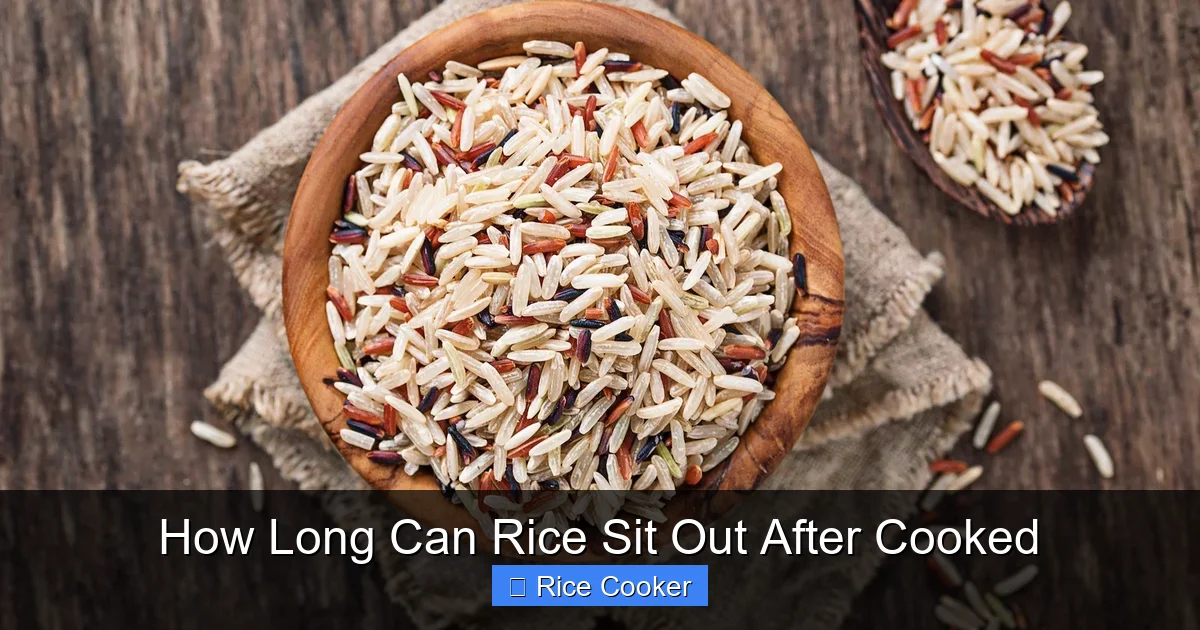
Visual guide about How Long Can Rice Sit Out After Cooked
Image source: ricecookerjunkie.com
Let’s start with a quick science lesson—because understanding why rice behaves the way it does makes it easier to handle safely.
When rice is cooked, it’s usually sterile. That means no harmful bacteria survive the high heat. But here’s the catch: the environment after cooking changes everything. Rice absorbs water during cooking, creating a perfect breeding ground for bacteria once it starts cooling down.
The danger zone for food is between 40°F and 140°F (4°C and 60°C). In this range, bacteria multiply quickly. Bacillus cereus, in particular, loves cooked rice because it can grow even at refrigerator temperatures—meaning even if you refrigerate rice too late, the damage may already be done.
This bacterium produces two types of toxins:
– One causes vomiting (like a stomach flu)
– The other causes diarrhea (like food poisoning)
And here’s the scary part: these toxins are heat stable. That means even if you reheat rice, the toxins won’t break down. So if you’ve eaten rice that was left out too long, reheating it won’t make it safe.
That’s why the rule isn’t just about freshness—it’s about preventing illness.
How Long Can Rice Sit Out Safely?
Now, let’s get to the main question: how long can rice sit out after cooked?
According to the U.S. Food and Drug Administration (FDA) and the Centers for Disease Control and Prevention (CDC), cooked rice should not be left at room temperature for more than 2 hours. If the room is hot—above 90°F (32°C)—that window drops to just 1 hour.
Why such strict rules?
Because Bacillus cereus spores can begin reproducing in as little as 30 minutes under ideal conditions. Within 6 hours, the bacteria can reach levels high enough to cause symptoms. Symptoms usually appear within 1–5 hours after eating contaminated rice and include nausea, vomiting, and diarrhea.
So, if you’re serving rice at a picnic or potluck, plan accordingly. Don’t leave it sitting on a warm table for hours. Keep it either hot (above 140°F) or cold (below 40°F).
Practical Examples: What Counts as “Out Too Long”?
Imagine you’re hosting a holiday dinner. You’ve made a big batch of jasmine rice, and guests are still eating dessert. Should you cover the rice bowl and let it sit on the table?
No—not unless you plan to serve it within the next hour. Even covered, the rice is still in the danger zone, and bacteria will keep growing.
Or say you’re meal prepping on Sunday. You cook a pot of brown rice and leave it out to cool overnight. By morning, it’s been 8 hours since cooking. That’s way too long. Even if it looks fine, it could be dangerous.
Another common scenario: You reheat leftover rice for lunch, but you’re not sure if it’s been sitting out too long since last time. If it’s been more than 2 hours since it was first cooked, it’s best to discard it—especially if you’re not going to refrigerate it right away.
Best Practices for Storing Cooked Rice
Even though we know rice shouldn’t sit out long, sometimes it’s unavoidable. Maybe you’re making a big batch for the week, or you’re cooking for a crowd. Here’s how to handle it safely.
Step 1: Cool It Quickly
Don’t just leave rice in a thick pile. That traps heat and slows cooling, giving bacteria time to grow. Instead:
– Spread rice in a shallow container or tray
– Stir it occasionally to release heat
– Place it in front of a fan or near an open window
– For faster cooling, submerge the container in an ice bath (water + ice cubes)
Cooling rice from 140°F to below 40°F within 2 hours is ideal. An ice bath can help you reach that goal much faster.
Step 2: Store in Airtight Containers
Once cooled, transfer rice to clean, airtight containers. Glass or BPA-free plastic containers work well. Make sure each portion is labeled with the date so you know how long it’s been stored.
Never store rice in the same container it was cooked in unless it’s specifically designed for that purpose (and even then, clean it thoroughly first).
Step 3: Refrigerate Promptly
Place the containers in the refrigerator within 2 hours of cooking. The colder the better—ideally at or below 40°F.
Refrigerated rice should be eaten within 3 to 5 days for best quality and safety. After that, the risk of spoilage increases, even if it looks okay.
Can You Freeze Cooked Rice?
Yes! Freezing is one of the best ways to extend the life of cooked rice—and it’s safer than leaving it out or in the fridge too long.
How to Freeze Rice Properly
1. Let rice cool completely.
2. Divide into single-serving portions using freezer-safe bags or containers.
3. Remove as much air as possible from bags to prevent freezer burn.
4. Label with the date.
5. Freeze immediately.
Frozen rice can last up to 6 months in the freezer. Beyond that, it may develop off-flavors or textures, though it’s still safe to eat.
Thawing and Reheating Frozen Rice
To thaw:
– Move rice to the refrigerator and let it defrost overnight
– Or use the microwave in short intervals, stirring between bursts
Never thaw rice at room temperature—this brings it back into the danger zone.
When reheating:
– Heat rice to 165°F (74°C) throughout
– Add a splash of water or broth to restore moisture
– Stir frequently to ensure even heating
Avoid reheating rice more than once. Each reheating cycle increases the chance of bacterial contamination.
How to Tell If Rice Has Gone Bad
Sometimes rice doesn’t look or smell bad, but it’s still unsafe. Here’s how to check:
Visual Cues
– Mold spots (fuzzy green, black, or white patches)
– Discoloration (yellowish or gray tint)
– Slimy texture
Smell and Taste
– Off or sour odor
– Unusual taste (metallic, rancid, or foul)
Texture Changes
– Sticky or overly soft
– Cracked or dry in parts
If any of these signs are present, throw the rice away. When in doubt, it’s better to be safe than sorry.
Note: Even if rice looks fine, it could still contain Bacillus cereus toxins. So appearance alone isn’t a reliable indicator of safety.
Special Considerations: Brown Rice vs. White Rice
Both types require similar storage rules, but there are some differences worth noting.
Brown Rice
– Higher in fiber and nutrients
– Contains more oils, which can go rancid faster
– May develop a bitter taste if stored improperly
– Still follows the same 2-hour rule—but watch for off-flavors sooner
White Rice
– Lower fat content, so it stays fresher longer
– More commonly affected by Bacillus cereus
– Easier to cook perfectly with rice cookers
In both cases, follow the same guidelines: cool fast, refrigerate soon, eat within a few days.
Common Myths About Rice Storage
There are plenty of old wives’ tales floating around about rice. Let’s debunk a few:
Myth: Rice Can Be Left Out All Night
False. No matter what you hear, leaving rice out overnight is risky. Even in cool rooms, bacteria grow faster than you think.
Myth: Boiling Leftover Rice Makes It Safe
False again. As mentioned earlier, Bacillus cereus toxins are heat stable. Repeated reheating doesn’t destroy them—it just warms the rice again, possibly spreading bacteria.
Myth: Rice Lasts Forever in the Fridge
Not true. While refrigeration slows bacterial growth, it doesn’t stop it. Rice in the fridge should be used within 3–5 days.
Myth: Rice Cookers Keep Rice Hot All Day
Most models don’t. While many rice cookers have a “warm” function, it only maintains temperature—it doesn’t kill bacteria. Leaving rice in the warm setting for hours is unsafe.
Tips for Safe Rice Handling in Different Settings
Whether you’re at home, in a restaurant, or at an event, here’s how to keep rice safe.
At Home
– Use a timer to track cooking time
– Cool rice in batches if making large quantities
– Teach kids about food safety—leftovers aren’t snacks
In Restaurants or Catering
– Use chafing dishes with ice beneath to keep rice cold
– Rotate stock frequently
– Train staff on proper storage times
For Picnics or Outdoor Events
– Pack rice in insulated coolers with ice packs
– Serve cold rice (like in salads) rather than hot
– Bring extra containers for easy portioning
For Meal Prep Enthusiasts
– Cook rice in smaller batches
– Freeze individual portions
– Use vacuum-sealed bags for long-term storage
Conclusion: Keep Your Rice Safe and Delicious
So, how long can rice sit out after cooked? The short answer: no more than 2 hours, and preferably less if it’s hot outside. After that, the clock starts ticking on bacterial growth, and the risk of food poisoning rises sharply.
But don’t let that discourage you from enjoying rice—just handle it smartly. Cool it fast, refrigerate it promptly, and eat it within a few days. Freeze extras to extend their life, and always reheat thoroughly.
Your rice cooker is a great tool, but it’s up to you to use it responsibly. With these simple steps, you can enjoy delicious, safe rice every time—whether it’s day-old takeout or a fresh batch straight from the pot.
Remember: When it comes to rice, safety isn’t optional. A little extra care now saves you from an unpleasant surprise later.
Frequently Asked Questions
Can rice be left out overnight?
No, cooked rice should never be left out overnight. Bacteria like Bacillus cereus can grow rapidly in the “danger zone” (40°F–140°F), and even if the rice looks fine, it may contain heat-stable toxins that cause food poisoning.
How long can cooked rice stay in the fridge?
Cooked rice can safely be stored in the refrigerator for 3 to 5 days. After that, the risk of spoilage increases, even if it hasn’t visibly gone bad. Always check for mold, odd smells, or slimy texture before eating.
Is it safe to reheat leftover rice?
Yes, but only if it’s been stored properly. Reheat rice to 165°F (74°C) throughout. Avoid reheating rice more than once, as repeated warming increases contamination risk. Never reheat rice that has been sitting out too long.
Can you freeze cooked rice?
Absolutely. Freeze rice in airtight containers or bags for up to 6 months. Thaw in the refrigerator overnight and reheat fully before eating. Freezing is one of the safest ways to preserve rice.
What’s the difference between brown and white rice storage?
Both follow the same basic rules—cool and refrigerate within 2 hours. However, brown rice has more oils and can go rancid faster, so it may develop off-flavors sooner if not stored properly.
Can I use my rice cooker’s “keep warm” feature all day?
No. The “keep warm” function only maintains temperature—it doesn’t kill bacteria. Leaving rice in the warm setting for hours keeps it in the danger zone, increasing the risk of foodborne illness. Use it for short periods only.