
Leaving your rice cooker on warm is generally safe for up to 10 hours, thanks to its built-in temperature control. However, food safety experts recommend not exceeding 2–4 hours if you’re unsure about the conditions. This article explains everything you need to know about using the warm setting, including when it’s safe, when it’s risky, and how to store leftover rice properly.
Have you ever finished cooking rice, pressed the “warm” button, and wondered, *how long can I leave it like this?* Maybe you’re prepping meals ahead, running late, or just want to keep dinner hot while guests arrive. The warm setting on most rice cookers seems convenient—but convenience isn’t always synonymous with safety or quality.
In this article, we’ll walk you through exactly how long you can leave a rice cooker on warm, why it matters, and what to do instead if you need to keep your rice hot longer than recommended. We’ll also cover signs of spoilage, energy use, storage tips, and even compare different rice cooker models. Whether you’re a college student, busy parent, or meal prep pro, understanding your rice cooker’s warm function will save you time, money, and potential stomach troubles.
Key Takeaways
- Warm Setting Duration: Most modern rice cookers keep food safely warm for up to 10 hours, but the FDA recommends limiting it to 2–4 hours for optimal safety.
- Food Safety First: Rice can harbor bacteria like Bacillus cereus, which thrives in the “danger zone” (40°F–140°F), so prolonged warming increases contamination risk.
- Quality Degrades Over Time: Even on warm, rice loses texture, becomes dry, and may develop off-flavors after several hours.
- Energy Efficiency: The warm function uses minimal power but should be turned off once the rice is consumed or stored.
- Proper Storage Matters: Refrigerate leftovers within 2 hours and reheat thoroughly to avoid foodborne illness.
- Check Your Model: Always consult your rice cooker’s manual—some models have different warm settings or timers.
- Signs of Spoilage: Smell, mold, sliminess, or unusual texture are indicators that rice should be discarded immediately.
Quick Answers to Common Questions
Can I leave rice on warm overnight?
No, it’s unsafe. Bacteria like Bacillus cereus can grow even at warm temperatures, and rice should be refrigerated within two hours of cooking.
Is it okay to leave rice on warm for 6 hours?
Not recommended. While the rice may look fine, texture degrades and bacterial risk increases after 4 hours. Better to reheat fresh rice or use proper storage.
Why does rice get hard on warm?
Moisture evaporates over time since warm mode doesn’t stir or circulate air. Stirring or adding liquid before serving helps restore softness.
Do all rice cookers have the same warm setting duration?
No. Basic models may only hold warmth for 1–2 hours, while advanced ones offer 6–10 hours. Always check your manual for specifics.
Can I reuse rice that was left on warm?
Only if it was kept on warm for less than 2 hours and shows no signs of spoilage. Otherwise, refrigerate immediately and reheat thoroughly.
📑 Table of Contents
- What Is the Warm Setting on a Rice Cooker?
- How Long Can You Safely Leave Rice on Warm?
- When Is It Safe to Leave Rice on Warm?
- Signs That Rice Has Gone Bad on Warm
- Best Practices for Using the Warm Setting
- Comparing Rice Cooker Models and Their Warm Settings
- Energy Efficiency and Environmental Impact
- Alternatives to Leaving Rice on Warm
- Common Myths About Rice Cooker Warm Settings
- Final Thoughts: When in Doubt, Err on the Side of Caution
What Is the Warm Setting on a Rice Cooker?
The “warm” function on a rice cooker is designed to maintain cooked food at a safe serving temperature—usually between 160°F and 170°F. Unlike the cooking cycle, which heats rice from cold to boiling, the warm mode simply holds the temperature steady. This prevents rice from drying out or forming a hard crust on top.
Most rice cookers automatically switch to warm mode once the cooking cycle ends. Some advanced models offer extended warm settings or delayed start functions, letting you schedule when your rice cooks. But regardless of the model, the warm function isn’t meant for long-term storage—it’s a short-term holding method.
How Does the Warm Function Work?
Inside your rice cooker, there’s a thermostat and heating element that monitor temperature continuously. Once rice reaches the ideal doneness, the cooker stops active boiling and switches to warm. The thermostat kicks in periodically to reheat rice if it cools below the set threshold.
This process keeps the inner pot consistently hot without overcooking the grains. However, because the warm setting doesn’t circulate air or stir the rice, moisture tends to evaporate over time, making the rice drier and less appealing.
How Long Can You Safely Leave Rice on Warm?
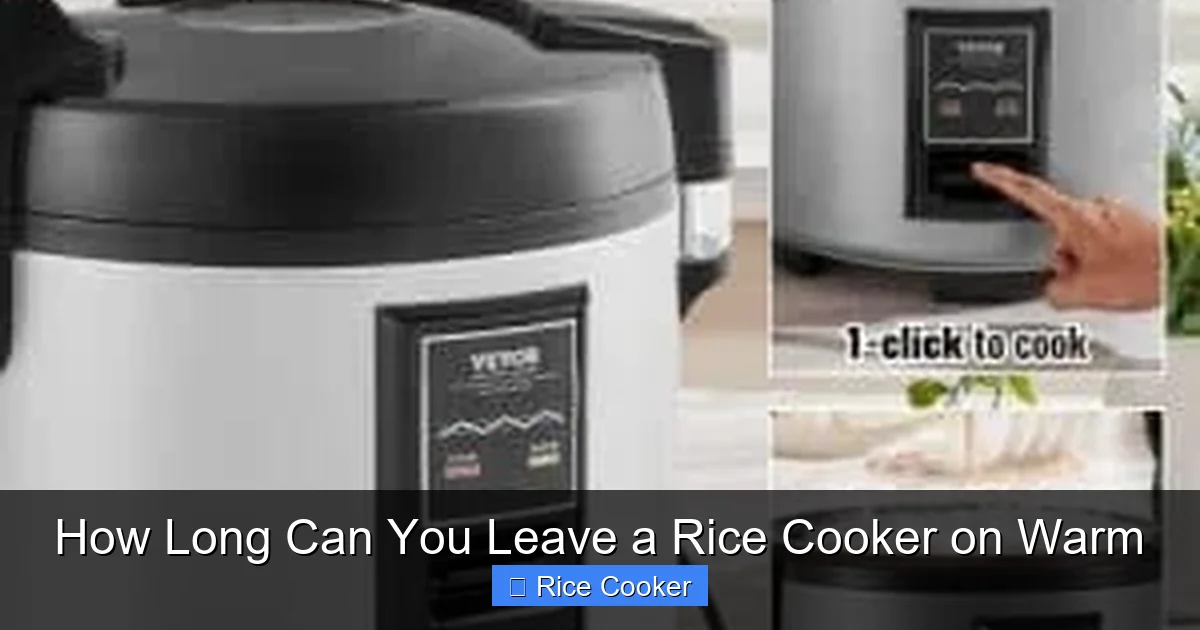
Visual guide about How Long Can You Leave a Rice Cooker on Warm
Image source: cleverkitchengear.com
According to the U.S. Food and Drug Administration (FDA) and the USDA, cooked rice should not sit in the “danger zone”—the temperature range between 40°F and 140°F—for more than two hours. Since the warm setting typically keeps rice above 140°F, it technically falls outside this danger zone.
That said, experts like food safety consultants and appliance manufacturers generally advise against leaving rice on warm for more than **2 to 4 hours**. Here’s why:
– **Bacterial Growth Risk**: While the warm setting avoids the danger zone, some bacteria, particularly *Bacillus cereus*, can survive high heat and produce toxins that aren’t killed by reheating. These spores are common in rice and can multiply slowly as the rice cools slightly.
– **Texture and Flavor Decline**: Rice starts losing moisture and becomes gummy or dry after a few hours on warm. This affects taste and mouthfeel, even if the rice looks fine.
– **Energy Waste**: Keeping your rice cooker on warm for 6+ hours wastes electricity and wears down internal components over time.
So while many rice cookers claim a 10-hour warm function, it’s best to treat that as a marketing feature rather than a safety guarantee. When in doubt, follow the 2–4 hour rule.
What Do Experts Say?
Dr. Sarah Kim, a food scientist at the National Center for Home Food Preservation, explains: “Rice cookers are excellent appliances, but their warm function is not a refrigerator substitute. The goal is to serve hot food promptly or store it safely. Leaving rice on warm beyond four hours increases the risk of foodborne illness, especially in humid climates where bacterial growth accelerates.”
Similarly, the FDA’s Food Code recommends that hot foods be held at 135°F or higher and removed from warming units after two hours unless they’re part of a continuous service (like buffet lines with chafing dishes).
When Is It Safe to Leave Rice on Warm?
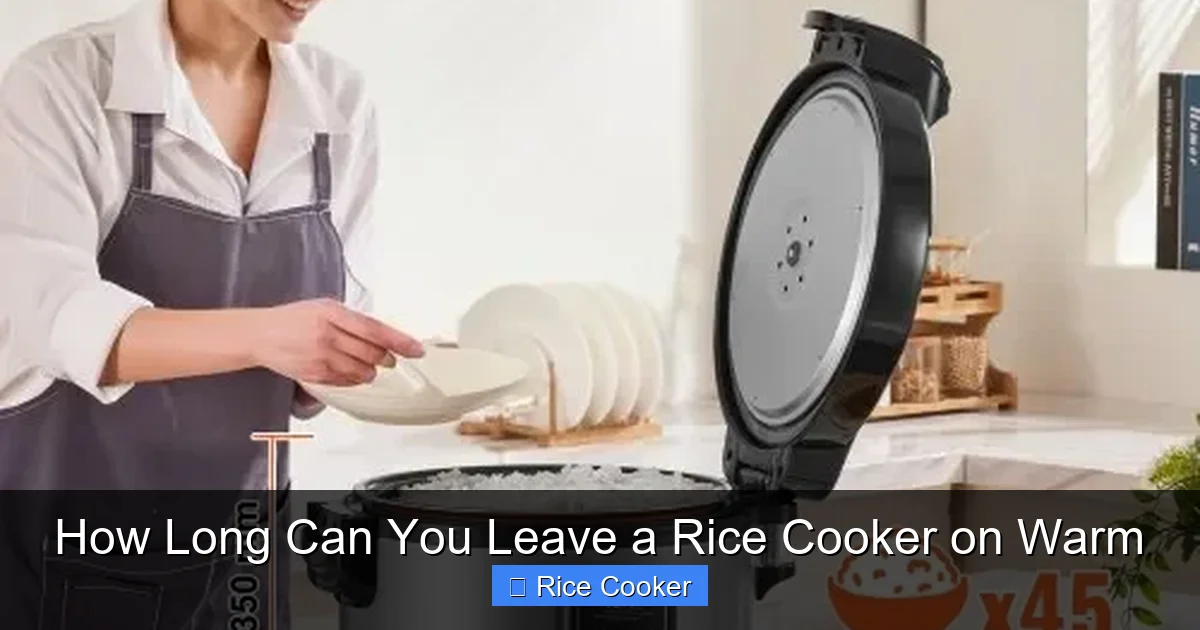
Visual guide about How Long Can You Leave a Rice Cooker on Warm
Image source: img.vevorstatic.com
There are a few situations where leaving rice on warm might be acceptable—but only under specific conditions.
Short Events (Under 2 Hours)
If you’re serving rice at a small family dinner or quick lunch, turning on warm right before eating is perfectly safe. Just make sure the rice was fully cooked earlier and hasn’t been sitting out too long.
Continuous Buffet Service
Some commercial kitchens use rice cookers with insulated pots and frequent stirring during buffets. In these cases, rice may stay on warm for several hours because it’s constantly being monitored and replenished. But home users rarely have the setup for this.
Quick Reheating Cycles
If your rice starts cooling below 140°F, the warm function will kick back on to reheat it. As long as this happens quickly (within minutes), the total time on warm remains under the safe window.
Signs That Rice Has Gone Bad on Warm
Even if your rice cooker says “warm,” you can’t always trust the display. Always check the rice visually, smell-wise, and by touch before eating.
Visual Cues
– **Dryness or Hard Crust**: A thick, hardened layer on top indicates excessive evaporation.
– **Mold or White Patches**: Any fuzzy growth means discard immediately.
– **Discoloration**: Grayish or yellowish spots suggest spoilage.
Odor and Texture
– **Sour or Rancid Smell**: Classic sign of bacterial overgrowth.
– **Slimy or Gummy Consistency**: Indicates protein breakdown or bacterial activity.
– **Off-Taste**: Even if you can’t see or smell anything wrong, a strange flavor means it’s time to throw it out.
If any of these signs appear, don’t risk it. Bacteria like *Bacillus cereus* can cause vomiting or diarrhea within 6–15 hours of ingestion.
Best Practices for Using the Warm Setting
To get the most out of your rice cooker’s warm function—and stay safe—follow these guidelines.
1. Don’t Use Warm as a Delay Timer
Many people press warm immediately after adding uncooked rice, thinking it’ll cook slowly. This is a big mistake. Uncooked rice needs full heat to absorb water and gelatinize starch. Using warm won’t cook it properly and may lead to undercooked, unsafe grains.
Instead, use the “cook” or “program” setting and let the rice finish cooking first.
2. Stir Before Serving
After several hours on warm, rice can form a crust. Gently fluff it with a fork before serving to restore fluffiness.
3. Store Leftovers Properly
Once rice cools below 140°F, move it to an airtight container and refrigerate within two hours. Label it with the date and consume within 3–4 days. For longer storage, freeze portions in freezer-safe bags for up to 6 months.
4. Reheat Thoroughly
Always reheat rice to 165°F throughout before eating. Add a splash of water or broth while reheating to prevent dryness.
5. Clean Your Rice Cooker Regularly
Residue buildup inside the pot can promote bacterial growth. Wash the inner pot after each use and wipe the exterior with a damp cloth.
Comparing Rice Cooker Models and Their Warm Settings
Not all rice cookers are created equal. Some have better insulation, smarter thermostats, or multiple warm modes.
Basic Rice Cookers
These entry-level models usually have a simple warm function that turns on after cooking. They’re reliable for 1–2 hour holds but lack advanced features. Brands like Aroma and Oster fall into this category.
Advanced Rice Cookers (e.g., Zojirushi, Cuckoo)
High-end models often include:
– **Extended warm timers** (up to 10 hours)
– **Keep-warm induction heating** (more precise temperature control)
– **Delayed start** (so rice finishes when you want it)
While these are impressive, they still shouldn’t replace proper refrigeration. Even premium models can’t eliminate all bacterial risks.
Slow Cooker vs. Rice Cooker Warm Mode
Some users wonder if a slow cooker’s low setting is safer for keeping rice warm. Technically, yes—slow cookers maintain lower temperatures (around 190°F) and allow for gentle reheating. But again, they’re not designed for this purpose and may affect rice texture.
Stick to your rice cooker for best results.
Energy Efficiency and Environmental Impact
Leaving your rice cooker on warm for extended periods does use electricity—though minimally compared to cooking. According to the Department of Energy, a standard rice cooker consumes about 300–600 watts during cooking and drops to around 50 watts in warm mode.
For example:
– Running warm for 10 hours = ~0.5 kWh
– At average U.S. rates ($0.13/kWh), that’s about 7 cents
Still, every bit adds up. Plus, constant heating can strain the thermostat and reduce appliance lifespan.
Eco-Friendly Tips
– Turn off the warm function once rice is served.
– Use smaller batches if you don’t need large quantities.
– Consider using a thermal carafe for overnight holding (if your model supports it).
Alternatives to Leaving Rice on Warm
If you need to keep rice hot for longer than 4 hours, try these safer options:
Use a Thermal Server or Chafing Dish
Transfer cooked rice to an insulated container or chafing dish lined with warm broth. This keeps it hot without electricity.
Reheat in Small Batches
Cook fresh rice daily or reheat portions in the microwave with a damp paper towel.
Meal Prep Smartly
Cook rice in advance, cool it quickly (in an ice bath), then refrigerate or freeze. Reheat only what you need.
Common Myths About Rice Cooker Warm Settings
Let’s clear up some misconceptions.
Myth 1: “I Can Leave Rice on Warm All Night Without Problems”
False. Even with perfect temperature control, rice left out overnight can develop harmful bacteria. Always refrigerate within two hours.
Myth 2: “All Rice Cookers Keep Food Safe for 10+ Hours”
Partially true—many claim 10-hour warm cycles, but safety standards don’t support that. Manufacturers design for convenience, not long-term storage.
Myth 3: “Warm Mode Kills Bacteria”
No. The warm setting maintains temperature but doesn’t sterilize. Bacteria already present at cooking time may multiply during holding.
Final Thoughts: When in Doubt, Err on the Side of Caution
Your rice cooker is a fantastic tool—but like any appliance, it has limits. The warm setting is great for short-term holding, but never a substitute for proper food handling.
Remember:
– **Safe window**: 2–4 hours max on warm
– **Storage**: Refrigerate within 2 hours
– **Reheat**: Until steaming hot throughout
– **Trust your senses**: If it smells or feels off, throw it out
By following these guidelines, you’ll enjoy fluffy, safe, delicious rice every time—without worrying about spoilage or wasted energy.
Frequently Asked Questions
How long is it safe to keep rice warm on a rice cooker?
The FDA recommends not leaving rice on warm for more than 2–4 hours. After that, the risk of bacterial growth and quality loss increases significantly.
Will leaving rice on warm kill bacteria?
No. The warm setting maintains temperature but doesn’t sterilize. Bacteria already present—especially Bacillus cereus—can multiply during holding.
What happens if you leave rice on warm too long?
Rice dries out, develops a crust, and loses flavor. More importantly, harmful bacteria may thrive, increasing the risk of food poisoning.
Can I turn my rice cooker’s warm function off?
Yes, absolutely. Once your rice is cooked and served, turn off the warm setting to save energy and preserve appliance life.
Is it better to refrigerate rice or keep it on warm?
Refrigeration is always safer for storage. Keep rice on warm only for short periods (under 4 hours), then refrigerate promptly.
Does the type of rice affect how long it can stay on warm?
Generally no—all cooked rice faces similar risks. However, brown rice has more oils and nutrients, so it spoils faster than white rice when stored improperly.