
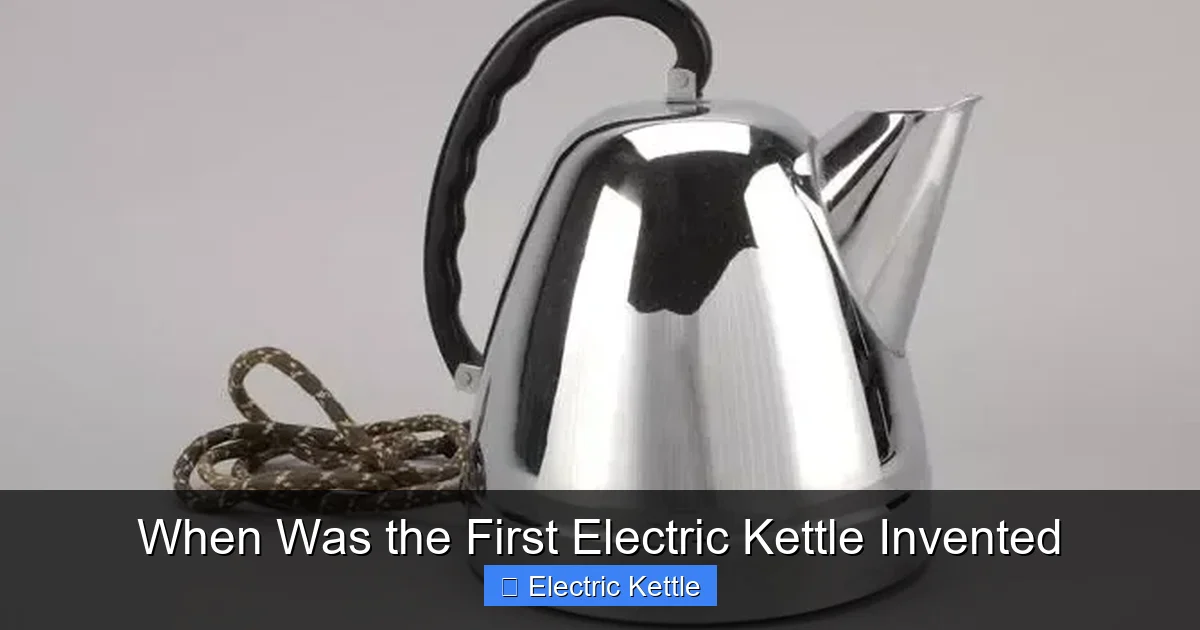
The first electric kettle was invented in 1891 by the Carpenter Electric Heating Manufacturing Company in the United States. This early model used a heating element inside the kettle to boil water, marking a major shift from stovetop heating. Over time, electric kettles evolved into safer, faster, and more efficient appliances found in homes worldwide.
Key Takeaways
- 1891 marks the invention of the first electric kettle by Carpenter Electric Heating Manufacturing Company in the U.S., using an internal heating element.
- Early models were slow and unsafe due to exposed heating elements and lack of automatic shut-off, limiting widespread adoption.
- The 1920s–1950s saw major improvements with automatic cut-off mechanisms and better insulation, making electric kettles safer and more practical.
- Britain played a key role in popularizing electric kettles in the 1950s, especially with brands like Russell Hobbs and Morphy Richards.
- Modern electric kettles are fast, energy-efficient, and smart, offering features like temperature control, LED indicators, and rapid boiling.
- Electric kettles save time and energy compared to stovetop kettles, boiling water in under 5 minutes with minimal heat loss.
- Future innovations may include AI integration and eco-friendly materials, continuing the evolution of this everyday kitchen essential.
📑 Table of Contents
When Was the First Electric Kettle Invented?
Imagine starting your morning without the familiar hum of an electric kettle. No quick boil for your tea, coffee, or instant oatmeal. It’s hard to picture a modern kitchen without this simple yet powerful appliance. But have you ever wondered when the first electric kettle was invented? The answer might surprise you—it goes back further than most people think.
The first electric kettle was invented in 1891 by the Carpenter Electric Heating Manufacturing Company, based in the United States. This early model was a groundbreaking innovation at the time, using an internal heating element to boil water directly inside the kettle. Before this, people relied on stovetops, open flames, or kerosene heaters to heat water—methods that were slower, less efficient, and often dangerous. The electric kettle represented a leap forward in convenience and safety, even though it took decades for the technology to become widely adopted.
At first, these early electric kettles were far from perfect. They were bulky, slow to heat, and lacked the safety features we take for granted today. But they planted the seed for a revolution in kitchen appliances. Over the next century, engineers and designers refined the concept, adding automatic shut-off, better insulation, and faster heating elements. Today, the electric kettle is a staple in homes across the globe, especially in countries like the UK, Australia, and parts of Asia, where tea culture thrives.
The Early Days: 1891 and the Birth of Electric Heating

Visual guide about When Was the First Electric Kettle Invented
Image source: i.ytimg.com
To truly understand when the first electric kettle was invented, we need to go back to the late 19th century—a time of rapid technological change. The 1890s were a golden age for electrical innovation. Thomas Edison had just introduced the light bulb, and electricity was beginning to enter homes. It was in this context that the Carpenter Electric Heating Manufacturing Company, based in Chicago, developed the first electric kettle.
This original model used a metal coil—similar to what you’d find in a modern toaster—placed inside the kettle’s base. When electricity passed through the coil, it heated up and transferred that heat directly to the water. Unlike stovetop kettles, which required constant monitoring and could easily boil dry, this electric version offered a new level of convenience. You could simply plug it in, fill it with water, and walk away.
However, there were significant drawbacks. The heating element was exposed, which posed a serious burn risk. There was no automatic shut-off, so if you forgot about it, the kettle could overheat or even start a fire. Additionally, the materials used weren’t as durable or heat-resistant as today’s standards. The kettle was also quite slow—taking up to 15 minutes to boil a liter of water—compared to modern models that can do it in under 4 minutes.
Despite these limitations, the invention was a milestone. It demonstrated that electricity could be used not just for lighting, but for everyday household tasks. The electric kettle was one of the first appliances to bring the power of electricity directly into the kitchen, paving the way for innovations like electric stoves, refrigerators, and microwaves.
The Role of the Industrial Revolution
The invention of the electric kettle didn’t happen in a vacuum. It was a product of the Industrial Revolution, which transformed manufacturing, transportation, and daily life. Factories were adopting electric motors, and homes were beginning to be wired for electricity. This shift created a demand for new appliances that could make life easier and more efficient.
The Carpenter Company was part of this wave of innovation. They specialized in electric heating devices, including irons and space heaters. The electric kettle was a natural extension of their expertise. By applying the same principles of resistive heating—where electricity passes through a material and generates heat—they created a device that could boil water without an open flame.
This was especially important in urban areas, where gas lines were common but not always safe or reliable. Electric kettles offered a cleaner, more controlled way to heat water. They didn’t produce smoke or fumes, making them ideal for small apartments or homes without proper ventilation.
Why It Took So Long to Catch On
Even though the electric kettle was invented in 1891, it didn’t become popular right away. In fact, it took nearly 50 years for electric kettles to gain widespread acceptance. Why? Several factors played a role.
First, electricity wasn’t widely available in homes until the early 20th century. In 1891, only a small percentage of American homes had electrical service. Most people still relied on gas, coal, or kerosene for heating and cooking. Without access to electricity, the electric kettle was a novelty, not a necessity.
Second, the cost was prohibitive. Early electric kettles were expensive to produce and purchase. They were seen as luxury items, not everyday appliances. Only wealthier households could afford them, and even then, many were skeptical of their safety and reliability.
Third, public trust in electricity was still growing. People were wary of this new “invisible force” and feared shocks, fires, or explosions. The lack of safety features in early models didn’t help. It wasn’t until the 1920s and 1930s, when electrical standards improved and homes became safer, that people began to embrace electric appliances.
The 1920s–1950s: Safety and Automation Take Center Stage
The real turning point for the electric kettle came in the mid-20th century. Between the 1920s and 1950s, engineers made critical improvements that transformed the appliance from a risky novelty into a safe, reliable kitchen tool.
One of the most important advancements was the introduction of the automatic shut-off mechanism. Before this, users had to manually unplug the kettle when the water boiled—otherwise, it would keep heating, potentially causing damage or fire. In the 1920s, inventors began experimenting with bimetallic strips—thin layers of two different metals that expand at different rates when heated. When the water reached boiling point, the strip would bend and trigger a switch, cutting off the power.
This innovation was a game-changer. It made electric kettles much safer and more convenient. You could now boil water without standing over the kettle, freeing you up to do other tasks. It also reduced the risk of accidents, especially in busy households.
Another major improvement was better insulation and enclosure of the heating element. Early models had exposed coils, but newer designs placed the element inside a sealed chamber at the base of the kettle. This not only improved safety but also increased efficiency, as less heat was lost to the surrounding air.
The Rise of British Electric Kettles
While the U.S. invented the electric kettle, it was the United Kingdom that truly popularized it. In the 1950s, British manufacturers like Russell Hobbs and Morphy Richards began producing sleek, modern electric kettles that appealed to post-war consumers.
These kettles were designed with aesthetics in mind. They featured polished chrome finishes, streamlined shapes, and ergonomic handles. They were marketed as symbols of modern living—clean, efficient, and stylish. The British love of tea also played a big role. With tea being a daily ritual for millions, having a fast, reliable way to boil water was essential.
Russell Hobbs, in particular, became a household name. Their 1955 “K1” model was one of the first mass-produced electric kettles with an automatic shut-off. It was lightweight, easy to use, and boiled water in under five minutes. It quickly became a bestseller and set the standard for future designs.
Global Expansion and Cultural Impact
As electric kettles improved, they spread beyond the U.S. and U.K. to other parts of the world. In Australia, New Zealand, and parts of Europe, electric kettles became standard kitchen fixtures. In countries like Japan and South Korea, where green tea and instant noodles are popular, compact, high-speed kettles became essential.
The cultural impact was significant. The electric kettle helped standardize tea and coffee preparation, making it faster and more consistent. It also contributed to the rise of convenience foods—instant soups, oatmeal, and noodles—that required hot water. In offices, electric kettles became common, allowing employees to make hot drinks without leaving their desks.
Modern Electric Kettles: Speed, Efficiency, and Smart Features
Today’s electric kettles are a far cry from the clunky, slow models of the 1890s. Thanks to advances in materials science, electronics, and design, modern kettles are faster, safer, and smarter than ever.
One of the biggest improvements is speed. Most electric kettles today can boil a liter of water in 3 to 5 minutes—sometimes even less. This is thanks to high-wattage heating elements (typically 1500 to 3000 watts) and efficient heat transfer designs. Some premium models use rapid-boil technology that can heat water in under two minutes.
Energy efficiency is another key feature. Modern kettles are designed to minimize heat loss, using insulated walls and sealed lids. Many also have “keep warm” functions that maintain the water temperature for up to an hour without reboiling, saving energy and time.
Smart Kettles and Temperature Control
One of the most exciting developments in recent years is the rise of smart electric kettles. These appliances connect to Wi-Fi and can be controlled via smartphone apps. You can start boiling water from another room, set specific temperatures, or schedule boil times in advance.
Temperature control is especially important for tea lovers. Different types of tea—green, white, oolong, black—require different water temperatures for optimal flavor. A smart kettle lets you select the perfect temperature with the touch of a button. Some models even have preset programs for various beverages, from coffee to baby formula.
Other smart features include LED indicators, voice control (via Alexa or Google Assistant), and automatic shut-off after a set time. These innovations make the electric kettle not just a tool, but a personalized kitchen assistant.
Materials and Design Trends
Modern electric kettles come in a variety of materials, each with its own benefits. Stainless steel kettles are durable, easy to clean, and resistant to rust. Glass kettles offer a sleek, modern look and let you watch the water boil—a satisfying visual experience. Plastic kettles are lightweight and affordable, though they may retain odors over time.
Design has also evolved. Many kettles now have cordless bases, making them easy to lift and pour. Some have wide openings for easy filling and cleaning. Others feature ergonomic handles and non-slip grips for safety.
Why the Electric Kettle Matters Today
At first glance, the electric kettle might seem like a simple appliance. But its impact on daily life is profound. It saves time, reduces energy use, and makes hot beverages more accessible than ever.
Consider this: boiling water on a gas stove can take 8 to 10 minutes and uses more energy because heat is lost to the air. An electric kettle, by contrast, heats water directly and efficiently, using up to 50% less energy. This not only saves money on utility bills but also reduces your carbon footprint.
In busy households, the electric kettle is a lifesaver. Parents can quickly prepare bottles for babies, students can make instant meals between classes, and office workers can enjoy a fresh cup of tea without leaving their desks. It’s a small appliance with a big role in modern life.
Tips for Choosing the Right Electric Kettle
If you’re in the market for a new electric kettle, here are a few tips to help you choose the best one:
– Look for automatic shut-off: This is a must-have safety feature that prevents overheating.
– Check the wattage: Higher wattage (1500W+) means faster boiling.
– Consider capacity: Choose a size that fits your needs—1.7 liters is standard for most families.
– Think about material: Stainless steel is durable, glass is stylish, and plastic is lightweight.
– Look for extra features: Temperature control, keep-warm function, and cordless design add convenience.
The Future of Electric Kettles
As technology continues to evolve, so will the electric kettle. Future models may include AI integration, allowing the kettle to learn your habits and suggest optimal boil times. We might see kettles made from recycled or biodegradable materials, reducing environmental impact.
There’s also potential for solar-powered kettles, especially in regions with limited electricity access. These could provide clean, renewable energy for boiling water, improving health and safety in developing countries.
One thing is certain: the electric kettle has come a long way since 1891. From a risky experiment to a global kitchen essential, its journey reflects the broader story of innovation, safety, and convenience. And as long as people enjoy a hot cup of tea or coffee, the electric kettle will remain a beloved part of daily life.
Conclusion
The invention of the first electric kettle in 1891 marked the beginning of a quiet revolution in the kitchen. What started as a slow, unsafe prototype has evolved into a fast, efficient, and smart appliance that millions rely on every day. From the Carpenter Electric Heating Manufacturing Company to modern smart kettles with app control, the journey of the electric kettle is a testament to human ingenuity and the pursuit of convenience.
Today, the electric kettle is more than just a tool—it’s a symbol of modern living. It saves time, saves energy, and brings people together over a shared love of hot drinks. Whether you’re brewing tea, making coffee, or preparing a quick meal, the electric kettle makes it easier, faster, and safer.
So the next time you hear that familiar whistle or see the steam rising from your kettle, take a moment to appreciate its history. From 1891 to today, the electric kettle has boiled, evolved, and improved—just like us.
Frequently Asked Questions
When was the first electric kettle invented?
The first electric kettle was invented in 1891 by the Carpenter Electric Heating Manufacturing Company in the United States. It used an internal heating element to boil water, marking a major shift from stovetop heating.
Was the first electric kettle safe to use?
No, early electric kettles were not very safe. They had exposed heating elements and no automatic shut-off, which posed risks of burns, overheating, and fire. Safety improved significantly in the 1920s with the addition of automatic cut-off mechanisms.
Why didn’t electric kettles become popular right after their invention?
Electric kettles didn’t gain popularity immediately because electricity was not widely available in homes until the early 20th century. They were also expensive and considered luxury items, and people were initially wary of electrical appliances.
Which country helped popularize the electric kettle?
The United Kingdom played a major role in popularizing the electric kettle, especially in the 1950s. Brands like Russell Hobbs and Morphy Richards introduced sleek, automatic models that appealed to British tea drinkers.
How fast can modern electric kettles boil water?
Most modern electric kettles can boil a liter of water in 3 to 5 minutes, thanks to high-wattage heating elements (1500–3000 watts) and efficient design. Some rapid-boil models can do it in under 2 minutes.
What features should I look for in a good electric kettle?
Look for automatic shut-off, high wattage for fast boiling, the right capacity for your needs, durable materials like stainless steel, and extra features like temperature control, keep-warm function, and cordless design.