Choosing between an electric kettle and a stove top kettle depends on your lifestyle, kitchen setup, and priorities. Electric kettles are faster, more energy-efficient, and safer for daily use, while stove top models offer versatility and lower upfront cost. This guide breaks down the pros, cons, and real-world performance of both to help you decide which is truly better for your home.
Key Takeaways
- Electric kettles boil water faster: Most electric models heat water in 3–5 minutes, while stove top kettles take 5–10 minutes depending on the heat source.
- Energy efficiency favors electric: Electric kettles use only the energy needed to boil water, making them up to 30% more efficient than gas or induction stoves.
- Stove top kettles are more versatile: They work on gas, electric, induction, and even campfires, making them ideal for off-grid or outdoor use.
- Electric kettles offer better safety features: Auto shut-off, boil-dry protection, and cool-touch exteriors reduce the risk of accidents.
- Stove top models are often cheaper upfront: A basic stove top kettle can cost as little as $15, while quality electric kettles start around $40.
- Maintenance differs significantly: Electric kettles require descaling and care for internal elements, while stove top kettles are easier to clean but may tarnish over time.
- Noise and convenience matter: Electric kettles are quieter and often include temperature control, while stove top kettles rely on whistling and manual monitoring.
📑 Table of Contents
- Which Is Better: Electric Kettle or Stove Top?
- Speed and Efficiency: Which Boils Faster?
- Energy Efficiency: Saving Power and Money
- Versatility and Compatibility: Where Can You Use Them?
- Safety Features: Which Is Safer to Use?
- Cost and Maintenance: What’s the Long-Term Investment?
- Noise, Convenience, and User Experience
- Conclusion: Which Is Better for You?
Which Is Better: Electric Kettle or Stove Top?
If you’ve ever stood in the kitchen waiting for water to boil, you’ve probably asked yourself: *Which is better—electric kettle or stove top?* It’s a question that sparks debate among tea lovers, coffee enthusiasts, and busy parents alike. The truth is, there’s no one-size-fits-all answer. The “better” option depends on your daily routine, kitchen setup, budget, and personal preferences.
Let’s be honest—boiling water seems simple. But the method you choose can affect everything from your morning coffee ritual to your monthly energy bill. Electric kettles promise speed and convenience, while stove top kettles offer a nostalgic charm and unmatched versatility. Some swear by the whistle of a classic stovetop kettle, while others can’t live without the precision of an electric model with variable temperature settings.
In this guide, we’ll dive deep into the electric kettle vs. stove top debate. We’ll compare performance, energy use, safety, cost, maintenance, and real-life usability. Whether you’re upgrading your kitchen or just curious about which kettle reigns supreme, you’ll walk away with a clear understanding of which option fits your lifestyle best.
Speed and Efficiency: Which Boils Faster?
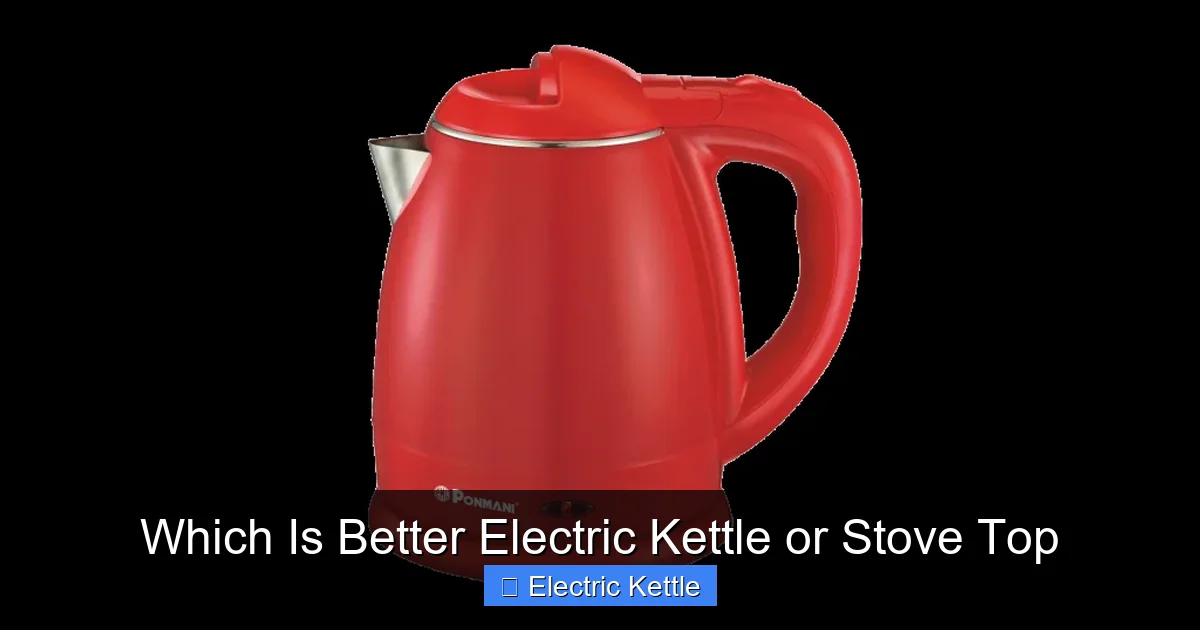
Visual guide about Which Is Better Electric Kettle or Stove Top
Image source: ponmani.com
When it comes to boiling water, speed matters—especially on busy mornings. If you’re rushing to make tea before work or preparing instant noodles in a hurry, you want results fast. So, which kettle wins the race?
Electric Kettles: The Speed Champions
Electric kettles are designed for one job: heating water quickly and efficiently. Most modern electric kettles can boil a full liter of water in just 3 to 5 minutes. High-end models with 1500–1800 watts of power can even do it in under 3 minutes. That’s because the heating element is submerged directly in the water, transferring heat with minimal loss.
For example, the popular Breville BKE830XL Smart Kettle boils a full pot in about 4 minutes and offers precise temperature control for different beverages. Whether you’re brewing green tea at 175°F or French press coffee at 200°F, it heats to the exact degree—no guesswork.
Stove Top Kettles: Slower but Steady
Stove top kettles, on the other hand, rely on your stove’s heat source. On a gas stove, they typically take 5 to 8 minutes to boil. On electric coils, it can stretch to 10 minutes or more. Induction stoves are faster, often matching electric kettles in speed, but not all stove top kettles are induction-compatible.
The delay comes from heat transfer. The flame or coil heats the kettle’s base, which then warms the water. This indirect method loses energy to the air and the surrounding environment. Plus, if you’re distracted and forget to turn off the stove, you could end up with a dry, overheated kettle.
Real-World Example: Morning Rush
Imagine it’s 7:15 a.m. You’re making coffee and need hot water fast. With an electric kettle, you fill it, press a button, and in 4 minutes, your water is ready. You can even set it to “keep warm” if you’re not ready to pour yet.
With a stove top kettle, you place it on the burner, wait for the whistle, and hope you don’t get sidetracked by emails or kids. If you’re using an electric stove, you might be waiting closer to 8 minutes. That extra time adds up over a year—potentially hours lost.
So, if speed is your top priority, electric kettles clearly win. But speed isn’t the only factor. Let’s look at how efficiently each kettle uses energy.
Energy Efficiency: Saving Power and Money
Energy efficiency isn’t just good for the planet—it’s good for your wallet. The more efficiently your kettle uses electricity or gas, the lower your utility bills will be. So, which kettle is the greenest choice?
Electric Kettles: Energy-Smart Design
Electric kettles are among the most energy-efficient appliances in the kitchen. They convert nearly all the electricity they use into heat, with minimal waste. According to the U.S. Department of Energy, electric kettles are about 80–90% efficient. That means almost all the energy goes into heating the water, not the air around it.
Many electric kettles also feature automatic shut-off once the water reaches boiling point. This prevents overheating and saves energy. Some models even let you boil only the amount of water you need, reducing waste. For instance, if you only need one cup of water, you don’t have to boil a full pot.
Stove Top Kettles: Higher Energy Loss
Stove top kettles are less efficient. Gas stoves are typically 40–55% efficient, meaning more than half the energy is lost to the air. Electric coil stoves are slightly better at 60–70%, but still lag behind electric kettles. Induction stoves are the most efficient stove type, reaching up to 85%, but again, only if your kettle is compatible.
Another issue: stove top kettles often require more water than needed. You might fill it to the top “just in case,” but that means heating extra water you don’t use. Over time, that wasted energy adds up.
Cost Comparison Over Time
Let’s say you boil water twice a day. Using an electric kettle might cost about $5–$8 per year in electricity. A gas stove top kettle could cost $10–$15, depending on gas prices. While the difference seems small, it compounds over years. Plus, electric kettles reduce your carbon footprint by using energy more wisely.
So, if you’re eco-conscious or watching your bills, electric kettles are the smarter long-term investment.
Versatility and Compatibility: Where Can You Use Them?
Not all kitchens are the same. Some have gas stoves, others use induction, and some people enjoy camping or living off-grid. Your kettle needs to work in your environment. That’s where versatility comes in.
Stove Top Kettles: The Universal Option
Stove top kettles are incredibly versatile. They work on gas, electric coil, induction (if made of magnetic material), and even campfires. This makes them ideal for travelers, campers, or people with older homes that lack modern appliances.
For example, the classic Chantal Classic Tea Kettle works on any stovetop and is perfect for outdoor adventures. You can take it camping, use it on a portable gas burner, or even heat water over a fire pit. No electricity needed.
Electric Kettles: Limited by Power Source
Electric kettles require an electrical outlet. That’s fine in most homes, but they’re useless during power outages, on camping trips, or in remote areas. Some newer models come with USB or battery options, but these are rare and often underpowered.
Also, electric kettles are not compatible with all stovetops. You can’t place them on a gas burner or induction cooktop and expect them to work. They’re standalone appliances, which limits their flexibility.
Kitchen Layout Matters
Consider your kitchen setup. If you have limited counter space, a stove top kettle might be better—it doesn’t take up room when not in use. But if you’re short on stove burners during meal prep, an electric kettle frees up space.
Also, some people prefer the aesthetic of a stove top kettle—its classic design adds charm to a rustic or vintage kitchen. Electric kettles, while sleek, can look more industrial.
So, if you value flexibility and don’t mind a slower boil, stove top kettles win on versatility. But if you’re always near an outlet and want speed, electric is the way to go.
Safety Features: Which Is Safer to Use?
Safety should never be an afterthought—especially when dealing with boiling water. A moment of distraction can lead to burns, spills, or even fires. Let’s compare how each kettle protects you.
Electric Kettles: Built-In Safety
Modern electric kettles come packed with safety features:
– Auto shut-off: Turns off when water reaches boiling point.
– Boil-dry protection: Stops heating if there’s no water inside.
– Cool-touch exterior: Prevents burns when handling.
– Lid locks: Some models lock the lid during boiling to prevent spills.
These features make electric kettles ideal for families with kids or elderly users. You can walk away without worrying about forgetting the kettle.
Stove Top Kettles: Manual Monitoring Required
Stove top kettles rely on you to monitor them. There’s no automatic shut-off—unless you have a smart stove (which most people don’t). If you get distracted, the water can boil dry, damaging the kettle or even causing a fire.
The whistle is a helpful alert, but it’s not foolproof. Some kettles whistle softly, and others may not whistle at all if the lid is on too tight. Plus, lifting a hot kettle from the stove can lead to spills or burns if not handled carefully.
Real Risk: The Forgotten Kettle
Imagine this: You start boiling water for tea, then get a phone call. Five minutes later, you return to a dry, smoking kettle. With an electric model, it would have turned off automatically. With a stove top, you’re lucky if the whistle woke you up.
Electric kettles reduce human error. That’s a big win for safety.
Cost and Maintenance: What’s the Long-Term Investment?
Price isn’t just about the initial purchase. It’s also about how much you’ll spend on maintenance, repairs, and replacements over time.
Upfront Cost: Stove Top Wins
Stove top kettles are generally cheaper. You can find a decent stainless steel model for $15–$30. Even high-end enamel kettles rarely exceed $60.
Electric kettles start around $40 for basic models and can go up to $150+ for smart kettles with temperature control, timers, and app connectivity. So, if you’re on a tight budget, stove top is the obvious choice.
Maintenance: Electric Requires More Care
Electric kettles need regular descaling to remove mineral buildup from the heating element. If you have hard water, this could be monthly. You’ll need vinegar or a commercial descaler, which adds to the cost.
Stove top kettles are easier to clean—just wash with soap and water. However, they can tarnish or discolor over time, especially if left on high heat. Some people use polish to restore shine, but it’s not always necessary.
Lifespan and Repairs
A well-made stove top kettle can last 10+ years with minimal care. Electric kettles typically last 3–5 years, though higher-end models may last longer. Repairs are rare for stove top kettles, but electric ones may need element or switch replacements—often not worth the cost.
So, while electric kettles cost more upfront and require maintenance, they offer convenience and safety. Stove top kettles are cheaper and simpler but demand more attention.
Noise, Convenience, and User Experience
Sometimes, the little things make the biggest difference. How a kettle sounds, feels, and fits into your routine can sway your decision.
Noise Levels: Electric Is Quieter
Electric kettles are relatively quiet. You’ll hear a gentle hum as they heat, but no loud whistling. Some models are so quiet you might not even notice them working.
Stove top kettles, especially the classic whistling kind, can be loud. The whistle is designed to alert you, but it might wake up light sleepers or disturb a quiet home. If you live in an apartment or have roommates, this could be a dealbreaker.
Convenience Features
Electric kettles often include extras like:
– Variable temperature settings: Perfect for different teas and coffees.
– Keep-warm function: Maintains temperature for 30–60 minutes.
– LED indicators: Show when the kettle is on or ready.
– Removable bases: Make pouring and cleaning easier.
Stove top kettles offer none of these. You get hot water—nothing more. But for some, that simplicity is part of the appeal.
User Experience: Which Feels Better?
Using an electric kettle feels modern and effortless. Fill, press, wait, pour. With a stove top, you’re more involved—adjusting the flame, listening for the whistle, lifting a hot handle.
If you value a hands-off experience, electric wins. If you enjoy the ritual of stovetop brewing, the classic kettle might feel more satisfying.
Conclusion: Which Is Better for You?
So, which is better: electric kettle or stove top? The answer depends on your needs.
Choose an electric kettle if you:
– Want fast, efficient boiling.
– Value safety and convenience.
– Have access to electricity.
– Brew different types of tea or coffee.
– Prefer quiet, modern appliances.
Choose a stove top kettle if you:
– Want a lower upfront cost.
– Need versatility (camping, off-grid, multiple stovetops).
– Enjoy the classic look and sound.
– Don’t mind monitoring the boil.
There’s no wrong choice—only the right one for your lifestyle. Many households even use both: an electric kettle for daily use and a stove top for special occasions or travel.
Ultimately, the best kettle is the one you’ll use happily, safely, and efficiently every day.
Frequently Asked Questions
Which boils water faster: electric kettle or stove top?
Electric kettles are significantly faster, boiling water in 3–5 minutes compared to 5–10 minutes for stove top kettles. The direct heating element in electric models transfers heat more efficiently.
Are electric kettles more energy efficient than stove top kettles?
Yes, electric kettles are up to 30% more energy efficient. They convert nearly all electricity into heat, while stove top kettles lose energy to the air and surrounding environment.
Can I use a stove top kettle on an induction stove?
Only if the kettle is made of magnetic material like stainless steel or cast iron. Aluminum or copper kettles won’t work on induction stoves unless they have a magnetic base.
Do electric kettles need regular maintenance?
Yes, especially if you have hard water. Descaling every 1–3 months prevents mineral buildup on the heating element and ensures optimal performance.
Are stove top kettles safe to leave unattended?
No. Stove top kettles require monitoring to prevent boil-dry situations. Electric kettles are safer because they automatically shut off when water reaches boiling point.
Can I use an electric kettle during a power outage?
No, electric kettles require electricity. Stove top kettles are better for power outages, camping, or off-grid living since they work on gas, fire, or induction.