
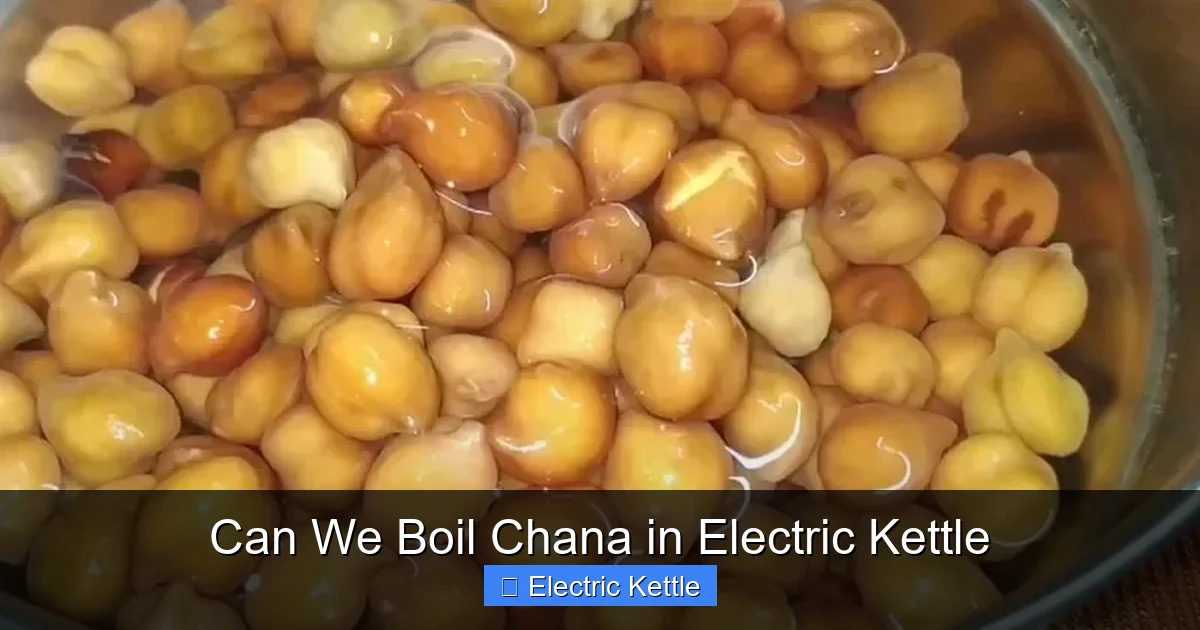
Yes, you can boil chana (chickpeas) in an electric kettle—but with important caveats. While it’s technically possible, doing so requires caution to avoid damaging the kettle or creating a mess. This guide covers safe practices, ideal kettle types, and step-by-step instructions.
Key Takeaways
- Boiling chana in an electric kettle is possible but not always recommended: Most standard kettles aren’t designed for solid foods, so residue and starch can clog the heating element.
- Use only kettles with wide openings and removable filters: These allow easier cleaning and reduce the risk of blockages from chickpea starch.
- Pre-soak chana for faster cooking: Soaking reduces boiling time and helps prevent overflow or uneven cooking inside the kettle.
- Never fill the kettle beyond half capacity: Chana expands when cooked, and excess water can lead to overflow and potential electrical hazards.
- Clean the kettle thoroughly after use: Residual starch and protein can build up over time, affecting performance and taste.
- Consider alternative appliances for frequent use: Pressure cookers or stovetop pots are safer and more efficient for cooking legumes regularly.
- Safety first—always monitor the process: Never leave the kettle unattended while boiling chana, as foam or bubbles may cause spills.
📑 Table of Contents
- Can We Boil Chana in Electric Kettle? The Truth Explained
- How Electric Kettles Work: Understanding the Basics
- Is It Safe to Boil Chana in an Electric Kettle?
- Step-by-Step Guide: How to Boil Chana in an Electric Kettle
- Tips for Success and Common Mistakes to Avoid
- Alternative Methods: When to Skip the Kettle
- Cleaning and Maintenance After Boiling Chana
- Final Thoughts: Should You Boil Chana in an Electric Kettle?
Can We Boil Chana in Electric Kettle? The Truth Explained
If you’ve ever found yourself short on time, kitchen space, or cooking tools, you might have wondered: *Can we boil chana in an electric kettle?* It’s a question that pops up often among students, office workers, and travelers who rely on compact appliances. Chana—also known as chickpeas—is a staple in many diets, packed with protein, fiber, and essential nutrients. But cooking them traditionally requires soaking, simmering, and patience. So, is there a shortcut using your trusty electric kettle?
The short answer is yes—but it’s not as simple as dropping dry chickpeas into boiling water. Electric kettles are primarily designed to heat water quickly and efficiently. They’re not built to handle solid ingredients, especially starchy legumes like chana. However, with the right precautions, proper technique, and the right type of kettle, you *can* boil chana safely. This article will walk you through everything you need to know—from how it works, to safety tips, cleaning advice, and when it’s better to avoid it altogether.
Let’s dive into the details and separate fact from fiction so you can make an informed decision the next time you’re craving a bowl of soft, tender chana.
How Electric Kettles Work: Understanding the Basics
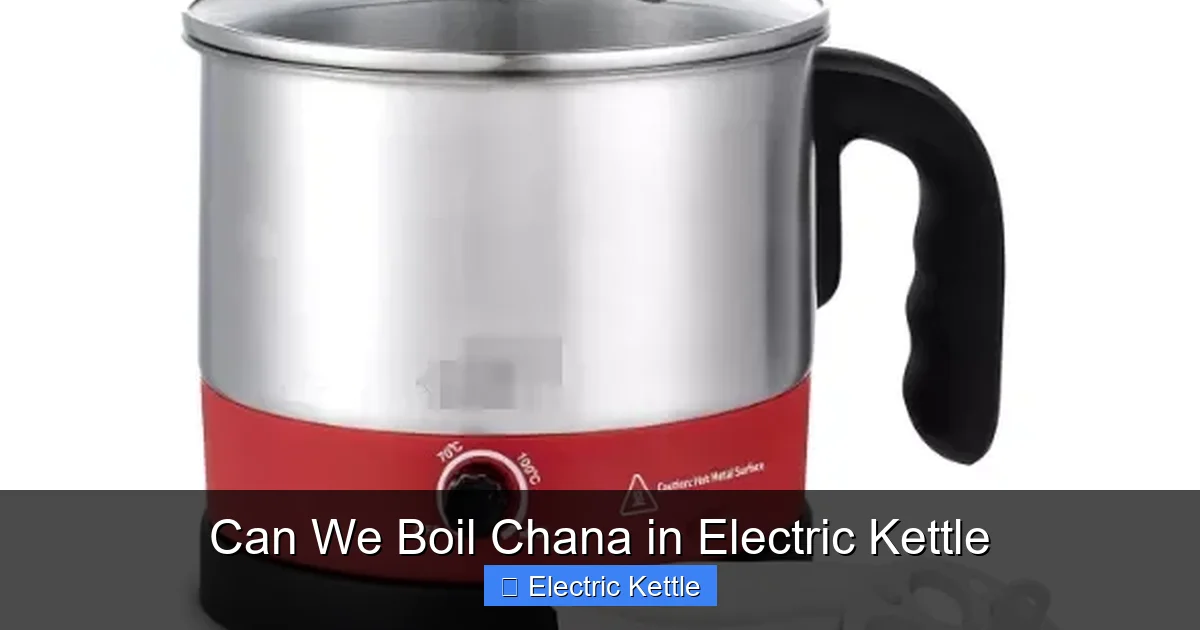
Visual guide about Can We Boil Chana in Electric Kettle
Image source: irrorwxhiqijjr5q.ldycdn.com
Before we get into whether you can boil chana in an electric kettle, it helps to understand how these appliances function. Most electric kettles operate using a concealed heating element at the base. When you press the “on” switch, electricity flows through this element, heating up rapidly and transferring heat directly to the water. Once the water reaches boiling point (usually around 100°C or 212°F), an automatic shut-off mechanism kicks in, turning off the kettle to prevent overheating.
This design is perfect for boiling water for tea, coffee, or instant noodles. But when you introduce solid foods like chana, things get complicated. Chickpeas release starch and proteins into the water as they cook, creating a thick, foamy liquid. This foam can rise quickly, especially if the kettle is overfilled, and may overflow through the spout. Worse, the starch can coat the heating element or clog the filter, reducing efficiency and potentially causing damage over time.
Additionally, most kettles have narrow openings and fixed interiors, making it difficult to stir the chana or check their doneness. Without proper agitation, some chickpeas may remain undercooked while others turn mushy. So while the heating mechanism *can* bring water to a boil with chana inside, the appliance isn’t optimized for this kind of cooking.
That said, newer models—especially those with wide mouths, removable lids, and detachable filters—are more forgiving. If you’re considering boiling chana in your kettle, your appliance’s design plays a big role in whether it’s feasible.
Is It Safe to Boil Chana in an Electric Kettle?
Safety is the biggest concern when using an electric kettle for anything other than water. So, is it safe to boil chana? The answer depends on several factors: the type of kettle, how you prepare the chana, and how you monitor the process.
Risks of Boiling Chana in a Standard Kettle
Standard electric kettles are not food-safe for solid ingredients. Here’s why:
– **Starch buildup:** Chickpeas release a lot of starch when boiled. This sticky residue can coat the heating element, reduce heat transfer, and eventually cause the kettle to overheat or fail.
– **Foam overflow:** As chana cook, they create foam that can rise rapidly. If the kettle doesn’t have enough headspace, this foam can spill out, potentially causing burns or short-circuiting the appliance.
– **Clogged filters:** Many kettles have mesh filters to prevent limescale from entering the spout. Starchy water can clog these filters, leading to poor pouring performance or even leaks.
– **Difficulty cleaning:** Narrow openings make it hard to scrub the interior. Leftover bits of chana or starch can rot or mold if not cleaned properly, affecting future use.
When It Might Be Safe
Despite these risks, boiling chana *can* be safe under the right conditions:
– You’re using a **kettle with a wide opening** and **removable filter**.
– The chana are **pre-soaked** for at least 6–8 hours, reducing cooking time and starch release.
– You **don’t overfill** the kettle—fill only up to the halfway mark.
– You **stay nearby** and monitor the process to prevent overflow.
– You **clean the kettle immediately** after use.
If your kettle is labeled as “food-safe” or designed for cooking (some modern models are), your chances of success increase. Always check the manufacturer’s guidelines—some brands explicitly warn against using the kettle for anything other than water.
Step-by-Step Guide: How to Boil Chana in an Electric Kettle
If you’ve decided to give it a try, here’s a safe and effective method to boil chana in your electric kettle. Follow these steps carefully to minimize risks and get the best results.
Step 1: Choose the Right Kettle
Not all kettles are created equal. For boiling chana, look for:
– A **wide-mouth design** (at least 4 inches in diameter) for easy access.
– A **removable or cleanable filter** to prevent clogs.
– A **transparent or semi-transparent body** so you can monitor the water level and foam.
– A **boil-dry protection** feature to shut off if water runs low.
Avoid kettles with narrow spouts, fixed filters, or sealed bases—they’re harder to clean and more prone to damage.
Step 2: Soak the Chana Overnight
Dry chickpeas can take 1–2 hours to cook, which is too long for most kettles. Soaking reduces cooking time to 20–30 minutes and helps prevent overflow.
– Rinse ½ cup of dried chana under cold water.
– Place them in a bowl and cover with 2–3 cups of water.
– Soak for 8–12 hours (or overnight).
– Drain and rinse before use.
Soaked chana are softer, cook faster, and release less foam—making them ideal for kettle boiling.
Step 3: Prepare the Kettle
– Wash the kettle thoroughly to remove any residue.
– Place the soaked chana into the kettle.
– Add enough water to cover the chana by at least 1 inch—do not exceed the halfway mark on the kettle’s capacity gauge.
– Make sure the lid closes securely.
Step 4: Boil and Monitor
– Plug in the kettle and turn it on.
– Stay in the room and watch for foam buildup. If foam starts rising, turn off the kettle immediately to prevent overflow.
– Once boiling, let it cook for 20–30 minutes. You may need to restart the kettle a few times if it auto-shuts off.
– Check the chana periodically by opening the lid (carefully—steam is hot!). They should be soft and tender when done.
Step 5: Drain and Rinse
– Once cooked, unplug the kettle and let it cool slightly.
– Pour the chana and water into a colander to drain.
– Rinse the chana under cold water to stop cooking and remove excess starch.
Step 6: Clean the Kettle Immediately
This step is crucial. Starchy residue can harden and damage the kettle over time.
– Rinse the interior with warm water.
– Use a soft brush or sponge to scrub away any stuck bits.
– If needed, soak the kettle in a mixture of water and vinegar (1:1 ratio) for 15–20 minutes to dissolve mineral and starch buildup.
– Rinse thoroughly and dry before storing.
Tips for Success and Common Mistakes to Avoid
Boiling chana in an electric kettle is a bit of an experiment—even for experienced users. Here are some practical tips to increase your chances of success, along with common pitfalls to avoid.
Pro Tips for Better Results
– **Use a timer:** Set a kitchen timer for 25 minutes to remind yourself to check the chana. Most kettles auto-shut off after boiling, so you’ll need to restart them.
– **Add a pinch of salt:** Salt helps soften the chickpeas and enhances flavor. Add it after the first boil to avoid toughening the skins.
– **Stir gently (if possible):** If your kettle allows, use a long spoon to stir the chana halfway through cooking for even softening.
– **Use a kettle with temperature control:** Some advanced kettles let you set lower temperatures. While not necessary, a gentler boil can reduce foaming.
– **Cook in small batches:** Don’t try to boil more than ½ cup of soaked chana at a time. Overloading increases the risk of overflow and uneven cooking.
Common Mistakes to Avoid
– **Using dry chana:** Dry chickpeas absorb water slowly and can take too long to cook, increasing the risk of kettle damage.
– **Overfilling the kettle:** This is the #1 cause of overflow and spills. Always leave at least 2–3 inches of space at the top.
– **Leaving the kettle unattended:** Foam can rise quickly. Never walk away while boiling chana.
– **Skipping the cleaning step:** Residue buildup can ruin your kettle over time. Clean it right after use.
– **Using a damaged or old kettle:** Cracks, loose parts, or worn heating elements increase the risk of malfunction.
Alternative Methods: When to Skip the Kettle
While boiling chana in an electric kettle *can* work in a pinch, it’s not the most efficient or reliable method—especially if you cook legumes regularly. Here are better alternatives:
1. Stovetop Pot (Best for Large Batches)
The traditional method: soak chana overnight, then simmer in a pot for 45–60 minutes. It’s simple, effective, and gives you full control over the process. Ideal for meal prepping or cooking for multiple people.
2. Pressure Cooker (Fastest and Most Efficient)
A pressure cooker can cook soaked chana in just 15–20 minutes. It’s energy-efficient, retains nutrients, and prevents overflow. If you cook legumes often, this is a worthwhile investment.
3. Instant Pot or Multi-Cooker
These appliances combine the benefits of a pressure cooker and slow cooker. Use the “pressure cook” function for quick chana, or the “soup” setting for a gentler simmer.
4. Microwave (For Small Portions)
Place soaked chana in a microwave-safe bowl with water, cover, and microwave in 5-minute intervals until tender. Stir between cycles. It’s not perfect, but it works in a hurry.
When the Kettle Makes Sense
The electric kettle method is best reserved for:
– Small quantities (1–2 servings).
– Emergency situations (e.g., no stove access).
– Travel or dorm living.
– Occasional use—not daily cooking.
If you’re boiling chana more than once a week, consider upgrading to a pressure cooker or multi-cooker for better results and safety.
Cleaning and Maintenance After Boiling Chana
One of the biggest downsides of boiling chana in an electric kettle is the cleanup. Starchy residue, mineral deposits, and tiny chickpea bits can accumulate quickly. Neglecting maintenance can lead to bad odors, reduced performance, and even appliance failure.
Immediate Cleaning Steps
– **Rinse immediately:** As soon as the kettle cools, rinse the interior with warm water to remove loose starch.
– **Scrub gently:** Use a soft sponge or bottle brush to clean the walls and base. Avoid abrasive scrubbers that can scratch the surface.
– **Soak if needed:** For stubborn residue, fill the kettle with a 1:1 mix of water and white vinegar. Let it sit for 20–30 minutes, then scrub and rinse.
Deep Cleaning Monthly
Even with regular rinsing, mineral buildup (limescale) can occur, especially in hard water areas. Once a month:
– Boil a mixture of equal parts water and vinegar.
– Let it sit for 1 hour.
– Rinse thoroughly and boil plain water once to remove any vinegar taste.
What Not to Do
– Don’t use bleach or harsh chemicals—they can damage the kettle and leave toxic residues.
– Don’t submerge the base or electrical parts in water.
– Don’t use metal utensils to scrape the interior—they can scratch and create rust spots.
Proper maintenance ensures your kettle stays functional and safe, whether you’re boiling water or experimenting with chana.
Final Thoughts: Should You Boil Chana in an Electric Kettle?
So, can we boil chana in an electric kettle? Yes—but with conditions. It’s a clever hack for small portions, limited kitchen setups, or emergency cooking. However, it’s not the ideal method for regular use. The risks of overflow, starch buildup, and appliance damage outweigh the convenience for many users.
If you do decide to try it, follow the steps carefully: soak the chana, use the right kettle, don’t overfill, stay nearby, and clean thoroughly afterward. Think of it as a temporary solution, not a long-term cooking strategy.
For daily or frequent chana cooking, invest in a pressure cooker or stovetop pot. They’re safer, faster, and produce better results. But if you’re in a dorm, traveling, or just out of options, your electric kettle can come to the rescue—just treat it with care.
At the end of the day, kitchen appliances are tools. With a little creativity and caution, you can stretch their use beyond the manual. Just remember: safety, cleanliness, and common sense should always come first.
Frequently Asked Questions
Can I boil dry chana directly in an electric kettle?
It’s not recommended. Dry chana take much longer to cook and can cause overflow or damage the kettle due to excessive starch release. Always soak them overnight first.
Will boiling chana ruin my electric kettle?
It can if done repeatedly without proper cleaning. Starchy residue can clog filters and coat the heating element. Occasional use with thorough cleaning is usually safe.
What type of electric kettle is best for boiling chana?
Choose a kettle with a wide opening, removable filter, transparent body, and boil-dry protection. These features make cooking and cleaning easier and safer.
How long does it take to boil chana in an electric kettle?
Soaked chana typically take 20–30 minutes to cook in a kettle, depending on the quantity and kettle power. You may need to restart the kettle multiple times.
Can I add salt or spices while boiling chana in the kettle?
You can add a pinch of salt after the first boil to enhance flavor and soften the chickpeas. Avoid adding oil or strong spices, as they can increase foaming and staining.
Is it safe to leave the kettle unattended while boiling chana?
No. Foam can rise quickly and overflow, posing a burn or electrical hazard. Always stay nearby and monitor the process closely.