
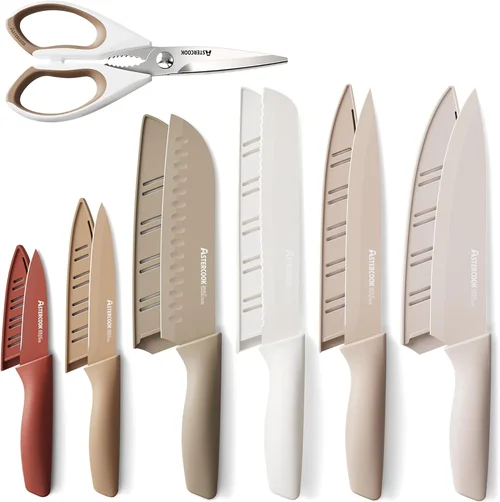
When it comes to outfitting a minimalist kitchen, every tool must earn its place. Unlike traditional kitchens cluttered with specialized gadgets and redundant utensils, a minimalist approach demands intentionality—each item should serve multiple purposes, last for years, and enhance efficiency without sacrificing aesthetics. In this context, kitchen knives aren’t just tools; they’re foundational elements of your culinary workflow. A well-chosen set of knives can streamline meal prep, reduce countertop chaos, and elevate your cooking experience, all while aligning with the clean, functional ethos of minimalist design.
This guide is designed for home cooks, design-conscious individuals, and anyone embracing a simpler, more intentional lifestyle who wants to invest wisely in kitchen knives. Whether you’re downsizing your kitchen, starting fresh in a new space, or simply tired of cluttered drawers filled with underused cutlery, you’ll learn how to select the right knives that deliver maximum performance with minimal footprint. We’ll walk you through the essential factors to consider—from blade material and handle ergonomics to budget and brand reliability—and help you avoid common pitfalls that lead to buyer’s remorse. By the end, you’ll have a clear roadmap to building a lean, powerful knife collection that supports your cooking style and complements your minimalist values.
The market for kitchen knives has evolved dramatically over the past decade. Once dominated by bulky block sets and mass-produced stainless steel blades, today’s offerings range from high-carbon Japanese steel masterpieces to sleek, space-saving modular systems. Brands like Shun, Wüsthof, Global, and Miyabi now compete with innovative startups like Hedley & Bennett and Made In, each promising superior sharpness, durability, and design. Meanwhile, consumers are increasingly prioritizing sustainability, craftsmanship, and long-term value over short-term savings. This shift has made it both easier and more challenging to choose the right knives: while options abound, discerning quality from marketing hype requires knowledge. Our goal is to cut through the noise and give you the expertise needed to make confident, informed decisions.

What to Look for When Buying Buying Guide
1. Blade Material and Steel Type
The heart of any knife is its blade, and the type of steel used directly impacts performance, edge retention, ease of sharpening, and resistance to corrosion. For minimalist kitchens, where every knife must pull double—or even triple—duty, choosing the right steel is critical.
High-carbon stainless steel is widely regarded as the gold standard for home cooks. It combines the sharpness and edge retention of carbon steel with the rust resistance of stainless steel. Popular alloys include VG-10 (used by Shun and Miyabi), X50CrMoV15 (found in Wüsthof and Zwilling), and AUS-10 (common in Japanese brands like Tojiro). These steels hold a fine edge well, resist staining, and are relatively easy to maintain.
Alternatively, pure carbon steel blades—like those made from Shirogami or Aogami steel—offer exceptional sharpness and ease of sharpening but require more care to prevent rust and discoloration. They’re ideal for experienced users who don’t mind regular oiling and drying. On the other end of the spectrum, ceramic blades are lightweight and retain sharpness for years, but they’re brittle and can chip if mishandled—making them less versatile for everyday use.
For minimalist kitchens, we recommend high-carbon stainless steel as the best balance of performance and practicality. It delivers professional-level results without demanding obsessive maintenance.
2. Blade Geometry and Edge Angle
Blade geometry refers to the shape and angle of the cutting edge, which affects how the knife performs across different tasks. Western-style knives (like those from Germany) typically feature a curved belly and a 20-degree edge angle per side, making them excellent for rocking motions when chopping herbs or dicing onions. Japanese-style knives often have straighter edges and sharper angles (15–16 degrees per side), ideal for precise slicing and clean cuts on vegetables, fish, and meat.
In a minimalist kitchen, versatility is key. A knife that excels at both chopping and slicing reduces the need for multiple specialized blades. Consider a Santoku—a Japanese all-purpose knife with a flat edge and sheepsfoot tip—that handles everything from mincing garlic to slicing tomatoes with ease. Alternatively, a Western chef’s knife with a slightly modified grind can offer similar adaptability.
Pay attention to the blade’s taper: full-tapered blades (thinner at the spine and edge) provide better balance and control, while thicker blades offer more durability for heavy-duty tasks like breaking down poultry. For most home cooks, a medium taper strikes the right balance.
3. Handle Design and Ergonomics
A knife’s handle might seem secondary, but poor ergonomics can lead to hand fatigue, slipping, and even injury during prolonged use. In a minimalist kitchen where you rely heavily on a few core knives, comfort and control are non-negotiable.
Handles come in three main types: full tang (the blade extends through the handle), partial tang, and hidden tang. Full-tang construction offers superior balance and durability, distributing weight evenly from tip to heel. It’s the preferred choice for serious cooks and professionals.
Material matters too. Traditional options include wood (warm and classic but require maintenance), polymer (durable and dishwasher-safe), and composite materials like G-10 or Micarta (lightweight, grippy, and resistant to moisture). Avoid overly ornate or bulky handles—they add unnecessary weight and can disrupt the clean lines of a minimalist setup.
The shape should fit naturally in your hand. Look for contoured handles with a slight flare at the end to prevent slipping. Test the grip: your index finger should rest comfortably along the spine, and your thumb should find a natural resting spot near the bolster (if present).
4. Weight and Balance
Knife weight and balance influence how the tool feels during use. A well-balanced knife reduces wrist strain and improves precision. Generally, knives fall into three categories: blade-heavy, handle-heavy, or neutral balance.
Blade-heavy knives (common in Japanese styles) use the weight of the blade to do the cutting, requiring less arm effort—ideal for fine slicing. Handle-heavy knives (often seen in budget sets) can feel clunky and tiring over time. Neutral balance, where the pivot point is near the middle of the knife, offers the best of both worlds and is preferred by most chefs.
For minimalist kitchens, aim for a knife that feels like an extension of your hand—not too light (which can lack authority) or too heavy (which causes fatigue). A good test: hold the knife by the blade (safely, with a towel) and see where it balances. If it tips toward the handle, it’s handle-heavy; if it dips toward the tip, it’s blade-heavy.
Most high-quality chef’s knives weigh between 6 and 9 ounces—light enough for agility, substantial enough for power.
5. Maintenance Requirements
Minimalism isn’t just about owning fewer things—it’s about reducing ongoing effort. A knife that demands daily polishing, special storage, or frequent professional sharpening contradicts the low-maintenance ethos.
Stainless steel blades are generally low-maintenance: rinse, dry, and store properly, and they’ll stay rust-free for years. Carbon steel, while stunning and sharp, requires oiling after each use and careful drying to prevent oxidation. Ceramic knives never rust but must be stored separately to avoid chipping.
Consider how you’ll sharpen your knives. High-end steels hold edges longer but may require specialized sharpening tools (like whetstones). If you prefer convenience, look for knives compatible with pull-through sharpeners or magnetic sharpening systems—though these can degrade edge quality over time.
Storage is another factor. Minimalist kitchens often lack drawer space, so consider magnetic strips or in-drawer trays that keep knives accessible yet protected. Avoid storing knives loosely in drawers—they dull quickly and pose safety risks.
6. Brand Reputation and Craftsmanship
Not all knives are created equal, even if they look similar. Reputable brands invest in metallurgy, heat treatment, and quality control—factors that directly impact performance and longevity.
German brands like Wüsthof and Zwilling have centuries of tradition and excel in durable, balanced knives suited for Western cooking styles. Japanese manufacturers such as Shun, Global, and Masahiro prioritize precision, sharpness, and elegant design, often using layered Damascus steel for beauty and performance.
Emerging brands like Hedley & Bennett (founded by a chef) and Made In (backed by Michelin-starred chefs) blend modern aesthetics with pro-grade functionality, often at more accessible price points. Meanwhile, boutique makers like Bob Kramer (collaborating with Zwilling) or Murray Carter (Canadian blacksmith) offer hand-forged artistry—but at premium prices.
When evaluating brands, look beyond marketing. Check for consistent reviews, warranty policies, and whether they offer repair or reconditioning services. A brand that stands behind its products signals confidence in craftsmanship.
7. Warranty and Customer Support
A minimalist kitchen thrives on reliability. You don’t want to replace knives every few years due to manufacturing defects or premature wear. A strong warranty reflects a brand’s commitment to quality.
Most premium brands offer limited lifetime warranties covering defects in materials and workmanship. Some go further: Wüsthof offers free sharpening for life, while Shun provides a lifetime warranty against defects and even covers accidental damage in some cases.
Read the fine print. Does the warranty cover rust, chipping, or handle loosening? Is it transferable? Can you get service locally, or must you ship the knife back? For international buyers, consider import duties and shipping costs for repairs.
Customer support matters too. Can you easily reach a human? Do they offer guidance on care and use? Brands with responsive support teams make ownership smoother—especially important when you’re relying on just a few essential tools.
8. Aesthetic Integration with Minimalist Design
In a minimalist kitchen, form follows function—but form still matters. Your knives should complement your space, not clash with it. Sleek, unadorned designs in neutral tones (matte black, brushed steel, natural wood) blend seamlessly with modern cabinetry and open shelving.
Avoid overly decorative handles, bright colors, or bulky rivets that disrupt visual flow. Magnetic knife strips made of bamboo, walnut, or stainless steel keep blades visible yet tidy, turning your knives into functional art.
Consider the overall silhouette. A streamlined chef’s knife with a hidden tang and seamless handle looks more integrated than a traditional full-tang model with exposed rivets. Some brands, like Global, use seamless stainless steel handles that are both hygienic and visually cohesive.
Ultimately, your knives should feel like part of the kitchen’s architecture—not just tools, but design elements that enhance the environment.
Different Types of Buying Guide

Common Buying Mistakes to Avoid
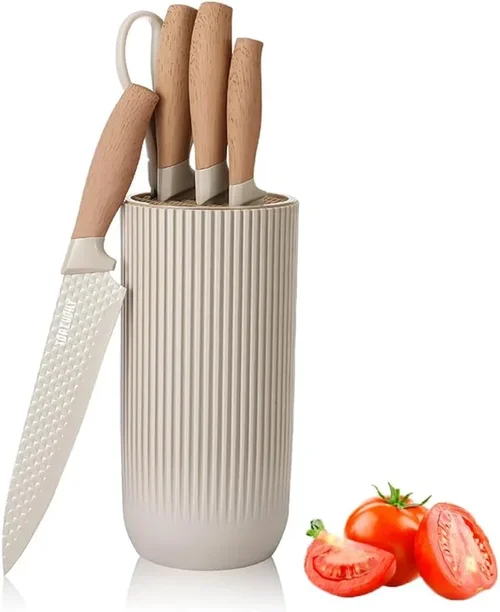
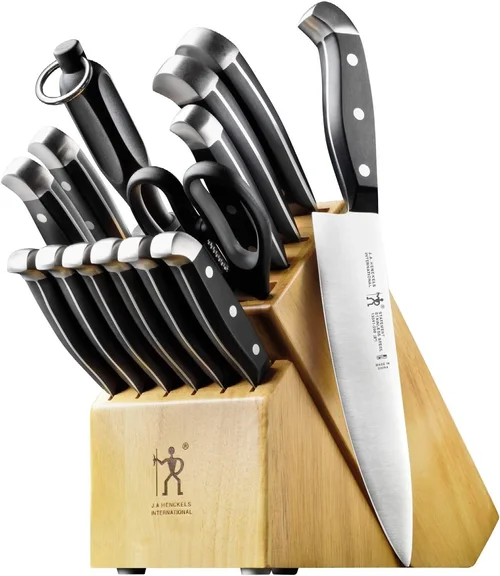
❌ Mistake: Buying a Full Knife Block Set
Why it’s bad: Most knife blocks include redundant or rarely used knives (like steak knives, cleavers, or specialty slicers), taking up valuable space and encouraging clutter. In a minimalist kitchen, this defeats the purpose—you end up with tools you don’t need and less room for what you do.
What to do instead: Build a custom set of 3–4 essential knives: a chef’s knife, paring knife, bread knife, and optionally a Santoku or utility knife. Store them on a magnetic strip to save counter and drawer space.
❌ Mistake: Prioritizing Looks Over Performance
Why it’s bad: A beautifully etched Damascus blade may look stunning on a shelf, but if it’s poorly heat-treated or has an uncomfortable handle, it will frustrate you during use. Minimalism values function as much as form.
What to do instead: Choose knives that balance aesthetics with ergonomics and steel quality. Read reviews from actual users, not just marketing copy. If possible, test the knife in person or buy from a retailer with a good return policy.
❌ Mistake: Ignoring Handle Comfort
Why it’s bad: An uncomfortable handle leads to hand fatigue, reduced control, and even repetitive strain injuries—especially if you cook daily. In a minimalist setup where you rely heavily on fewer tools, this becomes a major issue.
What to do instead: Prioritize ergonomics. Look for contoured handles, non-slip materials, and balanced weight distribution. If buying online, check return policies so you can test comfort at home.
❌ Mistake: Overlooking Maintenance Needs
Why it’s bad: Carbon steel knives require regular oiling and careful drying. If you’re not prepared for this upkeep, the blade will rust or discolor, ruining both performance and appearance.
What to do instead: Unless you’re committed to maintenance, stick with high-carbon stainless steel. It offers near-carbon performance with stainless convenience—perfect for minimalist lifestyles.
❌ Mistake: Choosing Based Solely on Price
Why it’s bad: Cheap knives often use low-grade steel that dulls quickly, have poor balance, and break easily. You’ll end up replacing them frequently, costing more in the long run and contradicting minimalist principles of durability.
What to do instead: Invest in quality. A single $150 chef’s knife that lasts 10+ years is better than three $50 knives that fail in two. Think long-term value, not upfront cost.
❌ Mistake: Neglecting Storage Solutions
Why it’s bad: Even the best knives will dull prematurely if stored improperly. Loose drawers cause blade-on-blade contact, leading to chips and rolled edges.
What to do instead: Use a magnetic strip, in-drawer tray, or blade guard. Magnetic strips also double as décor, enhancing your minimalist aesthetic while keeping knives accessible and protected.
❌ Mistake: Assuming One Knife Fits All
Why it’s bad: While a chef’s knife is versatile, it can’t perfectly replace a paring knife for peeling or a bread knife for slicing crusty loaves. Trying to do everything with one tool leads to frustration and subpar results.
What to do instead: Curate a small, intentional collection. Three well-chosen knives can handle 95% of kitchen tasks without clutter.
Budget Guidelines: How Much Should You Spend?
Entry-Level ($30–$75 per knife):
At this price point, expect decent stainless steel blades with basic handles. Brands like Victorinox Fibrox offer exceptional value—their chef’s knife is widely praised by professionals for its balance and edge retention. However, these knives may lack the refinement of higher-end models: handles might feel plasticky, and edges may require more frequent sharpening. Ideal for beginners or those on tight budgets, but not built for decades of use.
Mid-Range ($75–$150 per knife):
This is the sweet spot for most minimalist cooks. You’ll find high-carbon stainless steel, better heat treatment, and improved ergonomics. Brands like Shun Classic, Wüsthof Classic, and Global G-2 offer excellent performance and durability. These knives hold edges well, feel balanced in hand, and often come with lifetime warranties. A 3-knife set in this range can serve you reliably for 10+ years with proper care.
Premium ($150–$300 per knife):
Here, craftsmanship shines. Expect hand-forged blades, layered Damascus steel, premium handle materials (like pakkawood or micarta), and meticulous attention to detail. Brands like Miyabi, Bob Kramer, and Masamoto fall into this tier. These knives are favorites among serious home cooks and professionals. They offer superior sharpness, balance, and aesthetic appeal—but require more care and investment.
Luxury ($300+ per knife):
Reserved for collectors, enthusiasts, or those who view cooking as an art form. These knives often feature rare steels, custom handles, or limited-edition designs. While stunning, they may be overkill for everyday use. Unless you’re passionate about knife craftsmanship or cooking at a professional level, the marginal gains in performance rarely justify the cost for minimalist kitchens focused on practicality.
Expert Tips for Getting the Best Deal
1. Buy During Seasonal Sales: Major retailers like Williams Sonoma, Sur La Table, and Amazon offer significant discounts during Black Friday, Cyber Monday, and post-holiday sales. Sign up for newsletters to get early access. Japanese brands often have annual “knife days” with limited-time offers.
2. Consider Last Year’s Models: When new versions launch, previous models are often discounted. The performance difference is usually minimal, but you save 20–30%.
3. Shop Direct from Manufacturers: Brands like Shun, Wüsthof, and Global sometimes offer exclusive colors, bundles, or free shipping on their websites. You may also get better warranty support.
4. Look for “Seconds” or Factory Seconds: Some brands sell knives with minor cosmetic flaws (like slight handle imperfections) at reduced prices. These are fully functional and often indistinguishable in use.
5. Use Cashback and Rewards Programs: Credit cards with cashback on purchases or sites like Rakuten can add 3–10% savings on top of sale prices.
6. Test Before You Buy (When Possible): Visit kitchen stores to handle knives in person. Pay attention to weight, balance, and grip. If buying online, choose retailers with generous return windows (30 days or more).
7. Bundle Smartly: Some brands offer discounts when you buy multiple knives together. A 3-knife set might cost less than buying individually—but only if you actually need all three.
8. Invest in Care Tools: A $30 honing steel and $50 whetstone will keep your knives sharp for years, reducing the need for professional sharpening and extending blade life.

Frequently Asked Questions
Q: Do I really need more than one knife in a minimalist kitchen?
A: Yes—but only a few. A chef’s knife handles most tasks, but a paring knife is essential for detail work (like peeling or deveining shrimp), and a bread knife is indispensable for slicing without crushing. Three well-chosen knives cover 95% of needs without clutter.
Q: Are Japanese knives better than German knives?
A: Not necessarily—they’re different. Japanese knives are typically lighter, sharper, and better for precision slicing. German knives are heavier, more durable, and excel at chopping through bones or dense vegetables. Choose based on your cooking style, not nationality.
Q: Can I put my knives in the dishwasher?
A: No. Dishwashers expose blades to harsh detergents, high heat, and impact from other items, which can dull edges, corrode steel, and damage handles. Always hand-wash and dry immediately.
Q: How often should I sharpen my knives?
A: It depends on use, but most home cooks need to sharpen every 6–12 months. Use a honing steel weekly to maintain the edge between sharpenings.
Q: What’s the difference between a Santoku and a chef’s knife?
A: A Santoku has a flatter edge and shorter length, making it ideal for push-cutting vegetables. A chef’s knife has a curved belly for rocking motions. Many find the Santoku more comfortable for precise tasks, while the chef’s knife is more versatile for heavy chopping.
Q: Are expensive knives worth it?
A: If you cook regularly, yes. A high-quality knife improves safety (a sharp knife is less likely to slip), efficiency, and enjoyment. Think of it as an investment in your daily routine.
Q: How do I store knives in a small kitchen?
A: A wall-mounted magnetic strip is ideal—it saves space, protects blades, and looks sleek. Alternatively, use an in-drawer knife tray or individual blade guards.
Q: Can I use a chef’s knife for everything?
A: Technically yes, but not optimally. Trying to peel an apple with an 8″ chef’s knife is awkward and unsafe. A small paring knife is designed for those tasks.
Q: What’s the best way to sharpen a knife at home?
A: A whetstone (water stone) is the gold standard. Soak it, then sharpen at a consistent angle (15–20 degrees). Start with a coarse grit (200–400) for damaged edges, then finish with fine (1000+). Practice on an old knife first.
Q: Do I need a knife guard?
A: If storing in a drawer without a tray, yes. Blade guards protect the edge and prevent accidents. Silicone or leather guards are affordable and effective.
Our Final Recommendations
Best for Budget-Conscious Buyers: Victorinox Fibrox Pro Chef’s Knife (8″)
At under $50, this knife punches far above its weight. It features high-carbon stainless steel, a comfortable non-slip handle, and exceptional edge retention. Widely used in professional kitchens, it’s the ultimate value pick for minimalists who refuse to compromise on performance.
Best Overall Value: Shun Classic 8″ Chef’s Knife
Priced around $150, this Japanese icon combines VG-10 steel, a Damascus-clad blade, and an ergonomic pakkawood handle. It’s razor-sharp, beautifully balanced, and holds an edge for months. Perfect for those who want pro quality without luxury pricing.
Best Premium Option: Miyabi Birchwood SG2 8″ Chef’s Knife
At $300+, this hand-forged masterpiece uses ultra-hard SG2 micro-carbide steel (HRC 63) and features a stunning birchwood handle. It’s the pinnacle of Japanese craftsmanship—ideal for serious cooks who appreciate artistry and performance.
Best for Beginners: Global G-2 8″ Chef’s Knife
Lightweight, seamless, and made from a single piece of steel, this knife is easy to clean and maneuver. Its 15-degree edge is forgiving for new users, and the modern design fits any minimalist kitchen.
Best for Advanced Users: Wüsthof Classic Ikon 8″ Chef’s Knife
With a precision-forged blade, full tang, and contoured handle, this German classic offers unmatched balance and durability. It’s a workhorse for experienced cooks who demand reliability and control.
Conclusion: Making the Right Choice
Building a minimalist knife collection isn’t about owning less—it’s about owning better. Every knife you choose should reflect your cooking habits, aesthetic values, and commitment to quality. By focusing on essential tools, prioritizing craftsmanship, and avoiding unnecessary clutter, you create a kitchen that’s both functional and inspiring.
Remember: the best knife is the one you’ll use confidently and joyfully every day. Don’t let trends or marketing sway you. Instead, let your needs guide your choices. Invest in a few exceptional blades, care for them properly, and they’ll serve you—and your kitchen—for decades.
Start small. Buy one great chef’s knife. Learn its strengths. Add a paring knife when you realize how often you reach for it. Gradually, intentionally, you’ll build a set that feels complete, not because it’s large, but because it’s right.
Your minimalist kitchen deserves tools that honor its philosophy: simplicity, purpose, and enduring beauty. Choose wisely—and cook fearlessly.