
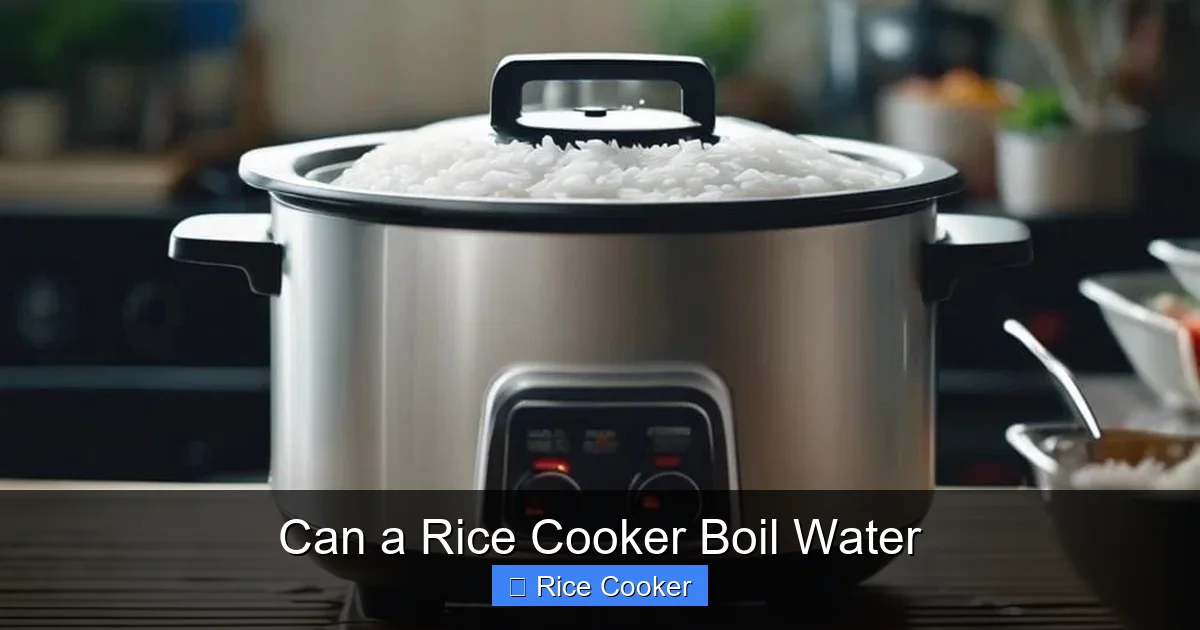
Can a rice cooker boil water? Absolutely! Most modern rice cookers come equipped with a boil function that heats water to a rolling boil, making them surprisingly useful beyond just cooking rice. While they may not match a stovetop’s speed, they offer convenience, energy efficiency, and safety for tasks like blanching vegetables or rehydrating dried beans.
With the right settings and understanding of your appliance, a rice cooker can become a multitasking kitchen ally. Whether you’re simplifying meal prep or looking for an eco-friendly alternative to the kettle, this compact device proves its versatility time and again.
Key Takeaways
- Rice cookers are designed to boil water: Many models include a “boil” or “cook” setting that heats water to 100°C (212°F), effectively bringing it to a full boil.
- They’re energy-efficient: Rice cookers use less electricity than stovetops for boiling water, especially in smaller quantities, saving both power and money.
- Safety features reduce risk: Automatic shut-off prevents overheating, making rice cookers safer than open-flame methods when boiling water.
- Perfect for small batches: Ideal for boiling just enough water for tea, instant noodles, or single servings of grains without waste.
- Multifunctional potential: Beyond boiling, rice cookers can steam, sauté, and even slow-cook, expanding their usefulness in daily cooking.
- Not all models are equal: Check your manual—some basic models lack a dedicated boil function but can still heat water to near-boiling temperatures.
- Cleaning is easy: The non-stick inner pot makes cleanup simple after boiling water or other liquids.
📑 Table of Contents
- Introduction: More Than Just a Rice Maker
- How Do Rice Cookers Work When Boiling Water?
- Can All Rice Cookers Boil Water?
- Practical Uses for Boiling Water in a Rice Cooker
- Tips for Boiling Water Safely and Efficiently
- Energy Efficiency: Is It Worth the Electricity?
- Common Myths About Rice Cookers and Boiling
- Conclusion: Your Rice Cooker Is a Hidden Multitool
Introduction: More Than Just a Rice Maker
Let’s face it—rice cookers are often seen as glorified rice machines. But what if we told you that your trusty kitchen companion might be capable of so much more? Can a rice cooker boil water? The short answer is yes—and not just yes, but yes with style, safety, and surprising efficiency.
Modern rice cookers, especially those with advanced digital controls, are engineered to manage precise temperature ranges. This means they can bring water to a full, rolling boil just as effectively as your stove—or even better, since they maintain consistent heat without scorching. Whether you’re blanching vegetables, making instant coffee, or rehydrating dried lentils, the rice cooker has your back. And the best part? It does so quietly, automatically, and with minimal supervision.
In this deep dive, we’ll explore everything you need to know about using your rice cooker to boil water. From understanding how the technology works to practical tips for everyday use, you’ll discover why this humble appliance deserves a spot in every kitchen toolkit—not just for rice, but for all kinds of boiling tasks.
How Do Rice Cookers Work When Boiling Water?
To understand whether a rice cooker can boil water, we first need to look under the hood—figuratively speaking. At its core, a rice cooker uses a combination of heating elements, thermal sensors, and automated controls to manage the cooking process.
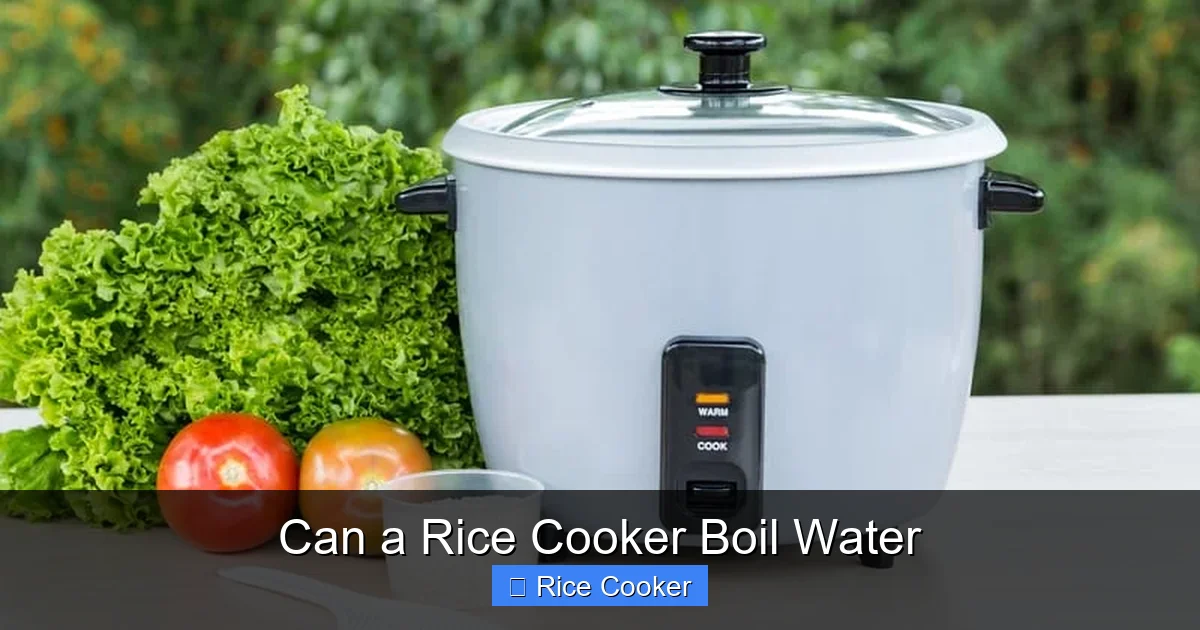
Visual guide about Can a Rice Cooker Boil Water
Image source: missvickie.com
The Science Behind the Heat
Most rice cookers operate on a two-stage heating system. In the first phase, they rapidly heat water to near boiling (around 95–98°C). Then, they switch to a lower, sustained temperature to keep the contents warm—this is known as the “keep-warm” mode. However, many advanced models now include a dedicated “boil” setting that pushes the internal temperature all the way to 100°C (212°F), the boiling point of water at sea level.
This is made possible by improved heating elements and programmable logic boards. Some smart rice cookers even allow you to customize temperature levels, giving you control over how hot the water gets. So yes—when you select the boil function, your rice cooker is literally bringing water to a full boil.
Limitations to Keep in Mind
While rice cookers can indeed boil water, there are a few caveats. First, they typically have smaller capacities than stovetop kettles—most hold between 1 to 6 cups of water. If you’re boiling large volumes (like for pasta or bulk stock), a kettle or pot may be faster. Second, boiling times vary by model. A high-wattage rice cooker might take 8–10 minutes to boil 2 cups of water, whereas a stovetop kettle does it in under 4.
Also, because the heating element sits at the bottom, water near the base boils first while cooler water remains at the top. Stirring occasionally helps distribute heat evenly—something you won’t need to do on a stovetop.
Can All Rice Cookers Boil Water?
Not necessarily. While most modern rice cookers have some form of boiling capability, older or budget models may only reach simmering temperatures. Here’s how to tell if yours can handle a full boil:
Check Your Manual
The simplest way to confirm is to consult your user manual. Look for terms like “boil,” “cook,” or “high heat.” If your model includes these functions, you’re good to go. Some manuals even specify maximum temperature thresholds—look for 100°C or 212°F listed.
Observe the Settings
On digital displays, a “Boil” icon or option is a clear sign. Older analog models might not have labeled buttons, but if it has a “Cook” setting that runs continuously (unlike the brief cycle used for rice), it likely can boil water. You can test it safely by adding water and selecting the highest heat setting—watch for bubbling and steam.
Model Types Matter
- Basic Analog Models: May only simmer, not fully boil.
- Digital Smart Cookers: Often include multiple boil modes.
- Multi-Cookers (like Instant Pot Duo): Designed for pressure and high-heat tasks, including boiling.
- Traditional Japanese-style Cookers: Typically focus on gentle cooking and may not reach full boil.
If you’re unsure, try a quick test: add 1 cup of water, set to the highest setting, and observe. If vigorous bubbling and steam appear within 5–7 minutes, your rice cooker can boil water.
Practical Uses for Boiling Water in a Rice Cooker
Now that we’ve established that rice cookers *can* boil water, let’s talk about why* you might want to. The applications go far beyond reheating instant noodles.
Meal Prep Made Easy
Imagine prepping dinner in 20 minutes. Start by boiling water in your rice cooker to blanch broccoli or carrots. Once blanched, transfer veggies to ice water to preserve color and crunch. Meanwhile, use the same pot to cook quinoa or brown rice—no dirty dishes needed.
Cooking Grains Without a Stove
Stovetop burners are great, but they’re not always available—especially in dorm rooms, RVs, or tiny apartments. A rice cooker eliminates the need for constant monitoring. Add water and grain, press “boil” or “cook,” and walk away. Perfect for oats, millet, or polenta.
Rehydrating Dried Beans and Legumes
Dried beans require soaking before cooking—but did you know you can skip the overnight soak? Simply boil water in your rice cooker, add beans, and let them sit for 1 hour. This reduces cooking time significantly and yields tender beans with less effort.
Brewing Coffee and Tea
For coffee lovers, boiling water in a rice cooker ensures consistent temperature without scalding. Use it for French press, pour-over, or instant coffee. For tea enthusiasts, the steady heat helps steep delicate leaves like white or oolong without bitterness.
Sanitizing Utensils and Containers
After a busy day of cooking, sanitize cutting boards or utensils by submerging them in boiling water from your rice cooker. It’s a hygienic, chemical-free method—ideal for homes with children or pets.
Making Homemade Broth or Stock
While you can’t simmer bones for hours like on the stove, a rice cooker can quickly make vegetable broth. Add chopped onions, garlic, herbs, and water, boil for 30 minutes, then strain. Great for soups, risottos, or gravies.
Tips for Boiling Water Safely and Efficiently
Boiling water in a rice cooker is safe—but like any kitchen task, it benefits from smart habits. Follow these tips to get the best results:
Use the Right Amount of Water
Never exceed ⅔ of the inner pot’s capacity. Overfilling risks spills during boiling and triggers safety shut-offs. Stick to 1–4 cups depending on your model.
Add a Pinch of Salt or Oil
Adding salt raises the boiling point slightly and enhances flavor in foods like pasta or grains. A drop of oil prevents foam buildup—especially useful when making oatmeal.
Cover the Lid
Leaving the lid off increases evaporation and slows boiling. A well-sealed lid traps heat, speeding up the process and conserving energy.
Stir Occasionally
As mentioned earlier, heat distributes unevenly. Stirring ensures uniform boiling and prevents scorching at the bottom.
Unplug After Use
Even though rice cookers auto-shutoff, it’s good practice to unplug after boiling. Safety first, especially around water and electronics.
Clean Immediately
Mineral deposits from hard water can build up inside. Rinse the inner pot right after use and wipe the exterior. Descale monthly with vinegar if needed.
Choose the Right Mode
Use “Boil” for rapid heating, “Cook” for sustained heat, and “Keep Warm” only after boiling is complete. Avoid mixing modes mid-process.
Energy Efficiency: Is It Worth the Electricity?
One common question is whether boiling water in a rice cooker saves energy. The answer depends on usage, but generally, yes—especially for small batches.
A typical rice cooker uses 300–600 watts, compared to a stovetop burner (1200–1800 watts). For example, boiling 2 cups of water takes about 8 minutes in a rice cooker (using ~0.04 kWh) versus 4 minutes on the stove (~0.06 kWh). Even accounting for standby power, the rice cooker wins in efficiency for low-to-moderate volumes.
Additionally, rice cookers retain heat better than stovetops once boiling stops. This means less energy is wasted keeping water hot longer. For eco-conscious cooks, it’s a smart, sustainable choice.
However, for large-scale boiling (like cooking a whole pot of pasta), a kettle or pot is still faster and more efficient. But for everyday tasks? The rice cooker shines.
Common Myths About Rice Cookers and Boiling
Let’s bust a few myths that might be holding you back:
Myth #1: “Rice cookers can’t get water hot enough.”
False. Modern units reach 100°C easily. Older models may simmer, but most new ones are built for full boiling.
Myth #2: “Boiling water ruins the non-stick coating.”
Not true. Water alone won’t damage coatings. Only abrasive cleaners or metal utensils pose a risk. Always use silicone or wooden tools.
Myth #3: “You can’t use a rice cooker for anything besides rice.”
Outdated thinking. With the right settings, rice cookers can cook grains, steam fish, bake cakes, and yes—boil water for countless recipes.
Myth #4: “It’s dangerous to leave boiling water unattended.”
Not if you use a model with auto shut-off. Once boiling begins, the unit usually switches to “keep warm,” reducing accident risks.
Conclusion: Your Rice Cooker Is a Hidden Multitool
So, can a rice cooker boil water? Absolutely. In fact, it’s one of its most underappreciated talents. Far from being limited to fluffy white rice, this compact kitchen gadget offers a reliable, safe, and energy-efficient way to boil water for cooking, cleaning, and brewing.
Whether you’re preparing a quick breakfast, rehydrating legumes, or sanitizing kitchen tools, your rice cooker is ready. With the right knowledge and a little creativity, you’ll find yourself reaching for it more often—not just for rice, but for all kinds of boiling tasks.
Next time you’re about to turn on the stove, pause and ask: “Can my rice cooker do this instead?” You might just save time, energy, and effort—all while enjoying perfectly boiled water every time.
Frequently Asked Questions
Can a rice cooker bring water to a full boil?
Yes, most modern rice cookers can bring water to a full boil (100°C or 212°F), especially those with a dedicated “boil” setting. Older models may only simmer, but many newer ones reach the boiling point efficiently.
Is it safe to boil water in a rice cooker?
Absolutely. Rice cookers are designed with automatic shut-off features that prevent overheating and overflow, making them safer than stovetops for boiling water, particularly when unattended.
How long does it take for a rice cooker to boil water?
Typically, it takes 8–12 minutes to boil 1–2 cups of water in a standard rice cooker. High-wattage models may do it faster, while smaller units take slightly longer due to lower power output.
Can I use a rice cooker to make pasta or tea?
Yes! Boil water in your rice cooker, then add pasta and cook for the recommended time. For tea, steep directly in the hot water. Just ensure the water reaches a full boil for best results.
Do I need special settings to boil water?
Many rice cookers have a “Boil” or “Cook” setting that enables full boiling. If not labeled, try the highest heat setting. Always check your manual for specific instructions.
Will boiling water damage my rice cooker?
No, boiling water itself won’t damage the non-stick interior. Avoid using metal utensils or harsh cleaners. Clean the inner pot promptly after use to prevent mineral buildup.