
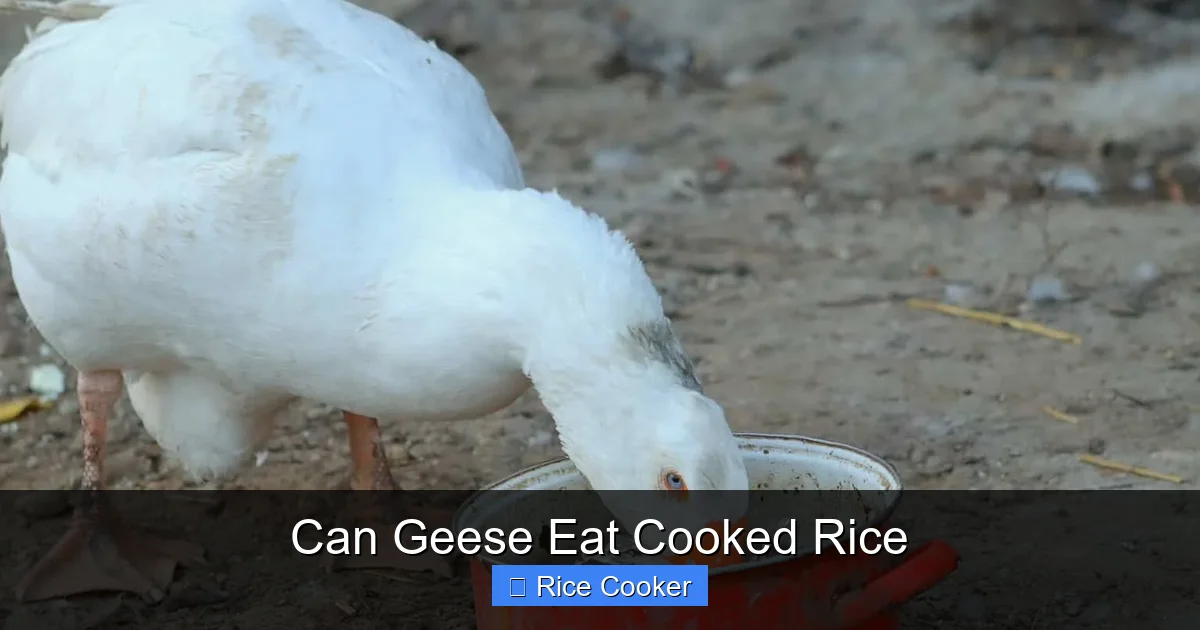
Can geese eat cooked rice? Absolutely—yes, geese can enjoy cooked rice as an occasional treat. It’s safe, nutritious, and easy to digest when served plain and without additives. Just avoid salt, seasonings, or uncooked rice to keep your geese healthy and happy.
Key Takeaways
- Cooked rice is safe for geese when served plain and cooled—no salt, butter, or seasonings.
- It provides carbohydrates and energy, making it a good supplemental food during colder months or growth periods.
- Uncooked rice expands in the stomach, which can be dangerous; always cook rice before feeding.
- Portion control matters—rice should not replace their main diet but rather supplement it.
- Monitor your geese after first-time feeding to watch for digestive issues like bloating or discomfort.
- Rice pairs well with other treats like greens, cracked corn, or oats for balanced nutrition.
- Store leftover cooked rice properly to avoid spoilage and foodborne illness.
📑 Table of Contents
- Can Geese Eat Cooked Rice? Yes—But With Care
- The Basics of Geese Nutrition
- Is Cooked Rice Safe for Geese?
- Nutritional Benefits of Cooked Rice for Geese
- How to Safely Feed Cooked Rice to Your Geese
- Risks of Feeding Uncooked Rice to Geese
- Best Practices for Homeowners and Farmers
- Alternatives to Rice for Geese
- My Experience: Feeding Rice to My Family’s Geese
- Environmental and Ethical Considerations
- Conclusion: Rice Can Be Part of a Healthy Goose Diet—But Sparingly
Can Geese Eat Cooked Rice? Yes—But With Care
Imagine standing on a quiet pond’s edge, watching a family of geese glide gracefully across the water. One of them waddles over to you, head bobbing expectantly. You reach into your pocket and offer a small spoonful of something soft, warm, and familiar—cooked rice. Their eyes brighten, and they eagerly accept the morsel. But wait… is that really a good idea?
If you’re raising backyard geese or even just curious about their diet, you’ve likely wondered: Can geese eat cooked rice? The short answer is yes—geese can eat cooked rice safely. But like most things in life, moderation and preparation matter. This article dives deep into everything you need to know about feeding rice to your geese, from nutritional benefits to safety precautions. Whether you’re using a rice cooker at home or managing a small farm, this guide will help you make informed decisions that keep your feathered friends thriving.
The Basics of Geese Nutrition
Before we get into the specifics of rice, let’s talk about what geese actually need to stay healthy. Like humans, geese are omnivores, meaning they eat both plant-based foods and small animals. In the wild, they graze on grasses, grains, seeds, and aquatic plants. They also occasionally nibble on insects or small fish. Domesticated geese, especially those raised for meat or eggs (yes, female geese do lay eggs), require a balanced diet rich in protein, fiber, vitamins, and minerals.

Visual guide about Can Geese Eat Cooked Rice
Image source: thehomesteadinghippy.com
Natural Diet of Wild and Domestic Geese
In nature, geese spend most of their time foraging. They use their wide, flat bills to sweep through shallow water and fields, plucking out edible plants and grains. During migration seasons, they consume large amounts of energy-dense foods like grains to fuel long flights. In captivity, their diet is often supplemented with commercial goose feed, which typically includes a mix of:
- Whole grains (wheat, barley, oats)
- Protein sources (soybean meal, fishmeal)
- Vitamin and mineral supplements
- Fiber-rich roughage (grass hay, chopped kale)
This balanced approach ensures they get all the nutrients they need. But what about human leftovers? Can cooked rice fit into this equation?
Why People Consider Feeding Rice to Geese
Many people feed rice to birds, especially in urban parks or near ponds, as a casual snack. It’s cheap, readily available, and seems harmless. But is it truly beneficial? Let’s explore the science behind it.
Rice is primarily composed of carbohydrates, which provide quick energy. For geese—especially young goslings or birds in cold climates—this can be helpful. However, rice lacks essential proteins and fats that are crucial for long-term health. That’s why it should never be the main component of their diet.
Is Cooked Rice Safe for Geese?
Yes, cooked rice is safe for geese to eat. When prepared properly, it poses no immediate harm. In fact, it’s easily digestible and can even serve as a temporary filler during times when natural forage is scarce.
What Makes Cooked Rice Safe?
Cooking breaks down the starches in rice, making them easier for geese to digest. Unlike uncooked rice, which can expand up to three times its volume in the stomach (a risk known as gastric torsion), cooked rice remains stable. This reduces the chance of bloating or digestive blockages.
Another benefit? Rice doesn’t contain toxic compounds for geese. Unlike some plants (think rhubarb leaves or avocado pits), rice is non-toxic and safe in small amounts.
Common Mistakes to Avoid
Despite its safety, there are several ways people accidentally harm geese by feeding them rice:
- Adding salt or seasonings: Salt can dehydrate geese and damage their kidneys over time.
- Using fried or buttered rice: Fats from frying or butter can upset their sensitive digestive systems.
- Feeding moldy or spoiled rice: Mold produces mycotoxins, which are harmful even in small doses.
- Overfeeding: Too much rice can displace more nutritious foods in their diet.
So while cooked rice is okay, it must be served plain and fresh.
Nutritional Benefits of Cooked Rice for Geese
Let’s be honest—geese aren’t picky eaters. If it looks edible, they’ll probably try it. But does rice actually offer any real nutritional value? The answer is yes, but only in moderation.
Energy Source
Rice is a high-carbohydrate food. Carbs are vital for energy, especially for active birds or those living in cooler environments. A single cup of cooked white rice contains about 200 calories—enough to fuel a goose for a day’s foraging.
Dietary Fiber
While not as fibrous as whole grains like oats or barley, brown rice does contain some dietary fiber. This aids digestion and helps maintain gut health. Brown rice is slightly better than white rice in this regard, though both are acceptable for geese.
Low Fat and Non-Toxic
Rice has virtually no fat, which means it won’t contribute to obesity if fed sparingly. And as mentioned earlier, it contains no known toxins that affect birds.
Potential Drawbacks
However, rice lacks key nutrients:
- It’s low in protein—geese need about 12–16% protein in their diet for optimal health.
- It doesn’t provide enough fat for insulation in winter.
- Too much rice can lead to imbalanced nutrition, weakening the immune system over time.
Think of rice as a treat, not a staple.
How to Safely Feed Cooked Rice to Your Geese
Now that we’ve covered the “why,” let’s talk about the “how.” Feeding rice correctly ensures your geese get the benefit without any side effects.
Step-by-Step Guide
- Choose the Right Type of Rice: White or brown rice works fine. Avoid instant or flavored varieties.
- Cook Without Additives: Boil rice in plain water—no salt, butter, oil, or spices.
- Cool Before Serving: Hot rice can burn their mouths. Let it cool to room temperature.
- Serve in Small Portions: A few tablespoons per bird is plenty for a snack.
- Mix With Other Foods: Combine rice with greens, cracked corn, or duckweed for variety.
- Clean Up Leftovers: Remove uneaten rice within 30 minutes to prevent bacterial growth.
Practical Example
Suppose you’re hosting a community event at a local park where geese frequently gather. You decide to bring a small bowl of leftover plain cooked rice to share. Here’s how to do it responsibly:
- Use a clean container with no residue from previous meals.
- Scoop out about half a cup of cooled rice.
- Place it on a flat surface near the water’s edge—geese prefer to eat near water.
- Observe from a distance to ensure they’re eating calmly and not fighting over it.
- Remove the bowl after 15 minutes to avoid attracting pests.
Risks of Feeding Uncooked Rice to Geese
This is a critical point many people overlook. While cooked rice is safe, uncooked rice is dangerous for geese.
Why Uncooked Rice Is Dangerous
When geese swallow uncooked rice, it absorbs liquid in their stomach and can expand significantly—up to three times its original size. This expansion can cause bloating, discomfort, or even gastric rupture, a life-threatening condition.
In extreme cases, this has led to fatal outcomes in waterfowl. Veterinarians have documented deaths in ducks and geese after consuming large quantities of raw rice.
What About Rice Husks?
Even if the rice isn’t fully cooked, the husk may remain intact. These husks can irritate the digestive tract or cause blockages. Always ensure rice is fully cooked and soft before offering it.
Best Practices for Homeowners and Farmers
Whether you’re caring for pet geese or managing a flock on a farm, here are some expert tips to follow:
For Backyard Pet Geese
- Limit rice to once or twice a week.
- Always pair it with leafy greens like lettuce, spinach, or dandelion greens.
- Ensure access to fresh water at all times—rice can dry out quickly in birds.
For Commercial Goose Farms
- Use rice as a supplementary feed during seasonal shortages.
- Mix with commercial pellets to maintain nutritional balance.
- Monitor flock behavior and health closely after introducing new foods.
Seasonal Considerations
In winter, geese need extra energy. A small amount of cooked rice can help supplement their diet when natural forage is frozen. In summer, however, stick to lighter, fresher options like grass and aquatic plants.
Alternatives to Rice for Geese
While rice is fine in moderation, there are healthier, more natural alternatives that offer better nutrition.
Recommended Supplemental Foods
- Cracked Corn: High in energy and commonly used in bird feed.
- Oats and Barley: Rich in fiber and protein.
- Leafy Greens: Kale, spinach, and romaine provide vitamins A and K.
- Duckweed and Water Plants: Natural and nutrient-dense.
These options support overall health better than rice alone.
My Experience: Feeding Rice to My Family’s Geese
I’ve raised geese on my suburban property for five years. Initially, I didn’t think much about what I fed them beyond letting them roam and graze. But after reading about their dietary needs, I started experimenting with small treats.
One winter, I noticed my geese seemed less energetic than usual. After consulting a poultry nutritionist, I learned they needed more calorie-dense foods during cold weather. I began offering a small portion of plain cooked rice mixed with chopped kale every other day.
Within a week, their feathers looked shinier, and they were more active. Of course, I never made rice their primary food. It was always part of a balanced routine. Now, they even come running when they see me heading toward the kitchen with leftover rice!
This experience taught me two important lessons: geese appreciate variety, and even simple foods like rice can play a supportive role—when done right.
Environmental and Ethical Considerations
Beyond health, there’s another reason to be thoughtful about feeding wild or semi-domestic geese: over-reliance on human-provided food can disrupt their natural behaviors.
Impact on Wild Geese Populations
In cities, geese often depend heavily on handouts from visitors. While rice seems harmless, consistent feeding can:
- Attract too many geese to one area, leading to overcrowding.
- Cause aggression or territorial disputes.
- Reduce their instinct to forage naturally.
Local wildlife agencies recommend limiting human-fed snacks and encouraging natural foraging instead.
Ethical Feeding Guidelines
If you choose to feed geese, do so ethically:
- Never feed them moldy, salty, or processed foods.
- Avoid creating dependency—offer treats sparingly.
- Respect local regulations; some areas restrict feeding wildlife.
Conclusion: Rice Can Be Part of a Healthy Goose Diet—But Sparingly
So, back to the original question: Can geese eat cooked rice? The answer is a confident yes—but with clear boundaries. Cooked, plain rice is safe, digestible, and can even provide valuable energy during tough times. It’s not toxic, and it won’t harm your geese when offered in moderation.
However, rice should never replace their main diet. Geese thrive on a mix of grains, greens, and protein sources. Treat rice as the occasional snack, not the main course. And always avoid uncooked rice, salt, or seasonings.
By following these guidelines, you’ll keep your geese healthy, happy, and well-nourished—whether you’re feeding them in a backyard pond or managing a larger flock. Remember, responsible care means knowing what’s good for them, not just what’s convenient for us.
Next time you’re near a flock of geese, consider sharing a small bit of plain cooked rice. Just don’t forget to rinse off the plate first.
Frequently Asked Questions
Can geese eat rice every day?
No, geese should not eat rice daily. While cooked rice is safe, it lacks essential nutrients like protein and fat. Overfeeding can lead to nutritional imbalances. Offer it once or twice a week as a treat instead.
Is brown rice better than white rice for geese?
Brown rice is slightly better because it retains more fiber and nutrients. However, both types are safe for geese when cooked plain. Choose whichever is more accessible to you.
Can goslings eat cooked rice?
Yes, but only after they’ve started eating solid food—usually around 4–6 weeks old. Start with very small portions and monitor for digestive issues. Always ensure the rice is soft and cooled.
What happens if a goose eats too much rice?
Eating excessive rice can displace more nutritious foods, leading to deficiencies. It may also cause bloating or mild digestive upset. If symptoms persist, consult a veterinarian.
Can I feed my geese leftover restaurant rice?
Only if it’s plain, unseasoned, and free of oil or sauces. Restaurant rice often contains salt, garlic, or butter—all of which are harmful. Stick to homemade, plain rice for safety.
Does rice help geese gain weight?
Rice provides calories and can support weight gain in underweight geese, especially during winter. Combine it with protein-rich foods like cracked corn or duckweed for best results.