
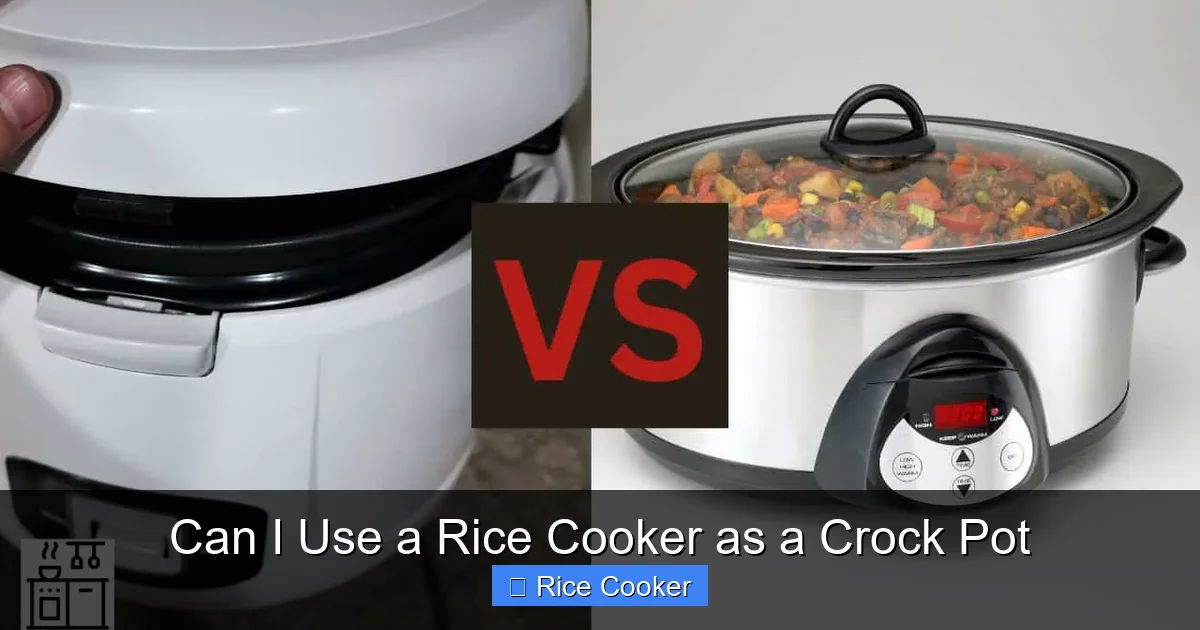
Can you use a rice cooker as a crock pot? While not designed for slow cooking, many rice cookers can mimic crock pot functions with proper settings and timing. With the right techniques, you can make soups, stews, and even braised dishes—but there are important limitations to consider.
Key Takeaways
- Functionality Overlap: Some rice cookers have a “keep warm” or “slow cook” mode that allows them to function similarly to a crock pot.
- Temperature Differences: Rice cookers typically reach lower maximum temperatures than crock pots, which may affect cooking times and food safety.
- Timer Limitations: Most rice cookers lack long-term timers, making unattended cooking risky compared to crock pots.
- Safety Considerations: Using a rice cooker for long periods without supervision can lead to overcooking or drying out of ingredients.
- Creative Uses: You can use a rice cooker for reheating, steaming vegetables, or making one-pot meals like oatmeal or chili.
- Best Alternatives: For true slow cooking, invest in a dedicated crock pot or multi-cooker with slow cook functionality.
- Energy Efficiency: Both appliances use minimal power, but crock pots are optimized for extended use without overheating risks.
Quick Answers to Common Questions
Can I cook a whole chicken in my rice cooker?
Yes, but not like in a crock pot. You can poach a chicken in a rice cooker by placing it in broth and cooking on the “white rice” setting for about 30–40 minutes. However, it won’t get as tender as slow-cooked chicken and lacks browning. It’s best for shredding into salads or sandwiches.
Is it safe to leave food in a rice cooker for 8 hours?
No, it’s not recommended. Rice cookers aren’t designed for long-term unattended cooking. Bacteria like Bacillus cereus can grow in cooked rice or other starchy foods left at room temperature for too long. Always monitor or use a timer.
Do all rice cookers have a “keep warm” function?
Most modern rice cookers do, but older or budget models may not. Check your manual to confirm. Even if it has the function, remember it’s only for holding cooked food—not for active cooking.
Can I make oatmeal in a rice cooker?
Absolutely! Add rolled oats and water or milk, set the timer for 20–30 minutes, and let it cook. Some models even have a “porridge” setting. It’s a great way to multitask—you can cook rice and oatmeal at the same time using the steamer basket.
Will my rice cooker burn food like a crock pot?
Yes, especially if you leave it unattended. Rice cookers often boil first, then switch to warm, which can cause scorching at the bottom. Stirring and monitoring helps, but it’s not as foolproof as a crock pot’s low-and-slow design.
📑 Table of Contents
- Can I Use a Rice Cooker as a Crock Pot? Exploring the Kitchen Appliance Connection
- Understanding the Basics: How Do Rice Cookers and Crock Pots Work?
- Can a Rice Cooker Really Replace a Crock Pot?
- Practical Ways to Use Your Rice Cooker Like a Crock Pot
- Limitations and Risks of Using a Rice Cooker as a Crock Pot
- Tips for Safer and More Effective Use
- When to Stick with a Dedicated Crock Pot
- Conclusion: A Tool with Potential, But Not a Full Replacement
Can I Use a Rice Cooker as a Crock Pot? Exploring the Kitchen Appliance Connection
Have you ever found yourself staring into your pantry, wondering what to make for dinner, only to realize your crock pot is buried under a mountain of clean dishes? Or maybe you just bought a shiny new rice cooker and are curious if it can do more than just cook perfect grains. If so, you’re not alone. The idea of using a rice cooker as a crock pot has been floating around online forums and kitchen blogs for years, sparking curiosity among home cooks everywhere.
Rice cookers and crock pots (also known as slow cookers) look nothing alike at first glance. One is compact, digital, and made for fluffy rice; the other is large, analog, and built for tenderizing tough cuts of meat over hours. But beneath their different designs lies a surprising overlap: both are electric appliances that gently cook food using heat and steam. So, can you use a rice cooker as a crock pot? Let’s dive deep into the science, safety, and practicality behind this kitchen question.
Understanding the Basics: How Do Rice Cookers and Crock Pots Work?
The Science Behind Rice Cooking
A rice cooker operates on a simple yet brilliant principle. It uses an internal thermostat and a heating element to bring water to a boil, then automatically switches to “warm” once the rice is fully cooked. This prevents overcooking by detecting when the water has evaporated and the rice is dry. Many modern models also include fuzzy logic technology that adjusts cooking time based on the type of grain and quantity being cooked.
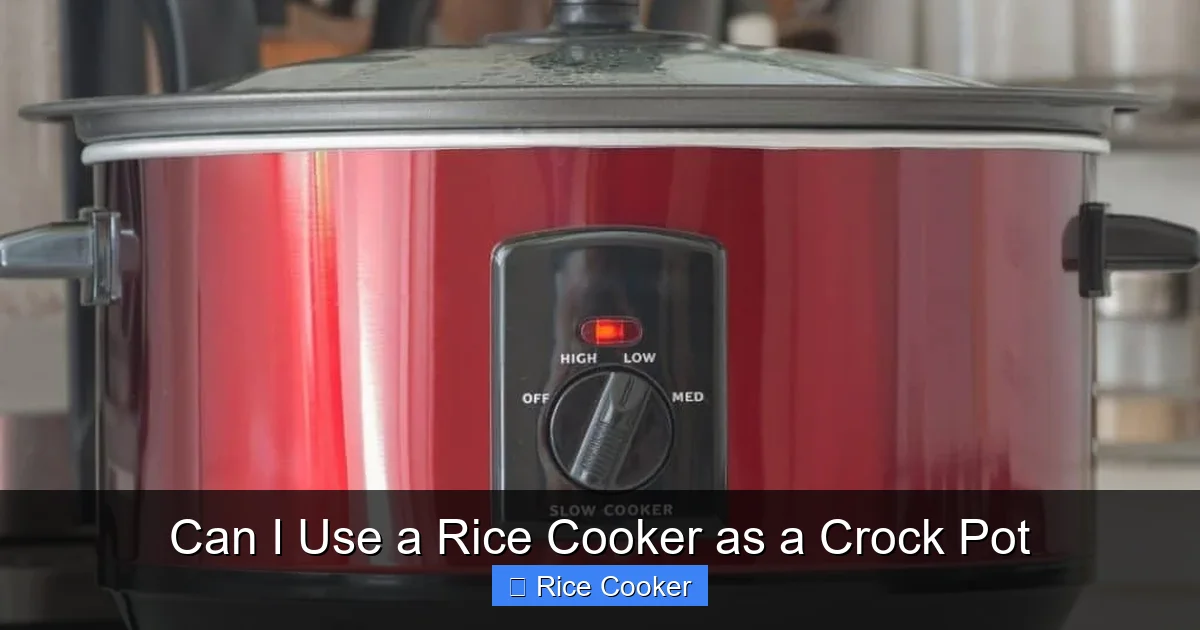
Visual guide about Can I Use a Rice Cooker as a Crock Pot
Image source: ovenspot.com
This means rice cookers are optimized for short to medium cooking times—usually 20 to 45 minutes—and operate at higher temperatures during active cooking phases. Once the cycle ends, they switch to low-temperature warming, usually around 140–170°F (60–77°C).
Crock Pots: Slow and Steady Wins the Race
In contrast, crock pots are engineered for low-and-slow cooking. They maintain a consistent temperature between 190–280°F (88–138°C), depending on the setting, and can run for up to 20 hours. This extended, gentle heat breaks down collagen in tough meats, turning them into melt-in-your-mouth tenderness. Crock pots also feature removable stoneware inserts for easy cleaning and serving.
Unlike rice cookers, most crock pots don’t have automatic shut-off timers unless they’re part of a programmable model. Their design prioritizes safety during long unattended cooking sessions, which is why they’re ideal for busy families and meal preppers.
Can a Rice Cooker Really Replace a Crock Pot?
Short Answer: Sometimes, But Not Always
Yes, you can technically use a rice cooker as a crock pot—but with caveats. If your rice cooker has a “keep warm,” “low,” or “delay start” function, you might be able to cook certain dishes that don’t require the same long, slow heat as a traditional crock pot recipe. However, the results may vary, and food safety becomes a bigger concern.
Visual guide about Can I Use a Rice Cooker as a Crock Pot
Image source: expertreviewsbestricecooker.com
For example, you could make a simple vegetable soup or a batch of chili in a rice cooker if you monitor it closely. But attempting to braise a pork shoulder for 12 hours? That’s where things get tricky.
What About Multi-Cookers?
If you’re looking for a middle ground, consider a multi-cooker—a hybrid appliance that combines features of both rice cookers and crock pots. Devices like the Instant Pot or Ninja Foodi offer pressure cooking, slow cooking, steaming, and sautéing all in one. These are far better suited to replace both appliances than a standard rice cooker.
Practical Ways to Use Your Rice Cooker Like a Crock Pot
1. Make One-Pot Meals
If you’re short on time and equipment, your rice cooker can handle hearty meals like jambalaya, pilafs with sausage, or even a basic chicken and rice dish. Just follow these steps:
- Add diced chicken, rice, broth, and spices to the inner pot.
- Set the timer for 30–40 minutes on the “white rice” or “manual” setting.
- Let it cook—no stirring needed!
This method works best for recipes that don’t require hours of simmering. The result won’t be as tender as a crock pot, but it’s a solid shortcut for weeknight dinners.
2. Reheat Soups and Stews
Got leftover soup from last night’s crock pot? Instead of reheating on the stove, transfer it to the rice cooker and set it to “warm” or “cook” on low. The rice cooker’s even heat distribution helps prevent scorching, and it’s easier to clean afterward.
3. Steam Vegetables While Cooking Rice
Many rice cookers come with a steamer basket. You can cook rice at the bottom and vegetables (like broccoli, carrots, or green beans) on top simultaneously. This dual-function use saves time and energy—perfect for healthy, balanced meals.
4. Make Grains and Beans
While not a crock pot, your rice cooker can prepare lentils, quinoa, barley, and even beans with the right liquid-to-grain ratio. Simply add soaked beans and water, set the timer, and let the machine do the work. Just remember to stir occasionally if your model doesn’t have a “keep warm” function.
Limitations and Risks of Using a Rice Cooker as a Crock Pot
Temperature Control Isn’t Equal
Crock pots are designed to maintain steady, high heat over long periods. Rice cookers, however, cycle through boiling and warming phases. If you leave a stew in a rice cooker overnight, it may dry out or burn at the bottom due to lack of consistent monitoring.
Lack of Long-Term Safety Features
Most rice cookers don’t have timers that allow unattended cooking for more than a few hours. Leaving food in a rice cooker for 8+ hours increases the risk of bacterial growth, especially in perishable foods like meat or dairy-based dishes.
Smaller Capacity
Standard rice cookers typically hold 6 cups of uncooked rice, which translates to about 12–16 cups of cooked grain. That’s fine for small families, but not enough for a full pot of pulled pork or a large batch of beef stew.
No Lid Seal for Moisture Retention
Crock pots have tight-fitting lids that trap steam and moisture, keeping food tender and flavorful. Rice cooker lids are designed to release excess steam during cooking, which can dry out slow-cooked dishes over time.
Tips for Safer and More Effective Use
Use the “Keep Warm” Function Wisely
The “keep warm” mode is not meant for active cooking—it’s designed to maintain temperature after cooking is complete. Using it to cook food can lead to uneven heating and potential foodborne illness. Only use it to hold already-cooked meals.
Monitor Cooking Times Closely
If you choose to use your rice cooker for slow-cooking tasks, set a timer and check on the food every 30 minutes. Stir occasionally and ensure liquids haven’t evaporated completely.
Choose Recipes with Shorter Cook Times
Opt for dishes that take 1–2 hours instead of 6–8. Think soups, stews, or braises that can finish quickly. Avoid recipes that rely on long, uninterrupted simmering.
Upgrade to a Model with More Functions
If you frequently use your rice cooker for non-rice dishes, consider investing in a model with a “slow cook” or “porridge” setting. These are safer and more efficient for alternative uses.
When to Stick with a Dedicated Crock Pot
For True Hands-Off Cooking
If you’re preparing a Sunday roast, a holiday ham, or a batch of chili to serve over several days, a crock pot is still the best tool. Its design ensures consistent heat, ample capacity, and peace of mind during long cooking sessions.
For Entertaining and Meal Prep
When hosting guests or prepping meals for the week, a crock pot allows you to cook once and forget about it. A rice cooker simply can’t match that level of convenience for larger-scale cooking.
For Food Safety Compliance
Restaurants and catering services must follow strict guidelines for holding hot food. Crock pots are approved for extended holding times, while rice cookers are not. This distinction matters if you’re scaling up recipes.
Conclusion: A Tool with Potential, But Not a Full Replacement
So, can you use a rice cooker as a crock pot? The answer is yes—but with important qualifications. While it’s possible to cook certain dishes in a rice cooker that would normally go in a crock pot, the two appliances are built for different purposes. Rice cookers excel at quick, precise grain cooking and steaming, while crock pots are champions of slow, hands-off meals.
If you’re short on time or equipment, your rice cooker can be a helpful backup for one-pot meals or reheating leftovers. But for true slow cooking, especially with meat or complex recipes, a dedicated crock pot remains the superior choice. And if you want the best of both worlds, a multi-cooker might be the ultimate kitchen upgrade.
Ultimately, understanding your appliances and their limits helps you cook smarter, safer, and more creatively. Whether you’re making jasmine rice or a comforting beef stew, the right tool makes all the difference.
Frequently Asked Questions
===
Can I use a rice cooker to cook beans?
Yes, but only if you soak the beans first. Add them to the rice cooker with enough water, set the timer for 45–60 minutes, and check for tenderness. Note that some rice cookers may not soften beans fully, so pressure cooking is more reliable.
Is it okay to cook soup in a rice cooker?
Yes, for short durations. Simmer soup on the “cook” setting for 30–60 minutes. Avoid leaving it unattended for more than a few hours, as it may dry out or burn. Stir occasionally for even heating.
Do rice cookers and crock pots use the same amount of electricity?
Both use relatively little power, but crock pots consume slightly more over long periods because they maintain heat continuously. Rice cookers cycle on and off, which saves energy but isn’t ideal for slow cooking.
Can I brown meat in a rice cooker before slow cooking?
Some advanced models have a sauté function, but standard rice cookers don’t brown food well. If browning is important, use a skillet first, then transfer the meat to the rice cooker with liquids.
Are there any rice cookers designed for slow cooking?
Yes, some brands offer “hybrid” rice cookers with built-in slow cook settings. Look for models labeled as “multi-cookers” or those with “slow cook” and “pressure cook” functions.
How do I clean a rice cooker used for non-rice dishes?
Always unplug and let it cool. Remove the inner pot and wash it with warm, soapy water. Wipe the exterior and lid with a damp cloth. Avoid submerging electrical parts in water.