
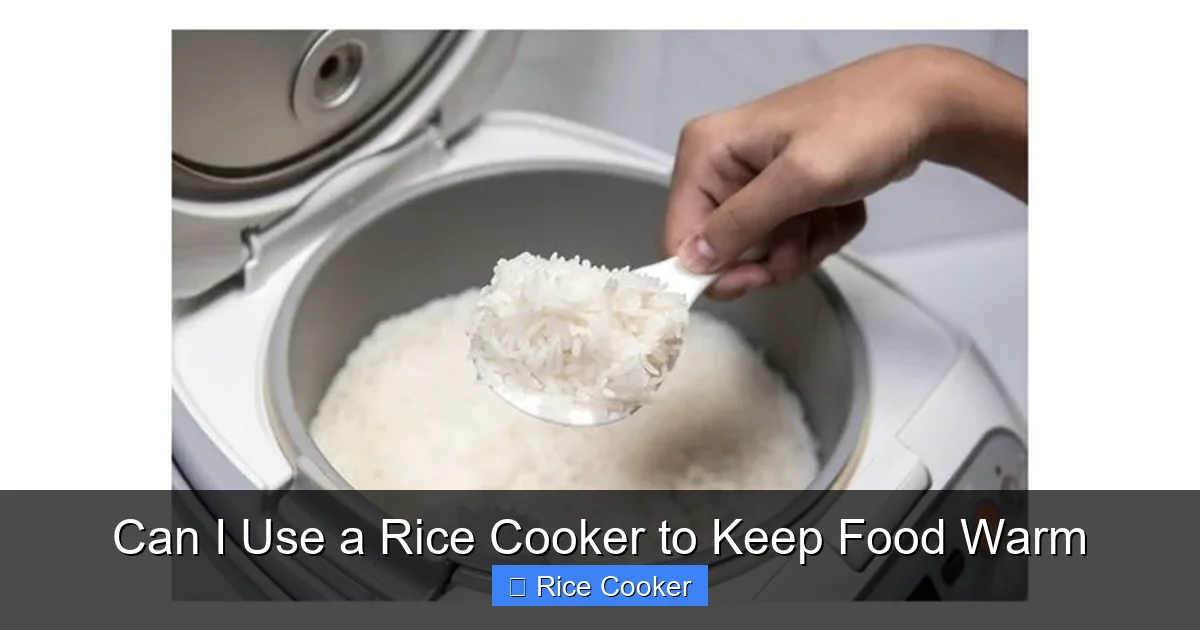
Yes, you can use a rice cooker to keep food warm, but with important caveats. Most modern rice cookers have a built-in “warm” function that maintains food at a safe temperature (usually around 160–170°F) for several hours. However, not all models are designed for continuous warming, and prolonged use may affect performance or safety. Always check your user manual and avoid leaving perishable foods in the warmer for more than a few hours to prevent bacterial growth.
Have you ever finished cooking a big meal—maybe a pot of jasmine rice, some stir-fried veggies, or a hearty soup—only to realize you’re not serving it immediately? You look at your trusty rice cooker, wondering: *Can I just leave it on the warm setting until everyone’s ready?* The short answer is yes… but not without knowing how it works and what precautions to take.
Rice cookers are one of those kitchen miracles—simple, reliable, and surprisingly versatile. While their primary job is to cook grains evenly and perfectly, many modern models come equipped with a “warm” or “keep-warm” function. But does that mean you can use your rice cooker as a food warmer for hours on end? Let’s dig into the science, safety, and practicalities behind this common kitchen question.
Key Takeaways
- Rice cookers often have a built-in warm setting designed to maintain cooked food at a safe temperature after cooking is complete.
- The warm function typically keeps food between 160°F and 170°F, which meets USDA guidelines for holding hot food safely—but only for limited time.
- Not all rice cookers are suitable for long-term warming; older or basic models may lack proper insulation or temperature control.
- Leaving food in the warmer too long increases spoilage risk, especially in humid climates or during warm weather.
- Using the warm setting beyond manufacturer recommendations can damage the heating element or void your warranty.
- For extended holding times (over 4 hours), consider alternative methods like a food warmer, chafing dish, or insulated containers.
- Proper storage and reheating protocols still apply when using your rice cooker to keep food warm.
📑 Table of Contents
How Does the Warm Setting Work?
The warm setting on a rice cooker isn’t meant for cooking—it’s designed to maintain already-cooked food at a consistent, safe temperature. When you turn off the cooking cycle (either automatically after boiling or manually), the rice cooker switches to low-power mode. This keeps the internal temperature steady, usually around 165°F to 170°F, which falls within the USDA-recommended range for holding hot food safely (above 140°F).
This feature is especially useful for keeping rice from drying out while you finish plating dishes or wait for guests to arrive. Some advanced models even include humidity control or dual-layer heating elements to reduce surface moisture and prevent sogginess—a real lifesaver if you’ve ever had overcooked, sticky rice because it sat under steam too long.
But here’s the catch: this warm function wasn’t built for marathon sessions. Think of it more like a gentle hug for your food than a full-time babysitter. Most manufacturers recommend using the warm setting for no more than 2 to 4 hours, depending on the model and ambient conditions.
Understanding Temperature Zones
To really grasp why the warm setting has limits, let’s talk about food safety zones:
– **Below 40°F**: Safe zone for refrigeration. Bacteria grow slowly.
– **Between 40°F and 140°F**: The danger zone. Bacteria multiply rapidly—especially between 90°F and 125°F.
– **Above 140°F**: Safe zone for hot holding. Food stays safe as long as it remains above this threshold.
When your rice cooker’s warm setting kicks in, it tries to hover just above 140°F. That’s great… until environmental factors start pulling the temperature down. Room temperature, opening the lid frequently, or poor insulation can drop the internal temp into the danger zone.
Is It Safe to Leave Food in the Rice Cooker?
Visual guide about Can I Use a Rice Cooker to Keep Food Warm
Image source: ricearray.org
Short-term? Absolutely. Long-term? Not so much.
According to food safety experts at the USDA and FDA, perishable foods should never sit in the danger zone for more than two hours—or one hour if the room is above 90°F. If your rice cooker’s warm setting drops below 140°F during that time (which happens easily), you’re rolling the dice with salmonella, E. coli, or other nasty bacteria.
Also, consider texture and quality. Rice left in the warmer too long becomes mushy, greasy, or develops off-flavors due to trapped steam and uneven heat distribution. Even if it looks fine, the nutritional value and taste suffer.
That said, there are smart ways to use your rice cooker’s warm function responsibly. For example, if you’re hosting a dinner party and need to serve rice 30 minutes after cooking, popping it into the warm setting is totally okay. Just don’t expect it to stay perfect for six hours.
What About Different Types of Rice Cookers?
Not all rice cookers are created equal when it comes to warming capabilities. Here’s a quick breakdown:
– **Basic Electric Rice Cookers**: Simple designs with one heating plate and minimal insulation. Often only recommended for short-term warming (under 2 hours).
– **Fuzzy Logic Rice Cookers**: More advanced models that adjust cooking cycles based on grain type and moisture levels. Many include enhanced warm functions with better temperature regulation.
– **Multi-Cooker/Rice Cookers with Slow Cook/Warm Settings**: These hybrid appliances often have superior insulation and longer warm timers. They’re safer for extended use—but still not meant for all-day warming.
– **Induction Heating Rice Cookers**: Top-tier models with precise control and rapid temperature recovery. Generally safest for holding food warm longer.
Always consult your owner’s manual. If it says “do not exceed 4 hours” or “unplug when not in use,” follow those instructions.
Practical Uses for the Warm Setting
Even with its limitations, the warm setting is incredibly useful. Here are some real-life scenarios where it shines:
1. Hosting a Casual Dinner Party
You cook a big batch of brown rice or quinoa early, then switch to warm mode while guests chat and appetizers come out. No need to rush the main course—or serve cold grains!
2. Keeping Breakfast Foods Ready
Overnight oats, scrambled eggs, or hash browns stored in the rice cooker overnight? Wait—that’s risky! But if you cook them in the morning and switch to warm before heading to work, it’s a convenient hands-off option… as long as you check the temp after an hour.
3. Reheating Leftovers (Safely)
Some people mistakenly put leftover soups or stews directly into the rice cooker’s warm setting to reheat them. That’s a big no-no. Instead, transfer food to the rice cooker *after* it’s fully heated on the stove or in the microwave. Then use the warm setting to hold it until serving.
4. Storing Cooked Grains for Meal Prep
If you’re prepping meals for the week, cook a large pot of rice, cool it quickly in ice water, refrigerate, and reheat portions later. But if you want to store it warm overnight? Skip the rice cooker—opt for an insulated container instead.
Tips for Using Your Rice Cooker to Keep Food Warm Safely
Want to make the most of your rice cooker’s warm function without compromising safety or quality? Follow these pro tips:
Use Only After Full Cooking Cycle
Never place raw or uncooked food into the warm setting. Always ensure everything is fully cooked first. The warm function is not a substitute for proper cooking.
Monitor Temperature Occasionally
If possible, use a kitchen thermometer to check the internal temperature of stored food every hour. If it drops below 140°F, transfer it to a different hot holder.
Avoid Frequent Lid Opening
Each time you open the lid, warm air escapes and cool air enters, causing temperature fluctuations. Minimize lid lifts during the warming period.
Choose the Right Container
Use shallow, wide containers to allow even heat distribution. Deep pots trap moisture and create cold spots. Also, avoid plastic lids unless they’re BPA-free and heat-safe.
Clean After Every Use
Food residue left in the inner pot can promote bacterial growth—even at warm temperatures. Wash immediately after use with mild soap and warm water.
Don’t Stack Heavy Items on Top
Some rice cookers have delicate lids or glass tops. Placing pots or weights on them can crack the material over time.
Alternatives to the Rice Cooker Warm Setting
While convenient, relying solely on your rice cooker for long-term food storage isn’t ideal. Consider these safer alternatives:
– **Insulated Food Warmer Containers**: Designed to retain heat for 6+ hours. Great for picnics or office lunches.
– **Chafing Dishes with Sterno**: Common at buffets and parties. Keep food hot with fuel packs underneath.
– **Slow Cooker on Warm**: Many slow cookers have dedicated warm settings and better insulation.
– **Thermal Carafes**: Like those used for coffee makers—excellent for liquids like soups or broths.
– **Portable Electric Warmers**: Compact devices specifically made for keeping meals hot on the go.
These options give you more control, longer hold times, and fewer risks of cross-contamination or texture loss.
Common Myths About Rice Cooker Warming
Let’s clear up some confusion:
**Myth #1:** “If the rice cooker says ‘warm,’ it means it can keep food safe forever.”
**Truth:** Even with the warm setting, bacteria can grow if food sits too long or cools too much.
**Myth #2:** “I can put frozen food straight into the rice cooker and turn it to warm.”
**Truth:** That defeats the purpose—and could damage your appliance. Always thaw and cook first.
**Myth #3:** “All rice cookers warm food the same way.”
**Truth:** Models vary wildly in insulation, power output, and safety features. Never assume.
**Myth #4:** “Leftovers stored in the rice cooker are automatically reheated.”
**Truth:** Reheating requires active heat. The warm setting only holds—it doesn’t cook or revive cold food.
Final Thoughts: Is It Worth It?
So, can you use a rice cooker to keep food warm? Yes—but wisely. For short bursts (under 2–4 hours), it’s a fantastic, energy-efficient tool. Just remember: convenience doesn’t override food safety. Always prioritize proper cooling, timely consumption, and adherence to temperature guidelines.
And hey—if you find yourself needing to keep meals warm for hours, investing in a dedicated food warmer might be worth it. Your taste buds (and your guests’ stomachs) will thank you.
At the end of the day, your rice cooker is more than just a grain-cooking machine. With the right approach, it can be part of a safe, stress-free meal plan—whether you’re feeding a family, hosting friends, or prepping for the week ahead.
Frequently Asked Questions
Can I leave rice in the rice cooker overnight?
No, not safely. Perishable foods like cooked rice should not be left in the danger zone (between 40°F and 140°F) for more than two hours. Overnight storage increases bacterial growth risk, including Bacillus cereus, which causes food poisoning. Always cool rice quickly, refrigerate, and reheat thoroughly before eating.
How long can food stay warm in a rice cooker?
Most manufacturers recommend using the warm setting for no more than 2 to 4 hours. Beyond that, the internal temperature may drop below 140°F, entering the food safety danger zone. Ambient room temperature, frequent lid opening, and poor insulation can shorten this window.
Does the warm setting actually keep food at 165°F?
Ideally, yes—many modern rice cookers maintain temperatures between 165°F and 170°F in warm mode. However, actual performance varies by model. Some budget versions struggle to sustain this temperature consistently, especially in cooler environments.
Can I use my rice cooker to reheat leftovers?
Only after they’ve been fully cooked elsewhere first. Never put cold or frozen leftovers directly into the warm setting. Instead, heat them on the stove or in the microwave until steaming, then transfer to the rice cooker for holding until serving.
Will using the warm setting damage my rice cooker?
Not necessarily—but excessive or improper use can shorten its lifespan. Leaving food in the warmer indefinitely may cause mineral buildup, odors, or strain the heating element. Always follow your manual’s guidelines to avoid voiding warranties.
Are induction rice cookers better for keeping food warm?
Generally yes. Induction models offer faster heat recovery, better temperature precision, and superior insulation. They’re less likely to drop below safe temperatures during extended use, making them safer for longer warm-hold periods compared to basic electric models.