
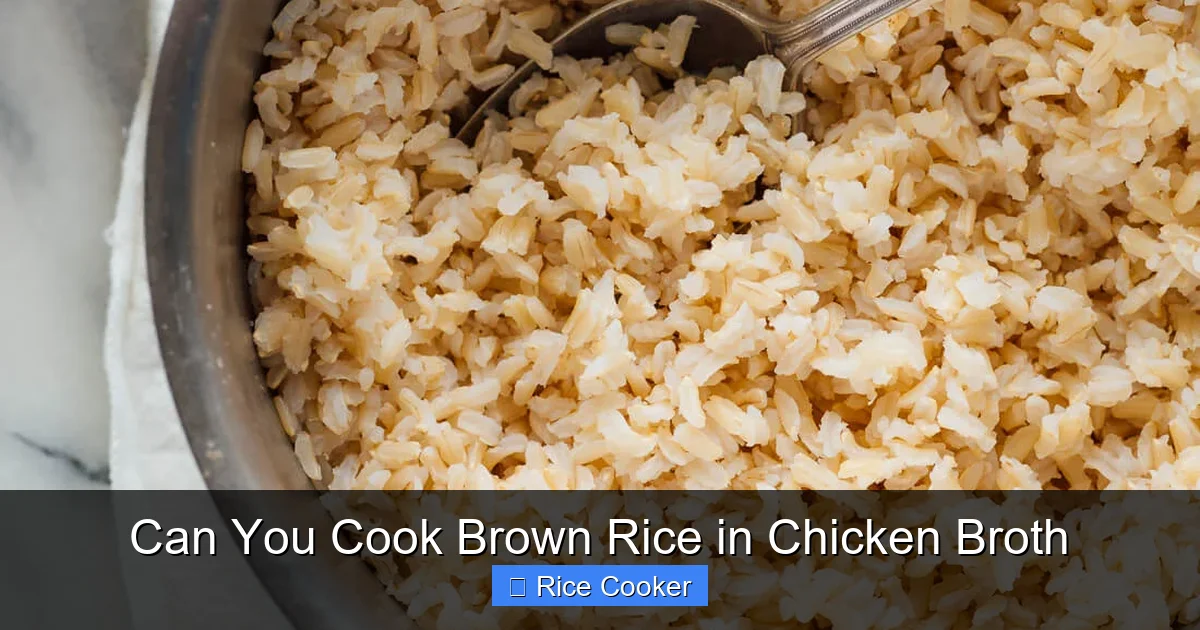
Yes, you can absolutely cook brown rice in chicken broth, and it makes a delicious, savory side dish or base for meals. Cooking brown rice in chicken broth instead of water adds depth and nutrients while keeping the grains tender and fluffy. With a few simple tips, you’ll never go back to plain water again!
Key Takeaways
- Flavor Boost: Using chicken broth enhances the taste of brown rice, making it more aromatic and satisfying than cooking with plain water.
- Better Texture: Brown rice benefits from the moisture and fat in broth, resulting in less sticking and a creamier mouthfeel.
- Healthier Option: Broth adds sodium, protein, and minerals, contributing to a more balanced meal without extra ingredients.
- Easy Process: The method is simple—just replace water with equal parts broth, adjust timing slightly, and let your rice cooker do the work.
- Versatile Use: Cooked brown rice in broth works great as a base for stir-fries, grain bowls, soups, or even as a stuffing ingredient.
- Storage Tips: Leftover cooked brown rice can be refrigerated for up to 5 days or frozen for longer storage—ideal for meal prep.
📑 Table of Contents
- Can You Cook Brown Rice in Chicken Broth?
- Why Choose Chicken Broth Over Water?
- How to Cook Brown Rice in Chicken Broth Using a Rice Cooker
- Tips for Perfect Brown Rice in Broth
- Common Mistakes and How to Avoid Them
- Serving Suggestions and Recipe Ideas
- Storing and Reheating Leftovers
- Frequently Asked Questions
Can You Cook Brown Rice in Chicken Broth?
Have you ever wondered if you can cook brown rice in chicken broth? The answer is a resounding yes—and it might just change how you prepare this nutritious staple forever. Cooking brown rice in chicken broth not only saves time but also infuses the grains with rich, savory flavors that elevate any dish. Whether you’re meal prepping for the week or whipping up a cozy family dinner, swapping plain water for flavorful broth adds depth and complexity to your rice.
Brown rice is known for its chewy texture and nutty taste, but it often requires longer cooking times compared to white rice. When you cook brown rice in chicken broth, you’re enhancing both the nutritional profile and flavor profile simultaneously. Instead of bland, starchy grains, you get aromatic, tender bites packed with umami goodness. Plus, using a rice cooker simplifies the process—no constant stirring or watching pots on the stove. So yes, cooking brown rice in chicken broth is not only possible; it’s a game-changer for home cooks looking to make their meals more exciting and nourishing.
Why Choose Chicken Broth Over Water?
If you’ve always cooked brown rice with water, you’re missing out on something special. While water gets the job done, chicken broth brings layers of flavor that transform an ordinary side into something extraordinary. But why exactly should you choose chicken broth over water when cooking brown rice? Let’s break down the benefits.
Visual guide about Can You Cook Brown Rice in Chicken Broth
Image source: homemadeforelle.com
The Flavor Difference
Plain water contributes nothing but hydration to your rice. On the other hand, chicken broth carries the essence of slow-simmered bones, vegetables, herbs, and seasonings. When you cook brown rice in chicken broth, each grain absorbs those savory notes, resulting in a more complex and satisfying bite. Imagine serving a bowl of plain brown rice versus one seasoned with garlic, onion, thyme, and a hint of salt—it’s like comparing a blank canvas to a masterpiece.
Even store-bought broths offer convenience without sacrificing much flavor. Just look for low-sodium versions if you’re watching your salt intake. Alternatively, homemade broth gives you full control over ingredients, ensuring no unwanted additives sneak into your meal.
Nutritional Benefits
Beyond taste, chicken broth adds subtle nutrients to your rice. It contains collagen from simmered bones, which supports joint health, and small amounts of protein and minerals like calcium and magnesium. When you cook brown rice in chicken broth, these elements leach gently into the grains during the cooking process, creating a more nutrient-dense final product.
Brown rice itself is already high in fiber, B vitamins, and antioxidants. Pairing it with broth amplifies its nutritional value without requiring extra calories or fats. This makes it an excellent choice for health-conscious eaters who still want bold flavors.
Improved Texture
Texture matters—especially with brown rice, which can sometimes turn gummy or dry if not handled properly. Chicken broth helps regulate moisture levels due to its fat content and steam-releasing properties. As the rice cooks, the broth releases gentle heat and keeps the grains from clumping together.
This leads to fluffier, more uniform bites rather than mushy clumps or overly firm chunks. Many home chefs report that cooking brown rice in chicken broth results in better consistency, even on the first try.
How to Cook Brown Rice in Chicken Broth Using a Rice Cooker
Using a rice cooker is one of the easiest ways to cook perfect brown rice every time—and doing so with chicken broth is just as straightforward. Most modern rice cookers come with multiple settings, including options specifically designed for whole grains like brown rice. Here’s how to do it step by step.
Visual guide about Can You Cook Brown Rice in Chicken Broth
Image source: i.ytimg.com
Step 1: Measure Your Ingredients
The golden rule when cooking brown rice in chicken broth is maintaining a proper ratio. A general guideline is 1 cup of uncooked brown rice to 2 cups of liquid. Since you’re using broth instead of water, stick to this ratio unless your recipe calls for adjustments.
For example:
– 1 cup brown rice
– 2 cups low-sodium chicken broth
– Optional: ½ teaspoon salt, a pinch of pepper, or fresh herbs like thyme or rosemary
Make sure your broth is at room temperature before adding it to the cooker. Cold broth can slow down the cooking process slightly.
Step 2: Rinse the Rice (Optional but Recommended)
Rinsing removes excess starch from the surface of brown rice, preventing it from becoming sticky. Fill a fine-mesh strainer with your measured rice and rinse under cold running water until the water runs clear. This step is especially helpful if you notice your rice turning mushy after cooking.
Pro tip: If you’re short on time, skip rinsing—but expect slightly stickier results.
Step 3: Add Everything to the Rice Cooker
Place the rinsed (or unrinsed) rice into the inner pot of your rice cooker. Pour in the chicken broth and any desired seasonings. Gently stir once to distribute flavors evenly.
Close the lid and select the “brown rice” setting if your machine has one. If not, use the standard “white rice” mode—the difference won’t be noticeable since both settings involve similar steaming processes.
Step 4: Let It Cook
Press start and wait patiently. Most rice cookers automatically switch to “warm” once the cycle completes. Do not lift the lid during cooking—this releases steam and disrupts the internal temperature needed for perfect doneness.
Brown rice typically takes longer than white rice—around 45–60 minutes depending on the brand and model. Some newer models have timers or delay functions, allowing you to begin cooking before heading to work or school.
Step 5: Let It Rest
After the cycle ends, let the rice sit for 10 minutes with the lid closed. This resting period allows residual heat to finish cooking the center and redistributes moisture evenly. Fluff gently with a fork before serving.
Tips for Perfect Brown Rice in Broth
While the basic method works reliably, a few tweaks can take your results from good to great. Here are some tried-and-true tips from experienced home cooks.
Use High-Quality Broth
Not all broths are created equal. Low-quality or overly salty broths can overpower the delicate flavor of brown rice. Opt for organic, homemade, or well-reviewed store brands labeled “reduced sodium” or “all-natural.”
You can also enhance store-bought broth by adding a bay leaf, sprig of fresh parsley, or crushed garlic clove while cooking. Remove them before mixing in the rice if you prefer cleaner flavors.
Avoid Overfilling
Rice cookers have maximum fill lines—never exceed them. Overfilling restricts airflow and prevents proper steaming, leading to unevenly cooked rice. Stick to the recommended capacity for best results.
Experiment with Seasonings
Chicken broth is versatile. Try adding lemon zest for brightness, smoked paprika for warmth, or grated ginger for a subtle kick. Even a splash of soy sauce or fish sauce can deepen the umami profile.
Adjust for Altitude or Hardness
If you live in high altitude or have very hard tap water, your broth may behave differently. In such cases, increase liquid slightly (by ¼ cup) to prevent dryness. Conversely, if your broth seems too thin, reduce it by simmering uncovered for 5–10 minutes beforehand.
Common Mistakes and How to Avoid Them
Even seasoned cooks occasionally run into issues when preparing brown rice. Recognizing common pitfalls helps ensure success every time you cook brown rice in chicken broth.
Mistake #1: Not Rinsing the Rice
Unrinsed brown rice tends to release more starch, causing clumping. Always rinse unless you enjoy a gluey texture—which most people don’t!
Mistake #2: Using Too Much Salt
Chicken broth is often already salty. Adding too much extra salt can make the rice unpalatable. Taste the broth first before seasoning, and err on the side of less is more.
Mistake #3: Opening the Lid Too Soon
Steam escapes when you open the lid mid-cycle, cooling the environment inside. This disrupts the cooking rhythm and leaves raw, hard spots in the rice. Wait until the cycle finishes completely.
Mistake #4: Skipping the Resting Period
Rushing the resting phase means missing out on even texture. Patience pays off here—trust the process!
Serving Suggestions and Recipe Ideas
Once you’ve mastered cooking brown rice in chicken broth, the possibilities are endless. This versatile base pairs beautifully with almost anything.
Grain Bowls
Build a vibrant grain bowl by topping your cooked brown rice with roasted vegetables, grilled chicken, avocado slices, and a drizzle of tahini dressing. The savory broth-infused rice acts as a hearty foundation.
Soups and Stews
Add cooked brown rice directly into soups or stews during the last 10–15 minutes of cooking. It thickens the broth slightly and adds fiber and satisfaction.
Stuffed Peppers or Tomatoes
Mix cooled rice with sautéed onions, ground turkey, and spices. Stuff into halved bell peppers and bake until tender. The broth-cooked rice absorbs the flavors beautifully.
Fried Rice
Use leftover broth-rice as a starting point for fried rice. Stir-fry with scrambled eggs, peas, carrots, and soy sauce for a quick, comforting meal.
Rice Pudding (Savory Twist)
Surprise your guests with a savory rice pudding! Simmer cooked brown rice with chicken broth, diced apples, cinnamon, and a touch of honey. Serve warm with crumbled feta cheese.
Storing and Reheating Leftovers
Making a large batch of brown rice in chicken broth is smart—you’ll likely have leftovers. Proper storage ensures they stay safe and tasty.
Refrigerate within two hours of cooking. Store in an airtight container for up to five days. For longer preservation, freeze portions in freezer-safe bags for up to three months. Thaw overnight in the fridge before reheating.
To reheat, add a splash of broth or water to prevent drying out. Heat in a covered skillet over medium-low heat, stirring occasionally, until warmed through. Microwave works too—cover with a damp paper towel to retain moisture.
Frequently Asked Questions
Can I substitute vegetable broth for chicken broth?
Absolutely! Vegetable broth works just as well and offers a lighter, plant-based alternative. Just keep in mind that the flavor profile will shift slightly—great for vegetarian or vegan dishes.
Do I need to add extra salt when using broth?
Usually not. Most broths contain enough salt for flavor. Taste before adding more—overseasoning is easy to do and hard to fix.
Will cooking brown rice in broth affect the cooking time?
Not significantly. The cooking time remains close to what’s recommended for water-based brown rice. However, always check doneness toward the end of the cycle.
Can I cook brown rice in broth on the stovetop?
Yes! Use a heavy-bottomed pot, bring the broth to a boil, then reduce heat and simmer covered for about 40–50 minutes, checking occasionally. Adjust liquid if needed.
Is it healthier to cook brown rice in broth vs. water?
Yes, because broth contributes additional minerals and proteins. Combined with brown rice’s natural nutrients, this creates a more balanced, nutrient-rich dish.
What if my rice comes out too wet?
Drain excess liquid, spread the rice on a baking sheet, and let it air-dry for 10–15 minutes. Alternatively, reheat uncovered to evaporate moisture.
Frequently Asked Questions
Can I substitute vegetable broth for chicken broth?
Absolutely! Vegetable broth works just as well and offers a lighter, plant-based alternative. Just keep in mind that the flavor profile will shift slightly—great for vegetarian or vegan dishes.
Do I need to add extra salt when using broth?
Usually not. Most broths contain enough salt for flavor. Taste before adding more—overseasoning is easy to do and hard to fix.
Will cooking brown rice in broth affect the cooking time?
Not significantly. The cooking time remains close to what’s recommended for water-based brown rice. However, always check doneness toward the end of the cycle.
Can I cook brown rice in broth on the stovetop?
Yes! Use a heavy-bottomed pot, bring the broth to a boil, then reduce heat and simmer covered for about 40–50 minutes, checking occasionally. Adjust liquid if needed.
Is it healthier to cook brown rice in broth vs. water?
Yes, because broth contributes additional minerals and proteins. Combined with brown rice’s natural nutrients, this creates a more balanced, nutrient-rich dish.
What if my rice comes out too wet?
Drain excess liquid, spread the rice on a baking sheet, and let it air-dry for 10–15 minutes. Alternatively, reheat uncovered to evaporate moisture.