
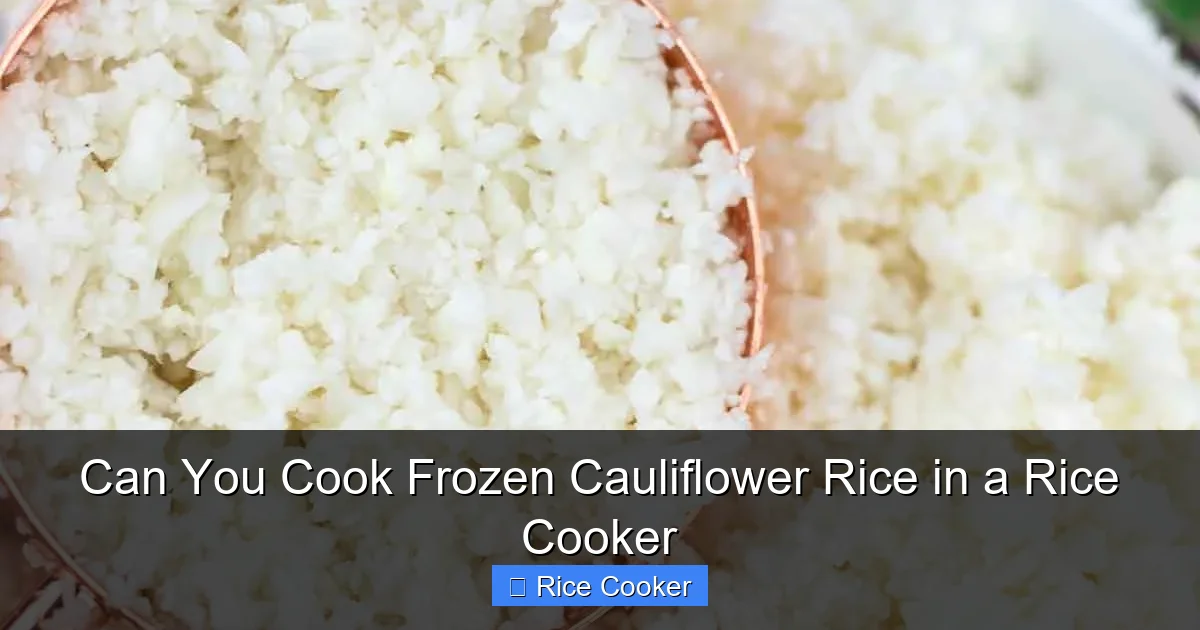
You absolutely can cook frozen cauliflower rice in a rice cooker, and it’s one of the easiest ways to prepare this nutritious, low-carb staple. With just a few simple steps, you’ll have perfectly cooked cauliflower rice ready in minutes—no thawing required. Whether you’re meal prepping or whipping up a quick side dish, your rice cooker makes the job effortless and consistent.
Key Takeaways
- No Thawing Needed: Frozen cauliflower rice works great straight from the freezer in most rice cookers—no need to thaw first.
- Adjust Water Ratio: Use less water than with regular rice—usually about 1/4 cup per cup of cauliflower—to avoid mushiness.
- Fluff with a Fork: Once cooked, gently fluff the cauliflower rice with a fork to restore its light, fluffy texture.
- Season After Cooking: Add salt, garlic powder, or olive oil after cooking for better flavor absorption.
- Storage Made Easy: Cooked cauliflower rice stores well in the fridge for up to 5 days or in the freezer for up to 3 months.
- Great for Meal Prep: Batch-cooking frozen cauliflower rice saves time and supports healthy eating habits all week long.
- Works with Most Rice Cooker Types: Whether white rice, sushi, or slow cooker models, most rice cookers handle cauliflower rice without issues.
📑 Table of Contents
- Can You Cook Frozen Cauliflower Rice in a Rice Cooker?
- Why Choose Cauliflower Rice?
- How Does a Rice Cooker Work with Frozen Cauliflower Rice?
- Step-by-Step Guide: Cooking Frozen Cauliflower Rice in a Rice Cooker
- Common Mistakes and How to Avoid Them
- Tips for Perfect Cauliflower Rice Every Time
- What Kind of Rice Cooker Works Best?
- Cooking Frozen Cauliflower Rice vs. Fresh
- Creative Ways to Use Your Cauliflower Rice
- Health Benefits of Cauliflower Rice
- Environmental Impact and Sustainability
- Cost Comparison: Frozen vs. Fresh Cauliflower Rice
- Troubleshooting: Why Is My Cauliflower Rice Mushy?
- Final Thoughts: Should You Try It?
Can You Cook Frozen Cauliflower Rice in a Rice Cooker?
If you’re following a low-carb lifestyle, cutting down on carbs, or just looking for a healthier alternative to white rice, cauliflower rice has become a pantry staple. It’s light, versatile, and packed with nutrients—without the extra calories. But when life gets busy, who has time to chop a head of cauliflower? That’s where frozen cauliflower rice comes in. And if you already own a rice cooker, the answer is yes—you can absolutely cook frozen cauliflower rice in a rice cooker.
In this article, we’ll walk you through everything you need to know: how to do it properly, why it works so well, and even some pro tips to make your cauliflower rice taste amazing every time. So grab your favorite rice cooker, open that freezer bag, and let’s get cooking!
Why Choose Cauliflower Rice?
Visual guide about Can You Cook Frozen Cauliflower Rice in a Rice Cooker
Image source: recipes.net
Before diving into the “how,” let’s talk about the “why.” Cauliflower rice isn’t just a trendy diet fad—it’s a smart, science-backed way to enjoy your meals with fewer carbs and more fiber. One cup of raw cauliflower contains only about 25 calories and 5 grams of carbohydrates, compared to over 200 calories and 45 grams of carbs in a cup of white rice. Plus, it’s rich in vitamins C and K, folate, and antioxidants.
But beyond nutrition, cauliflower rice is incredibly versatile. Use it as a base for stir-fries, mix it into tacos, blend it into smoothies for extra veggies, or serve it as a side dish with grilled chicken or fish. And thanks to frozen varieties, it’s convenient, shelf-stable, and available year-round.
Now, imagine doing all of this without any prep work. No chopping, no blanching, no waiting. Just pop it in, press a button, and walk away. That’s the magic of using a rice cooker with frozen cauliflower rice.
How Does a Rice Cooker Work with Frozen Cauliflower Rice?
Visual guide about Can You Cook Frozen Cauliflower Rice in a Rice Cooker
Image source: ricearray.org
Most modern rice cookers use a combination of heat and steam to cook grains evenly. They monitor internal temperature and moisture levels to prevent burning or undercooking. While traditional rice cookers are designed for dry grains like rice or quinoa, they’re surprisingly adaptable—especially when it comes to vegetables.
Frozen cauliflower rice is flash-frozen shortly after harvest, which helps preserve its structure and nutrients. This means it’s already been processed into uniform pieces, making it ideal for quick cooking methods like steaming in a rice cooker. The key is understanding how moisture plays a role.
When you add frozen vegetables directly to the cooker, they release water as they thaw—this can lead to soggy results if you’re not careful. That’s why adjusting the water ratio and cooking time is essential.
Step-by-Step Guide: Cooking Frozen Cauliflower Rice in a Rice Cooker
Ready to try it? Follow these simple steps for foolproof cauliflower rice every time.
1. Measure Your Cauliflower Rice
Start by measuring out the amount you want to cook. One typical serving is about 1 cup of frozen cauliflower rice. Keep in mind that frozen cauliflower rice expands slightly when cooked, so don’t overfill your cooker.
2. Add the Right Amount of Water
This is the trickiest part. Too much water = mushy rice. Too little = dry and tough. For every cup of frozen cauliflower rice, use about 1/4 to 1/3 cup of water. If your rice cooker has markings inside, aim for just enough to reach the lowest level line—usually around 1 inch of water at the bottom.
3. Stir Gently Before Cooking (Optional)
Some cooks prefer to give the mixture a light stir before closing the lid. This helps distribute moisture evenly and prevents clumping. Others skip this step because the cooker does the work. Either way works fine.
4. Close the Lid and Select the Right Setting
Most rice cookers have a “White Rice” setting, but since cauliflower rice is more delicate, you might want to use the “Steam” or “Keep Warm” function afterward. However, simply pressing the “Cook” button will work just fine. The rice cooker will automatically switch to “Keep Warm” once done.
5. Let It Rest After Cooking
Once the cooker beeps, let the cauliflower rice sit for 5–10 minutes with the lid closed. This allows residual steam to finish cooking the rice evenly and prevents it from turning to mush when you fluff it.
6. Fluff and Season
Use a fork to gently fluff the rice. Then season with salt, pepper, garlic powder, lemon juice, or olive oil—whatever your heart desires. Remember: flavor often needs time to develop, so seasoning right after cooking gives the best results.
Common Mistakes and How to Avoid Them
Even experienced home cooks can run into trouble with cauliflower rice. Here are the most common pitfalls and how to fix them.
Mistake #1: Using Too Much Water
This is by far the biggest issue. Cauliflower rice releases a lot of water when thawed, so adding too much liquid leads to a slimy, soupy mess. Always start with less water and add more only if needed.
Mistake #2: Not Letting It Rest
Skipping the resting period can result in uneven texture. Think of it like letting bread cool after baking—it helps set the structure.
Mistake #3: Overcooking
Cauliflower rice cooks faster than brown rice—sometimes in as little as 8–12 minutes. Check it halfway through if your cooker doesn’t have automatic alerts. Overcooking breaks down the fibers and turns it into paste.
Mistake #4: Skipping the Fluff Step
After cooking, cauliflower rice tends to clump together. A gentle fluff restores its light, fluffy texture—just like real rice.
Mistake #5: Cooking Without a Non-Stick Pan
If your rice cooker uses a non-stick inner pot, you’re golden. Otherwise, consider lining it with parchment paper or greasing it lightly to prevent sticking.
Tips for Perfect Cauliflower Rice Every Time
Want to take your cauliflower rice game to the next level? Try these expert tips.
Tip 1: Preheat the Rice Cooker (Optional)
For even cooking, especially if you’re using a smaller model, you can preheat the inner pot with a splash of water for 1–2 minutes before adding the rice. This helps distribute heat more evenly.
Tip 2: Use a Timer for Batch Cooking
If you’re making a large batch, set a timer to avoid overcooking. Cauliflower rice starts losing its texture quickly once it hits “Keep Warm.”
Tip 3: Add Herbs or Spices During Cooking
While it’s easier to season after cooking, you can also toss in a sprig of fresh thyme or a pinch of cumin while it steams. Just remove the herb before serving.
Tip 4: Freeze Leftovers Properly
Portion cooked cauliflower rice into freezer-safe containers or bags. Label with the date and freeze for up to 3 months. To reheat, microwave with a damp paper towel to retain moisture.
Tip 5: Experiment with Mix-ins
Try mixing in cooked lentils, diced mushrooms, or roasted peppers for added protein and flavor. These hold up well in the rice cooker during cooking.
What Kind of Rice Cooker Works Best?
Not all rice cookers are created equal. While most standard models can handle frozen cauliflower rice, here’s what to look for:
Non-Stick Inner Pot
A must. Stainless steel or aluminum pots can cause sticking, especially with sticky vegetables.
Steaming Function
While not required, a dedicated steam setting gives you more control over texture and moisture.
Timer and Delay Start
Great for meal prep. Set it to cook while you sleep or during lunch.
Size Matters
Smaller cookers (1–2 cups) work well for single servings, while larger ones (4–6 cups) are better for families or batch cooking.
Popular brands like Zojirushi, Instant Pot, and Cuckoo all perform well with cauliflower rice. Even basic $20 models from Walmart or Target get the job done.
Cooking Frozen Cauliflower Rice vs. Fresh
You might wonder: Is there a difference between cooking frozen versus fresh cauliflower rice in a rice cooker?
Frozen Pros:
- No prep required
- Consistent texture
- Saves time
- Long shelf life
Fresh Pros:
- Better flavor (some say)
- More customizable size and shape
- No preservatives
That said, fresh cauliflower rice requires chopping or pulsing in a food processor—which defeats the purpose of convenience for many people. And honestly, both types cook beautifully in a rice cooker when you follow the same guidelines.
Creative Ways to Use Your Cauliflower Rice
Once you master the basics, the possibilities are endless.
Breakfast Bowls
Sauté cauliflower rice with scrambled eggs, spinach, and avocado for a low-carb morning meal.
Burrito Bowls
Layer it with black beans, salsa, cheese, and sour cream for a filling, carb-conscious version of a burrito.
Stir-Fries
Toss with soy sauce, ginger, garlic, and your favorite proteins for a quick dinner.
Fried Rice
Use it as a base for Chinese-style fried rice—just add scrambled egg and veggies at the end.
Sushi Rolls
Mix with cucumber, avocado, and crab meat for a keto-friendly sushi alternative.
Smoothie Boost
Add a spoonful to green smoothies for extra fiber and nutrients without changing the taste.
Pasta Sauce Base
Simmer it with marinara sauce and Italian herbs for a grain-free pasta substitute.
Health Benefits of Cauliflower Rice
Beyond being low in carbs, cauliflower rice offers several health perks:
- Rich in Fiber: Supports digestion and keeps you full longer.
- Anti-Inflammatory: Contains compounds like sulforaphane that may reduce inflammation.
- Heart Health: Low in sodium and high in potassium, supporting healthy blood pressure.
- Brain Support: Folate and vitamin K contribute to cognitive function.
- Weight Management: High volume, low calorie—great for portion control.
And because it absorbs flavors well, you can enjoy bold tastes without extra fats or sugars.
Environmental Impact and Sustainability
Choosing frozen cauliflower rice isn’t just good for your health—it’s good for the planet. Cauliflower requires less water and fewer pesticides than many other vegetables. Flash-freezing reduces food waste by preserving produce at peak freshness. Plus, buying frozen cuts down on packaging compared to multiple heads of fresh cauliflower.
Many brands now offer recyclable or compostable packaging, making it an eco-conscious choice.
Cost Comparison: Frozen vs. Fresh Cauliflower Rice
Let’s talk money. On average, frozen cauliflower rice costs between $2.50 and $4.00 per pound, while fresh cauliflower is about $1.50 to $2.50 per pound. But remember: fresh requires prep time, energy (for chopping), and yields less usable product due to trimming.
When you factor in convenience, consistency, and reduced waste, frozen cauliflower rice often ends up being cheaper in the long run—especially if you’re busy.
Troubleshooting: Why Is My Cauliflower Rice Mushy?
If your cauliflower rice turned out gummy or wet, don’t worry—it happens to the best of us. Here’s how to diagnose and fix it:
- Too much water: Next time, cut back on liquid.
- Overcooked: Reduce cooking time by 2–3 minutes.
- Not fluffed enough: Give it a vigorous fork mix after cooking.
- Old cauliflower rice: Check expiration dates. Frozen veggies lose quality over time.
Sometimes, even with perfect technique, the rice cooker model matters. Some older models don’t regulate heat as precisely. In those cases, try using a stovetop steamer basket instead.
Final Thoughts: Should You Try It?
Absolutely. Cooking frozen cauliflower rice in a rice cooker is simple, fast, and effective. Whether you’re managing diabetes, cutting carbs, or just trying to eat more vegetables, this method delivers consistent, tasty results with minimal effort.
The best part? There’s no learning curve. Just measure, add water, press a button, and enjoy. And once you see how easy it is, you’ll find yourself reaching for frozen cauliflower rice again and again.
So go ahead—unplug the old rice cooker, open that freezer door, and make today’s dinner healthier, easier, and smarter.
Frequently Asked Questions
Can I use any type of rice cooker for frozen cauliflower rice?
Yes, most rice cookers work well with frozen cauliflower rice. Look for models with a non-stick inner pot for best results. Even basic electric rice cookers handle it just fine.
Do I need to thaw frozen cauliflower rice before cooking?
No, you don’t need to thaw it. Frozen cauliflower rice cooks directly from the freezer, though it releases more water during cooking, so adjust the liquid accordingly.
How much water should I use for frozen cauliflower rice?
Use about 1/4 to 1/3 cup of water per cup of frozen cauliflower rice. Too much water makes it mushy, so start low and add more only if necessary.
How long does it take to cook frozen cauliflower rice in a rice cooker?
It usually takes 10–15 minutes. Most rice cookers switch to “Keep Warm” automatically once done. Let it rest for 5–10 minutes before fluffing.
Can I season cauliflower rice before or after cooking?
It’s best to season after cooking. Add salt, pepper, garlic powder, or olive oil and mix well. Flavors blend better when applied warm.
How long can I store cooked cauliflower rice?
Store in an airtight container in the refrigerator for up to 5 days or freeze for up to 3 months. Reheat in the microwave with a damp paper towel to keep it moist.