

Cooking ground beef in a rice cooker is not only possible—it’s practical and efficient. You’ll save on stovetop space, reduce cleanup, and still get juicy, well-cooked meat for tacos, pasta sauces, or casseroles. With the right prep and timing, your rice cooker becomes a versatile kitchen tool beyond just making rice.
Have you ever been stuck in the middle of dinner prep—stirring a pot of simmering sauce or managing multiple burners—only to realize you don’t need all that effort? If so, you’re not alone. Modern kitchen gadgets like rice cookers were originally designed just for steaming grains, but smart home cooks have discovered they can do so much more. One surprising hack: cooking ground beef in a rice cooker. It sounds unconventional, maybe even risky, but done right, it’s a game-changer for busy weeknights.
Imagine this: you come home tired, unload groceries, and notice you’ve got ground beef, rice, onions, and spices already in your fridge. Instead of heating up the stove, you pop everything into your trusty rice cooker, press a button, and walk away. By the time you return, you’ve got perfectly browned, seasoned beef ready for tacos, chili, or spaghetti—with minimal mess and maximum flavor. That’s the magic of using a rice cooker for ground beef. In this article, we’ll walk through everything you need to know—from safety tips to recipe ideas—so you can confidently turn your rice cooker into a multi-tasking kitchen powerhouse.
Key Takeaways
- Yes, you can safely cook ground beef in a standard rice cooker. The appliance generates enough heat and steam to brown and cook lean meats evenly when used correctly.
- Proper preparation is key. Always thaw frozen ground beef completely and drain excess fat during cooking to prevent overflow and ensure even browning.
- Seasonings and liquids enhance flavor. Add onions, garlic, tomato paste, or broth early in the process to build rich, savory layers in your dish.
- Monitor closely during browning. Unlike stovetop cooking, there’s no direct flame to control temperature, so stir frequently to avoid burning.
- Use the right cooker settings wisely. Start on “Brown” or “Sauté” if available, then switch to “Cook” mode; otherwise, use “Keep Warm” carefully to finish cooking without drying out the meat.
- Clean-up is easier than expected. Most rice cookers have non-stick inner pots that make scraping off cooked-on bits simple after a quick soak.
📑 Table of Contents
- Why Use a Rice Cooker for Ground Beef?
- How Does Cooking Ground Beef Work in a Rice Cooker?
- Step-by-Step Guide: Cooking Ground Beef in Your Rice Cooker
- Best Practices for Success
- Troubleshooting Common Issues
- Creative Recipe Ideas Using Rice-Cooker Ground Beef
- Choosing the Right Rice Cooker for Meat Cooking
- Safety Considerations When Cooking Meat in a Rice Cooker
Why Use a Rice Cooker for Ground Beef?
You might be wondering: why bother with a rice cooker when the stove does such a great job? The answer lies in convenience, consistency, and control—especially for those with limited kitchen space or mobility issues. Traditional stovetop methods require constant attention: stirring, watching for sticking, adjusting heat, and cleaning splatters afterward. A rice cooker automates much of this process, freeing up your hands and reducing stress during meal prep.
Moreover, many modern rice cookers come with specialized functions like “brown,” “slow cook,” or “keep warm” that make them surprisingly versatile. Even basic models allow you to sauté ingredients first before switching to full cooking mode. This two-stage approach mimics stovetop browning while letting the machine handle the rest. Plus, since there’s no open flame, you reduce fire risk and save energy—a win-win for safety-conscious households.
Another advantage? Fewer dirty dishes. Cooking ground beef directly in the same pot you’ll later cook rice or pasta in means one less pan to wash. And because rice cooker interiors are usually coated with nonstick material, food tends to release easily—even after browning tough cuts of meat.
Of course, not every rice cooker works equally well for this task. Compact or older models may lack the power or temperature regulation needed for proper browning. But if yours has at least 1.5 quarts of capacity and decent heat distribution (like most Japanese-style rice makers), you’re good to go. We’ll dive deeper into selecting the right model later in the article.
How Does Cooking Ground Beef Work in a Rice Cooker?
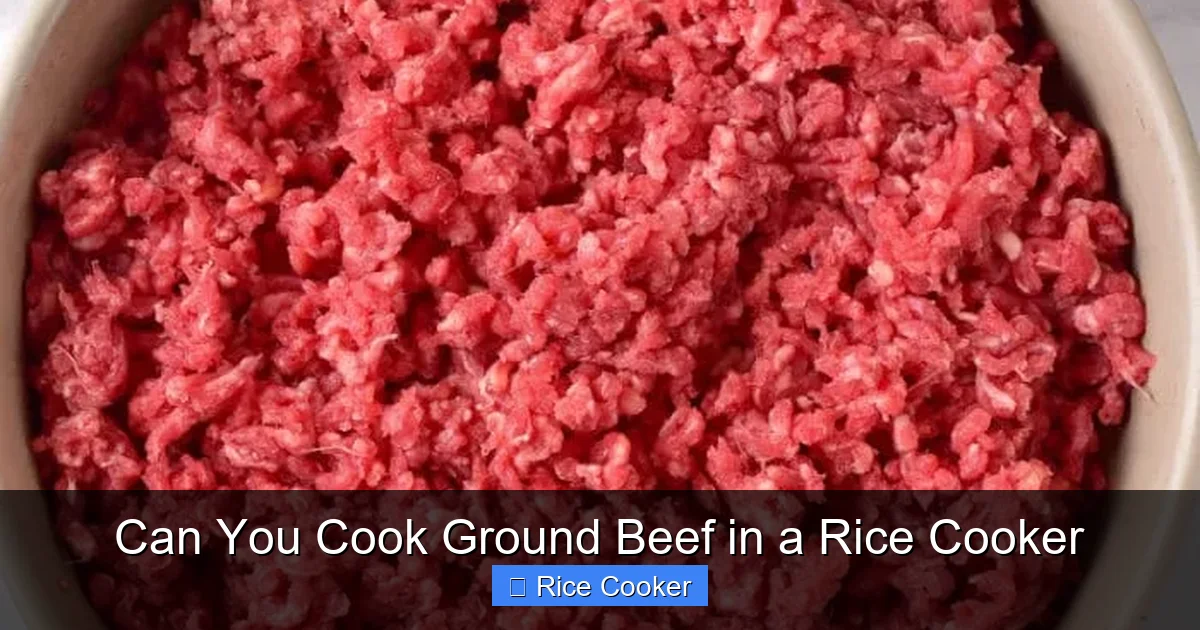
Visual guide about Can You Cook Ground Beef in a Rice Cooker
Image source: temeculablogs.com
At its core, cooking ground beef in a rice cooker relies on the same principles as stovetop browning: applying dry heat to trigger the Maillard reaction—the chemical process that turns raw meat into golden-brown goodness with deep umami flavor. However, instead of direct flame or electric coils, your rice cooker uses internal heating elements to warm the bottom of the pot.
When you add oil and meat to a hot pan, droplets of fat carry heat throughout the mixture, promoting even searing. Similarly, a rice cooker’s base heats uniformly (assuming it’s functioning properly), allowing fat to render out and coat the meat particles. As moisture evaporates from the surface, proteins denature and caramelize, creating that coveted crust.
But here’s the catch: unlike an induction burner or gas stove, you can’t visually gauge doneness or adjust airflow. So timing and stirring become critical. Most rice cookers recommend “browning” for 8–12 minutes total, depending on batch size and fat content. After that, you transfer the beef to a separate bowl or continue adding other ingredients before finishing the cycle.
Some advanced units feature a dedicated “meat” or “slow cook” setting that maintains low, steady heat ideal for braising or simmering ground beef mixtures. Others simply rely on the default “cook” phase once the browning stage ends. Either way, the goal is consistent, thorough cooking without drying out the meat.
The Science Behind Browning Without a Stove
If you’ve ever wondered whether a rice cooker can truly mimic stovetop results, science says yes—but only under certain conditions. For optimal browning, you need:
– **Enough surface area**: Chop onions finely or mince garlic to help distribute heat evenly.
– **Adequate fat**: Use at least 15% fat content (like 80/20 ground beef) to keep things moist and aid conduction.
– **Stirring frequency**: Every 2–3 minutes prevents clumping and ensures uniform exposure to heat.
– **Lid management**: Keep the lid closed during browning to trap steam and maintain humidity, which helps prevent scorching.
Without these factors, your ground beef might turn gray and greasy instead of developing color and texture. Think of it like slow-roasting vegetables—they won’t char without airflow and direct contact, but they will soften beautifully with gentle, sustained heat.
Step-by-Step Guide: Cooking Ground Beef in Your Rice Cooker
Ready to try it yourself? Follow this foolproof method for perfect, flavorful ground beef every time. Don’t worry—we’ll explain each step so you understand what’s happening behind the scenes.
What You’ll Need
– 1 lb (450g) ground beef (preferably 80/20 for best results)
– 1 tbsp neutral oil (e.g., vegetable, canola)
– Optional seasonings: salt, pepper, onion powder, garlic powder
– Onion and/or garlic (finely chopped)
– Water or broth (for deglazing if needed)
Step 1: Prep Your Ingredients
Start by removing your rice cooker’s inner pot from the unit and placing it on a stable surface. If your beef is frozen, thaw it completely in the fridge overnight or run it under cold water until pliable—never skip this step! Frozen chunks won’t brown properly and may create uneven spots.
Next, chop any aromatics (onions, garlic) into tiny pieces so they cook quickly and blend seamlessly into the meat. Season lightly with salt and pepper; you can always adjust later.
Step 2: Heat Oil and Sauté Aromatics
Turn on your rice cooker and select the “Brown” function if available. If not, just plug it in and let it preheat while you heat 1 tablespoon of oil in the inner pot over medium heat (if your cooker allows manual heating). Wait until the oil shimmers slightly before adding onions and garlic. Stir constantly for about 2 minutes until fragrant and translucent.
Step 3: Add Ground Beef and Break It Up
Now, break up the ground beef into small crumbles using a wooden spoon or spatula. Spread it evenly across the bottom of the pot. Cook undisturbed for 1–2 minutes to allow initial browning, then stir frequently for another 6–8 minutes until fully browned and no pink remains. Drain excess grease if desired by tilting the pot and spooning out fat (or leave some for extra richness).
Step 4: Adjust Seasonings and Finish Cooking
Once the beef is cooked, add any additional spices, tomato paste, or liquid (like broth or canned tomatoes) to build flavor. Mix well, then cover and cook on “Normal” or “White Rice” setting for 10–15 minutes, or until the liquid reduces to your liking. Taste and adjust seasoning before serving.
Best Practices for Success
While the basic steps seem straightforward, small details make a big difference between mediocre and mouthwatering ground beef. Here are pro tips to elevate your results:
– **Don’t overcrowd the pot**: Stick to half-full capacity during browning. Too much meat creates dense clumps that won’t sear properly.
– **Use a timer**: Since visual cues aren’t always reliable, set a countdown on your phone or watch. Most rice cookers take 10–12 minutes total for browning.
– **Avoid opening the lid**: Steam builds pressure inside, and frequent openings lower the temperature, slowing down browning.
– **Keep a splash guard handy**: Fat splatter is inevitable—place a damp paper towel over the opening if needed.
– **Clean immediately**: Grease hardens when cool, so wipe the pot while it’s still warm. A quick soak in hot soapy water makes scrubbing effortless.
Also, consider investing in a rice cooker with interchangeable inserts. Some brands offer stainless steel or ceramic pots that conduct heat better than plastic-lined versions, improving browning performance.
Troubleshooting Common Issues
Even experienced cooks hit snags sometimes. If your ground beef turns out greasy, bland, or burned, here’s how to fix common problems:
**Problem: Meat sticks to the bottom**
– Cause: Insufficient oil, too high heat, or insufficient stirring.
– Solution: Use more oil initially, stir every 2 minutes, and ensure the pot is truly hot before adding meat.
**Problem: No browning occurs**
– Cause: Old or low-powered rice cooker lacking sufficient heat output.
– Solution: Test your appliance by boiling water—if it takes longer than usual, consider upgrading to a higher-wattage model (700W+ recommended).
**Problem: Excess smoke or burnt smell**
– Cause: Rendering fat igniting due to prolonged high heat.
– Solution: Reduce stirring intervals, lower heat settings, or drain fat halfway through.
**Problem: Meat tastes flat**
– Cause: Lack of acidity, herbs, or layered seasoning.
– Solution: Deglaze the pot with vinegar, lemon juice, or broth after browning, then simmer for 5 minutes to meld flavors.
Remember, practice makes perfect. Try different ratios of fat, seasonings, and cooking times to find your ideal setup.
Creative Recipe Ideas Using Rice-Cooker Ground Beef
Once you master the basics, the possibilities expand exponentially. Ground beef cooked in a rice cooker forms the foundation for countless meals—here are five crowd-pleasing ideas to inspire you:
**1. Taco Night Simplified**
After browning beef with cumin, chili powder, and diced onion, add crushed tomatoes and cook until thickened. Serve in tortillas with shredded cheese, lettuce, and salsa. Top with a dollop of Greek yogurt for creaminess.
**2. Hearty Beef & Barley Soup**
Combine cooked beef with pearl barley, carrots, celery, chicken broth, and bay leaf. Cook on “Slow Cook” setting for 45 minutes until barley is tender. Garnish with fresh parsley.
**3. Pasta Sauce Perfection**
Brown beef with garlic and onion, then stir in marinara sauce and heavy cream. Simmer for 10 minutes before tossing with cooked spaghetti. Sprinkle Parmesan on top for extra decadence.
**4. Shepherd’s Pie Base**
Layer browned beef with frozen peas and carrots, top with mashed potatoes (made separately or in the same pot), and bake until bubbly. Broil for 2 minutes to crisp the top.
**5. Breakfast Burrito Fillings**
Cook beef with scrambled eggs, black beans, and diced bell peppers. Spoon into tortillas with avocado slices and hot sauce for a protein-packed morning meal.
Each recipe leverages the rice cooker’s ability to maintain consistent temperatures over time, ensuring tender, well-integrated flavors. And since everything cooks in one vessel, cleanup is a breeze.
Choosing the Right Rice Cooker for Meat Cooking
Not all rice cookers are created equal when it comes to handling ground beef. Before rushing out to buy a new appliance, assess your current model’s capabilities:
Look for features like:
– **Nonstick coating**: Easier to clean and less likely to burn-on residues.
– **Multiple cooking programs**: “Brown,” “Meat,” or “Slow Cook” modes simplify the process.
– **Large capacity**: At least 1.5 quarts accommodates 1–2 pounds of meat comfortably.
– **High wattage**: Models above 700 watts generate more heat for effective browning.
– **Removable pot**: Makes cleaning and transferring ingredients easier.
Popular brands known for versatility include Zojirushi, Cuckoo, Instant Pot (dual-use), and Panasonic. Read user reviews specifically mentioning “browning” or “meat” performance—real-world feedback often reveals hidden flaws.
If your existing rice cooker lacks these specs, don’t despair. Many older or budget models can still work with patience and technique adjustments. Just remember: even a basic rice cooker beats a dirty stovetop!
Safety Considerations When Cooking Meat in a Rice Cooker
While rice cookers are generally safe for cooking meat, certain precautions minimize risks:
– **Never leave unattended**: Although automated, occasional stirring prevents accidents.
– **Check manufacturer guidelines**: Some brands warn against cooking meats other than rice.
– **Ensure proper ventilation**: Open windows or turn on exhaust fans if smoking occurs.
– **Use oven mitts**: Hot pots can cause burns—always handle with care.
– **Test temperature**: Use a meat thermometer to confirm internal temp reaches 160°F (71°C) for safety.
Also, avoid cooking bacon or sausage in the same pot unless thoroughly cleaned—fat residue attracts bacteria and affects future dishes.
Frequently Asked Questions
Can I cook frozen ground beef in a rice cooker?
It’s not recommended. Frozen beef won’t brown properly and may create uneven cooking. Always thaw completely in the refrigerator or under cold running water before cooking.
Do I need a special rice cooker to cook ground beef?
No, but newer models with “brown” or “meat” settings make the process easier. Even basic rice cookers can work if you monitor stirring and timing closely.
How long does it take to cook ground beef in a rice cooker?
Browning takes about 8–12 minutes total, followed by additional cooking time if adding liquids or other ingredients. Total process rarely exceeds 30 minutes.
Will cooking ground beef in a rice cooker dry it out?
Not if you use enough fat (like 80/20 beef) and avoid overcooking. Adding broth or tomato products during cooking also retains moisture.
Can I cook rice and ground beef together in the same pot?
Yes, but only after the beef is fully cooked and removed. Raw beef shouldn’t touch uncooked rice due to potential cross-contamination concerns.
Is it worth buying a rice cooker just for cooking meat?
If you already own one, absolutely! It’s a versatile tool beyond rice. But if you never cook rice, a multi-cooker or Instant Pot might offer more value.