

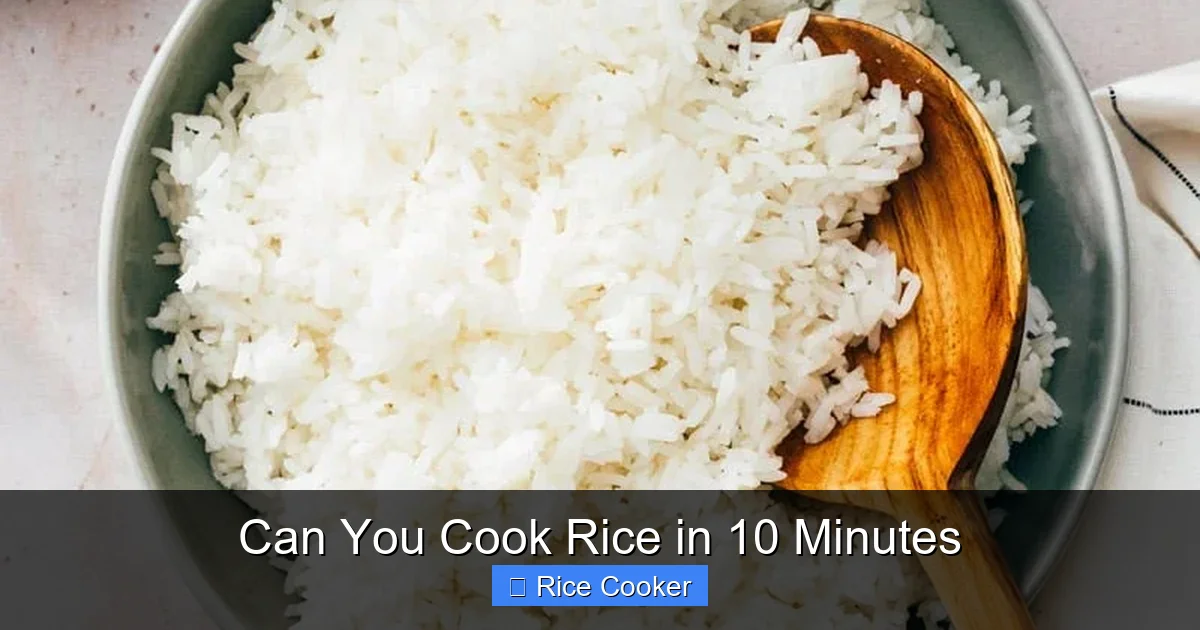
Yes, you can cook rice in just 10 minutes—but not with traditional methods. Using a rice cooker with the right settings or high-pressure cooking techniques like instant pot or microwave steaming makes it possible. This guide covers everything from quick-rinse grains to advanced appliances so you never have to wait long for fluffy, delicious rice.
Key Takeaways
- Instant Pot or pressure cookers can cook most rice types in under 10 minutes by using high heat and steam pressure to speed up hydration and starch gelatinization.
- Microwave rice is another fast option, especially when combined with pre-soaking or using a specialized microwave-safe dish with venting.
- Short-grain varieties like sushi or arborio rice absorb liquid faster than long-grain jasmine or basmati, making them better candidates for quick cooking.
- Rinsing rice before cooking removes excess starch, which helps prevent clumping and ensures even cooking—even in high-speed methods.
- Pre-soaking rice for 10–15 minutes significantly reduces total cook time and improves texture, especially for whole grains like brown rice.
- Modern rice cookers with fuzzy logic or quick-cook modes automate the process and often deliver perfect results in 8–12 minutes.
- Stir-frying cooked rice briefly over high heat can revive day-old rice into a quick, crispy dish that’s ready in under 5 minutes.
📑 Table of Contents
- Can You Really Cook Rice in 10 Minutes? Let’s Break It Down
- Understanding How Rice Cooks: Why 10 Minutes Is Possible
- Fastest Methods to Cook Rice in 10 Minutes
- Choosing the Right Rice for Fast Cooking
- Troubleshooting Common Issues When Cooking Rice Quickly
- Beyond Basics: Creative Uses for Quick-Cooked Rice
- Environmental and Time-Saving Benefits of Fast Rice Cooking
- Final Thoughts: Is 10-Minute Rice Worth It?
Can You Really Cook Rice in 10 Minutes? Let’s Break It Down
We’ve all been there: standing at the stove, waiting patiently as water simmers and evaporates, hoping your rice turns out fluffy and separate—not mushy or undercooked. That classic stovetop method takes anywhere from 15 to 40 minutes, depending on the grain. But what if someone told you it’s possible to get perfectly cooked rice in just 10 minutes? Sounds too good to be true, right?
The short answer is yes—but only with the right tools and techniques. While traditional boiling won’t cut it, modern appliances like pressure cookers (especially Instant Pots), advanced rice cookers, and even clever microwave hacks can dramatically reduce cook time without sacrificing taste or texture. Whether you’re meal-prepping for the week or scrambling for dinner after work, knowing how to cook rice quickly doesn’t mean compromising quality. In this deep dive, we’ll explore every angle of fast rice cooking—from appliance choices to grain selection and timing hacks—so you can enjoy restaurant-quality rice in under ten minutes.
Understanding How Rice Cooks: Why 10 Minutes Is Possible
The Science Behind Rice Cooking
Before we get into shortcuts, let’s talk about why rice usually takes so long. Rice is essentially starch-heavy seeds—mostly made up of carbohydrates that need to absorb water, swell, and gelatinize (that means transforming from raw granules into soft, edible particles). This process requires consistent heat and moisture, traditionally achieved through slow simmering or steaming.

Visual guide about Can You Cook Rice in 10 Minutes
Image source: cycookery.com
In conventional methods, heat transfers slowly through water, causing the outer layers of each grain to absorb liquid first. The inner parts follow gradually, taking time to soften evenly. But when you increase temperature dramatically—like in a pressurized environment—you accelerate molecular movement. Water penetrates deeper and faster, and starch gelatinizes quicker, reducing overall cook time.
Why Traditional Methods Can’t Do 10 Minutes
If you’re trying to boil white rice on the stovetop, forget about 10 minutes. Even with constant rolling boil, it still needs at least 15–18 minutes because the heat isn’t intense enough to force rapid hydration. Overcooking risks mushiness; undercooking leads to chalky centers. Plus, evaporation rates are too low to maintain ideal conditions throughout the process.
This is where alternative methods shine. By either increasing heat intensity (microwave), adding pressure (pressure cooker), or optimizing vessel design (rice cooker), you create environments that mimic professional kitchen efficiency at home.
Fastest Methods to Cook Rice in 10 Minutes
Using an Instant Pot or Pressure Cooker
One of the most reliable ways to cook rice in under 10 minutes is with an electric pressure cooker—commonly known by its brand name, Instant Pot. These devices use sealed, pressurized steam to raise internal temperatures above boiling point (up to 250°F!), drastically cutting down absorption time.
Visual guide about Can You Cook Rice in 10 Minutes
Image source: acouplecooks.com
For white rice, here’s a typical Instant Pot method:
- Rinse 1 cup of rice until water runs clear.
- Add rice + 1 cup water (or broth) to the pot.
- Cook on high pressure for 3 minutes.
- Natural release for 10 minutes, then quick-release remaining pressure.
- Fluff with a fork—and done!
That’s total active time under 15 minutes, but actual cooking happens in just 3–4 minutes under pressure. Brown rice takes slightly longer due to higher fiber content, but many models offer preset “quick cook” modes that adapt accordingly.
Microwave Rice Tricks
Your microwave might surprise you. With proper prep, you can cook rice in as little as 6–8 minutes—no pot needed. The key is creating a sealed environment that traps steam, mimicking a mini steamer.
Try this microwave rice hack:
- Place ½ cup uncooked rice in a microwave-safe bowl.
- Add ¾ cup hot water (not cold—this speeds things up).
- Cover tightly with plastic wrap or a microwave-safe lid, leaving a small vent.
- Microwave on high for 6 minutes.
- Let stand 2 minutes, then fluff.
Pro tip: For extra fluffiness, add a splash of oil or butter before covering. Also, using a ceramic plate inside the bowl acts as a heat diffuser, preventing scorching.
Advanced Rice Cookers with Quick-Cook Settings
Gone are the days when rice cookers were limited to basic “on/off” functions. Today’s smart models feature sensors that detect moisture levels, adjust heating cycles, and even pulse-warm to prevent drying out. Many come with dedicated “quick cook” or “express” modes designed specifically for faster results.
For example, Zojirushi’s Neuro Fuzzy Logic model can distinguish between different rice types and automatically select optimal settings. Some brands allow you to input custom timers, so you can set it and walk away while it finishes in under 10 minutes.
Just remember: even with automation, rinsing and measuring accurately remain essential. An inconsistent ratio throws off the entire system.
Choosing the Right Rice for Fast Cooking
Grain Type Matters More Than You Think
Not all rice responds equally to speed. Short-grain rice—like Japanese sushi rice or arborio (used in risotto)—has higher starch content and cooks faster because it absorbs liquid rapidly. Medium-grain works well too, but long-grain varieties like basmati or jasmine expand more and may need slightly longer to avoid dryness.
Brown rice, unfortunately, is slower due to its bran layer acting as insulation. Most pressure cooker recipes call for 15–20 minutes of cooking time, though some newer models claim “ultra-fast brown rice” modes. Still, expect a few extra minutes compared to white rice.
Pre-Soaking Speeds Things Up
Even if your appliance supports fast cooking, pre-soaking rice for 10–15 minutes can shave off another 2–3 minutes and improve texture. Soak white rice in cold water, then drain before cooking. For brown rice, soak longer—up to 30 minutes—since it’s denser.
This step also helps remove surface starches, reducing stickiness and promoting even hydration during high-heat phases.
Troubleshooting Common Issues When Cooking Rice Quickly
Mushy or Gummy Rice
This usually happens when too much water is used or the rice isn’t rinsed properly. Starch builds up on unrinsed grains and creates a glue-like consistency when heated rapidly. Always rinse until water clears, and follow trusted water ratios (typically 1:1.5 for white rice).
Undercooked or Hard Grains
Insufficient water or incorrect pressure settings cause this. If using an Instant Pot, ensure the valve is sealed and the lid locks. Microwave rice needs precise timing—overdoing it leads to dryness; underdoing it leaves crunchy centers.
Burnt Bottoms or Uneven Cooking
This points to poor heat distribution. Use a wide-bottomed pot or microwave-safe dish that allows even exposure. Stirring halfway (if safe for your appliance) helps distribute heat. Avoid overcrowding the container.
Beyond Basics: Creative Uses for Quick-Cooked Rice
Make Fried Rice in Under 5 Minutes
Day-old rice is ideal for stir-fries because it’s drier and less sticky. Heat a wok with oil, scramble eggs, add veggies, then toss in cooled rice. Cook on high heat while stirring constantly—you’ll have restaurant-style fried rice in under 5 minutes.
Use Rice as a Thickener or Base
Quick-cooked rice blended with broth becomes a creamy sauce base for soups or curries. Or mix with mashed beans and spices for a protein-packed side dish. Its neutral flavor makes it incredibly versatile.
Prepare Rice Bowls Efficiently
Batch-cook rice ahead of time using one of these fast methods. Then pair with roasted veggies, grilled proteins, and sauces for healthy, grab-and-go meals. No need to reheat—just assemble!
Environmental and Time-Saving Benefits of Fast Rice Cooking
Beyond convenience, quick rice cooking offers real benefits. Pressure cooking uses less energy than boiling, saving electricity or gas. Microwaving is also efficient, especially for small portions. And since you’re reducing overall cook time, you free up stove space and mental bandwidth for other tasks.
Plus, fewer pots and pans mean easier cleanup—a win for busy households.
Final Thoughts: Is 10-Minute Rice Worth It?
Absolutely—if you have the right tools. While traditional methods have their charm, life moves fast, and sometimes you need something simple, nutritious, and ready quickly. With today’s technology, cooking perfect rice in 10 minutes isn’t just possible; it’s reliable and repeatable.
Whether you opt for an Instant Pot, microwave hack, or smart rice cooker, the secret lies in understanding how heat and moisture interact. Once you master the basics, experimenting with flavors, textures, and pairings opens up endless possibilities.
So next time you’re craving a bowl of warm, fluffy rice without the wait, don’t reach for the slow cooker. Grab your pressure cooker or microwave—and in under ten minutes, you’ll be digging into something truly satisfying.
Frequently Asked Questions
Can you cook brown rice in 10 minutes using a pressure cooker?
Most standard recipes require 15–20 minutes of pressure cooking for brown rice due to its fibrous bran layer. However, some advanced models claim “ultra-fast” settings that may shorten this, though results vary. For best texture, follow manufacturer guidelines closely.
Is microwave rice as good as stovetop rice?
It depends on technique. Properly prepared microwave rice can be nearly identical in texture and flavor, especially when using hot water and tight sealing. Some people prefer stovetop for control, but microwaving saves time and effort.
Do I really need to rinse rice before cooking?
Yes, especially for quick methods. Rinsing removes excess surface starch that causes gummy results. Skip it only if using pre-washed or parboiled rice labeled as “no-rinse.”
What’s the fastest rice cooker setting?
Look for “quick cook,” “express,” or “rapid” modes on your rice cooker. These skip preheating steps and optimize heating cycles. Total cook time typically ranges from 8–12 minutes for white rice.
Can I cook rice in a regular oven at high heat?
Technically yes, but it’s inefficient and risky. Ovens don’t provide consistent steam or pressure control. Specialized appliances like pressure cookers or microwaves are far superior for speed and safety.
Does soaking rice reduce cook time in a rice cooker?
Absolutely. Soaking hydrates the grain beforehand, so the cooker spends less time doing the work. For white rice, 10–15 minutes of soaking can reduce active cook time by 2–3 minutes.