
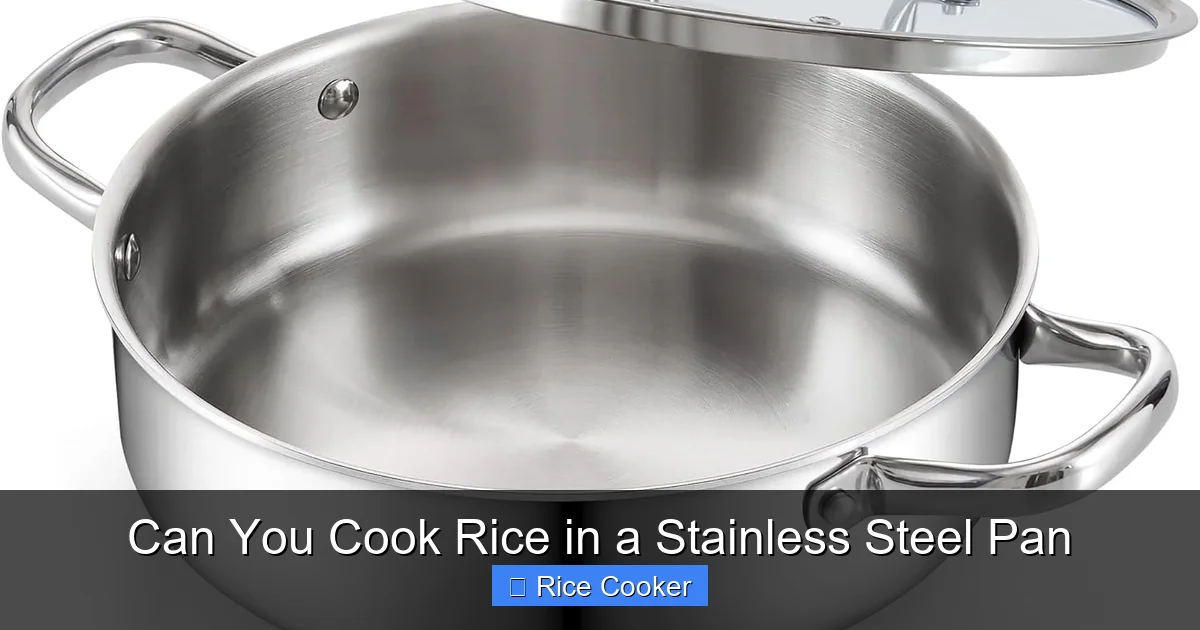
Can you cook rice in a stainless steel pan? Absolutely! With the right method, stainless steel pans deliver evenly cooked, fluffy rice without sticking. While it requires more attention than a rice cooker, it’s a great alternative when you don’t have one on hand.
Key Takeaways
- Stainless steel is safe for cooking rice: It’s non-reactive, durable, and provides excellent heat distribution when used properly.
- Proper water-to-rice ratio is essential: Typically 1:2 (rice to water), but adjust based on grain type and desired texture.
- Use a tight-fitting lid: This traps steam and ensures even cooking, mimicking the sealed environment of a rice cooker.
- Preheat and stir occasionally: Preheating helps prevent sticking, and gentle stirring avoids clumping.
- Rest after cooking: Leting the rice sit covered for 5–10 minutes allows steam to finish the process and fluff the grains.
- Clean promptly to avoid residue: Stainless steel resists staining but needs immediate care after cooking starchy foods like rice.
- Consider your pan size: A wide-bottomed pan with thick walls works best for consistent heat and even cooking.
Quick Answers to Common Questions
Can you cook rice in a stainless steel pan?
Yes, you can absolutely cook rice in a stainless steel pan. With proper heat control, the right water ratio, and a tight-fitting lid, it produces fluffy, evenly cooked rice.
Do you need special equipment to cook rice in stainless steel?
No special equipment is needed beyond a good-quality stainless steel pan with a thick base and a tight-fitting lid. A timer and measuring tools are helpful but optional.
Is stainless steel safe for cooking rice?
Yes, stainless steel is completely safe and non-reactive. It won’t leach chemicals into your food, making it ideal for cooking delicate grains like rice.
Will rice stick to stainless steel?
It can stick if heat is too high or the pan is poorly made. Using a quality pan, maintaining low heat, and covering the pot helps prevent sticking.
How do you know when rice is done in a stainless steel pan?
Check after the recommended simmer time. The rice should be tender with a slight resistance to the bite, and the top should appear dry with steam still rising.
📑 Table of Contents
- Can You Cook Rice in a Stainless Steel Pan? The Short Answer Is Yes!
- Why Choose a Stainless Steel Pan for Cooking Rice?
- What Type of Rice Works Best in a Stainless Steel Pan?
- Step-by-Step Guide: How to Cook Perfect Rice in a Stainless Steel Pan
- Common Mistakes When Cooking Rice in Stainless Steel
- Tips to Prevent Rice from Sticking in Stainless Steel
- How Long Does It Take to Cook Rice in a Stainless Steel Pan?
- Can You Use a Stainless Steel Pan Like a Rice Cooker?
- Cleaning and Maintaining Your Stainless Steel Pan After Cooking Rice
- Conclusion: Yes, You Can Cook Great Rice in a Stainless Steel Pan
Can You Cook Rice in a Stainless Steel Pan? The Short Answer Is Yes!
You’ve probably seen those sleek, polished pots and pans hanging in kitchens across the world—stainless steel cookware that looks as modern as it functions. But here’s the real question: can you cook rice in a stainless steel pan, and will it turn out fluffy, not mushy?
The short answer is yes—you absolutely can cook rice in a stainless steel pan. In fact, many home cooks swear by it because of its durability, even heating, and versatility. However, unlike a dedicated rice cooker, a stainless steel pan doesn’t come with built-in sensors or automatic timers. That means success depends on technique, timing, and a little bit of patience. But don’t worry—once you get the hang of it, you’ll be making restaurant-quality rice in any pan you have at home.
In this article, we’ll walk through everything you need to know about cooking rice in stainless steel, from choosing the right pan to mastering the water ratio and heat control. Whether you’re cooking white rice, brown rice, jasmine, or basmati, we’ve got tips and tricks to help you get it just right.
Why Choose a Stainless Steel Pan for Cooking Rice?
Stainless steel is a popular choice in kitchens worldwide for good reason. It’s tough, easy to clean, and doesn’t react with acidic or alkaline ingredients. But can it handle the delicate art of rice cooking? Let’s break down why stainless steel is actually a great option—if you know how to use it.
Visual guide about Can You Cook Rice in a Stainless Steel Pan
Image source: stretchrecipes.com
Durability and Longevity
One of the biggest advantages of stainless steel is its strength. Unlike aluminum or non-stick surfaces, stainless steel won’t scratch, warp, or degrade over time—even with daily use. If you drop a wooden spoon or scrape the bottom while stirring, your pan will likely survive unscathed. This makes it ideal for long-term kitchen investments.
But here’s the catch: not all stainless steel pans are created equal. Some are made with thin walls and poor heat distribution, which can lead to hot spots and unevenly cooked rice. Look for pans with a thick base or multi-ply construction (like tri-ply or clad) for better results.
Even Heat Distribution
When cooking rice, consistent heat is key. You want the water to simmer steadily without boiling over or scorching the bottom. High-quality stainless steel pans with a heavy, flat base distribute heat evenly, helping prevent burning and ensuring the rice cooks uniformly from edge to edge.
Cheaper pans may warp under heat or develop hot spots, especially if they’re made with just a single layer of metal. These inconsistencies can cause rice to stick, dry out, or cook unevenly. That’s why many professional chefs prefer stainless steel for tasks requiring precision—like rice.
Non-Reactive Surface
Rice absorbs flavors and aromas from the cooking liquid and surrounding ingredients. Stainless steel doesn’t leach chemicals or alter taste, so your rice stays pure and neutral—perfect for pairing with curries, stir-fries, or sushi.
Unlike some non-stick coatings, which can degrade at high temperatures, stainless steel remains stable and safe, even when searing or deglazing. This makes it a reliable choice for multi-step recipes where rice is part of a larger dish.
Easy to Clean
After cooking starchy rice, cleanup can be messy. Fortunately, stainless steel resists stains and odors, and most residues can be removed with warm water and a soft sponge. For stubborn rice stuck to the bottom, soak the pan briefly before scrubbing—never use abrasive steel wool unless necessary.
What Type of Rice Works Best in a Stainless Steel Pan?
Not all rice types behave the same way in a stainless steel pan. Some are more forgiving than others. Here’s a breakdown of popular varieties and how they perform:
Visual guide about Can You Cook Rice in a Stainless Steel Pan
Image source: i.kinja-img.com
White Rice
White rice—such as long-grain American, Calrose, or jasmine—is one of the easiest to cook in a stainless steel pan. Its starch content is moderate, so it holds together well without becoming gluey. Follow the standard 1:2 rice-to-water ratio, and you’ll end up with tender, separate grains.
Brown Rice
Brown rice takes longer to cook due to its higher fiber and oil content. You’ll need a slightly longer simmering time and sometimes an extra splash of water. A common ratio is 1:2.5 (brown rice to water), but check the package instructions for specifics.
Basmati and Jasmine Rice
These aromatic varieties benefit from a gentler heat and precise timing. They tend to puff up and become fragrant when cooked correctly. Use the same 1:2 ratio as white rice, but let them rest longer after cooking to absorb residual steam.
Sushi Rice
Sushi rice requires a very specific texture—slightly sticky but not mushy. Cook it in a stainless steel pan using the 1:1.2 ratio (rice to water), then rinse thoroughly before serving. Be careful not to over-stir during cooking.
Wild and Brown Rice Blends
These mixes often require extended cooking times and extra water. Stir occasionally to prevent clumping, and consider adding a pinch of salt or butter for flavor.
Step-by-Step Guide: How to Cook Perfect Rice in a Stainless Steel Pan
Now that you understand why stainless steel works well for rice, let’s walk through a foolproof method. This approach mimics the gentle, controlled cooking of a rice cooker but uses only your stovetop and a stainless steel pan.
Gather Your Ingredients and Tools
- Stainless steel pan with a tight-fitting lid (at least 2–3 quarts)
- Fine-mesh strainer
- Measuring cup
- Wooden spoon or spatula
- Timer or phone clock
Step 1: Rinse the Rice (Optional but Recommended)
While not always required, rinsing removes excess surface starch, which can make rice gummy. Place rice in a strainer and rinse under cold running water until the water runs clear. This step is especially important for sushi or glutinous rice.
Step 2: Measure Water and Rice
Use the 1:2 ratio as a starting point. For example, 1 cup of rice to 2 cups of water. Adjust slightly based on grain type:
- White rice: 1:2
- Brown rice: 1:2.25 to 1:2.5
- Jasmine or basmati: 1:2
Always measure both rice and water accurately for consistent results.
Step 3: Bring Water to a Boil
Add water to the pan, place it on medium-high heat, and bring to a rolling boil. Once boiling, reduce the heat to low to maintain a gentle simmer.
Step 4: Add Rice and Simmer
Gently add rinsed rice to the boiling water. Stir once or twice to prevent clumping. Cover the pan with a lid and let it simmer for:
- White rice: 15–18 minutes
- Brown rice: 30–40 minutes
- Jasmine/basmati: 18–20 minutes
Avoid lifting the lid during cooking—this releases steam and disrupts the process.
Step 5: Turn Off Heat and Rest
After the timer goes off, turn off the heat and keep the lid on. Let the rice rest for 5–10 minutes. This allows the remaining steam to finish cooking the rice and fluff the grains naturally.
Step 6: Fluff and Serve
Remove the lid and gently fluff the rice with a fork. Avoid pressing down—this compacts the grains. Serve immediately or keep warm under a towel for up to 30 minutes.
Common Mistakes When Cooking Rice in Stainless Steel
Even experienced cooks make mistakes when adapting rice recipes to stainless steel pans. Here are the most common pitfalls—and how to avoid them.
Mistake 1: Using the Wrong Pan Size
Cooking rice in a deep, narrow pan leads to uneven cooking. Instead, choose a wide, shallow pan that allows the rice to spread evenly. A 10-inch pan is ideal for 1–2 cups of rice.
Mistake 2: Not Preheating the Water
Adding cold water and rice to a cold pan forces the rice to sit in cool liquid, which can make it mushy. Always bring water to a boil first, then add rice.
Mistake 3: Lifting the Lid Too Often
Each time you lift the lid, steam escapes, lowering the internal temperature. This prolongs cooking time and risks uneven results. Only peek at the end of cooking.
Mistake 4: Over-Stirring
Stirring too much breaks up the grains and releases starch, leading to a gluey texture. Stir just enough to break up clumps—no more.
Mistake 5: Skipping the Rest Period
Rushing the resting phase means missing the final burst of steam that finishes cooking the center of each grain. Always let it sit.
Mistake 6: Using Low-Quality Stainless Steel
Thin, poorly constructed pans warp and develop hot spots. Invest in a well-made stainless steel pot with a thick base.
Tips to Prevent Rice from Sticking in Stainless Steel
Stainless steel is naturally non-stick, but rice’s starch can cling if heat or timing is off. Here’s how to keep your pan clean and your rice smooth.
Use Enough Oil or Butter (Optional)
A light coating of oil or butter on the bottom of the pan can help prevent sticking. Just don’t overdo it—too much fat can make rice greasy.
Don’t Rush the Heat
High heat causes rapid evaporation and scorching. Keep the flame low after the water reaches a boil to maintain a steady simmer.
Keep the Lid On
The trapped steam keeps the surface moist, reducing the chance of dry, stuck-on rice.
Soak Stuck Rice Before Scrubbing
If rice does stick, let the pan cool slightly, then soak it in warm water for 10–15 minutes. This loosens the residue, making cleanup easier.
How Long Does It Take to Cook Rice in a Stainless Steel Pan?
Cooking time varies by rice type:
- White rice: 15–18 minutes simmering + 5–10 minute rest
- Brown rice: 30–40 minutes simmering + 10–15 minute rest
- Jasmine or basmati: 18–20 minutes simmering + 5–10 minute rest
- Sushi rice: 12–15 minutes simmering + 10 minute rest, then rinse
Always refer to the package instructions for specific guidance, as brands differ slightly.
Can You Use a Stainless Steel Pan Like a Rice Cooker?
While you can’t replicate a rice cooker’s automated cycle exactly, a stainless steel pan can produce similar results with manual attention. The key difference is monitoring. A rice cooker shuts off automatically; with a pan, you must judge doneness by time and visual cues.
Some advanced rice cookers also include steaming baskets or browning functions—features you’d need to simulate separately in a stainless steel pan. But for basic white or brown rice, the pan method is reliable and effective.
Cleaning and Maintaining Your Stainless Steel Pan After Cooking Rice
Proper cleaning prevents staining and extends the life of your pan. Here’s how to do it right:
- Let the pan cool completely before washing.
- Soak in warm water if rice has stuck.
- Use a soft sponge or nylon brush—avoid steel wool unless necessary.
- For stubborn residue, add baking soda or vinegar to the water.
- Dry thoroughly to prevent water spots.
Regular maintenance ensures your stainless steel pan stays shiny and functional for years.
Conclusion: Yes, You Can Cook Great Rice in a Stainless Steel Pan
So, can you cook rice in a stainless steel pan? The answer is a confident yes. With the right technique, the right ratios, and a little practice, you can achieve perfectly fluffy, evenly cooked rice every time—without needing a dedicated rice cooker.
Stainless steel offers durability, even heating, and ease of cleaning, making it a smart addition to any kitchen. While it demands more attention than a plug-and-play appliance, the payoff is delicious, customizable rice that pairs beautifully with any meal.
Next time you’re craving a side of jasmine rice or a batch of sushi, reach for your stainless steel pan—not your rice cooker. You might just find it becomes your new favorite kitchen tool.
Frequently Asked Questions
Can you cook rice directly in a stainless steel pot?
Yes, you can cook rice directly in a stainless steel pot. Use a 1:2 rice-to-water ratio, bring to a boil, then simmer with the lid on until done.
Do I need to rinse rice before cooking in stainless steel?
It’s optional but recommended, especially for sushi or sticky rice. Rinsing removes excess starch and prevents gummy results.
Why is my rice sticking to the stainless steel pan?
Rice may stick if the pan is overheated, the water is insufficient, or the pan has poor heat distribution. Use medium-low heat and ensure adequate water.
Can you cook different types of rice in a stainless steel pan?
Yes, you can cook white, brown, jasmine, basmati, and sushi rice in a stainless steel pan. Adjust water and cooking time based on grain type.
How do you clean a stainless steel pan after cooking rice?
Let the pan cool, soak in warm water if needed, then wash with a soft sponge. Avoid abrasive scrubbers unless necessary.
Is a stainless steel pan better than a non-stick pan for cooking rice?
Stainless steel is more durable and safer at high temperatures, but non-stick pans require less oil and may be easier for beginners. Choose based on preference and usage.