
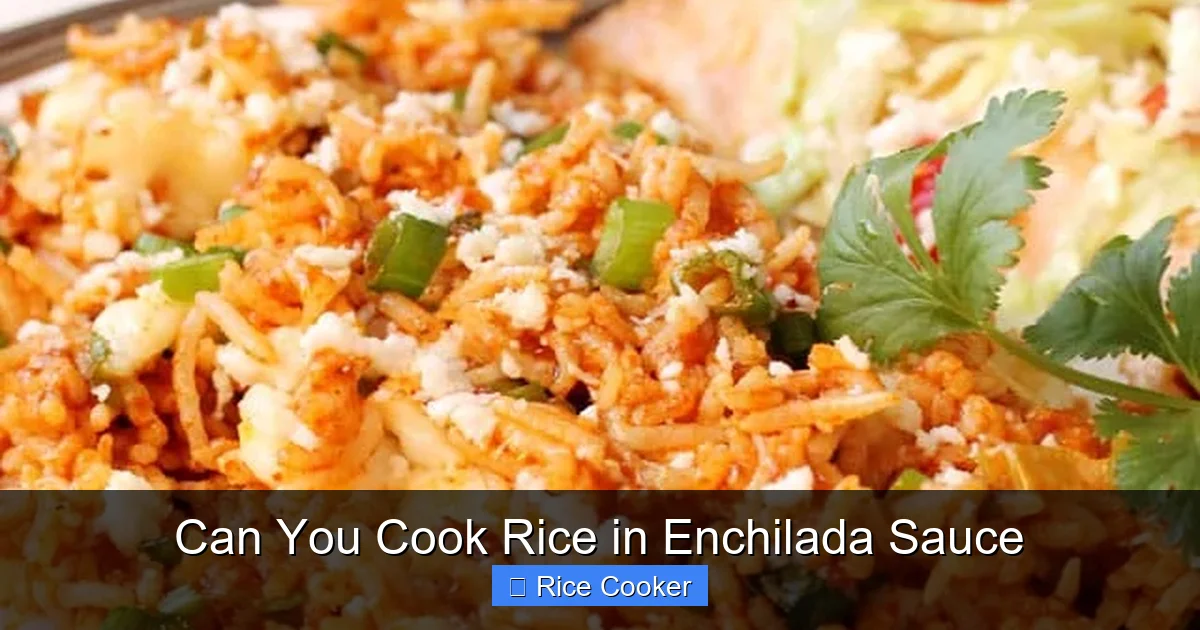
Can you cook rice in enchilada sauce? Yes—and doing so adds rich, spicy flavor to every grain. While not traditional, using enchilada sauce as your rice cooking liquid creates a delicious, one-pot meal that’s easy and full of Mexican-inspired taste. This method works best with long-grain rice like jasmine or basmati, and it’s perfect for busy weeknights when you want big flavor without extra effort.
Key Takeaways
- Rice can be cooked in enchilada sauce for a flavorful, aromatic dish with minimal effort.
- Use a rice cooker or stovetop method—enchilada sauce acts as both liquid and seasoning.
- Long-grain rice works best, such as jasmine or basmati, which absorb flavors well without becoming mushy.
- Adjust spice levels by choosing mild or medium enchilada sauce to suit your taste.
- Enhance the dish with additions like cheese, beans, or fresh herbs after cooking.
- Savory rice becomes versatile—pair with grilled chicken, tacos, or serve alongside Mexican-style dishes.
- It’s a creative shortcut that saves time and boosts flavor when you’re short on ingredients.
[FEATURED_IMAGE_PLACEHOLDER]
Introduction: A Flavorful Twist on Rice
Cooking rice in enchilada sauce might sound unusual at first, but it’s actually a clever way to turn a pantry staple into a bold, satisfying meal. Instead of plain water or broth, you’re using the rich, spicy, tomato-based sauce that usually coats tortillas and fills burritos. The result? Rice that’s deeply flavored, slightly tangy, and full of Mexican-inspired warmth. It’s not just about flavor—it’s about convenience too. With a rice cooker or a simple pot, you can make a complete dish in under 30 minutes.
Whether you’re looking to jazz up leftover dinner, impress guests with a new technique, or simply try something different, cooking rice in enchilada sauce delivers. It’s especially handy when you’re out of chicken broth or don’t feel like opening another jar. This method transforms ordinary rice into a standout side dish or even a main course when paired with protein and vegetables. Let’s dive into how to do it right—and why you’ll want to keep a jar of enchilada sauce in your rice rotation.
Understanding Enchilada Sauce: What Makes It Tick
Before we get into cooking, let’s talk about what enchilada sauce really is. Unlike salsa, which is fresh and chunky, enchilada sauce is a smooth, thick blend of tomatoes, chili peppers, garlic, onions, and spices like cumin and oregano. It’s typically used to coat corn tortillas before baking, but its rich flavor makes it a great substitute for liquid when cooking grains.
The Ingredients Behind the Flavor
Most store-bought enchilada sauces contain:
- Tomatoes (diced or pureed)
- Dried chilies (like ancho or pasilla)
- Garlic, onion, and spices
- Vinegar or lime juice for acidity
- Sugar or salt for balance
These ingredients give it a deep red color and a complex taste—earthy, smoky, and mildly spicy. When used to cook rice, they infuse every grain with that same depth.
Mild vs. Hot Enchilada Sauce
Not all enchilada sauces are created equal. Some are labeled “mild,” while others are labeled “hot” or “spicy.” If you’re cooking for kids or prefer subtle heat, go with mild. For a bolder kick, use hot. Just remember that once the rice starts cooking, the chili flavor mellows slightly—so if you want more spice, add a pinch of cayenne or a diced jalapeño while cooking.
Why Cook Rice in Enchilada Sauce?
You might wonder: why bother? After all, rice cooked in water or broth is perfectly fine. But using enchilada sauce brings several advantages that make it worth trying.
Flavor Infusion Without Extra Steps
Instead of seasoning rice after it’s done, you’re seasoning it from within. Every grain absorbs the sauce’s tangy, savory notes as it cooks. No need to stir in extra spices or mix in cheese—though you can, of course!
Saves Time and Effort
If you already have enchilada sauce in your fridge, you’ve got a flavorful cooking liquid ready to go. No need to buy or open another ingredient. This is especially helpful during busy weeknights when you want a quick, cohesive meal.
Versatile and Pairable
Rice cooked in enchilada sauce pairs beautifully with:
- Grilled chicken or steak
- Black beans or refried beans
- Shredded cheese (cheddar or Monterey Jack)
- Fresh cilantro or green onions
- Tortilla chips for crunch
It’s a natural fit for Mexican, Tex-Mex, or fusion meals.
Creates a One-Pot Dish
When combined with ingredients like onions, garlic, or frozen corn, enchilada-sauce rice becomes a complete meal. You can even add cooked meat directly into the rice cooker for hands-off cooking.
How to Cook Rice in Enchilada Sauce: Step-by-Step Guide
Ready to try it? Here’s how to cook rice using enchilada sauce as your primary liquid. The process is similar to making regular rice, but with a flavor twist.
Ingredients You’ll Need
- 1 cup long-grain white rice (jasmine, basmati, or converted)
- 1½ cups enchilada sauce (mild or medium preferred)
- Optional: ½ teaspoon salt, 1 clove minced garlic, ¼ cup frozen corn, 1 small diced onion
- Optional: 1 cup shredded cheese (for topping)
Method 1: Using a Rice Cooker
Using a rice cooker is the easiest way to get consistent results.
- Wash the rice under cold water until the water runs clear. This removes excess starch and prevents gummy rice.
- Add the rinsed rice to the inner pot of your rice cooker.
- Pour in 1½ cups of enchilada sauce. If using, add garlic, onions, or corn now.
- Turn on the rice cooker and select the standard “white rice” setting.
- Once cooked, let it sit for 5 minutes with the lid closed—this helps the rice absorb any remaining liquid.
- Fluff with a fork and top with cheese or fresh herbs before serving.
Method 2: Stovetop Technique
No rice cooker? No problem. The stovetop method works just as well.
- In a medium saucepan, combine rice and enchilada sauce. Stir to coat.
- Bring to a boil over high heat.
- Reduce heat to low, cover, and simmer for 18–20 minutes, or until rice is tender and liquid is absorbed.
- Remove from heat and let rest, covered, for 5 minutes.
- Fluff gently and serve.
Pro Tips for Perfect Results
- Don’t skip rinsing the rice—it ensures fluffy grains.
- Use a ratio of 1:1.5 rice to sauce. Too much sauce can make rice soggy; too little, and it may dry out.
- If the rice seems too wet, uncover and cook off excess moisture for 2–3 minutes.
- For extra creaminess, stir in a tablespoon of sour cream or Greek yogurt at the end.
What Kind of Rice Works Best?
Not all rice types are created equal when it comes to absorbing flavors. Long-grain varieties are ideal because they remain separate and fluffy, even after soaking up sauce.
Best Types for Enchilada-Sauce Rice
- Jasmine Rice: Fragrant and slightly sticky, it loves liquid and takes on flavor beautifully.
- Basmati Rice: Light and aromatic, it doesn’t clump and holds texture well.
- White Long-Grain Rice: A reliable choice—neutral flavor, easy to find.
- Avoid short-grain or sushi rice—they tend to become mushy when cooked in sauce.
Instant or Quick-Cooking Rice?
While possible, instant rice isn’t recommended. It’s designed for speed and doesn’t absorb liquid the same way, so it may end up too soft or unevenly cooked. Stick to regular long-grain rice for best results.
Customizing Your Enchilada Rice
The beauty of cooking rice in enchilada sauce is that you can tweak it to your liking. Here are some fun variations to try.
Add Protein
Make it a main course by adding:
- Shredded rotisserie chicken
- Ground beef or turkey (cooked and drained first)
- Black beans or pinto beans (added with the sauce)
Cook everything together in the rice cooker for a no-fuss meal.
Boost the Veggies
Frozen corn, bell peppers, or diced zucchini add color and nutrition. Add them with the sauce—they’ll cook through as the rice steams.
Switch Up the Sauce
Try different flavors:
- Green enchilada sauce (made with tomatillos) for tangier rice
- Red enchilada sauce (the classic) for richer color and deeper taste
- Homemade enchilada sauce for full control over spices
Even leftover green chile sauce works well.
Toppings Galore
Serve with:
- Shredded cheese (cheddar, Monterey Jack, or queso fresco)
- Sour cream or Greek yogurt
- Chopped cilantro or green onions
- Lime wedges for brightness
- Tortilla strips for crunch
These transform the dish into a full-blown Tex-Mex bowl.
Common Mistakes and How to Avoid Them
Even experienced cooks can run into issues when trying a new method. Here’s how to sidestep common pitfalls.
Mistake 1: Not Rinsing the Rice
Unwashed rice leaves behind starch, leading to clumpy, gluey grains. Always rinse until water runs clear.
Mistake 2: Using Too Much Sauce
Too much liquid = mushy rice. Stick to 1½ cups per 1 cup rice. Drain excess if needed.
Mistake 3: Skipping the Resting Period
Letting rice rest after cooking helps redistribute moisture and fluffiness. Don’t skip this step.
Mistake 4: Using Low-Quality Sauce
Cheap, overly processed enchilada sauce may lack depth. Choose a brand with real ingredients or make your own.
Mistake 5: Overcooking
Keep an eye on the timer. Overcooked rice loses texture and becomes unappetizing.
Pairing Ideas: What Goes Well With Enchilada-Rice?
This rice isn’t just a side—it’s a star. Here’s how to build meals around it.
Mexican Bowl
Layer rice with black beans, grilled chicken, salsa, guacamole, and cheese. Top with tortilla strips and cilantro.
Burrito Bowl
Similar to above, but served in a large bowl instead of a wrap. Add a drizzle of sour cream for creaminess.
Rice as a Main Dish
For vegetarians or light eaters, add sautéed mushrooms, corn, and spinach. Top with avocado slices.
Side Dish for Tacos or Fajitas
Serve alongside grilled fajita meat and fresh veggies. The rice soaks up any juices beautifully.
Fusion Ideas
Try it with Asian flavors: add soy sauce, sesame oil, and green onions for an Asian-Mexican twist.
Nutritional Benefits and Considerations
Is enchilada-sauce rice healthy? It depends on how you prepare it—but it can be nutritious.
Pros
- Rice provides carbohydrates for energy.
- Enchilada sauce offers lycopene (from tomatoes) and antioxidants.
- Addition of beans or veggies increases fiber and plant-based protein.
Considerations
- Store-bought enchilada sauce can be high in sodium and preservatives. Check labels.
- Some brands contain added sugar—opt for unsweetened versions.
- Pair with lean proteins and plenty of veggies to balance the meal.
Storage and Reheating Tips
Got leftovers? Here’s how to handle them.
Storing Leftover Rice
- Cool completely, then refrigerate in an airtight container for up to 4 days.
- Freeze in portions for up to 3 months—just thaw and reheat.
Reheating
- Microwave with a splash of water or broth to prevent drying.
- Steam in the microwave or warm in a skillet with a bit of sauce.
- Add a sprinkle of cheese to revive flavor and texture.
Final Thoughts: A Game-Changer for Busy Cooks
Cooking rice in enchilada sauce isn’t just a novelty—it’s a practical, tasty shortcut that elevates everyday meals. It turns a simple grain into something special, using ingredients you likely already have. Whether you’re feeding a family, meal-prepping, or just craving bold flavors, this method delivers.
Give it a try with your next pot of rice. Start with a basic batch, then experiment with toppings and additions. You might just discover your new favorite way to cook rice. And who knows? Once you see how easy and delicious it is, you’ll never go back to plain water again.
FAQs
Can I use green enchilada sauce instead of red?
Absolutely! Green enchilada sauce, made with tomatillos, gives rice a tangy, slightly citrusy flavor. It works just as well as red sauce—just adjust other spices if needed.
Do I need to dilute the enchilada sauce?
Not usually. Store-bought enchilada sauce is thick enough to cook rice without dilution. If yours is very thick, add a splash of water or broth to reach the right consistency.
Can I make this in a slow cooker?
Yes, but it’s not ideal. Slow cookers don’t provide the same heat control. Instead, cook rice separately and mix it with enchilada sauce and other ingredients in the slow cooker.
Will the rice be too spicy?
Not necessarily. The heat mellows during cooking. Use mild enchilada sauce if you’re sensitive to spice. You can always add more heat with cayenne or hot sauce after cooking.
Can I use leftover enchilada sauce from a casserole?
Yes, but strain it first to remove any chunks or solids. Use only the liquid part for cooking rice.
Is this gluten-free?
Most store-bought enchilada sauces are gluten-free, but always check the label. Homemade versions are naturally gluten-free if you use certified gluten-free ingredients.
This is a comprehensive guide about can you cook rice in enchilada sauce.
Key Takeaways
- Understanding can you cook rice in enchilada sauce: Provides essential knowledge
Frequently Asked Questions
What is can you cook rice in enchilada sauce?
can you cook rice in enchilada sauce is an important topic with many practical applications.