

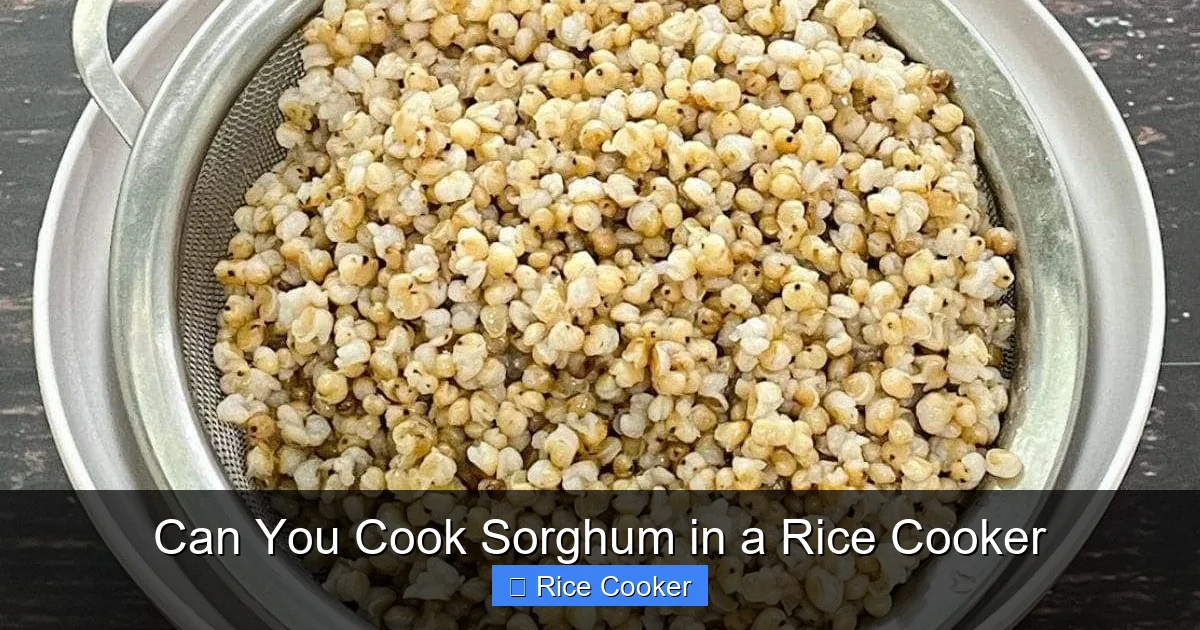
Absolutely! Sorghum cooks beautifully in a rice cooker, yielding tender, fluffy grains with a mild, slightly sweet flavor. With the right water ratio and a few simple steps, you can enjoy this gluten-free and nutrient-rich grain just like rice. Whether you’re meal prepping or trying something new, using a rice cooker makes cooking sorghum quick, easy, and hands-off.
Key Takeaways
- Yes, sorghum works great in a rice cooker. It produces fluffy, separate grains similar to rice when cooked properly.
- Use a 2:1 water-to-sorghum ratio. For every cup of sorghum, use two cups of water or broth for ideal texture.
- Rinse sorghum before cooking. This removes excess starch and prevents clumping.
- Cooking time is about 30–40 minutes. Check after 25 minutes and add extra time if needed.
- Sorghum is naturally gluten-free and packed with nutrients. It’s rich in fiber, protein, and antioxidants.
- You can use a rice cooker’s white rice or brown rice setting. Some models have a “grain” or “pulse” setting that works best.
- Store leftovers properly. Cooked sorghum keeps well in the fridge for up to 5 days.
Can You Cook Sorghum in a Rice Cooker?
If you’ve ever wondered whether sorghum—a humble, nutty-flavored grain often overlooked in favor of rice or quinoa—can be cooked in a rice cooker, the answer is a resounding yes. In fact, using a rice cooker might be one of the easiest and most foolproof ways to prepare sorghum perfectly every time. Whether you’re following a gluten-free diet, looking to diversify your grain intake, or simply want a quicker alternative to stovetop cooking, sorghum in a rice cooker delivers consistent, delicious results with minimal effort.
Sorghum, also known as milo or great millet, has been a staple in many cultures for thousands of years. Native to Africa and Asia, it’s now gaining popularity in North America thanks to its nutritional benefits and versatility. It’s naturally gluten-free, high in protein and fiber, and has a mild, slightly sweet taste that complements both savory and sweet dishes. But how does it behave in a rice cooker? Can it puff up? Does it stick? Can you achieve that perfect, fluffy texture?
In this complete guide, we’ll walk you through everything you need to know about cooking sorghum in a rice cooker—from preparation and timing to serving suggestions and storage tips. We’ll also explore why this ancient grain deserves a spot in your kitchen and how your rice cooker can help unlock its full potential.
Key Takeaways
- Understanding can you cook sorghum in a rice cooker: Provides essential knowledge
📑 Table of Contents
- Understanding Sorghum: The Grain That’s More Than Meets the Eye
- Why Use a Rice Cooker for Sorghum?
- How to Cook Sorghum in a Rice Cooker: Step-by-Step Guide
- Troubleshooting Common Issues
- Creative Ways to Use Cooked Sorghum
- Comparing Sorghum to Other Grains in the Rice Cooker
- Tips for Perfect Sorghum Every Time
- Health Benefits of Sorghum
- Environmental Impact and Sustainability
- Frequently Asked Questions
Understanding Sorghum: The Grain That’s More Than Meets the Eye
Before diving into the how-to, let’s talk about what sorghum actually is. Botanically speaking, sorghum (Sorghum bicolor) belongs to the grass family, much like wheat, barley, and rice. Despite being less common in Western kitchens, it’s one of the world’s top five cereal crops by production volume. That means it’s grown on a massive scale worldwide—just not always eaten in its whole form.
When you buy sorghum at the grocery store or online, you’re likely getting either pearl sorghum (the most common type) or brown sorghum. Pearl sorghum has been processed to remove the outer bran layer, giving it a smoother texture and shorter cooking time. Brown sorghum retains more of its natural nutrients but takes longer to cook and has a chewier bite.
Both types are excellent choices for a rice cooker, though pearl sorghum tends to yield a lighter, fluffier result—closer to white rice. Brown sorghum, while nuttier and more fibrous, still cooks beautifully in a rice cooker and offers more fiber and antioxidants.
Nutritionally, sorghum is a powerhouse. It’s rich in complex carbohydrates, plant-based protein, and essential minerals like iron, magnesium, and potassium. It also contains phenolic compounds, which act as antioxidants and may support heart health and reduce inflammation. For people with celiac disease or gluten sensitivities, sorghum is a fantastic alternative to wheat-based grains.
Why Use a Rice Cooker for Sorghum?
Cooking sorghum on the stovetop requires constant attention—checking for doneness, stirring occasionally, and adjusting heat to prevent scorching. A rice cooker eliminates all that guesswork. Once you add the sorghum and water (or broth), you simply press a button and let the machine do the rest.
Here’s why a rice cooker is ideal for sorghum:
– **Consistent results:** No more overcooked or undercooked batches.
– **Hands-off convenience:** Set it and forget it—perfect for busy days.
– **Energy efficient:** Uses less electricity than boiling on the stove.
– **Even cooking:** The internal mechanism ensures uniform heat distribution.
– **Easy cleanup:** Just rinse the inner pot and lid.
Most modern rice cookers come with multiple settings—white rice, brown rice, porridge, steam, and even delay timers. While sorghum isn’t listed as a specific option, it fits well between white and brown rice modes. Experimenting with settings helps find the best match for your desired texture.
How to Cook Sorghum in a Rice Cooker: Step-by-Step Guide
Ready to try it yourself? Follow these simple steps for perfect sorghum every time.
1. Choose the Right Sorghum
Opt for pearl sorghum if you prefer a softer, lighter grain. If you’re okay with a chewier texture and want maximum nutrition, go for brown sorghum. Both work well in a rice cooker.
2. Measure and Rinse
For every 1 cup of dry sorghum, use 2 cups of liquid (water, vegetable broth, or chicken broth). Rinsing removes surface starches that can cause clumping. Place the sorghum in a fine-mesh strainer and rinse under cold water for 30–60 seconds until the water runs clear.
3. Add to the Rice Cooker Pot
Pour the rinsed sorghum into the inner pot of your rice cooker. Then add the measured liquid. Stir gently to combine.
4. Select the Best Setting
If your rice cooker has a “White Rice” setting, use that. For brown sorghum, try the “Brown Rice” mode. Some models offer a “Grain” or “Pulse” setting—these work wonderfully too. Avoid the “Quick Cook” or “Risotto” settings unless your machine specifically supports them for grains like sorghum.
5. Start Cooking
Close the lid and press start. The cooking process typically takes 30–40 minutes. Pearl sorghum usually finishes closer to 30 minutes; brown sorghum may need 35–40 minutes. Don’t open the lid during cooking—this releases steam and can affect timing.
6. Let It Rest
Once the cycle ends, let the sorghum sit, covered, for 5–10 minutes. This allows residual steam to finish softening any remaining grains. Then fluff with a fork.
7. Serve or Store
Enjoy immediately as a side dish, base for bowls, or mixed into salads. Leftovers store well in an airtight container in the refrigerator for up to 5 days or freeze for up to 3 months.
Troubleshooting Common Issues
Even with the right technique, you might run into a few hiccups. Here’s how to fix them:
Too Watery?
If your sorghum came out mushy or soupy, you probably used too much liquid or didn’t drain excess moisture afterward. Next time, reduce water slightly (try 1.8:1 ratio) and let it sit uncovered for 5 minutes after cooking to vent steam.
Grains Sticking Together?
This usually happens if sorghum wasn’t rinsed well or cooked too long. Always rinse thoroughly before cooking. Also, avoid lifting the lid frequently during cooking.
Undercooked in the Center?
Some rice cookers have hot spots. To fix this, stir once halfway through cooking (only possible in models with manual pause features). Alternatively, break up any large clumps after the cycle ends.
Too Dry or Chewy?
If sorghum feels hard or chalky, it wasn’t cooked long enough. Add another 5 minutes next time, or soak the dry grain overnight in water (1 cup grain + 3 cups water, refrigerated) to shorten cooking time.
Creative Ways to Use Cooked Sorghum
Once you’ve mastered the basics, the possibilities are endless. Sorghum is incredibly versatile—here are some inspired ideas:
Mediterranean Bowls
Combine cooked sorghum with roasted vegetables (zucchini, bell peppers, eggplant), chickpeas, feta cheese, and a lemon-tahini dressing. Top with fresh parsley and a drizzle of olive oil.
Southwest Salad
Mix sorghum with black beans, corn, diced tomatoes, avocado, red onion, and cilantro. Dress with lime juice, olive oil, cumin, and chili powder.
Sorghum Porridge
For breakfast, cook sorghum with almond milk, cinnamon, vanilla, and a pinch of salt. Sweeten with honey or maple syrup. Top with berries, nuts, or seeds.
Stuffed Peppers
Fill bell peppers with a mixture of sorghum, ground turkey, onions, garlic, tomatoes, and spices. Bake until peppers are tender.
Sorghum Pudding
Make a comforting dessert by simmering sorghum with coconut milk, sugar, and cardamom. Chill and serve with whipped cream.
Burrito Bowls
Layer sorghum with salsa, guacamole, shredded cheese, sour cream, and grilled chicken or beans for a customizable meal prep favorite.
Comparing Sorghum to Other Grains in the Rice Cooker
Wondering how sorghum stacks up against other popular grains? Here’s a quick comparison:
Sorghum vs. Rice
While white rice cooks faster (about 20 minutes) and has a softer texture, sorghum offers more fiber, protein, and nutrients. It holds up better in salads and pilafs without falling apart.
Sorghum vs. Quinoa
Quinoa cooks in about 15 minutes and has a slightly crunchy bite. Sorghum has a milder flavor and absorbs liquids more readily, making it great for creamy dishes.
Sorghum vs. Bulgur
Bulgur is pre-cooked wheat and ready to eat—no cooking needed. Sorghum requires cooking but provides gluten-free benefits and a chewier texture ideal for stuffing.
Sorghum vs. Farro
Farro is chewy and nutty but takes 45+ minutes on the stovetop. In a rice cooker, sorghum wins for speed and ease while offering comparable nutritional value.
Tips for Perfect Sorghum Every Time
To ensure success, keep these expert tips in mind:
– **Soak overnight (optional):** Soaking reduces cooking time by up to 10 minutes and improves digestibility.
– **Use broth instead of water:** Adds flavor and boosts nutrition.
– **Fluff immediately after resting:** Prevents sticking and maintains separation.
– **Don’t skip rinsing:** Especially important for pearl sorghum.
– **Experiment with ratios:** Start with 2:1, then adjust based on preference.
– **Clean your rice cooker regularly:** Residue from previous meals can affect future batches.
Health Benefits of Sorghum
Beyond being easy to cook, sorghum packs a serious nutritional punch. It’s naturally gluten-free, making it safe for those with celiac disease or non-celiac gluten sensitivity. It’s also lower on the glycemic index than many grains, helping stabilize blood sugar levels.
One cup of cooked sorghum provides:
– About 220 calories
– 6 grams of protein
– 8 grams of fiber
– Rich in iron, magnesium, phosphorus, and B vitamins
These nutrients support digestion, muscle function, energy metabolism, and overall wellness. Plus, sorghum contains tannins and polyphenols that act as antioxidants—protecting cells from damage caused by free radicals.
Environmental Impact and Sustainability
Choosing sorghum isn’t just good for your health—it’s good for the planet. Sorghum is drought-resistant and requires less water than rice or wheat. It grows well in arid regions and doesn’t need heavy pesticides, making it an eco-friendly crop. Supporting sorghum farming helps promote sustainable agriculture and food security in vulnerable communities.
By incorporating sorghum into your diet, you’re voting with your fork for a more resilient food system.
Frequently Asked Questions
Can I cook sorghum directly in the rice cooker without rinsing?
It’s not recommended. Rinsing removes excess starch that can cause sorghum to clump or become gummy. Skipping this step may result in uneven texture.
Visual guide about Can You Cook Sorghum in a Rice Cooker
Image source: storables.com

Visual guide about Can You Cook Sorghum in a Rice Cooker
Image source: storables.com
How long does cooked sorghum last in the refrigerator?
Stored properly in an airtight container, cooked sorghum stays fresh for up to 5 days in the refrigerator. For longer storage, freeze portions in freezer-safe bags for up to 3 months.
Can I use a slow cooker instead of a rice cooker?
Yes, but adjustments are needed. Use a 2.5:1 liquid-to-grain ratio and cook on low for 6–8 hours. Monitor closely to avoid drying out.
Is sorghum safe for people with celiac disease?
Absolutely. Sorghum is naturally gluten-free and safe for those with celiac disease or gluten intolerance—but always check packaging to confirm no cross-contamination occurred during processing.
Can I substitute sorghum for rice in fried rice?
Yes! Cook sorghum ahead of time, cool completely, then stir-fry with vegetables and protein. It holds shape well and absorbs flavors beautifully.
Does sorghum need to be soaked before cooking?
Not required, but soaking (especially brown sorghum) reduces cooking time and improves texture. Simply cover with water and soak overnight in the fridge.
Frequently Asked Questions
Can I cook sorghum directly in the rice cooker without rinsing?
It’s not recommended. Rinsing removes excess starch that can cause sorghum to clump or become gummy. Skipping this step may result in uneven texture.
How long does cooked sorghum last in the refrigerator?
Stored properly in an airtight container, cooked sorghum stays fresh for up to 5 days in the refrigerator. For longer storage, freeze portions in freezer-safe bags for up to 3 months.
Can I use a slow cooker instead of a rice cooker?
Yes, but adjustments are needed. Use a 2.5:1 liquid-to-grain ratio and cook on low for 6–8 hours. Monitor closely to avoid drying out.
Is sorghum safe for people with celiac disease?
Absolutely. Sorghum is naturally gluten-free and safe for those with celiac disease or gluten intolerance—but always check packaging to confirm no cross-contamination occurred during processing.
Can I substitute sorghum for rice in fried rice?
Yes! Cook sorghum ahead of time, cool completely, then stir-fry with vegetables and protein. It holds shape well and absorbs flavors beautifully.
Does sorghum need to be soaked before cooking?
Not required, but soaking (especially brown sorghum) reduces cooking time and improves texture. Simply cover with water and soak overnight in the fridge.