
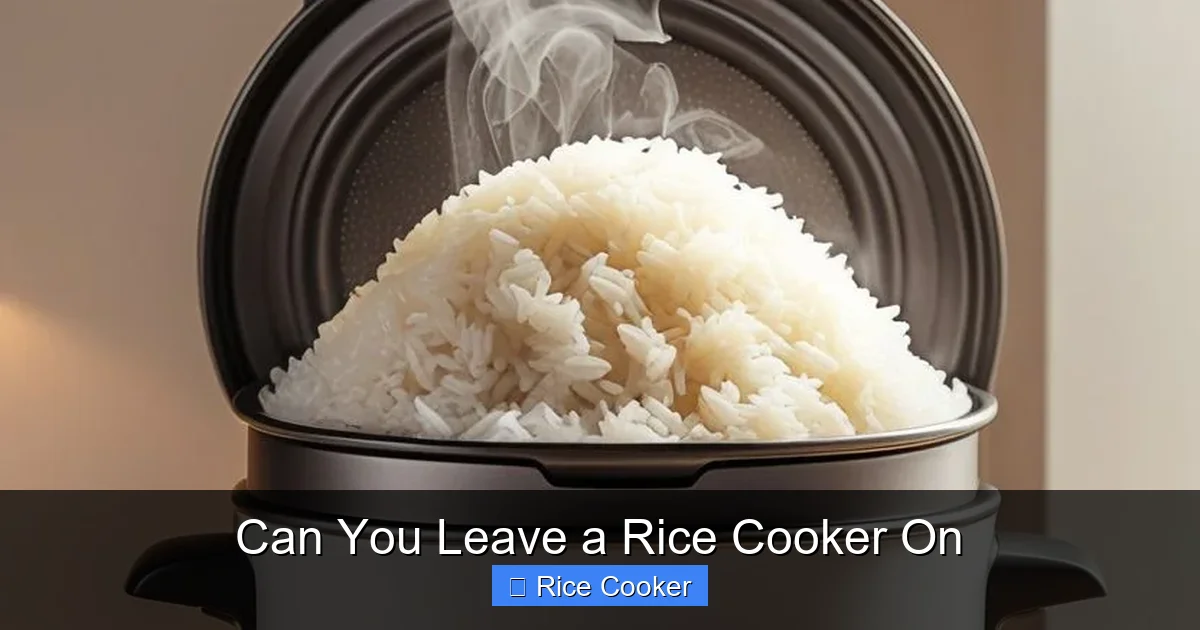
Can you leave a rice cooker on? The short answer is yes—most modern rice cookers are designed with automatic shut-off features that make them safe to leave unattended. However, leaving it on unnecessarily can waste energy and reduce the appliance’s lifespan. With proper understanding of your model and safety settings, you can use your rice cooker confidently and efficiently.
Key Takeaways
- Safety First: Most rice cookers have built-in shut-off mechanisms that turn off automatically after cooking, reducing fire or burn risks.
- Energy Efficiency: Leaving a rice cooker on for hours uses unnecessary electricity and can increase your utility bill.
- Warranty Concerns: Running a rice cooker continuously might void your warranty if the manufacturer specifies otherwise.
- Food Quality: Rice left in the cooker after cooking may overcook or dry out, affecting taste and texture.
- Modern Features: Many newer models include keep-warm functions that last only a few hours before turning off.
- Manual Override: Some users leave rice cookers on “warm” mode overnight for convenience, but this isn’t always safe or recommended.
- Best Practice: Always unplug your rice cooker when not in use to eliminate any electrical hazards.
📑 Table of Contents
- Can You Leave a Rice Cooker On? A Complete Guide to Safety and Efficiency
- How Modern Rice Cookers Work: Built-In Safety Features
- Is It Safe to Leave a Rice Cooker On All Day?
- When Is It Acceptable to Leave Your Rice Cooker On?
- What Happens If You Leave Rice Cooker On Too Long?
- Tips for Using Your Rice Cooker Safely and Efficiently
- Comparing Rice Cooker Models: What to Look For
- Final Thoughts: Balance Convenience with Responsibility
- Conclusion
Can You Leave a Rice Cooker On? A Complete Guide to Safety and Efficiency
If you’re someone who loves the convenience of a rice cooker—whether you’re meal-prepping for the week, feeding a large family, or just making dinner while juggling other tasks—you’ve probably wondered: Can I really leave my rice cooker on all day?
This is a common question among home cooks and busy families alike. After all, the idea of setting your rice cooker and forgetting about it sounds like kitchen magic. But is it safe? And more importantly, should you do it?
In this comprehensive guide, we’ll break down everything you need to know about leaving a rice cooker on. From understanding how modern rice cookers work to exploring energy usage, safety features, and expert tips, we’ve got you covered. Whether you’re using a basic white rice model or a high-tech digital one with multiple settings, you’ll learn what’s safe, what’s not, and how to get the most out of your appliance without risking your home—or your food.
How Modern Rice Cookers Work: Built-In Safety Features
Before we dive into whether you can leave a rice cooker on, let’s talk about how these appliances actually function. Most rice cookers operate using a simple yet effective system involving a thermostat, heating element, and control circuitry. Here’s what happens step by step:
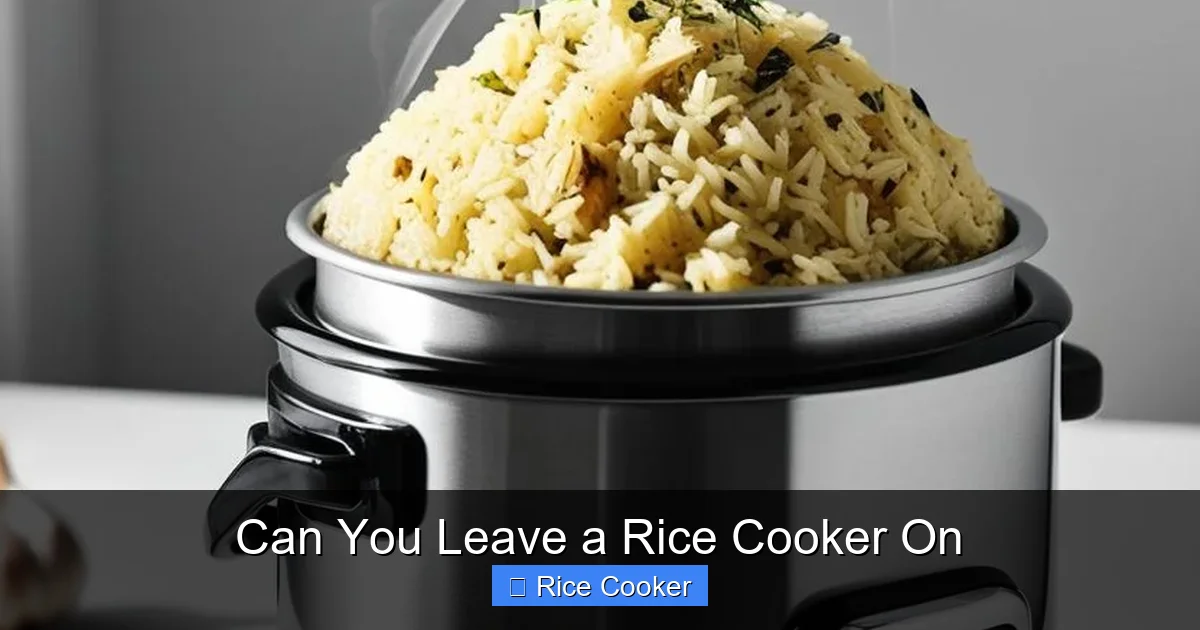
Visual guide about Can You Leave a Rice Cooker On
Image source: i.pinimg.com
The Cooking Cycle
When you add water and rice to the inner pot and press the “Cook” button, the rice cooker heats up rapidly to bring the water to a boil. As the water evaporates, the temperature inside the pot rises until it reaches a certain threshold—usually around 212°F (100°C), the boiling point of water. At this point, the thermostat detects the change and signals the heating element to switch off. The rice continues to cook gently using residual heat.
The Automatic Shut-Off Mechanism
After the cooking cycle completes, most rice cookers enter a “keep warm” mode. This mode maintains the rice at an ideal serving temperature (typically between 165°F and 185°F) for a limited time—often 12 to 24 hours. However, even the keep-warm function usually has a timer or sensor that eventually turns off the heating element to prevent overheating or drying out the rice.
For example, the Zojirushi Neuro Fuzzy Rice Cooker—one of the most popular models in North America—has a keep-warm feature that lasts up to 24 hours, after which the unit shuts off automatically. This design helps prevent accidents and saves energy.
Why These Features Exist
Manufacturers build these safety mechanisms because they understand human behavior. People forget things. They leave appliances running, take naps on the couch, or step away from the kitchen. By incorporating auto-shutoff, thermal sensors, and fail-safe circuits, rice cookers protect both your food and your home from potential hazards.
Is It Safe to Leave a Rice Cooker On All Day?
Now comes the big question: Can you leave a rice cooker on all day? The answer depends on several factors, including your model, its age, and how you plan to use it.
Visual guide about Can You Leave a Rice Cooker On
Image source: kitchensnitches.com
Yes, It’s Generally Safe—With Caveats
Most modern rice cookers are designed to be left on during the cooking process and even during the keep-warm phase. In fact, many manufacturers recommend leaving the rice in the cooker after it finishes cooking, especially if you’re serving it right away. The keep-warm function keeps rice at the perfect temperature without burning or drying it out.
However, leaving it on indefinitely—say, for days at a time—is not advisable. Over time, the rice will lose moisture, become hard, and develop an unpleasant texture. More importantly, continuous heating increases wear on internal components, which could lead to malfunctions or even fire risks if something goes wrong.
What About Older Models?
Older rice cookers—especially those made before the 1990s—may lack advanced safety features. If your model doesn’t have an automatic shut-off or reliable thermostat, leaving it on could pose real dangers. For instance, without a proper temperature cutoff, the heating element might stay on too long, causing the inner pot to overheat and potentially crack or melt.
If you own an older model, check the user manual or contact the manufacturer to confirm whether it includes safety shut-offs. If not, consider upgrading to a newer, safer model with modern safeguards.
Energy Use and Cost Considerations
Even though rice cookers use relatively little power—around 300–600 watts depending on size—leaving one on continuously adds up. Let’s do a quick math example:
- A typical rice cooker uses 500 watts per hour.
- If left on for 24 hours, that’s 500 watts × 24 = 12,000 watt-hours (or 12 kilowatt-hours).
- At average U.S. electricity rates ($0.12 per kWh), that’s about $1.44 per day!
That’s money you could save by simply unplugging it after use—or better yet, using the keep-warm function only when needed.
When Is It Acceptable to Leave Your Rice Cooker On?
There are specific situations where leaving your rice cooker on makes sense—as long as you follow best practices. Here are some scenarios where it’s okay (and even convenient):
During Meal Prep or Batch Cooking
If you’re preparing a large batch of rice for multiple meals throughout the day—like for a family dinner party or a meal prep session—it’s perfectly fine to let the rice stay in the cooker on keep-warm mode. Just make sure to check the rice periodically and transfer it to a cooler container if it starts to look dry or crusty.
For Convenience Overnight
Some people prefer to set their rice cooker in the evening to cook rice while they sleep, waking up to hot, ready-to-eat grains. This is safe and efficient, provided the unit has a reliable keep-warm function. Again, avoid leaving it on past the recommended duration unless necessary.
In Restaurants or Commercial Kitchens
Professional kitchens often use rice cookers (or commercial rice cookers) that run continuously during service hours. These machines are built for heavy-duty use and often have reinforced components and cooling systems. Even then, operators monitor them closely and follow strict cleaning schedules to prevent buildup or malfunction.
What Happens If You Leave Rice Cooker On Too Long?
Let’s say you forget to turn off your rice cooker. What could go wrong? While modern models are built to handle occasional lapses, prolonged exposure to heat can cause problems:
Drying Out and Burning
Rice contains natural moisture. When heated continuously without additional water, it dries out and can form a tough crust at the bottom of the pot. This not only ruins the texture but also makes cleanup harder due to burnt-on residue.
Increased Risk of Fire
Though rare, overheating can damage internal wiring or the heating plate, potentially creating a spark or igniting nearby materials like paper towels or wooden utensils. Smoke detectors near the kitchen counter are always a good idea.
Reduced Lifespan of Components
Constant cycling between heating and warming stresses thermostats and heating elements. Over time, this leads to faster wear and tear, shortening the overall lifespan of your rice cooker.
Mold or Bacteria Growth (If Stored Unrefrigerated)
If rice sits at room temperature for more than two hours (per USDA guidelines), bacteria can multiply rapidly. Even if your rice cooker stays warm, storing rice above 40°F (4°C) for extended periods is unsafe for consumption.
Tips for Using Your Rice Cooker Safely and Efficiently
To enjoy the benefits of your rice cooker without risking safety or wasting energy, follow these practical tips:
Always Read the Manual
User manuals provide critical information about your specific model’s capabilities and limitations. Some rice cookers have different keep-warm durations, so knowing yours is essential.
Use the Keep-Warm Function Sparingly
Instead of leaving the unit on all day, use the keep-warm setting only when you expect to serve the rice within 12–24 hours. Turn it off afterward and store leftover rice properly in the refrigerator.
Unplug When Not in Use
Even with auto-shutoff, unplugging your rice cooker eliminates any risk of electrical issues. Plus, it saves a tiny bit of standby power (though minimal, every bit counts!)
Clean the Inner Pot Regularly
Burnt rice residue can interfere with temperature sensing and trigger false alarms or shutdowns. Clean the inner pot after each use with warm, soapy water or place it in the dishwasher (if labeled dishwasher-safe).
Avoid Overfilling
Using too much rice or water can affect cooking performance and clog vents or sensors. Stick to the recommended ratios (usually 1:1.5 for white rice) to ensure consistent results.
Check for Faulty Parts
If your rice cooker suddenly stops working, makes strange noises, or emits smoke, unplug it immediately and stop using it. Damaged components can create serious hazards.
Store Leftovers Properly
Transfer cooked rice to an airtight container and refrigerate within two hours. Reheat thoroughly before eating to kill any potential bacteria.
Comparing Rice Cooker Models: What to Look For
If you’re shopping for a new rice cooker, here’s what to consider regarding safety and usability:
| Feature | Importance for Leaving On |
|---|---|
| Auto Shut-Off | Essential—prevents overheating |
| Keep-Warm Duration | Look for 12+ hours; beyond that, turn off |
| Thermal Sensor Accuracy | Ensures precise temperature control |
| Dishwasher-Safe Parts | Easier maintenance reduces long-term risks |
| Warranty Coverage | Covers defects from misuse or overuse |
Top-rated brands like Zojirushi, Panasonic, and Cuckoo consistently score high for reliability and safety. Reading customer reviews can also reveal real-world experiences with keeping units on longer than intended.
Final Thoughts: Balance Convenience with Responsibility
So, can you leave a rice cooker on? Absolutely—but with smart boundaries. Modern rice cookers are engineered to be user-friendly and safe, allowing you to multitask or prepare meals ahead of time without constant supervision. Their automatic shut-off and keep-warm features make them ideal tools for busy households.
That said, convenience shouldn’t come at the cost of safety or efficiency. Leaving a rice cooker on unnecessarily wastes energy, degrades food quality, and may shorten the appliance’s life. Instead, use the keep-warm function wisely, clean your unit regularly, and unplug it when possible.
By following these guidelines, you’ll enjoy perfectly cooked rice every time—without worrying about what might happen if you accidentally leave your rice cooker on.
Conclusion
In summary, yes—you can leave a rice cooker on, thanks to built-in safety features that prevent overheating and automatic shut-offs. But doing so indefinitely isn’t recommended. Treat your rice cooker like a trusted kitchen assistant: reliable, efficient, and respectful of both your time and resources. With the right habits, you’ll never have to wonder again whether your rice cooker is still running—because you’ll know exactly how to use it safely and effectively.
Frequently Asked Questions
Is it safe to leave a rice cooker on overnight?
It can be safe if your rice cooker has a reliable keep-warm function that shuts off after a set period—usually 12–24 hours. However, leaving it on indefinitely increases energy use and risks drying out the rice. Always check your manual for specifics.
Will leaving my rice cooker on cause a fire?
Modern rice cookers are designed with safety features like auto shut-off and thermal sensors that minimize fire risks. However, damaged parts, old models, or poor maintenance can increase danger. Never leave it on if you notice smoke, unusual smells, or malfunctions.
How long can you keep rice warm in a rice cooker?
Most rice cookers keep rice warm for 12 to 24 hours. After that, the unit typically turns off to conserve energy and prevent over-drying. For best taste and safety, consume or store rice within this window.
Should I unplug my rice cooker after use?
While not strictly necessary due to auto shut-off, unplugging reduces standby power draw and eliminates any electrical hazard. It’s a simple habit that adds peace of mind and slight energy savings.
Can leaving a rice cooker on damage it?
Prolonged use without breaks can strain internal components like thermostats and heating elements, potentially shortening the appliance’s lifespan. Occasional use of keep-warm is fine, but continuous operation isn’t ideal.
What should I do if my rice cooker stops working while on?
Immediately unplug it and inspect for visible damage, burning smells, or loose connections. Do not attempt to repair it yourself. Contact the manufacturer or a qualified technician for assistance.