
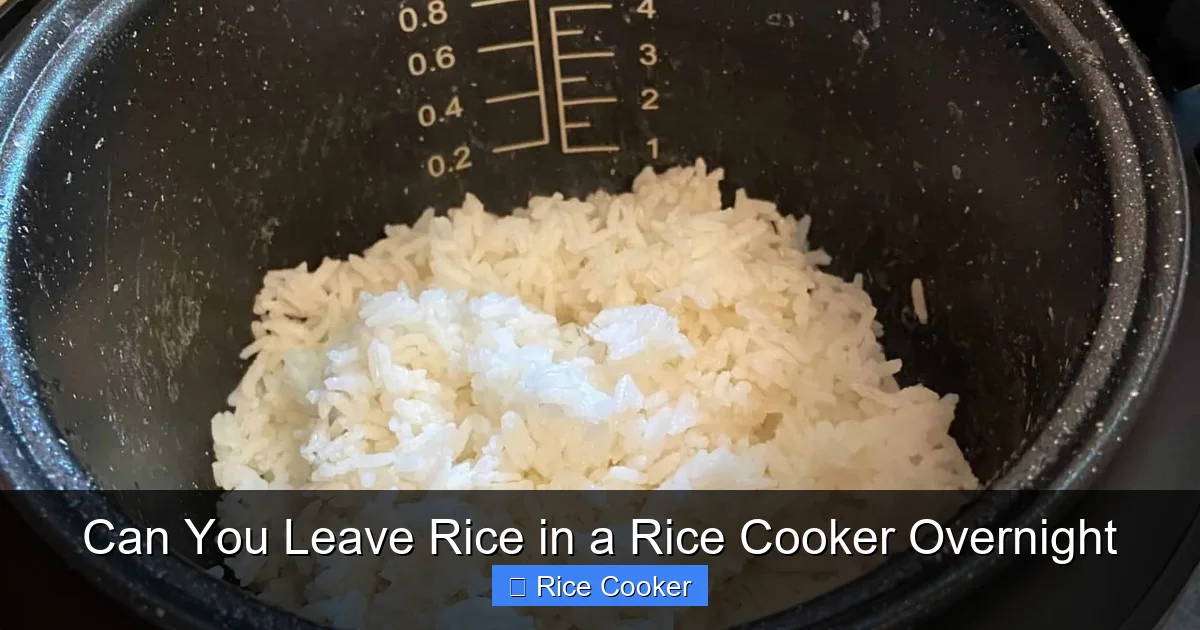
Can you leave rice in a rice cooker overnight? Technically yes, but it’s generally not advised. Rice left in a warm cooker for too long can develop bacteria like Bacillus cereus, which causes food poisoning. For optimal safety and taste, cool cooked rice quickly and store it properly in the fridge or freezer within two hours. While convenient for some, leaving rice in the cooker overnight increases the risk of spoilage and texture degradation.
Key Takeaways
- Safety First: Leaving rice in a rice cooker overnight increases the risk of bacterial growth, especially in the “danger zone” (40°F–140°F).
- Cooking Method Matters: The way you cook rice affects how long it can safely sit in the cooker—steaming vs. boiling makes a difference.
- Proper Cooling Is Essential: Never leave hot rice sitting at room temperature for more than 2 hours before refrigeration.
- Texture and Flavor Deteriorate: Overnight storage in the cooker leads to mushy, sticky rice that’s less enjoyable to eat.
- Use a Warmer Function Wisely: If you must reheat later, use the “warm” setting only for short periods (under 1 hour) to avoid bacterial buildup.
- Better Alternatives Exist: Store cooked rice in airtight containers in the fridge or freezer for up to 5–7 days.
- Clean Your Cooker Regularly: Residual moisture and starch can attract mold and bacteria if not cleaned promptly.
Key Takeaways
- Understanding can you leave rice in a rice cooker overnight: Provides essential knowledge
Quick Answers to Common Questions
Can I leave rice in a rice cooker for 8 hours?
No, it’s not safe. The rice can enter the danger zone (40°F–140°F), allowing bacteria like Bacillus cereus to grow. Always cool and refrigerate rice within two hours.
Does the warm setting kill bacteria?
No. The warm setting maintains heat but doesn’t kill bacteria. It can actually promote bacterial growth if the temperature fluctuates into the danger zone.
Can I reheat rice multiple times?
Yes, but each reheating cycle should be thorough—up to 165°F. However, frequent reheating reduces quality. Best to store properly and reheat only once.
Is it OK to leave rice in the cooker for 2 hours?
No. The FDA recommends moving cooked rice out of the danger zone within two hours. Even then, it’s safer to refrigerate it immediately.
Can I leave rice in the cooker while sleeping for 6–8 hours?
Not recommended. Unless your cooker has advanced safety features, the risk of bacterial growth increases significantly. Better to store it properly.
📑 Table of Contents
- Can You Leave Rice in a Rice Cooker Overnight? A Complete Guide
- The Science Behind Rice and Bacterial Growth
- Is It Safe to Leave Rice in a Rice Cooker Overnight?
- How Long Can You Safely Keep Rice in a Rice Cooker?
- Best Practices for Storing Cooked Rice
- Different Types of Rice and Their Storage Needs
- Common Mistakes People Make with Leftover Rice
- Tips for Convenient Rice Meal Prep
- Signs Your Rice Has Gone Bad
- Conclusion: Safety Should Always Come First
Can You Leave Rice in a Rice Cooker Overnight? A Complete Guide
You just finished cooking a perfect pot of jasmine rice, and instead of serving it immediately, you decide to let it sit in the rice cooker overnight so it’ll be ready for lunch tomorrow. It sounds convenient—no extra effort, right? But before you turn off the cooker and call it a night, pause. There’s a lot more to consider than just convenience when it comes to food safety and quality. In this detailed guide, we’ll explore whether it’s safe—or even smart—to leave rice in a rice cooker overnight.
We’ll dive into the science behind bacterial growth, how different types of rice react to prolonged heat exposure, and what the experts say about storing cooked rice. Whether you’re meal prepping for the week or simply trying to save time, understanding the risks and best practices will help you make informed decisions. By the end of this article, you’ll know exactly how to handle leftover rice—whether in the cooker, fridge, or freezer—and still enjoy delicious, safe meals every time.
The Science Behind Rice and Bacterial Growth
Why Rice Is a Breeding Ground for Bacteria
Rice is made up of starch, which breaks down during cooking into simple sugars. These sugars are a prime food source for bacteria—especially Bacillus cereus, a common culprit in foodborne illness linked to rice. When rice is cooked and then allowed to sit, especially in a warm environment, Bacillus cereus spores can germinate and multiply rapidly.
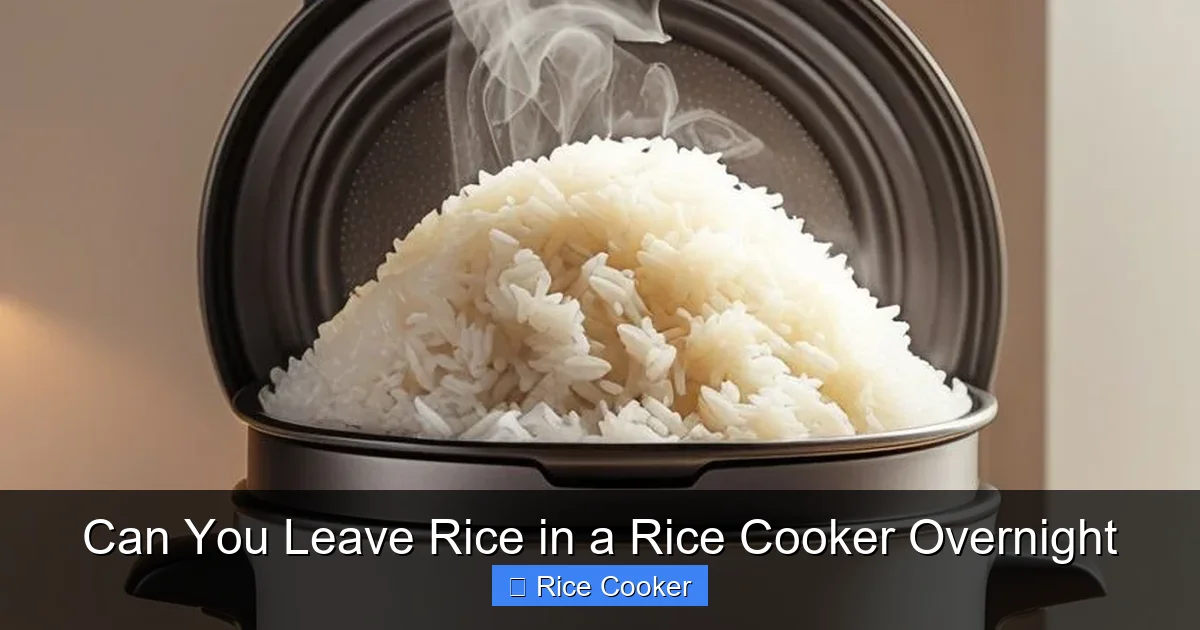
Visual guide about Can You Leave Rice in a Rice Cooker Overnight
Image source: i.pinimg.com
Unlike meat or vegetables, rice doesn’t contain natural preservatives. This means once it’s cooked, it has no defense against bacterial invaders. And here’s the tricky part: these bacteria don’t change the smell or taste of rice—they produce toxins that cause vomiting or diarrhea within 6 to 18 hours of consumption. So even if your rice looks and smells fine, it could still make you sick.
The Danger Zone: What Temperature Does Rice Need to Avoid?
The U.S. Food and Drug Administration (FDA) defines the “danger zone” as temperatures between 40°F and 140°F. Bacteria grow most rapidly in this range—doubling in number every 20 minutes under ideal conditions. Most rice cookers, when set to “warm,” maintain temperatures around 140°F to 160°F, which seems safe. But here’s the catch: the outer layers of the rice may stay warm, while the center might drop below the danger zone, creating uneven conditions that promote bacterial growth.
Additionally, many rice cookers have a delay timer or keep-warm function that turns off after several hours, cooling the rice gradually. This cooling process can bring rice into the danger zone for extended periods, especially if the kitchen is warm or if the cooker isn’t well-insulated.
Is It Safe to Leave Rice in a Rice Cooker Overnight?
Short Answer: Not Recommended
While technically possible, leaving rice in a rice cooker overnight is not considered safe by food safety experts. The combination of residual heat, moisture, and starch creates an environment where bacteria can thrive. Even if your rice cooker has a high-quality warmer function, the risk remains too great for long-term storage.
Visual guide about Can You Leave Rice in a Rice Cooker Overnight
Image source: i.pinimg.com
The USDA recommends that cooked rice should never sit at room temperature for more than two hours. After that, the chance of harmful bacteria multiplying becomes significant. If you plan to store rice overnight, the safest method is to transfer it to a shallow container, cool it quickly, and refrigerate it immediately.
When Might It Be Acceptable?
In rare cases—such as if you’re using a high-end rice cooker with precise temperature control and a modern keep-warm feature that cycles off and on to maintain safe temperatures—some people might feel comfortable leaving rice for a few hours. However, this is still risky and not officially endorsed. The bottom line: when in doubt, don’t risk it.
How Long Can You Safely Keep Rice in a Rice Cooker?
The Two-Hour Rule
The golden rule for cooked rice is this: cool it and refrigerate it within two hours. This applies whether the rice is in the cooker, on the counter, or in a pot. Once the rice drops below 140°F, it enters the danger zone, and bacterial growth accelerates.
What Happens If You Ignore the Two-Hour Rule?
If rice sits too long, especially in a warm environment, you may notice changes over time. Initially, there’s no smell or taste difference, but within 24 hours, the rice can become slimy, sticky, or develop a sour odor—signs of spoilage. Even without visible signs, consuming improperly stored rice can lead to food poisoning.
Studies have shown that Bacillus cereus can produce heat-resistant spores that survive cooking. When rice is left warm, these spores reactivate and multiply, releasing toxins that aren’t destroyed by reheating.
Best Practices for Storing Cooked Rice
Step 1: Cool Quickly
After cooking, spread the rice out in a shallow dish or divide it into smaller containers. This increases surface area and speeds up cooling. Using ice water to dip the container (like in ice baths for pasta) can further reduce cooling time.
Step 2: Refrigerate Promptly
Place the cooled rice in airtight containers and refrigerate within two hours. Properly stored rice lasts 3–5 days in the fridge. Always check for signs of spoilage—mold, unusual odors, or sliminess—before eating.
Step 3: Freeze for Longer Storage
For meals planned up to a week ahead, freeze rice in portion-sized containers. Frozen rice stays safe indefinitely (though quality may decline after 6–8 months). Thaw in the refrigerator or microwave before reheating.
Step 4: Reheat Safely
Always reheat rice to an internal temperature of 165°F. Use a food thermometer to ensure safety. Stir the rice while heating to distribute heat evenly and prevent cold spots where bacteria can survive.
Different Types of Rice and Their Storage Needs
White Rice vs. Brown Rice
Both white and brown rice pose similar risks when stored improperly. However, brown rice contains more oil and nutrients, making it more prone to rancidity if not stored correctly. Always refrigerate or freeze brown rice soon after cooking.
Sushi Rice and Specialty Varieties
Sushi rice is often stored overnight in the refrigerator for flavor development, but it’s typically cooled and stored in a sealed container—not left in the cooker. Never leave sushi rice in the warmer function overnight, as the vinegar seasoning can encourage bacterial growth.
Instant and Pre-Cooked Rice
Some instant rice brands claim to be shelf-stable, but once opened and cooked, they follow the same rules as regular rice. Always refrigerate after opening and cooking.
Common Mistakes People Make with Leftover Rice
Mistake 1: Leaving Rice on the Counter All Night
This is one of the most dangerous habits. Room temperature allows rapid bacterial growth. Never let cooked rice sit uncovered on the counter for more than two hours.
Mistake 2: Using the “Warm” Setting for Too Long
Most rice cookers’ “warm” settings are designed for short-term holding—typically 12–24 hours. But even then, it’s not ideal. The warmer cycles can fluctuate, bringing rice into the danger zone.
Mistake 3: Not Cleaning the Cooker Immediately
Starch and moisture from rice can harden inside the cooker, promoting mold and bacterial growth if not cleaned right away. Always wipe down the inner pot and lid after use.
Mistake 4: Reheating Only Part of the Rice
If you reheat only part of the rice and leave the rest at room temperature, you’re creating a breeding ground for bacteria. Always reheat all portions together.
Tips for Convenient Rice Meal Prep
Batch Cook and Store
Cook a large batch of rice at the beginning of the week and divide it into containers. This saves time and ensures you always have safe, ready-to-eat rice for stir-fries, bowls, or salads.
Use Mason Jars for Portion Control
Store rice in wide-mouth mason jars. They allow for quick cooling, easy access, and stackable storage. Label them with dates to track freshness.
Freeze in Ice Cube Trays
For small portions, freeze rice in silicone ice cube trays. Pop out cubes and store in a bag. Great for soups, stews, or sauces.
Invest in a High-Quality Rice Cooker
Modern rice cookers with fuzzy logic and precise temperature control offer better performance and safety features. Some even have timers that automatically switch to “keep warm” only after the rice is fully cooked.
Signs Your Rice Has Gone Bad
Even with proper storage, rice can spoil. Watch for these red flags:
- Slimy texture – Indicates bacterial breakdown.
- Off smell – Sour, fermented, or rotten odor.
- Mold – White, green, or black spots on the surface.
- Discoloration – Yellowish or gray tint.
If any of these appear, discard the rice immediately—even if it looks mostly fine.
Conclusion: Safety Should Always Come First
So, can you leave rice in a rice cooker overnight? The answer is a cautious no. While it might seem like a time-saver, the risks far outweigh the convenience. From bacterial contamination to texture loss, leaving rice in the cooker overnight compromises both safety and quality.
Instead, adopt smart habits: cool rice quickly, store it properly, and reheat thoroughly. With a little planning, you can enjoy delicious, safe rice meals without any guesswork. Remember, food safety isn’t about being overly cautious—it’s about protecting yourself and your loved ones from preventable illness.
Next time you cook rice, think beyond the cooker. Embrace the fridge, the freezer, and the two-hour rule. Your future self (and stomach) will thank you.
Frequently Asked Questions
Is it safe to leave cooked rice in a rice cooker overnight?
No, it’s not considered safe. Cooked rice should be refrigerated within two hours to prevent bacterial growth, especially Bacillus cereus, which can cause food poisoning.
How long can rice sit in a rice cooker on warm?
Most rice cookers are designed to hold rice on warm for up to 12–24 hours, but this is not ideal. Prolonged exposure increases the risk of bacterial contamination and texture degradation.
Can bacteria grow in rice that’s been kept warm?
Yes, especially in the outer layers. Bacillus cereus spores can survive cooking and multiply in warm, moist environments, producing toxins that aren’t destroyed by reheating.
Should I clean my rice cooker after every use?
Yes. Starch and moisture residue can attract mold and bacteria. Wipe the inner pot and lid immediately after use to maintain hygiene and extend the life of your appliance.
Can I freeze rice that’s been in the cooker?
Only if it has been properly cooled and transferred to a container within two hours. Do not freeze rice directly in the cooker—transfer it first.
What’s the best way to reheat leftover rice?
Reheat rice until it reaches an internal temperature of 165°F. Use a microwave or stovetop with stirring to ensure even heating and avoid cold spots where bacteria can survive.