
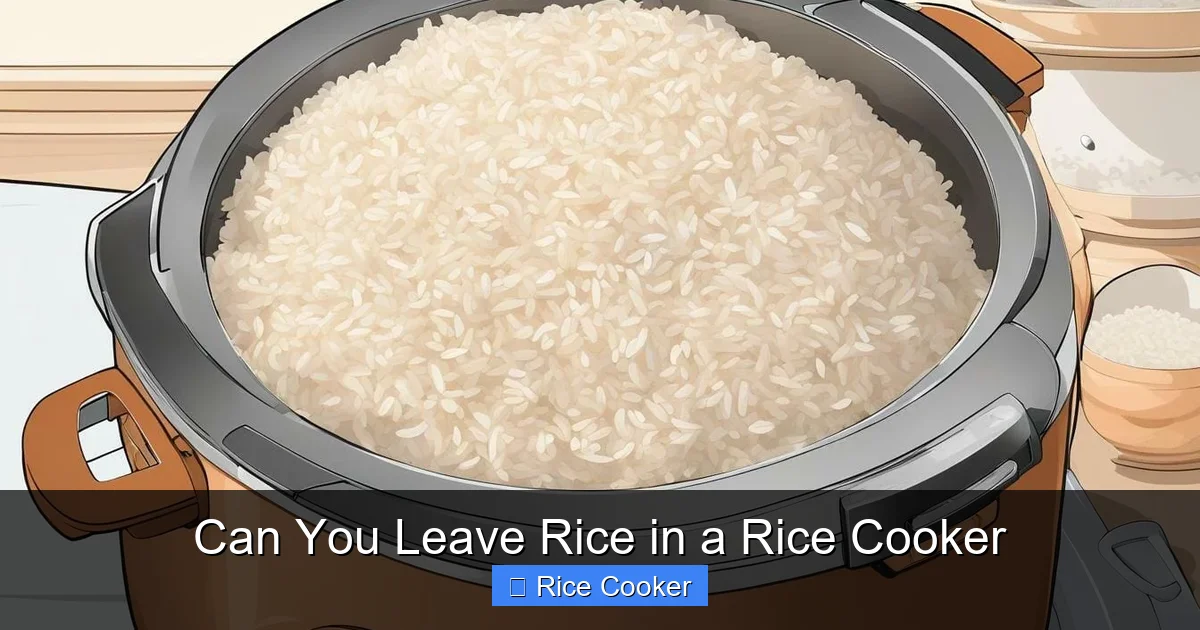
Can you leave rice in a rice cooking machine? Yes, but only temporarily. Leaving cooked rice in your rice cooker for more than a few hours increases the risk of bacterial growth and spoilage. For best results and food safety, it’s recommended to transfer leftover rice to an airtight container and refrigerate it within two hours of cooking.
Have you ever finished a perfect pot of rice just in time for dinner, only to realize you won’t eat every last grain? Or maybe you’re meal prepping and want to keep rice ready to go throughout the day. One question often pops up: can you leave rice in a rice cooker? It sounds harmless, right? Just turn it on “warm” and walk away. But here’s the truth—your rice cooker isn’t a magic food preservation machine. While short-term warmth might seem okay, leaving rice sitting too long can lead to bacterial growth, spoilage, and even foodborne illness.
In this guide, we’ll break down everything you need to know about storing rice in your rice cooker—from safety concerns to best practices. Whether you’re a busy parent, a college student with limited fridge space, or someone who loves making big batches of rice, you’ll learn how to keep your grains fresh, safe, and delicious.
Key Takeaways
- Short-term storage is safe: You can leave rice in a rice cooker for up to 2–3 hours without major risk if the cooker is kept on the “warm” setting.
- Overnight storage is risky: Leaving rice in the cooker overnight significantly raises the chance of bacterial contamination, especially if the warm setting isn’t reliable.
- Refrigeration is safest: Always store leftover rice in an airtight container and refrigerate within two hours of cooking to prevent spoilage.
- Reheating matters: When reheating stored rice, make sure it reaches an internal temperature of at least 165°F (74°C) to kill any potential bacteria.
- Cooker type affects safety: Some modern rice cookers have advanced warming functions that maintain safer temperatures longer, making short-term storage slightly more secure.
- Signs of spoilage: Discard rice if it smells sour, has an off color, feels slimy, or shows signs of mold.
- Best practices: Use a timer or alarm to remind yourself to remove rice after cooking, and clean your rice cooker promptly to avoid residue buildup.
📑 Table of Contents
Understanding Rice Cooker Functions
Before we dive into storage tips, let’s talk about what your rice cooker actually does. Most standard models come with three main settings: cook, warm, and sometimes cancel. The “warm” function is designed to keep cooked rice at a consistent temperature—usually around 160–170°F (71–77°C). This mimics the heat of a stovetop simmer and helps prevent the rice from drying out.
However, not all “warm” settings are created equal. Some older or cheaper models may cycle on and off or fail to maintain a safe temperature consistently. That’s why the USDA recommends not relying solely on the “warm” setting for extended periods. In fact, the agency advises against keeping cooked rice at room temperature for more than two hours.
So while your rice cooker can technically hold rice safely for a few hours, it’s not built for long-term storage. Think of it like a thermos—it keeps things hot, but not forever.
How Long Is Too Long?
Let’s get specific. How long can you leave rice in a rice cooker before it becomes unsafe?
The Two-Hour Rule
According to food safety experts, cooked rice should not be left at room temperature for more than two hours. After that, the risk of bacterial growth—especially from *Bacillus cereus*—increases dramatically. This bacterium thrives in starchy foods like rice and can produce toxins that cause vomiting or diarrhea.
Even if your rice cooker is set to “warm,” ambient factors matter. If your kitchen is warm or humid, the internal temperature might dip below the safe zone faster. Also, opening the lid frequently lets cold air in, which disrupts the stable environment your rice needs.
What About Overnight?
Leaving rice in the cooker overnight? That’s a no-go—unless you’re using a high-end model with a precise temperature control system. Even then, most home rice cookers aren’t designed for 8+ hours of continuous warmth. The “keep-warm” function often cycles on and off to save energy, meaning the rice cools down between cycles.
For example, imagine your rice cools from 170°F to 90°F during a 10-minute cooldown phase. That’s prime territory for bacteria to multiply. And once bacteria start growing, they can survive even reheating—unless the food reaches a high enough temperature.
So unless you’re actively monitoring the temperature (which defeats the purpose of convenience), it’s better to play it safe.
Safety Tips for Short-Term Storage
If you absolutely must leave rice in the cooker for a few hours, here are some smart strategies:
Use a Timer or Alarm
Set a phone reminder or kitchen timer to check on your rice after 1–2 hours. If it’s still being used for meals, transfer it to a covered bowl or airtight container. This simple step reduces exposure to air and prevents temperature swings.
Check the Temperature
Some digital rice cookers display the internal temperature. If yours does, aim to keep it above 140°F (60°C)—the threshold at which most harmful bacteria stop multiplying rapidly. If your model doesn’t show temp readings, assume it’s cycling on/off and plan accordingly.
Avoid Opening the Lid Frequently
Every time you open the lid, cold air rushes in and cools the rice. Limit checks to once every hour, and try to minimize handling until you’re ready to serve.
Keep the Cooker Unplugged When Not in Use
After transferring the rice, unplug the appliance. This saves energy and eliminates the risk of accidental overheating or power surges.
Storing Rice Properly After Cooking
Once your rice is done cooking, the clock starts ticking. Here’s how to store it safely:
Cool It Quickly
While you don’t need to rush to refrigerate rice immediately, cooling it within 1–2 hours is ideal. Spread it out in a shallow container or divide it into smaller portions to speed up cooling.
Use Airtight Containers
Store leftover rice in glass or BPA-free plastic containers with tight-fitting lids. Avoid leaving it uncovered—dust, insects, and moisture can contaminate the food.
Label and Date Your Containers
Write the date on the container so you know how long it’s been stored. Cooked rice stays safe in the fridge for up to 4–6 days and in the freezer for up to 6 months.
Freeze for Long-Term Storage
For meal prep lovers, freezing is a great option. Portion rice into ice cube trays, freeze solid, then transfer cubes to a zip-top bag. Thaw in the fridge overnight or reheat directly from frozen.
Reheating Leftover Rice Safely
You’ve stored your rice properly—now how do you bring it back to life?
Microwave Method
Place rice in a microwave-safe dish, add a tablespoon of water, cover with a damp paper towel, and heat in 30-second intervals until steaming hot throughout. Stir between bursts to ensure even heating.
Stovetop Revival
Warm rice in a saucepan over low heat, stirring occasionally and adding a splash of water or broth to revive texture. Cover the pan to trap steam.
Oven Reheat
Spread rice on a baking sheet, cover with foil, and warm at 300°F (150°C) for 10–15 minutes. This works well for large quantities.
Always check that the center of the rice reaches at least 165°F (74°C). Use a food thermometer if possible.
Signs Your Rice Has Gone Bad
Trust your senses. If your rice looks, smells, or feels off, toss it.
Common warning signs include:
– Sour or fermented odor
– Slimy texture
– Mold spots (even tiny ones)
– Discoloration (grayish or green patches)
When in doubt, throw it out. Better safe than sorry when it comes to food poisoning.
Advanced Rice Cookers: Are They Safer?
Modern rice cookers with fuzzy logic or AI technology often have better temperature regulation. Models from brands like Zojirushi, Tiger, or Instant Pot offer precise “keep-warm” modes that maintain 165°F for several hours.
These can be useful if you’re serving a multi-course meal or hosting guests. But even premium units shouldn’t be trusted for overnight storage. The safest practice remains transferring rice to a sealed container.
Some high-end models also feature insulated inner pots that retain heat longer—great for travel or picnics. But again, treat them as temporary solutions, not refrigerators.
Common Myths Debunked
Let’s clear up some misconceptions:
Myth: Rice Cookers Are Self-Cleaning
False. Leaving rice in the cooker overnight leaves sticky residues that attract mold and bacteria. Clean the inner pot, lid, and exterior after each use with warm, soapy water.
Myth: Cold Rice Is Better Than Hot Rice
Not necessarily. While cooled rice is less likely to spoil quickly, it can dry out or develop an unpleasant texture if stored improperly. Proper refrigeration beats leaving it out.
Myth: All Bacteria Die When You Reheat Rice
Only if heated thoroughly. *Bacillus cereus* spores can survive boiling, but the toxins they produce are killed at temperatures above 165°F. So reheating matters!
Final Thoughts: Convenience vs. Safety
At the end of the day, your rice cooker is a tool—not a pantry. It’s fantastic for cooking perfect grains every time, but it wasn’t made to replace your refrigerator. Balancing convenience with safety means planning ahead: cook extra rice, store it properly, and reheat with care.
By following these guidelines, you’ll enjoy delicious, safe rice—whether it’s fresh from the pot or revived from last night’s leftovers.
Remember: short-term warmth is okay, but long-term storage requires refrigeration. Your taste buds—and your stomach—will thank you.
Frequently Asked Questions
Can I leave rice in the rice cooker overnight?
It’s not recommended. Most rice cookers aren’t designed for overnight storage, and the “warm” setting may not maintain a safe temperature consistently. Bacteria can grow rapidly between 40°F and 140°F, increasing the risk of foodborne illness.
Is it safe to leave rice in the rice cooker for 4 hours?
Generally, no. After 2 hours at room temperature, the risk of bacterial growth rises significantly. Even with the “warm” function, temperature fluctuations can occur. Transfer rice to a sealed container and refrigerate within 2 hours for safety.
How long can cooked rice stay warm in a rice cooker?
Most experts say up to 2–3 hours is acceptable for short-term warmth, depending on the model and kitchen conditions. However, the safest approach is to remove rice after cooking and store it properly in the refrigerator.
Does leaving rice in the cooker cause it to dry out?
Possibly. Prolonged exposure to heat can evaporate moisture, especially if the cooker cycles on and off. To prevent dryness, transfer rice to a covered container and consider adding a splash of water when reheating.
Can I reheat rice that was left in the rice cooker too long?
Only if you’re certain it was stored safely. Reheat thoroughly to at least 165°F (74°C) throughout. If the rice shows any signs of spoilage—like smell, sliminess, or mold—do not eat it.
What’s the best way to store leftover rice?
Place it in an airtight container within 2 hours of cooking, label it with the date, and refrigerate. For longer storage, freeze in portion-sized bags. Always reheat completely before eating.