
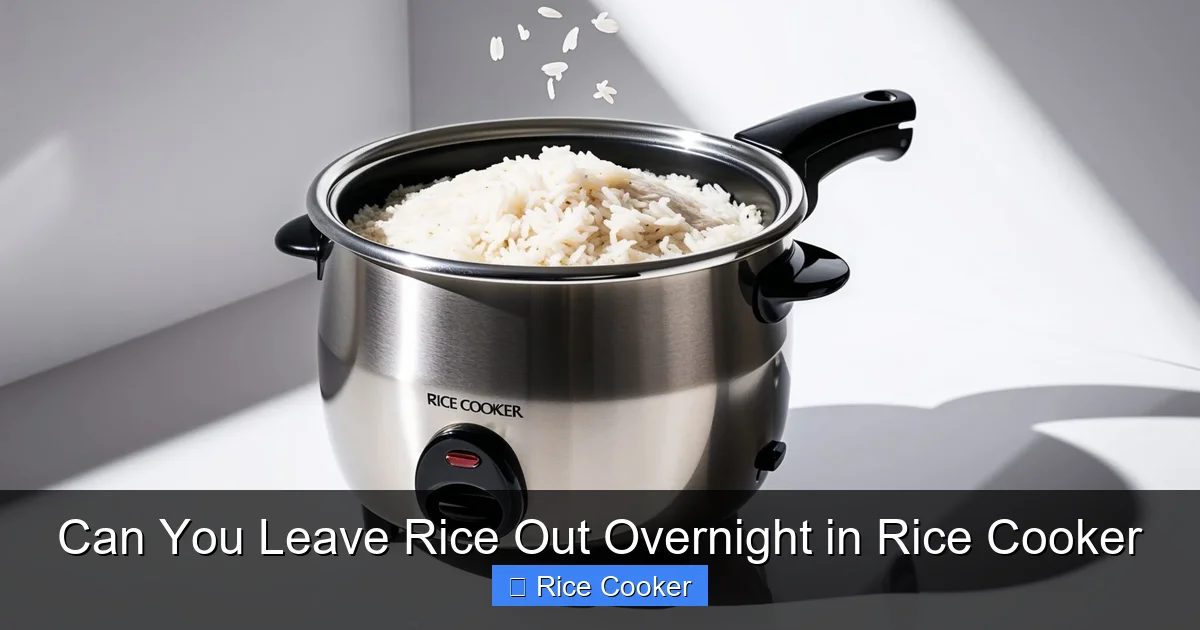
Leaving cooked rice out overnight in a rice cooker is not recommended. Rice can develop harmful bacteria like Bacillus cereus, which causes food poisoning. Always refrigerate rice within two hours of cooking to stay safe and preserve quality.
Key Takeaways
- Food Safety Risk: Cooked rice left at room temperature for too long becomes a breeding ground for dangerous bacteria.
- Refrigeration is Key: Always store rice in the refrigerator within 2 hours of cooking to prevent bacterial growth.
- Rice Cooker Lid Traps Moisture: Leaving rice in a sealed rice cooker creates a warm, humid environment perfect for spoilage.
- Reheating Matters: If reheating leftover rice, ensure it reaches 165°F (74°C) throughout to kill any potential bacteria.
- Use Airtight Containers: Transfer rice to shallow, airtight containers before refrigerating to cool faster and reduce risk.
- Symptoms to Watch For: Nausea, vomiting, or diarrhea after eating rice could indicate foodborne illness.
- Best Practice: Plan meals ahead—cook only what you’ll eat in one sitting to avoid leftovers altogether.
📑 Table of Contents
- Can You Leave Rice Out Overnight in Rice Cooker?
- The Science Behind Rice and Bacteria
- Why Leaving Rice in the Rice Cooker Is Dangerous
- How Long Is Too Long? Understanding Safe Storage Timelines
- What Happens If You Accidentally Leave Rice Out Overnight?
- Safe Alternatives: How to Store Cooked Rice Properly
- Special Considerations: Fried Rice and Other Varieties
- Tips for Safe Meal Prep with Rice
- Conclusion: Prioritize Safety Over Convenience
Can You Leave Rice Out Overnight in Rice Cooker?
Imagine this: you’ve just finished a delicious dinner with perfectly steamed jasmine rice, and there’s some left over. Instead of putting it away, you decide to leave it in the rice cooker with the lid on—overnight, maybe even for a full day. You might think, “It’s warm, it’s clean, it should be fine.” But here’s the truth: that’s not a smart move. In fact, leaving rice out overnight in a rice cooker can be downright dangerous.
Cooked rice, especially when stored improperly, is a prime target for bacterial growth. The warm, moist environment inside a rice cooker—especially with the lid sealed—creates the perfect storm for harmful microorganisms to thrive. While rice itself isn’t inherently unsafe once cooked, how and where you store it makes all the difference.
In this article, we’ll explore everything you need to know about leaving rice out overnight in a rice cooker. We’ll cover the science behind why it’s risky, what happens if you do it anyway, and most importantly, how to keep your rice safe and tasty every time. Whether you’re meal prepping or just trying to save time, understanding proper storage is essential for food safety and peace of mind.
The Science Behind Rice and Bacteria
Rice contains starches that break down during cooking, making them soft and digestible. But this same breakdown process can also create an ideal environment for bacteria. When rice is cooked, it’s usually at a temperature above 160°F (71°C), which kills most harmful microbes. However, once removed from heat, the rice begins to cool rapidly—and so does its ability to fight off contamination.
One of the most dangerous culprits is Bacillus cereus, a spore-forming bacterium commonly found in soil and grains. These spores survive cooking temperatures and can multiply in cooked rice left at room temperature. Once they grow, they release toxins that cause food poisoning. Symptoms typically appear within 6 to 15 hours and include nausea, vomiting, stomach cramps, and diarrhea.
What makes Bacillus cereus particularly tricky is its resilience. It can grow in environments ranging from 40°F (4°C) to 140°F (60°C), with the “danger zone” between 40°F and 140°F being where rapid bacterial growth occurs. This is why the USDA recommends refrigerating perishable foods within two hours (or one hour if the ambient temperature is above 90°F/32°C).
Now, back to the rice cooker. After turning off the unit, the rice often remains warm for several minutes—sometimes up to 30. During this time, if the lid is left on, the residual heat keeps the internal temperature in the danger zone. Combined with moisture from steam condensation, this creates a hospitable home for bacteria. Leaving it there overnight? That’s practically inviting illness into your kitchen.
Why Leaving Rice in the Rice Cooker Is Dangerous
The rice cooker wasn’t designed for long-term food storage. Its primary function is to cook rice efficiently using heat and controlled boiling. After cooking, the unit shuts off automatically, but unless you open the lid and let it ventilate, the trapped steam increases humidity and maintains warmth. This combination is exactly what bacteria love.
Let’s break down why leaving rice in the rice cooker overnight is problematic:
1. Warmth Promotes Bacterial Growth
Even after switching off, many rice cookers retain enough heat to keep the inner pot between 95°F and 115°F (35°C–46°C) for extended periods. This falls squarely within the bacterial growth range. Bacillus cereus, in particular, thrives in these conditions and can double its population every 20 minutes under ideal circumstances.
2. Moisture Builds Up
When the lid is closed, steam condenses on the cooler surface near the top. This moisture drips back into the rice, increasing its water content and creating a damp, sticky texture. High moisture levels accelerate spoilage and make the rice more susceptible to mold and bacterial contamination.
3. Poor Air Circulation
Unlike open containers or shallow trays, a sealed rice cooker restricts airflow. Bacteria don’t need oxygen to grow—many species are anaerobic—but poor circulation still slows cooling and limits natural drying. This means the rice stays wetter for longer, further encouraging microbial activity.
4. Lack of Monitoring
If you forget about the rice overnight, you won’t notice signs of spoilage until it’s too late. Unlike checking a fridge, there’s no way to visually inspect rice inside a sealed cooker without opening it—which defeats the purpose of leaving it in place.
5. Reheating Doesn’t Eliminate All Toxins
Even if you bring leftover rice to a rolling boil before eating, heat-resistant toxins produced by Bacillus cereus may remain. These toxins aren’t destroyed by normal cooking temperatures, so reheating won’t always make contaminated rice safe.
These factors combined mean that leaving rice in a rice cooker overnight significantly increases your risk of foodborne illness. It’s simply not worth the gamble—especially when safer alternatives exist.
How Long Is Too Long? Understanding Safe Storage Timelines
So how long is actually safe to leave rice at room temperature? According to food safety experts, cooked rice should not sit out for more than two hours. If your kitchen is hot—above 90°F (32°C)—that window shrinks to one hour. Beyond that, the risk of bacterial proliferation skyrockets.
But what about leaving rice in the rice cooker specifically? Even if you unplug it right after cooking, the residual warmth and enclosed space extend the danger period. Studies show that rice left in a closed container at room temperature for more than four hours can harbor dangerous levels of Bacillus cereus.
For reference:
– Within 2 hours: Safe to refrigerate.
– Between 2–4 hours: Risk increases; refrigerate immediately if possible.
– After 4 hours: Discard safely to avoid food poisoning.
Many people assume that because rice was freshly cooked, it must be safe for longer. But freshness doesn’t equate to safety when temperature control is ignored. The key is speed: the moment your rice stops steaming, start thinking about storage.
What Happens If You Accidentally Leave Rice Out Overnight?
Suppose you forgot about that bowl of rice sitting in the rice cooker last night. What now? First, don’t panic—but do act quickly. Here’s what to consider:
Visual and Smell Cues
Spoiled rice may look slightly slimy, have an off-color tint (grayish or yellowish), or emit a sour, unpleasant odor. If any of these are present, discard the rice immediately. Trust your senses—if something seems wrong, it probably is.
Texture Changes
Overnight exposure often results in clumping, stickiness, or a mushy consistency due to trapped moisture. Freshly cooked rice should be fluffy and dry. Any deviation suggests bacterial activity or mold development.
Taste Test? Not Advisable
Some people try tasting a small amount to check safety. But this is extremely risky. Bacillus cereus produces toxins that alter taste and texture, meaning even a tiny sample could cause illness. Never rely on taste alone.
Proper Disposal
If you suspect contamination, wrap the rice tightly in plastic or seal it in a bag before throwing it in the trash. Avoid composting or flushing, as this can spread bacteria. Wash your hands and any surfaces that came into contact with the potentially spoiled rice.
While accidental overnight storage doesn’t guarantee illness, it definitely increases the odds. Better safe than sorry—when in doubt, throw it out.
Safe Alternatives: How to Store Cooked Rice Properly
The good news? You don’t have to sacrifice convenience or flavor. With the right techniques, you can enjoy leftover rice safely and deliciously.
Step 1: Cool Quickly
After cooking, transfer rice to a shallow, wide container or multiple small bowls. The wider surface area allows heat to dissipate faster, reducing time spent in the danger zone. Avoid stirring too much—gentle folding is enough to prevent clumping while promoting even cooling.
Step 2: Refrigerate Promptly
Place the container in the refrigerator within two hours (one hour if it’s hot outside). Ideally, aim for cooling within 30–60 minutes. Rapid chilling inhibits bacterial growth and preserves texture.
Step 3: Use Airtight Containers
Store rice in glass or BPA-free plastic containers with tight-fitting lids. Mason jars work well because they’re stackable and easy to label. Avoid metal containers that can react with acidic foods (though plain rice is less reactive).
Step 4: Label and Date
Write the date on the container so you know when it was made. Cooked rice stays safe in the fridge for up to 6 days. Beyond that, quality declines and risk increases.
Step 5: Reheat Thoroughly
When ready to eat, reheat rice to at least 165°F (74°C) throughout. Stir occasionally to ensure even heating. Adding a splash of water or milk can help restore moisture lost during storage.
By following these steps, you’ll keep your rice both safe and delicious—no rice cooker required for storage!
Special Considerations: Fried Rice and Other Varieties
Not all rice is created equal when it comes to storage. Fried rice, for example, contains eggs, oil, and vegetables—all of which introduce additional variables.
Egg-Based Fried Rice
Because eggs are highly perishable, fried rice with egg should be refrigerated within two hours and consumed within 3–4 days. The presence of fat and protein accelerates spoilage compared to plain white rice.
Vegetable or Meat Add-Ins
Any cooked meat or high-moisture vegetables (like corn or peas) increase the risk of pathogen growth. These ingredients often carry their own bacteria, compounding the danger if left unrefrigerated.
Coconut Milk or Creamy Rice Dishes
Dishes like Thai coconut rice or risotto contain dairy or thick sauces that support bacterial growth. Refrigerate promptly and consume within 2–3 days.
In short, the more complex the dish, the shorter its shelf life. When in doubt, treat it like high-risk food.
Tips for Safe Meal Prep with Rice
Meal prepping is a great way to save time, but it requires careful planning to avoid waste and illness.
Portion Control
Cook only what you’ll realistically eat. Leftovers are fine in moderation, but large batches increase storage needs and risk.
Cool in Batches
If you’re preparing a big meal, cool rice in smaller portions rather than one giant pot. This speeds up refrigeration and reduces exposure time.
Avoid Repeated Heating/Refrigerating
Each cycle of heating and cooling degrades quality and multiplies bacteria. Try to use rice within a few days or freeze it for longer storage.
Freezing Option
Frozen rice lasts up to 1 month and retains most of its quality. Thaw overnight in the fridge and reheat thoroughly. Portion into freezer-safe bags for easy grab-and-go meals.
By integrating these habits into your routine, you’ll enjoy safe, tasty rice every time—without the guesswork.
Conclusion: Prioritize Safety Over Convenience
Leaving rice out overnight in a rice cooker is never a good idea. The warm, moist, enclosed environment turns your kitchen appliance into a breeding ground for harmful bacteria. Despite common misconceptions, convenience shouldn’t compromise safety—especially when it comes to something as simple as leftover rice.
Remember: two hours is your limit. After that, refrigerate or discard. Never rely on smell or taste to judge safety. And always prioritize proper cooling and storage techniques.
With a little awareness and preparation, you can enjoy delicious rice dishes without worry. Your stomach will thank you—and so will your peace of mind.
Frequently Asked Questions
Is it safe to leave rice in the rice cooker overnight?
No, it is not safe. Leaving rice in a rice cooker overnight creates a warm, moist environment ideal for bacterial growth, particularly Bacillus cereus, which can cause food poisoning.
How long can cooked rice sit out at room temperature?
Cooked rice should not sit out for more than two hours (one hour if the temperature is above 90°F/32°C). Beyond that, bacteria can multiply rapidly.
Can you reheat rice left out overnight?
It’s not recommended. Even if reheated thoroughly, toxins from bacteria like Bacillus cereus may remain. When in doubt, discard the rice.
How should I store leftover rice?
Transfer rice to a shallow, airtight container and refrigerate within two hours. Consume within 6 days for best quality and safety.
Does freezing rice extend its shelf life?
Yes, frozen rice can last up to one month. Thaw in the refrigerator and reheat to 165°F (74°C) before eating.
Why does fried rice spoil faster than plain rice?
Fried rice often contains eggs, meats, or vegetables, which introduce additional proteins and moisture that support quicker bacterial growth compared to plain cooked rice.