
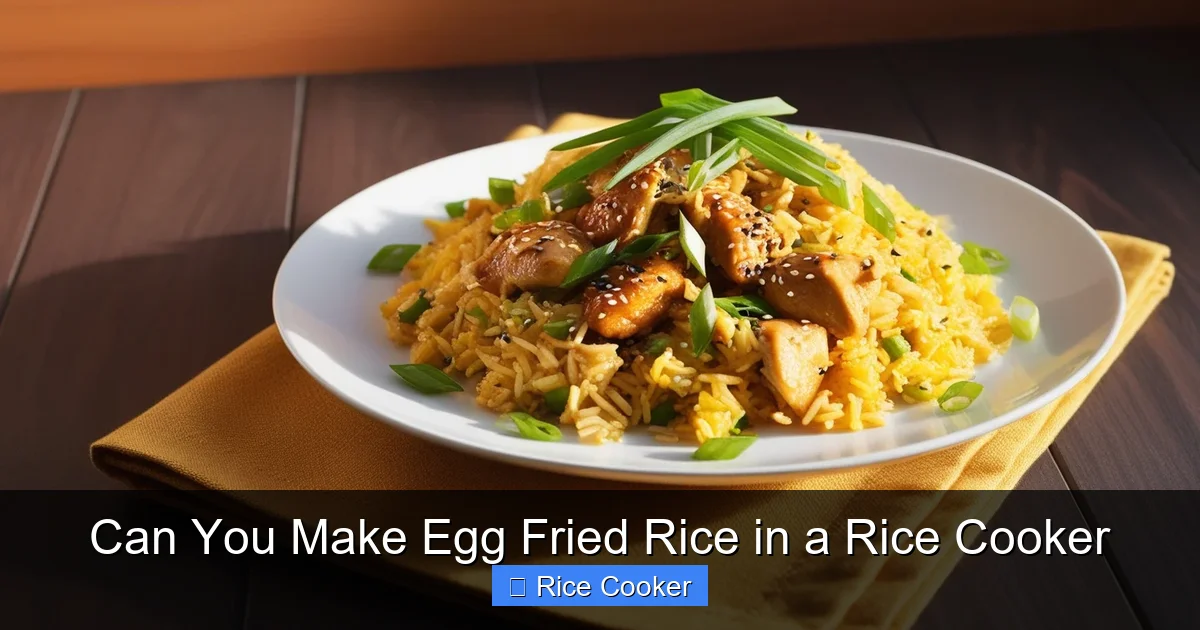
Yes, you absolutely can make egg fried rice in a rice cooker—and it’s easier than you think! With just a few simple steps, your rice cooker transforms leftover rice into fluffy, flavorful stir-fry that rivals takeout. This method saves time, uses minimal cleanup, and delivers consistent results every time.
Key Takeaways
- Yes, it’s possible: A rice cooker can cook or reheat egg fried rice with the right technique.
- Use day-old rice: Stale rice works best because it’s drier and less likely to clump.
- Add oil and seasonings early: Prevent sticking and boost flavor by sautéing ingredients before adding rice.
- Stir gently but thoroughly: Over-stirring breaks up grains; under-stirring leads to uneven cooking.
- Customize freely: Add veggies, proteins, or sauces to suit your taste or leftovers.
- Clean-up is simple: Most parts are non-stick and dishwasher-safe for easy maintenance.
📑 Table of Contents
- Can You Make Egg Fried Rice in a Rice Cooker?
- The Science Behind Cooking Fried Rice in a Rice Cooker
- Essential Ingredients and Tools You’ll Need
- Step-by-Step Guide: How to Make Egg Fried Rice in a Rice Cooker
- Tips for Perfect Results Every Time
- Troubleshooting Common Issues
- Creative Variations and Customizations
- Conclusion: Why Your Rice Cooker Deserves More Credit
Can You Make Egg Fried Rice in a Rice Cooker?
If you’re like most home cooks, you probably love the convenience of a rice cooker. It’s the unsung kitchen hero that does one job—cook perfect rice—but often more. But here’s a fun twist: can you actually make egg fried rice in a rice cooker? The short answer is yes, and we’re about to show you exactly how.
Egg fried rice is one of the most popular dishes across Asia and beyond—simple, satisfying, and endlessly customizable. Traditionally made in a wok over high heat with constant tossing, many assume it requires professional equipment or serious cooking skills. But thanks to modern rice cookers with advanced functions (like keep-warm, steam, and even stir-fry modes), you can now recreate that restaurant-quality version right at home. Plus, using your rice cooker cuts down on cleanup and reduces the risk of burning or uneven cooking. So whether you’ve got leftover steamed rice chilling in the fridge or want a quick dinner idea, this method might just become your new go-to.
In this article, we’ll walk through everything you need to know—from choosing the right type of rice to mastering timing and texture. We’ll also share pro tips for flavor enhancement, ingredient substitutions, and troubleshooting common pitfalls. By the end, you’ll be ready to whip up a batch of fluffy, golden egg fried rice that tastes like it came from a street-side stall—no wok required.
The Science Behind Cooking Fried Rice in a Rice Cooker
Before diving into recipes, let’s talk about why working with a rice cooker isn’t as counterintuitive as it sounds. Traditional fried rice relies on flash-heating and constant movement to achieve its signature smoky aroma and slightly charred edges. But rice cookers operate differently—they use gentle, consistent heat and rely on internal mechanisms (like agitators or heating plates) to distribute warmth evenly.
Visual guide about Can You Make Egg Fried Rice in a Rice Cooker
Image source: izzycooking.com
So how do we bridge that gap? The key lies in preparation and technique. Since rice cookers don’t offer direct flame control or manual stirring, we compensate by prepping ingredients ahead of time, minimizing water content, and using the right settings. For example, if your model has a “keep warm” function, you can actually use it to finish cooking fried rice after the initial stir-fry phase. Some high-end models even have dedicated stir-fry programs designed specifically for dishes like this.
Another important factor is rice selection. Freshly cooked rice tends to be too moist and sticky for ideal fried rice. That’s why chefs recommend using cold, day-old rice—it absorbs excess moisture during storage and becomes firmer, making it easier to separate grains when heated. This texture mimics what happens naturally in a hot wok, where steam escapes quickly and leaves behind dry, individual grains.
Why Day-Old Rice Works Better
When rice cools overnight, its starches recrystallize, creating a firmer structure. This prevents the grains from clumping together when reheated—a major advantage in a rice cooker where moisture levels are harder to regulate. If you only have fresh rice, try spreading it out on a baking sheet and letting it air-dry for 30–60 minutes before cooking.
Also, note that jasmine and basmati rice tend to work better than long-grain white rice due to their slightly stickier texture and aromatic profiles. However, any leftover cooked white rice will do the trick—just remember to fluff it gently with a fork before adding other ingredients.
Understanding Your Rice Cooker’s Capabilities
Not all rice cookers are created equal. Basic models may lack features needed for true fried rice, while advanced ones come equipped with multiple settings. Here’s what to look for:
- Keep-warm function: Allows gradual reheating without drying out the rice.
- Steam setting: Useful for adding vegetables without overcooking them.
- Timer function: Lets you delay cooking so everything is ready at once.
- Non-stick inner pot: Makes cleaning easier and helps prevent burnt spots.
If your rice cooker doesn’t have these options, don’t worry—you can still make great fried rice by following a modified method (more on that later). The bottom line? Even a standard rice cooker can handle egg fried rice if used intelligently.
Essential Ingredients and Tools You’ll Need
Making egg fried rice in a rice cooker doesn’t require exotic ingredients or specialty tools. In fact, much of what you’ll use are pantry staples and items already in your kitchen. Below is a breakdown of the essentials:
Visual guide about Can You Make Egg Fried Rice in a Rice Cooker
Image source: cravinghomecooked.com
Core Ingredients
- Cooked rice (preferably day-old): About 2 cups (360g) per serving.
- Eggs: 2 large eggs work well for one generous portion.
- Vegetable oil: Neutral oils like canola, vegetable, or peanut work best—they have high smoke points and won’t overpower the dish.
- Soy sauce (or tamari for gluten-free): Low-sodium is preferable for better control over saltiness.
- Salt and white pepper: Enhance umami and balance flavors.
- Optional additions: Green onions, peas, carrots, diced ham, shrimp, or tofu for extra protein and color.
Recommended Tools
- Non-stick rice cooker pot: Ensures easy cooking and cleanup.
- Fork or wooden spoon: For breaking up clumps and mixing evenly.
- Bowl for beaten eggs: Makes scrambling quicker and more uniform.
- Lid or foil cover: Helps trap steam initially, then opens partially during cooking.
One tip: If you don’t have day-old rice readily available, cook your rice earlier in the day and store it properly. Keep it covered in the fridge—not in an airtight container (which traps moisture), but loosely wrapped or in a breathable container. This keeps it fresh without turning mushy.
Step-by-Step Guide: How to Make Egg Fried Rice in a Rice Cooker
Ready to get cooking? Follow this foolproof method for creamy scrambled eggs, fragrant rice, and bold soy-infused flavors—all in one pot.
Preparation Phase (10 Minutes)
- Dice your extras: Chop green onions, grate carrots, or cube leftover chicken. Prepping ahead ensures smooth timing during cooking.
- Beat the eggs: Crack eggs into a bowl, whisk until fully blended, and set aside.
- Fluff the rice: Use a fork to gently break apart any clumps in the cold rice. No need to rinse or wash it—this removes starch that would make the mixture too wet.
Cooking Process (15–20 Minutes)
- Heat the pot: Turn your rice cooker on and select the “keep warm” or lowest heat setting. Add 1 tablespoon of oil and swirl to coat the bottom.
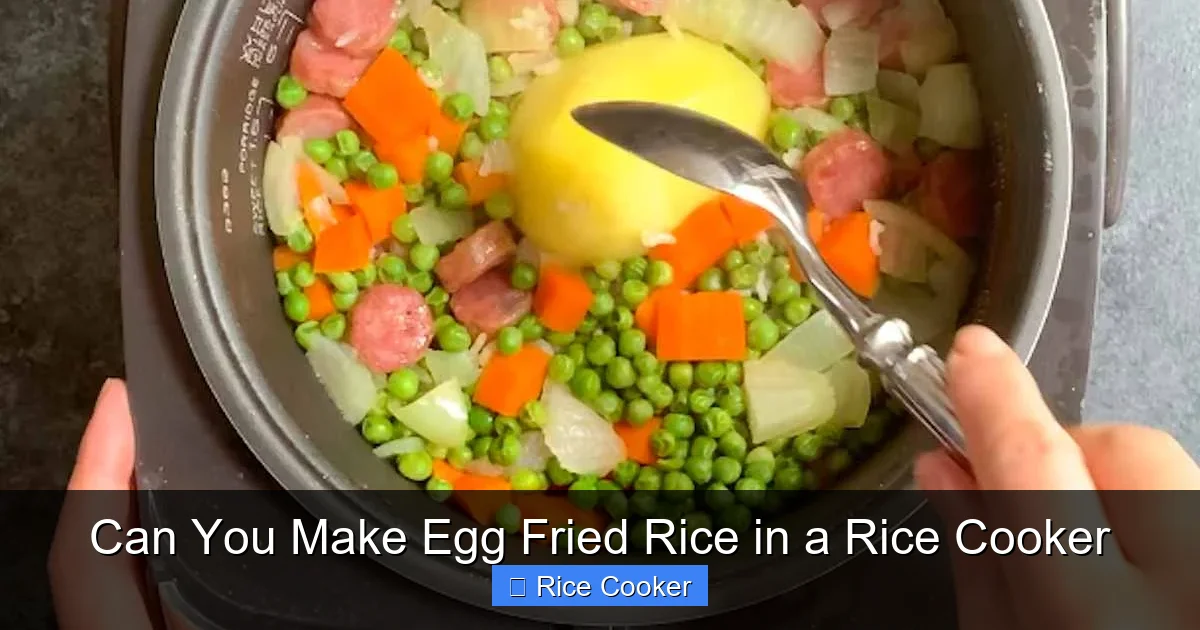
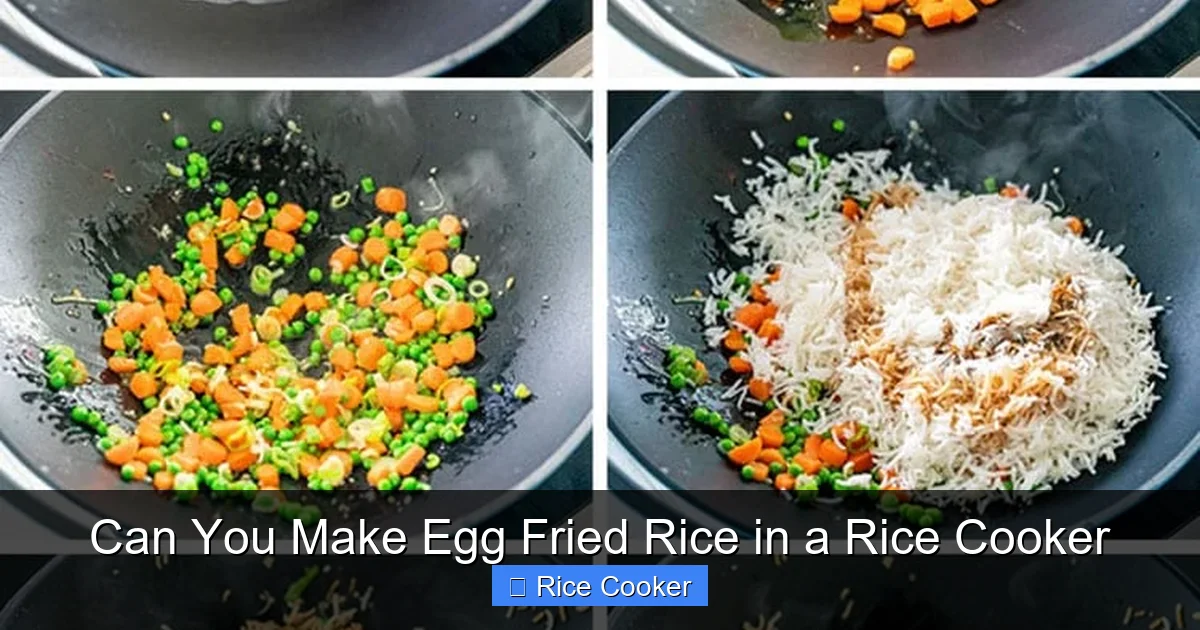
- Sauté aromatics: Toss in minced garlic or ginger (if using), followed by your diced vegetables. Stir frequently for 2–3 minutes until fragrant and tender-crisp.
- Push veggies aside, scramble eggs: Clear a space in the center of the pan. Pour in the beaten eggs and scramble gently until just set—don’t overcook or they’ll turn rubbery.
- Add rice and seasonings: Push the eggs and veggies to one side. Add the rice, then drizzle with 1–2 tablespoons of soy sauce. Sprinkle salt and white pepper to taste. Mix everything together thoroughly.
- Cover and cook: Close the lid and let it sit for 5 minutes on low heat or “warm” mode. Avoid opening the lid during this time to retain steam.
- Final stir: After 5 minutes, open the lid and give everything a good mix. Taste and adjust seasoning if needed. Garnish with chopped green onions and serve immediately.
Pro Tip: If your rice cooker has a “stir-fry” program, use it now! Otherwise, simulate the effect by shaking the pot gently or using a spatula to lift and fold the contents periodically.
Tips for Perfect Results Every Time
Even with the right recipe, small adjustments can elevate your egg fried rice from good to great. Here are some insider tricks:
Control Moisture Like a Pro
Rice cookers absorb liquid slowly, so too much water leads to mushiness. Always start with dry rice and add only enough soy sauce or broth to coat—not soak. If you notice sogginess, transfer the mixture to a skillet briefly to evaporate excess moisture.
Layer Flavors Strategically
Don’t dump all your seasonings at once. Sauté garlic and ginger first to release their oils, then add soy sauce toward the end so it caramelizes slightly. A splash of oyster sauce (optional) adds depth, while a pinch of sugar balances saltiness.
Don’t Skip the Scramble
Scrambling eggs separately before combining ensures they stay tender and evenly distributed—not rubbery chunks floating in sauce. Patience here pays off!
Experiment with Textures
For chewier rice, choose brown basmati instead of white. For richer flavor, toast rice briefly in oil before adding liquids. Want crispy bits? Finish under a broiler for 2 minutes (if your cooker allows).
Clean-Up Hack
Soak the inner pot in warm soapy water immediately after cooking. Most non-stick surfaces wipe clean easily—no scrubbing required.
Troubleshooting Common Issues
No matter how careful you are, mistakes happen. Here’s how to fix them:
Problem: Rice Sticks Together
Cause: Too much moisture or insufficient stirring.
Solution: Use drier rice, reduce soy sauce, and stir more aggressively. Transfer to a baking sheet to cool completely before recombining.
Problem: Burnt Bottom Layer
Cause: Insufficient oil or overheating.
Solution: Coat the pot generously before adding rice. Lower the heat setting and stir every few minutes.
Problem: Bland Flavor
Cause: Underseasoned or old rice.
Solution: Toast rice with garlic first. Add soy sauce gradually while tasting. Fresh rice has stronger flavor than stale.
Problem: Rubber-Eggs
Cause: Overcooked or stirred too late.
Solution: Scramble eggs quickly over medium-low heat and combine immediately with rice.
Creative Variations and Customizations
Once you master the basics, the possibilities are endless. Try these fun twists:
- Korean-Style: Add gochujang (red chili paste), kimchi, and sesame oil.
- Thai-Inspired: Use coconut milk instead of water, plus lime juice and cilantro.
- Mediterranean Twist: Swap soy for lemon zest, olives, and feta cheese.
- Vegan Version: Replace eggs with silken tofu and use tamari instead of soy.
You can also turn it into a full meal by adding grilled chicken, dumplings, or a soft-boiled egg on top. Leftovers freeze beautifully—just thaw overnight in the fridge before reheating.
Conclusion: Why Your Rice Cooker Deserves More Credit
Making egg fried rice in a rice cooker isn’t just possible—it’s practical, delicious, and surprisingly versatile. While traditionalists may argue that woks deliver superior results, modern rice cookers offer consistency, ease, and minimal cleanup that fit perfectly into busy lifestyles. Whether you’re cooking for one or feeding a family, this method proves that simplicity doesn’t mean sacrificing flavor.
Remember: the secret isn’t in the appliance itself, but in your approach. Choose the right rice, prep ingredients ahead, and embrace gentle, controlled heat. With these tips under your belt, you’ll soon find yourself reaching for your rice cooker not just for plain rice—but for a whole new world of comfort meals.
So next time you open the fridge and see yesterday’s rice staring back at you, don’t toss it. Grab your rice cooker, crack an egg, and turn ordinary leftovers into something extraordinary. Your taste buds (and your schedule) will thank you.
Frequently Asked Questions
Do I really need day-old rice for egg fried rice in a rice cooker?
Yes! Day-old rice is drier and less sticky, which prevents clumping in the rice cooker. Fresh rice contains too much moisture and tends to form mushy globs when heated.
Can I use frozen mixed vegetables instead of fresh?
Absolutely. Just thaw and pat them dry before adding to avoid excess steam. Frozen peas and carrots work especially well and add vibrant color.
What if my rice cooker doesn’t have a keep-warm or stir-fry setting?
You can still make fried rice by cooking it on the lowest heat setting or by using the regular “cook” cycle twice—first to warm ingredients, then again to finish blending flavors.
How much soy sauce should I add?
Start with 1–2 tablespoons per 2 cups of rice. Add gradually while tasting, since different brands vary in saltiness. You can substitute with Worcestershire sauce or fish sauce for complexity.
Can I make this ahead of time?
It’s best served immediately, but leftovers stored in an airtight container in the fridge last up to 3 days. Reheat gently on the stove or microwave, adding a splash of water if needed.
Is it safe to leave the rice cooker unattended while making fried rice?
Yes—once you’ve added all ingredients and closed the lid, the rice cooker won’t overheat. Just avoid opening the lid frequently to preserve steam and prevent temperature drops.