
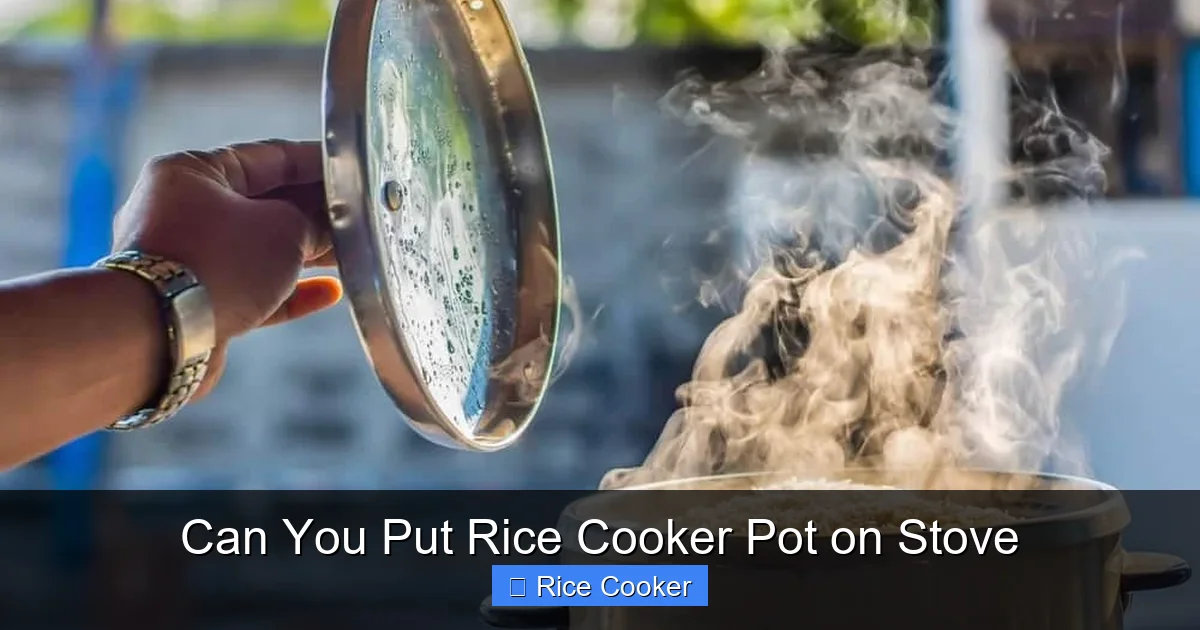
Yes, you can sometimes put a rice cooker pot on the stove—but only if it’s designed for stovetop use. Many modern rice cooker pots are made with heat-resistant materials like stainless steel or nonstick coatings that can handle direct flame or electric coils. However, older models with aluminum bases or non-heat-safe lids may warp, melt, or release harmful fumes. Always check the manufacturer’s label, test at low heat first, and never leave unattended. Using your rice cooker pot on the stove can save time during meal prep, but safety comes first.
Have you ever been in the middle of making dinner, realized you’re out of your regular pot, and wondered—*can I just use my rice cooker pot instead?* Maybe you’re doubling a recipe, need to simmer sauce, or want to sear something quickly. Rice cooker pots are convenient, compact, and often come with tight-fitting lids, making them versatile kitchen tools. But here’s the big question: **Can you put a rice cooker pot on the stove?**
The short answer? It depends. Some rice cooker pots are perfectly safe to use on the stove—especially newer models made with durable, heat-resistant materials. Others? Not so much. Using the wrong kind of pot on the stove can lead to warped bases, melted handles, even fires or toxic fumes from certain coatings. So before you grab your rice cooker pot and head for the burner, let’s break down everything you need to know about safely using it on the stovetop.
—
Key Takeaways
- Check the material: Stainless steel and cast iron rice cooker pots are generally stovetop-safe, while aluminum or nonstick-coated ones may not be.
- Look for labels: Manufacturers often mark pots as “stovetop compatible” or provide usage warnings—read them carefully.
- Test at low heat: If unsure, start on the lowest setting and monitor closely for warping or discoloration.
- Avoid high heat: Even safe pots can overheat quickly; medium or low heat is best for stovetop use.
- Don’t use if cracked or damaged: Cracks in the base or lid can trap heat and cause accidents or uneven cooking.
- Consider alternatives: For recipes requiring high heat (like searing), a dedicated saucepan may be safer and more effective.
- Clean before switching uses: Always wash and dry your rice cooker pot thoroughly before using it on the stove to prevent cross-contamination.
📑 Table of Contents
- Understanding Rice Cooker Pot Materials
- How to Tell if Your Rice Cooker Pot Is Stovetop-Safe
- When It’s Safe to Use Your Rice Cooker Pot on the Stove
- When You Should Avoid Using Your Rice Cooker Pot on the Stove
- Tips for Safely Using Your Rice Cooker Pot on the Stove
- Alternative Uses for Rice Cooker Pots (Beyond Cooking)
- Frequently Asked Questions About Rice Cooker Pots on Stoves
Understanding Rice Cooker Pot Materials
To figure out if your rice cooker pot belongs on the stove, you first need to understand what it’s made of. Most rice cooker pots fall into a few common categories:
Stainless Steel
Stainless steel is one of the most common materials used in high-quality rice cooker pots. It’s durable, non-reactive, and excellent at distributing heat evenly. Many modern rice cookers—especially those from brands like Zojirushi, Tiger, or Panasonic—use stainless steel inner pots that are labeled as “stovetop compatible.” These pots can handle direct flame or electric coil heating without warping or melting.
For example, if your rice cooker pot has a thick, mirror-polished steel base with a sturdy handle and no visible cracks, it’s likely safe for stovetop use. Just make sure the entire base is metal (not plastic or composite) and that the lid isn’t made of heat-sensitive materials.
Aluminum
Aluminum is lightweight and conducts heat well, which is why it’s often used in budget-friendly rice cookers. However, pure aluminum can react with acidic foods (like tomatoes or vinegar), potentially altering taste or leaching metals. More importantly, many aluminum rice cooker pots have thin bases that can warp under direct heat.
If your pot feels flimsy, has a dull finish, or lacks any stovetop warning labels, it probably shouldn’t go near an open flame or hot electric element. Even if it looks okay, aluminum tends to heat up unevenly, which increases the risk of hot spots and scorching.
Nonstick Coated
Nonstick coatings—like PTFE (Teflon)—are popular because they prevent rice from sticking. But here’s the catch: most nonstick coatings can’t handle temperatures above 400°F (204°C). That means if you try to use your nonstick rice cooker pot on the stove, especially at high heat, you risk releasing harmful fumes and damaging the coating permanently.
Even if your pot has a nonstick layer, the base might still be stainless steel or aluminum. Check both! If the bottom has a nonstick finish, avoid stovetop use unless it’s specifically rated for it (which is rare).
Cast Iron
Some premium rice cooker models feature cast iron inner pots. These are incredibly heat-retentive and great for slow cooking or keeping food warm. Cast iron is definitely stovetop-safe—just remember to season it properly and avoid sudden temperature changes (like going from cold water to high heat).
However, cast iron pots are heavy and may not fit all rice cookers. Also, if yours came with a plastic or silicone lid, that part won’t survive direct heat.
—
How to Tell if Your Rice Cooker Pot Is Stovetop-Safe
Not all rice cooker pots are created equal. Here’s how to determine whether yours can handle the heat:
1. Check the User Manual or Label
Your first stop should always be the manual—or at least the product label on the pot itself. Look for phrases like:
– “Suitable for gas/electric stovetop”
– “Do not use on stovetop”
– “Heat-resistant base”
If there’s no clear marking, search online using your model number. A quick Google search can reveal forums, reviews, or official support pages that confirm stovetop compatibility.
2. Inspect the Base
Hold your rice cooker pot upside down and examine the bottom. Is it:
– Smooth and metallic?
– Made entirely of metal (no plastic rings or composite layers)?
– Free of dents, warps, or discoloration?
A warped or dented base can cause uneven heating, leading to scorched food or even damage to your stove.
3. Test with Water First
If you’re still unsure, do a simple test: fill the pot halfway with water and place it on the lowest heat setting. Watch for:
– Bubbling too aggressively (sign of overheating)
– Warping or sagging in the center
– Smoking or strange odors
After 5–10 minutes, turn off the heat and feel the base. If it’s uncomfortably hot or misshapen, don’t use it again.
4. Consider Weight and Thickness
Heavier pots with thicker bases tend to handle stovetop heat better. Thin, lightweight models are usually meant for use inside the rice cooker only.
—
When It’s Safe to Use Your Rice Cooker Pot on the Stove
So when *is* it okay to pop your rice cooker pot onto the burner? Here are common scenarios where it works well:
Simmering Sauces or Soups
If you’re making a stir-fry sauce, reducing a gravy, or reheating leftovers, your rice cooker pot can work great—as long as it’s made of stainless steel or cast iron. The tight-fitting lid helps trap steam and speed up cooking.
Tip: Stir occasionally to prevent sticking, especially if you’re using a nonstick model at low heat.
Boiling Water or Cooking Pasta
Need to boil water for ramen or cook a small amount of pasta? A rice cooker pot can double as a mini stockpot. Again, stick to low-to-medium heat and keep an eye on it.
Searing Meat or Vegetables
This one’s tricky. While you *can* sear in a rice cooker pot if it’s stainless steel and preheated properly, it’s not ideal. The smaller size and lack of wide surface area can limit browning. Still, for quick pan-sears, it’s acceptable—just don’t expect restaurant-level results.
Keeping Food Warm
Many people use rice cooker pots to keep dishes warm during parties or gatherings. Since the pot retains heat well (especially cast iron), this is a smart workaround. Just transfer cooked food to the pot and place it on a trivet or folded towel to protect countertops.
—
When You Should Avoid Using Your Rice Cooker Pot on the Stove
Just because you *can* doesn’t mean you *should*. Here’s when to keep your rice cooker pot in the appliance:
If It Has a Nonstick Coating
As mentioned earlier, most nonstick coatings degrade at high temperatures. Even medium heat can cause the coating to flake off or emit fumes. If your pot smells funny when heated, stop immediately.
If the Lid Isn’t Heat-Safe
Some rice cooker pots come with plastic or silicone lids designed only for use inside the machine. Putting these on the stove risks melting or warping.
If the Handle Is Plastic or Composite
Handles made of plastic, wood, or glued composites can soften or burn when exposed to direct flame. Always ensure the handle is metal or fully heat-resistant.
If You See Warning Labels
If the manufacturer explicitly says “Do not use on stovetop,” take it seriously. They know their product best.
If You’re Using It for Delicate Recipes
Recipes requiring precise temperature control (like custards or hollandaise sauce) are better suited to dedicated pots with thermometers.
—
Tips for Safely Using Your Rice Cooker Pot on the Stove
Assuming your pot passes the safety checks, here’s how to minimize risks:
Use Low to Medium Heat
High heat is your enemy. Start on low, then increase only if needed. This prevents scorching and extends the life of your pot.
Never Leave It Unattended
Even on low heat, liquids can boil over or evaporate quickly. Stay nearby!
Preheat Gradually
Cold metal hitting high heat can crack or warp. Let the pot warm gradually by starting with low heat and adding ingredients slowly.
Clean Thoroughly Before Switching Uses
Residue from rice or other foods can burn and create smoke when heated on the stove. Wash and dry your pot completely before using it outside the rice cooker.
Use Oven Mitts or Heat-Resistant Gloves
Hot handles can cause burns. Always use proper protection when handling.
Store Properly
After cleaning, store your rice cooker pot in a cool, dry place. Avoid stacking heavy items on top if it has a delicate base.
—
Alternative Uses for Rice Cooker Pots (Beyond Cooking)
Your rice cooker pot isn’t just for rice. Here are some creative ways to reuse it:
Measuring Cups
The standard sizes (e.g., 1.8L, 3L) make excellent measuring containers. Perfect for portioning grains, beans, or snacks.
Overnight Oats Jar
Fill it with oats, milk, and toppings. Screw on the lid and refrigerate overnight. In the morning, enjoy a ready-made breakfast.
Travel Coffee Mug
Great for road trips or office commutes. Just add coffee and a thermos insert (if available) to keep drinks hot.
Small Storage Container
Use it to organize craft supplies, screws, or bathroom essentials. Bonus: the tight seal keeps dust out.
—
Frequently Asked Questions About Rice Cooker Pots on Stoves
Can I use my rice cooker pot on induction stoves?
Yes, if the base is magnetic (usually indicated by a steel or iron content). Stainless steel with magnetic properties works well on induction. Aluminum and copper won’t respond to induction fields.

Visual guide about Can You Put Rice Cooker Pot on Stove
Image source: missvickie.com

Visual guide about Can You Put Rice Cooker Pot on Stove
Image source: missvickie.com
What happens if I accidentally melt my rice cooker pot?
Melted plastic or warped metal can release toxins and ruin your pot permanently. If you notice warping, discoloration, or strange smells, discard the pot immediately and replace it.
Can I put my rice cooker pot in the dishwasher?
Most rice cooker pots are not dishwasher-safe due to seals, electronics, or delicate coatings. Hand-wash with mild soap and a soft sponge to preserve longevity.
Is it cheaper to buy a separate pot or use my rice cooker pot?
Using your existing rice cooker pot saves money and reduces clutter. Just ensure it’s safe for stovetop use first.
Can I bake in my rice cooker pot?
Only if it’s oven-safe and made of heat-resistant materials like stainless steel or cast iron. Check the manufacturer’s guidelines—many rice cooker pots aren’t designed for oven use.
How do I clean a burnt rice cooker pot?
Soak in warm water with baking soda or vinegar. For stubborn residue, use a non-abrasive scrubber. Avoid steel wool, which can scratch nonstick surfaces.
—
In conclusion, yes—you can put a rice cooker pot on the stove, but only if it’s built for the job. Safety hinges on material, design, and proper usage. Never rush the process: check labels, test at low heat, and always supervise. With care, your rice cooker pot can become a multi-tool in your kitchen, helping you whip up sauces, boil water, or keep meals warm—without needing extra equipment.
Remember, convenience should never compromise safety. When in doubt, skip the stove and find another solution. But if your pot checks all the right boxes, go ahead—your future self will thank you for saving time and effort.
Frequently Asked Questions
What is can you put rice cooker pot on stove?
can you put rice cooker pot on stove is an important topic with many practical applications.