
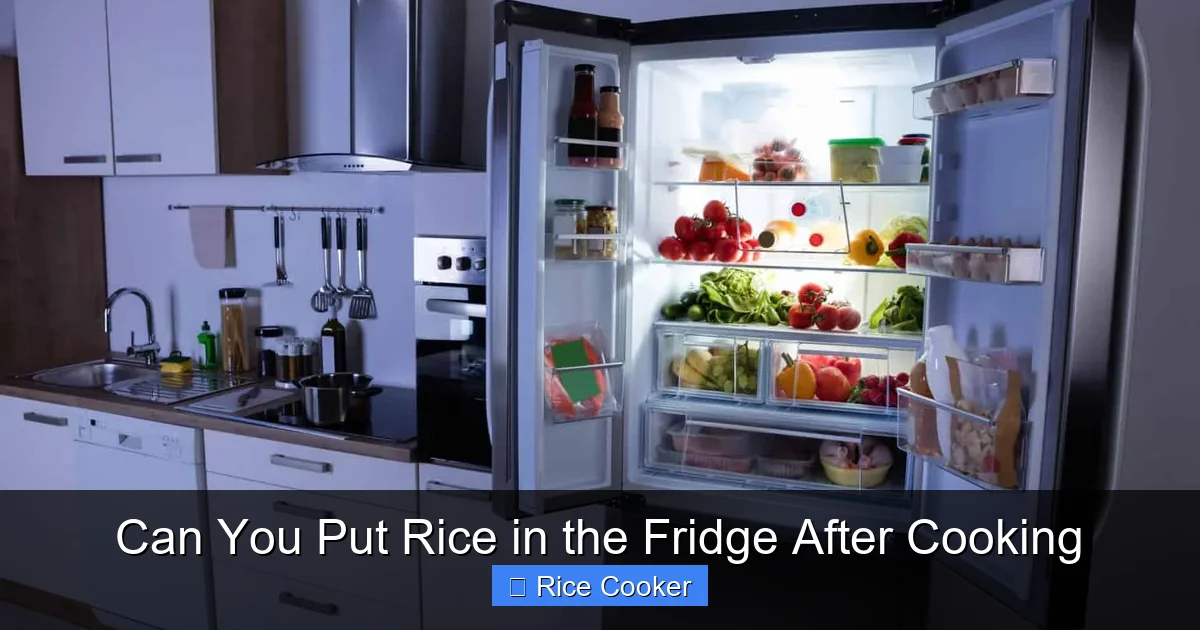
You absolutely can put cooked rice in the fridge, but timing and technique matter for safety. Refrigerating rice within 1 hour of cooking helps prevent dangerous bacteria like *Bacillus cereus*. Always cool it quickly, store in shallow containers, and eat leftovers within 3–4 days for best results.
Can You Put Rice in the Fridge After Cooking? Yes—But Do It Right
Cooking a big batch of rice often leads to leftovers, and many people wonder: Can you put rice in the fridge after cooking? The short answer is yes—but with important caveats. Refrigerating rice isn’t just about convenience; it’s about food safety. If done improperly, rice can become a breeding ground for harmful bacteria that cause food poisoning. But when handled correctly, refrigerated rice is safe, tasty, and perfect for quick meals all week.
In this complete guide, we’ll walk through everything you need to know about storing cooked rice in the refrigerator—from cooling techniques to reheating tips and even freezing options. Whether you’re using a rice cooker or stovetop, this advice applies to all types of cooked rice: white, brown, jasmine, basmati, or wild. Let’s dive in and make your rice last longer—and safer—than ever.
Why You Should Refrigerate Cooked Rice Promptly
When rice finishes cooking, it’s still warm and moist—perfect conditions for bacteria to multiply. One particularly sneaky culprit is *Bacillus cereus*, a spore-forming bacterium commonly found in soil and grains. These spores survive cooking and can grow rapidly at room temperature. In fact, studies show that if rice sits between 40°F and 140°F (the “danger zone” for bacterial growth) for more than two hours, the bacteria can double every 20 minutes.
That’s why prompt refrigeration is critical. The U.S. Food and Drug Administration (FDA) recommends cooling perishable foods—including cooked rice—to 40°F or below within two hours of preparation. For faster chilling, especially on warm days, aim to get it into the fridge within one hour. This simple step dramatically reduces your risk of foodborne illness.
How Long Does Cooked Rice Last in the Refrigerator?
So, how long can you keep rice in the fridge after cooking? Generally, properly stored cooked rice lasts **3 to 4 days** in the refrigerator. This timeframe ensures maximum flavor and safety. Beyond four days, the risk of spoilage increases, even if the rice looks and smells fine.
To extend its life further, consider freezing. Cooked rice freezes well for up to **1 month**. Just portion it into freezer-safe bags or containers, label them with the date, and thaw in the fridge overnight before reheating.
Signs That Your Refrigerated Rice Has Gone Bad
Even when stored correctly, rice won’t last forever. Watch for these warning signs:
– **Sour or off smell**: Fresh rice shouldn’t have any odor. A sour or unpleasant scent means it’s spoiled.
– **Mold or discoloration**: White or slightly yellow rice is normal. Black, green, or fuzzy spots indicate mold—discard immediately.
– **Unusual texture**: If rice feels slimy, sticky, or unusually soft, it’s likely contaminated.
– **Rise in temperature**: If your fridge thermometer reads above 40°F, food spoilage accelerates.
When in doubt, throw it out. Better safe than sorry when it comes to food safety.
Best Practices for Cooling Rice Before Refrigeration
The key to safe refrigeration lies in how fast you cool the rice. Rapid cooling prevents bacterial growth while preserving quality. Here are proven methods:
1. **Spread it thin**: Transfer cooked rice to shallow, wide containers or baking sheets. The larger surface area allows heat to escape faster.
2. **Use an ice bath**: Fill a large bowl with cold water and ice cubes. Submerge the container of rice (with lid slightly open) for 15–20 minutes to pull heat away quickly.
3. **Stir occasionally**: While not always practical, gently stirring helps distribute cooler temperatures.
4. **Avoid deep pans**: Deep containers trap heat and delay chilling.
Avoid placing hot rice directly into the fridge—it raises the internal temperature, making the appliance work harder and increasing energy use. Plus, condensation inside can drip onto other foods.
Storing Rice in the Refrigerator: Container Tips
Once cooled, proper storage makes all the difference. Follow these guidelines:
– Use **airtight containers** to prevent absorption of odors from other foods.
– Choose **shallow containers** (no deeper than 2 inches) to maintain even cold temperatures.
– Label each container with the **type of rice** and **date of storage**.
– Don’t stack containers tightly—they need airflow around them.
Glass or BPA-free plastic containers work best. Avoid leaving rice uncovered, as this invites moisture, bacteria, and cross-contamination.
Reheating Leftover Rice Safely
Many people skip reheating rice because they worry about dryness or texture—but skipping it is actually riskier. Bacteria don’t die just by sitting in the fridge; they remain dormant until conditions allow regrowth. Reheating kills them and ensures safety.
Here’s how to do it right:
1. **Transfer to microwave-safe dish**: Place rice in a covered container or plate.
2. **Add moisture**: Sprinkle a few drops of water over the surface—this prevents drying.
3. **Cover loosely**: Steam helps distribute heat evenly.
4. **Microwave in intervals**: Heat in 30-second bursts, stirring between rounds, until steaming hot throughout.
5. **Check temperature**: Use a food thermometer to confirm it reaches at least 165°F (74°C).
For stovetop reheating, simmer rice in a saucepan with a splash of broth or water, covered, over low heat until heated through.
Brown vs. White Rice: Storage Differences
Both white and brown rice can be refrigerated after cooking, but there are subtle differences in handling:
– **White rice**: Cooks faster and holds shape better. It’s less prone to becoming mushy when reheated if stored properly.
– **Brown rice**: Contains more fiber and oil, which can go rancid faster. Store it in airtight containers and consume within 2–3 days for optimal freshness.
Regardless of type, follow the same cooling and storage rules. Brown rice may also develop a stale flavor after several days, so plan meals accordingly.
Using a Rice Cooker for Batch Cooking and Storage
If you own a rice cooker, you’re probably used to making large batches. But what happens when it overflows? Or you want to prep ahead?
Modern rice cookers often include a “warm” setting that keeps rice at ~140°F—but this isn’t safe for long-term storage. The FDA advises against keeping rice in the “warm” mode for more than 2 hours.
Instead, cook extra rice, then transfer immediately to shallow containers and refrigerate. Some models even come with steam trays or warming baskets—use those for immediate serving, not storage.
Can You Freeze Cooked Rice?
Yes! Freezing is one of the safest ways to preserve rice for longer periods. Here’s how:
1. **Cool completely** before freezing.
2. Portion into **freezer-safe bags or containers**, removing as much air as possible.
3. **Label with date and contents**.
4. **Freeze flat** (if using bags) to save space.
5. **Thaw overnight in the fridge** before reheating.
Frozen rice retains most of its texture and nutrients. When reheated properly, it tastes almost like freshly cooked rice.
Common Myths About Storing Cooked Rice
There are plenty of misconceptions floating around. Let’s clear them up:
– **Myth**: You can leave rice out overnight—it’ll stay fresh.
**Fact**: Room temperature creates ideal conditions for bacterial growth. Never leave cooked rice out beyond 2 hours (1 hour if above 90°F).
– **Myth**: Rice can be stored in the rice cooker overnight.
**Fact**: The “warm” setting doesn’t kill bacteria—it just slows their growth. Always refrigerate promptly.
– **Myth**: All leftover rice is safe to eat.
**Fact**: Even if it looks fine, old rice may harbor toxins produced by *Bacillus cereus*. Trust your senses—and your thermometer.
Health Benefits of Eating Leftover Rice
Beyond safety, eating refrigerated rice offers health perks. Cooked rice is rich in carbohydrates, providing sustained energy. Whole grain varieties like brown rice offer fiber, aiding digestion and promoting satiety. Plus, reheated rice is easy to digest compared to raw grains.
Just remember: pair rice with vegetables, lean proteins, and healthy fats for balanced meals.
Tips for Restaurants and Food Service Settings
In commercial kitchens, rice safety is non-negotiable. Health inspectors expect strict adherence to protocols. Key practices include:
– Using blast chillers or rapid cooling systems.
– Storing rice in labeled, dated containers.
– Discarding any rice older than 48 hours.
– Training staff on time/temperature control.
Home cooks can adopt similar discipline—especially during holidays or meal prepping marathons.
Environmental Impact of Rice Waste
Throwing away rice isn’t just wasteful—it’s environmentally costly. Rice production uses significant water and land resources. Reducing waste through smart storage helps conserve these precious inputs.
By refrigerating and repurposing leftovers, you contribute to a more sustainable kitchen.
Final Thoughts: Rice Storage Made Simple
Putting rice in the fridge after cooking is not only allowed—it’s recommended for food safety. With proper cooling, storage, and reheating techniques, you can enjoy delicious, safe meals for days. Whether you’re meal prepping, hosting guests, or simply saving dinner, mastering rice storage pays off.
Remember: speed matters when cooling. Shallow containers help. Label everything. And always trust your senses. When in doubt, discard questionable rice.
With these tips, your rice cooker becomes a powerhouse of efficiency—not just for cooking, but for preserving flavor, nutrition, and safety. Happy cooking!
Key Takeaways
- Refrigerate promptly: Cool rice within 1 hour of cooking to slow bacterial growth.
- Use shallow containers: Spread rice in thin layers to speed up cooling.
- Avoid room-temperature storage: Leaving rice out overnight increases contamination risk.
- Reheat thoroughly: Always microwave or steam leftover rice until steaming hot (above 165°F/74°C).
- Label and date: Track how long rice has been stored to ensure freshness and safety.
- Freezing is an option: You can freeze cooked rice for up to 1 month for longer storage.
- Watch for spoilage signs: Discard rice if it smells off, feels slimy, or looks moldy.
Frequently Asked Questions
Is it safe to put hot rice directly in the fridge?
No, you should never place hot rice straight into the refrigerator. Doing so raises the internal temperature, forcing your fridge to work harder and potentially spoiling other foods. Instead, cool rice to room temperature first—ideally within 1 hour—before refrigerating.
How long can you keep rice in the fridge?
Properly stored cooked rice lasts 3 to 4 days in the refrigerator. After that, the risk of bacterial growth and spoilage increases significantly. Always check for signs of mold, off smells, or unusual texture before consuming.
Can you freeze cooked rice?
Yes! Cooked rice freezes well for up to 1 month. Portion it into airtight containers or freezer bags, label with the date, and thaw in the fridge overnight before reheating. Frozen rice retains its quality when handled correctly.
Should you wash rice before storing it?
Washing raw rice removes excess starch and prevents stickiness, but it’s optional depending on your preference. Once cooked, there’s no need to wash it again—just store it clean and sealed.
Does refrigerated rice lose nutritional value?
Short-term refrigeration doesn’t significantly affect nutrients. However, prolonged storage (beyond 4 days) may reduce some vitamin content slightly. To maximize nutrition, consume rice within the recommended timeframe and pair it with nutrient-rich sides.
What’s the fastest way to cool rice for refrigeration?
The best method is spreading rice in shallow containers and placing them in an ice bath. Alternatively, use a fan or place containers near open windows to accelerate cooling. Aim to get rice into the fridge within 1 hour of cooking.