
Leaving rice in a rice cooker for more than 2 hours at room temperature can lead to bacterial growth, especially Bacillus cereus, which causes food poisoning. While modern rice cookers with keep-warm functions may hold rice for several hours, it’s safest to consume cooked rice within 1–2 hours or refrigerate it promptly. Always store leftover rice properly to maintain freshness and safety.
Have you ever finished cooking a perfect pot of jasmine rice, only to wonder: *How long can I leave rice in rice cooker*? It’s a common question, especially when you’re busy, hosting guests, or just don’t want to waste perfectly cooked grains. After all, rice cookers are designed to keep food warm—so why not leave dinner simmering until everyone’s ready?
But here’s the thing: rice isn’t like soup or stew. Unlike liquid-heavy dishes, rice is a starchy grain that becomes a breeding ground for bacteria when left at room temperature—especially the notorious Bacillus cereus. This spore-forming bacterium thrives in moist, cooked grains and can produce toxins that survive even boiling.
So while your rice cooker might say “keep warm,” your body will thank you more if you follow food safety rules. Let’s break down everything you need to know about how long you can leave rice in a rice cooker, how to do it safely, and when to say goodbye to that pot.
Key Takeaways
- Room Temperature Danger: Leaving rice out beyond 2 hours increases the risk of harmful bacteria growing, particularly Bacillus cereus, which produces heat-stable toxins.
- Refrigeration Is Key: If you won’t eat rice within 2 hours, refrigerate it within 1 hour and consume within 3–4 days for best quality.
- Keep-Warm Function Caution: Most rice cookers’ keep-warm settings maintain rice at around 140°F (60°C), a safe zone for bacteria—use sparingly and only for short periods.
- Reheating Matters: Always reheat rice thoroughly to 165°F (74°C) to kill any potential bacteria. Never reheat rice multiple times.
- Proper Storage Tips: Store rice in an airtight container and spread it out to cool quickly. Avoid stacking containers to prevent steam buildup.
- Symptoms of Food Poisoning: Watch for nausea, vomiting, diarrhea, or stomach cramps after eating rice that’s been left too long—seek medical help if symptoms persist.
- Best Practices: Cook only what you need, use clean utensils, and avoid cross-contamination for safer rice consumption.
📑 Table of Contents
- Understanding Rice Safety and Bacteria Risks
- The Science Behind Rice Spoilage
- How Long Can You Actually Leave Rice in a Rice Cooker?
- Safe Practices for Storing Rice from the Rice Cooker
- Reheating Rice Safely
- Special Cases: Brown Rice, Wild Rice, and Instant Rice
- Common Mistakes People Make with Rice Cookers
- Signs You Should Throw Out Rice
- Tips for Better Rice Handling
- Conclusion: Short-Term Warmth, Long-Term Safety
Understanding Rice Safety and Bacteria Risks
When rice is cooked, it’s no longer raw—but it’s also not safe forever. The starch in rice absorbs water and becomes soft, creating an ideal environment for bacteria to grow. One of the most common culprits is Bacillus cereus, which can be present in raw rice due to soil contamination. When you cook the rice, the spores survive and multiply rapidly if conditions are right.
These bacteria love temperatures between 40°F and 140°F—the so-called “danger zone” where microbial growth accelerates. Your rice cooker’s keep-warm function typically holds food at around 140°F, which seems safe, but it’s actually on the edge. Even a few hours in this range can allow enough bacterial growth to cause food poisoning.
The scary part? Bacillus cereus produces heat-stable toxins that won’t be destroyed by reheating. So even if you boil leftover rice again, the toxins remain. That’s why proper cooling and storage are non-negotiable.
The Science Behind Rice Spoilage
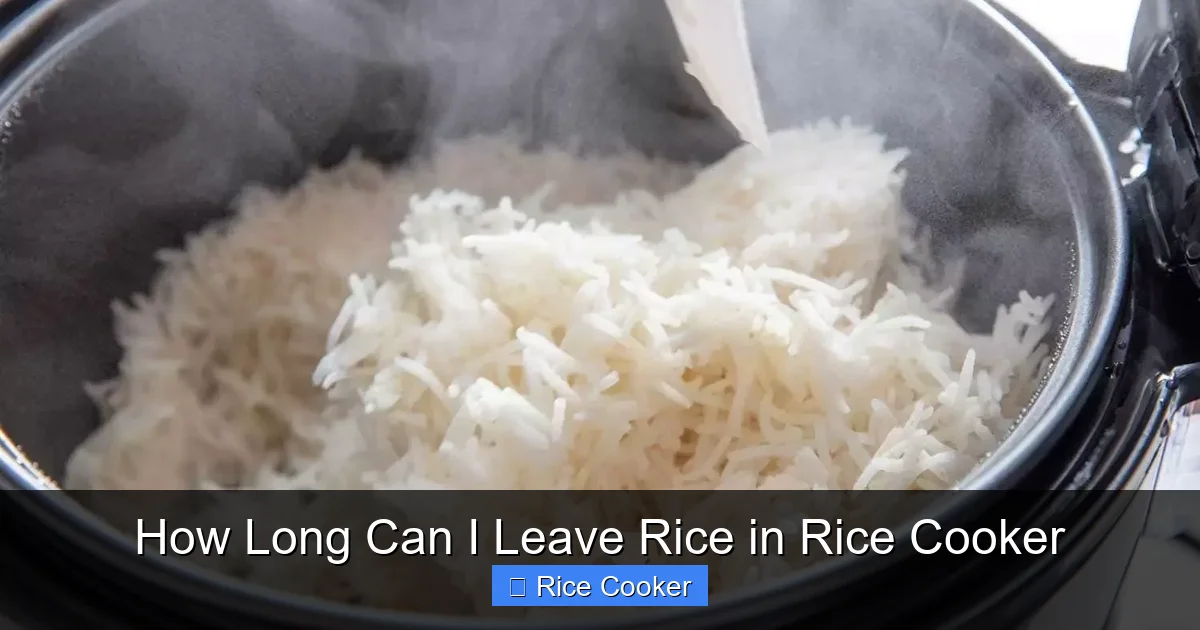
Visual guide about How Long Can I Leave Rice in Rice Cooker
Image source: twinstripe.com
Let’s get into the nitty-gritty. Rice contains amylase enzymes and starches that break down over time, leading to texture changes. But more importantly, moisture and warmth create the perfect storm for bacterial multiplication.
After cooking, the surface temperature of rice drops quickly, but the center takes longer—especially in a sealed rice cooker. This means some parts of the rice may sit in the danger zone for extended periods, even if the cooker claims to stay at 140°F.
For example, if you cook 2 cups of rice, it might take 15–20 minutes to cool below 140°F. During that time, bacteria could already be multiplying. And if you leave it in the cooker for hours afterward, you’re essentially feeding those microbes.
That’s why experts from the USDA and FDA recommend never leaving perishable foods—like rice, pasta, or beans—out for more than 2 hours. In hot environments (above 90°F), that drops to just 1 hour.
How Long Can You Actually Leave Rice in a Rice Cooker?
Now, let’s answer the big question: *How long can I leave rice in rice cooker?*
The short answer? **Not long.**
Most food safety authorities agree that cooked rice should not be left in a rice cooker’s keep-warm mode for more than **1–2 hours**. After that, the risk of bacterial growth becomes significant.
Here’s a quick breakdown:
– **0–1 hour:** Safe to leave in the rice cooker, especially if you’ll eat it soon.
– **1–2 hours:** Acceptable if you plan to eat it within the next meal, but not ideal.
– **2+ hours:** High risk. Discard the rice or move it to the refrigerator immediately.
– **4+ hours:** Definitely unsafe. Do not eat.
Even if your rice cooker has advanced sensors or insulation, these are meant to preserve food temporarily—not indefinitely. Modern models might advertise “longer keep-warm times,” but that doesn’t mean they’re safe.
For instance, some high-end rice cookers claim to keep food warm for up to 8 hours. While convenient, using them for that long with rice is risky unless you plan to refrigerate within 2 hours.
What About the Keep-Warm Light?
Many rice cookers have a “keep-warm” indicator light. Just because it’s on doesn’t mean the rice is safe. The light simply means the heating element is active. It doesn’t measure bacterial load or toxin levels.
So, don’t rely solely on the light. Use a food thermometer to check internal temperature. Ideally, rice should be cooled below 40°F as fast as possible.
Safe Practices for Storing Rice from the Rice Cooker
If you know you won’t finish the rice within a couple of hours, here’s how to handle it properly:
Cool It Fast
Don’t let rice sit in the cooker while it cools. Instead:
– Open the lid to release steam.
– Use a spoon to fluff the rice and speed up cooling.
– Spread it in a shallow dish or divide into smaller portions.
Cooling rice from 140°F to 40°F should ideally take under 90 minutes. The faster it cools, the less time bacteria have to grow.
Store in Airtight Containers
Once cooled, transfer the rice to an airtight container. Glass or BPA-free plastic works best. Avoid foil or paper wraps—they trap moisture.
Label the container with the date so you know when it was made. Most cooked rice stays fresh for 3–4 days in the fridge.
Avoid Overcrowding the Fridge
Don’t stack heavy pots directly on shelves. Place them on a rack or tray to ensure cold air circulates. Also, don’t place hot rice straight into the fridge—it raises the internal temperature and affects other foods.
Reheating Rice Safely
Leftover rice can be eaten safely—if handled correctly.
Always Reheat Thoroughly
Microwave, stovetop, or oven—make sure the rice reaches **165°F (74°C)** throughout. Stir it well to distribute heat evenly. Let it stand for 1–2 minutes after heating to allow residual heat to penetrate.
Never reheat rice more than once. Each cycle increases the risk of bacterial survival.
Check for Signs of Spoilage
Before eating, look for:
– Unusual smell (sour or rancid)
– Slimy texture
– Mold or discoloration
If anything looks off, throw it out. When in doubt, discard.
Special Cases: Brown Rice, Wild Rice, and Instant Rice
Different types of rice have slightly different risks and storage needs.
Brown Rice
Because brown rice has a higher oil content and more nutrients, it goes rancid faster. Cooked brown rice should be refrigerated within 1 hour and consumed within 2 days.
Wild Rice
Wild rice is actually a grass seed and cooks slower than white rice. Its porous structure holds more moisture, making it prone to bacterial growth. Follow the same 2-hour rule and refrigerate promptly.
Instant Rice or Pre-Cooked Rice Mixes
These are often pre-cooked and dried, then reconstituted with boiling water. Because they’ve already been heated once, they’re more vulnerable to contamination during packaging and handling. Treat them like regular cooked rice—refrigerate within 1–2 hours.
Common Mistakes People Make with Rice Cookers
Even experienced cooks make these errors:
Ignoring the Keep-Warm Limit
Some people leave rice in the cooker overnight, thinking it’s fine because it’s “always hot.” Not true. Overnight storage at 140°F creates dangerous conditions.
Using the Same Utensil Twice
Always use a clean spoon to serve rice. Reusing a dirty spoon introduces bacteria.
Storing Rice Near Raw Meat or Fish
Cross-contamination is real. Keep cooked rice away from raw proteins in the fridge.
Not Cooling Before Refrigeration
Placing hot rice in the fridge raises the temperature and promotes bacterial growth in other foods.
Signs You Should Throw Out Rice
Trust your senses. If you notice any of these, discard the rice:
– Sour or foul odor
– Cloudy or slimy appearance
– Visible mold
– Off-color spots
– Persistent stomach upset after eating
Even if the rice looks and smells fine, if it’s been sitting out for more than 2 hours, it’s better to be safe.
Tips for Better Rice Handling
Want to enjoy rice without the stress?
– Cook only what you need.
– Use a timer so you know when to start eating.
– Freeze extra rice for later—it keeps for up to 1 month.
– Label frozen portions with dates.
– Thaw in the fridge, not at room temperature.
Also, consider investing in a rice cooker with a delay timer or smart features that notify you when to eat.
Conclusion: Short-Term Warmth, Long-Term Safety
So, *how long can I leave rice in rice cooker*? For most people, the answer is **no more than 1–2 hours**. While your rice cooker is great for convenience, it’s not a substitute for proper food handling.
The key is balance: enjoy the benefits of a warm rice cooker, but respect the limits of food safety. Cool rice fast, refrigerate promptly, and reheat thoroughly. With these habits, you can keep enjoying delicious rice—without the worry.
Remember, food poisoning isn’t worth a few extra minutes of waiting. When it comes to rice, it’s always better to err on the side of caution.
Frequently Asked Questions
Can I eat rice that’s been in the rice cooker overnight?
No, it’s not safe. Rice left in a rice cooker overnight likely exceeds the 2-hour limit, allowing Bacillus cereus to grow and produce toxins that survive reheating. Always refrigerate within 2 hours.
Does the keep-warm setting on my rice cooker keep rice safe?
Not necessarily. The keep-warm setting usually maintains rice around 140°F, which is in the danger zone for bacterial growth. Use it only for short periods—ideally under 2 hours.
How can I tell if rice has gone bad?
Look for a sour smell, slimy texture, mold, or unusual discoloration. If rice has been left out for more than 2 hours, it’s safest to discard it, even if it looks fine.
Can I freeze rice that’s been in the rice cooker?
Yes! Once cooled, store rice in airtight containers or freezer bags. Frozen rice keeps for up to 1 month. Thaw in the refrigerator before reheating.
Is it okay to leave rice in the rice cooker while cooking another meal?
If the total time is under 2 hours, it’s generally fine. But if you’re adding rice to the cooker mid-day, check the clock. Anything beyond 2 hours requires refrigeration.
Why does my rice smell funny after being in the cooker?
A sour or unpleasant odor suggests bacterial growth or spoilage. Don’t taste it—discard the rice immediately to avoid food poisoning.