
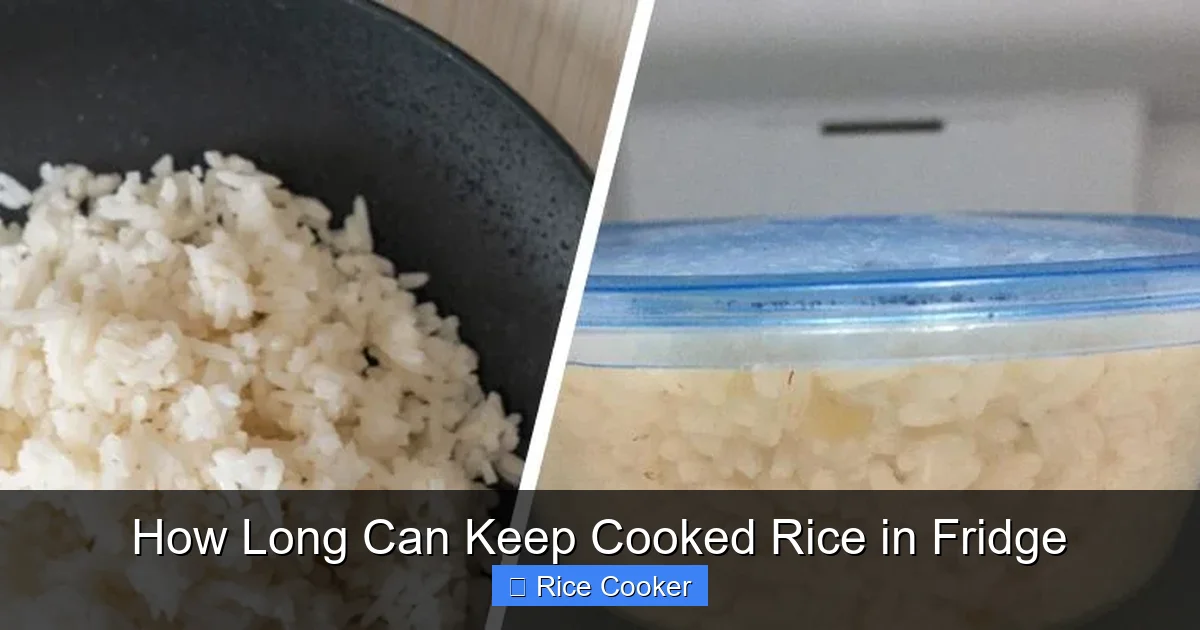
How long can you keep cooked rice in the fridge? Most experts agree that cooked rice should be stored in the refrigerator within 1 hour of cooking and consumed within 3 to 4 days for optimal safety and taste. Leaving rice at room temperature for too long creates ideal conditions for harmful bacteria like Bacillus cereus to grow. Proper storage—such as using airtight containers and refrigerating promptly—can significantly reduce health risks and extend your rice’s usability.
Have you ever wondered how long you can safely keep cooked rice in the fridge? Whether you’re meal prepping for the week or saving last night’s dinner, knowing the right way to store rice is essential for both flavor and food safety. Rice is a staple in many diets around the world—from Asian stir-fries to American jambalaya—and its versatility makes it a go-to ingredient. But despite its popularity, rice comes with a hidden danger: it can harbor bacteria that cause foodborne illness if not handled correctly.
The main culprit behind rice-related food poisoning is a bacterium called *Bacillus cereus*. This sneaky microbe produces heat-resistant spores that survive normal cooking temperatures. When cooked rice is left at room temperature, those spores can germinate and multiply, especially between 40°F and 140°F—the so-called “danger zone” where bacteria thrive. So even though your rice looks and smells fine, it might still make you sick if it’s been sitting out too long. That’s why understanding how to store, cool, and reheat rice properly isn’t just helpful—it’s critical.
In this article, we’ll walk you through everything you need to know about keeping cooked rice safe in the fridge. You’ll learn how long rice lasts, what happens if you don’t follow safety rules, and practical tips to preserve both quality and taste. Whether you’re a busy parent, a college student, or a home cook who loves batch-cooking, these guidelines will help you enjoy rice confidently and safely.
Key Takeaways
- Safe Refrigeration Window: Cooked rice should be eaten within 3 to 4 days when stored properly in the refrigerator.
- Cooling is Critical: Always cool rice quickly after cooking to prevent bacterial growth; never leave it sitting out for more than 1 hour.
- Proper Storage Matters: Store rice in shallow, airtight containers to speed up cooling and maintain freshness.
- Bacillus Cereus Risk: This common bacterium thrives in starchy foods like rice and can cause food poisoning if improperly handled.
- Reheating Tips: Always reheat rice to an internal temperature of 165°F (74°C) to kill any potential bacteria.
- Freezing Extends Life: For long-term storage, freeze rice in portions; it remains safe for up to 1 month when frozen correctly.
- Watch for Spoilage Signs: Discard rice if it smells off, has an unusual texture, or shows mold—don’t risk eating questionable leftovers.
📑 Table of Contents
- Why Does Rice Become Unsafe Over Time?
- How Long Can You Keep Cooked Rice in the Fridge?
- Best Practices for Storing Cooked Rice
- Can You Freeze Cooked Rice?
- How to Safely Reheat Cooked Rice
- Common Mistakes People Make With Rice Storage
- Special Considerations: Brown Rice vs. White Rice
- What About Leftover Fried Rice or Rice Bowls?
- Final Thoughts: Stay Safe, Eat Smart
Why Does Rice Become Unsafe Over Time?
Rice becomes potentially unsafe not because of spoilage in the traditional sense—like milk going sour or meat turning green—but due to the presence of *Bacillus cereus*, a common soil-dwelling bacterium. This bacterium is naturally found in raw rice grains, and while cooking usually kills the bacteria, it doesn’t destroy their heat-resistant spores. These spores can survive even boiling and remain dormant until conditions become favorable again.
When cooked rice is allowed to sit at room temperature for extended periods, especially above 90°F (32°C), the spores awaken and begin producing toxins. One of these toxins, called cereulide, is heat-stable, meaning reheating won’t destroy it. That’s why consuming improperly stored rice—even after heating—can lead to symptoms like nausea, vomiting, and diarrhea within 1 to 5 hours of ingestion.
Unlike other foods that spoil visibly, rice often looks, smells, and tastes perfectly normal even when contaminated. This makes it especially dangerous: you can’t tell by sight or smell whether rice is safe to eat. The only reliable ways to ensure safety are following proper cooling procedures, storing it promptly in the refrigerator, and reheating thoroughly.
How Long Can You Keep Cooked Rice in the Fridge?
Visual guide about How Long Can Keep Cooked Rice in Fridge
Image source: uhkkfeeqacwcyryreuie.supabase.co
So, how long can you actually keep cooked rice in the fridge? The short answer: **3 to 4 days**. According to the U.S. Food and Drug Administration (FDA) and the Centers for Disease Control and Prevention (CDC), cooked rice should be refrigerated within 1 hour of preparation and consumed within 3 to 4 days for maximum safety.
This timeframe applies to white rice, brown rice, jasmine rice, basmati, and other varieties—all types of starchy grains are susceptible to *Bacillus cereus* if mishandled. While some people might stretch it to 5 days under ideal conditions, sticking to 3–4 days ensures you’re minimizing risk.
It’s important to note that refrigeration slows bacterial growth but doesn’t stop it entirely. Even in the cold, spores may slowly produce toxins over time. That’s why older rice, even if sealed well, poses a higher risk than freshly stored batches.
For best results, divide large portions into smaller containers before refrigerating. Smaller volumes cool faster and allow quicker access to individual servings without repeatedly opening the container, which introduces air and moisture.
The Importance of Timing
Timing is everything when it comes to rice safety. The FDA recommends that perishable foods like cooked rice should not be left out at room temperature for more than **1 hour** if the ambient temperature is below 90°F (32°C). If it’s hotter than that—like on a warm summer day—the limit drops to just **2 hours**.
Why such strict guidelines? Because bacterial reproduction doubles every 20 minutes under ideal conditions. In just 2 hours, a small amount of contamination can explode into thousands or even millions of harmful cells.
Imagine this scenario: you cook a big pot of rice for dinner, serve some immediately, and save the rest to eat tomorrow. If you let the leftover rice sit on the counter while washing dishes or watching TV, you’ve already entered the danger zone. By bedtime, that rice could be teeming with bacteria.
To avoid this, always transfer leftovers to clean containers within 1 hour of cooking. Use a clean spoon each time you scoop out a portion—never double-dip! And remember: if you’re serving guests or hosting a party, designate a cooler or insulated bag to keep rice chilled during the event.
Signs Your Rice May Be Bad
Even with careful storage, rice can go bad—but unlike dairy or meat, rice rarely shows obvious signs of spoilage. However, there are a few red flags to watch for:
– **Unpleasant odor:** Fresh rice shouldn’t have any strong smell. If it smells sour, fermented, or “off,” discard it.
– **Mold growth:** Tiny fuzzy spots (usually white, gray, or black) indicate mold. Never eat moldy rice.
– **Texture changes:** Sticky, slimy, or overly soft rice may be spoiled. Normal rice should have a firm, slightly dry texture.
– **Discoloration:** Brownish or dark patches aren’t necessarily bad if they’re just from oxidation, but combined with other signs, they’re a warning.
If you’re ever unsure, it’s better to throw it out. Food poisoning from rice is unpleasant and avoidable with smart habits.
Best Practices for Storing Cooked Rice
Storing cooked rice correctly isn’t rocket science—but it does require attention to detail. Follow these best practices to keep your rice safe and tasty:
Use Airtight Containers
Always store rice in **shallow, airtight containers**. Wide-mouthed jars or plastic tubs work great because they allow the rice to cool quickly. Deep containers trap heat and moisture, slowing down the chilling process and promoting bacterial growth.
Glass containers are ideal—they’re non-porous, easy to clean, and don’t absorb odors. Avoid metal containers unless they’re stainless steel, as acidic foods (and rice can become slightly acidic over time) may react with certain metals.
Label your containers with the date so you know when you cooked the rice. This simple habit helps you track freshness and avoid guessing games later.
Refrigerate Promptly
As soon as the rice reaches room temperature (within 1 hour), move it to the fridge. Don’t wait! Even if you plan to eat it soon, refrigeration halts bacterial activity.
Place the container on a shelf rather than in the door. The door fluctuates in temperature every time it opens, making it less stable for perishables.
Keep the fridge at or below 40°F (4°C) for optimal safety. If your fridge is warmer than that, consider adjusting the thermostat or using a separate cooler for bulk storage.
Portion Wisely
Divide large quantities into single-serving sizes. Not only does this make reheating easier, but it also prevents repeated exposure to air and bacteria every time you open the container.
For example, if you cooked 8 cups of rice, divide it into two 4-cup portions or four 2-cup ones. Then, when you want a meal, just thaw or heat one portion instead of defrosting the whole batch.
Can You Freeze Cooked Rice?
Yes! Freezing is an excellent way to extend the life of cooked rice beyond the 3–4 day window. When frozen properly, rice can stay safe for up to **1 month**. Beyond that, quality begins to decline—texture gets mushier, and flavor dulls—but it’s still technically edible.
To freeze rice:
1. Cool it completely (use the same 1-hour rule).
2. Portion into freezer-safe bags or containers.
3. Remove as much air as possible to prevent freezer burn.
4. Label with the date.
When ready to use, thaw overnight in the fridge or microwave with a damp paper towel to retain moisture. Reheat until steaming hot throughout.
Freezing also reduces the risk of *Bacillus cereus* growth since cold temperatures inhibit bacterial activity. Just remember: freezing doesn’t sterilize rice—so if it was contaminated before freezing, toxins could still be present.
How to Safely Reheat Cooked Rice
Reheating rice is simple, but doing it wrong defeats the purpose of safe storage. Here’s how to do it right:
Microwave Method
Place rice in a microwave-safe dish. Add a tablespoon of water per cup of rice to prevent drying out. Cover with a damp paper towel or vented lid to trap steam.
Heat on high in 30-second intervals, stirring between each, until the rice reaches **165°F (74°C)** internally. Use a food thermometer to check—this is the only surefire way to confirm it’s hot enough.
Never microwave rice directly from the fridge without warming it gradually—cold rice can develop hot spots that aren’t fully heated.
Stovetop Method
On medium heat, add rice to a saucepan with a splash of water or broth. Stir frequently to distribute heat evenly. Bring to a simmer until steamy and hot throughout.
This method gives better control over texture and helps eliminate cold centers.
Oven Method
Spread rice on a baking sheet lined with parchment. Drizzle with a little oil or water and cover tightly with foil. Bake at 350°F (175°C) for 15–20 minutes, flipping halfway through.
Great for reheating large batches, but requires more energy and monitoring.
No matter the method, always reheat until the center is piping hot. Let it stand covered for 2 minutes after heating to equalize temperature.
Common Mistakes People Make With Rice Storage
Even experienced cooks slip up sometimes. Here are the most common mistakes—and how to avoid them:
– **Leaving rice out overnight:** Never do this! Bacteria multiply rapidly between 40°F and 140°F. If you forgot to refrigerate it, toss it out.
– **Using improper containers:** Avoid plastic wrap or aluminum foil alone—they don’t seal well. Use lids or zip-top bags.
– **Not labeling containers:** Without dates, you’ll forget when you made the rice. Write it clearly!
– **Reusing old rice without checking:** Even if it smells fine, reheat thoroughly and trust your instincts—when in doubt, throw it out.
– **Skipping cooling time:** Hot rice in a deep pot takes forever to chill. Transfer to shallow containers immediately.
By avoiding these pitfalls, you’ll protect yourself and your family from unnecessary foodborne illness.
Special Considerations: Brown Rice vs. White Rice
Both white and brown rice require the same basic storage rules, but there are subtle differences:
Brown rice has a higher oil content in its bran layer, which can turn rancid over time—even in the fridge. It generally lasts **3–4 days** in the refrigerator, just like white rice. Some people prefer to freeze brown rice to extend its shelf life further.
White rice, being more refined, stays fresher longer once cooked—but still follows the same 3–4 day guideline due to the *Bacillus cereus* risk.
Neither type benefits from extended room-temperature exposure. Always treat both the same way: cool fast, refrigerate soon, consume early.
What About Leftover Fried Rice or Rice Bowls?
Leftover fried rice, rice bowls, or casseroles containing rice follow the same safety rules. As long as the rice itself was cooled and stored properly, the rest of the dish is fine. However, if the mixture includes other ingredients like eggs, meat, or vegetables, those may have different spoilage timelines.
Still, the rice component should never exceed 3–4 days in the fridge—regardless of what else is in the container.
Tip: Separate rice from wetter ingredients (like sauces) before storing. Moisture accelerates spoilage and can make rice soggy.
Final Thoughts: Stay Safe, Eat Smart
Cooked rice is delicious, nutritious, and incredibly versatile—but only if handled safely. Remember: **3 to 4 days in the fridge, 1 hour max at room temperature**, and always reheat thoroughly. These aren’t arbitrary rules; they’re based on decades of food safety research aimed at protecting public health.
Don’t let complacency put you at risk. A quick minute of extra care—transferring rice to a container, labeling it, or setting a timer—can prevent weeks of stomach discomfort. And yes, it’s okay to freeze rice if you know you won’t eat it within a few days. Planning ahead saves time, money, and stress.
At the end of the day, the goal isn’t perfection—it’s consistency. With a few simple habits, you can enjoy rice-based meals without worry. So next time you cook up a pot, think twice about what you do with the leftovers. Your future self will thank you.
Frequently Asked Questions
Can I eat rice left out overnight?
No, you should not eat rice left out overnight. Cooked rice should never be left at room temperature for more than 1 hour (or 2 hours if above 90°F/32°C). Doing so allows harmful bacteria like Bacillus cereus to grow rapidly and produce toxins that can cause food poisoning.
Is it safe to reheat rice multiple times?
Reheating rice multiple times increases the risk of bacterial growth, especially if each reheating cycle leaves the rice sitting at room temperature. It’s safer to prepare only what you’ll eat at once. If you must reheat leftovers more than once, ensure each time that the rice reaches 165°F (74°C) and is consumed immediately afterward.
How can I tell if my refrigerated rice is still good?
Check for signs like off smells, mold, sliminess, or unusual texture. If the rice looks and smells normal, reheat it thoroughly to 165°F (74°C). When in doubt, throw it out—rice contamination isn’t always detectable by appearance or smell alone.
Does freezing rice kill bacteria?
Freezing does not kill bacteria or their toxins. However, it stops bacterial growth by slowing metabolism. If rice was contaminated before freezing, toxins could still be present. Always follow proper storage and reheating procedures even with frozen rice.
Can I leave rice in the fridge for a week?
No, cooked rice should not be kept in the refrigerator for more than 3 to 4 days. After that, even if it looks fine, the risk of bacterial toxin buildup increases. For longer storage, freeze rice in portions—it stays safe for up to 1 month when properly frozen.
Should I wash rice before storing it?
No, you don’t need to wash cooked rice before storing it. Washing removes surface starch, which can affect texture and isn’t necessary for safety. Focus instead on cooling and sealing it quickly in an airtight container.