
How long can you keep rice in a rice cooker? The answer depends on whether the rice is hot or cold, how it’s stored, and how quickly it cools. In general, cooked rice should be eaten within 4–6 hours at room temperature and up to 3–4 days when refrigerated. Leaving rice out too long creates ideal conditions for bacteria like Bacillus cereus, which can cause food poisoning. Always cool rice quickly, store it properly, and reheat thoroughly to stay safe.
Have you ever cooked a big batch of rice, only to wonder how long you can keep it in the rice cooker? Maybe you’re meal prepping for the week or left rice sitting on the counter while you cleaned up. You’re not alone. Rice is one of the most popular side dishes worldwide—soft, fluffy, and incredibly versatile—but it also comes with some serious food safety concerns if not handled properly. One common question people ask is: **how long can you keep rice in a rice cooker**?
The short answer is: **not very long if left at room temperature.** But let’s dive deeper into why this matters, how to store rice safely, and what to do if you accidentally leave it out too long.
Rice cookers are amazing kitchen appliances. They do all the hard work for you—measure water, set timing, and automatically switch to warm mode once the rice is done. But that warm setting isn’t just for keeping rice cozy; it can actually create dangerous conditions if used incorrectly. The warm plate keeps food at around 140–160°F (60–71°C), which is within the “danger zone” for bacterial growth. That means if you leave cooked rice in the rice cooker after it finishes cooking and never take it out, you’re basically creating a buffet for bacteria like *Bacillus cereus*.
This bacterium is particularly sneaky because it forms spores that survive boiling and can regrow in improperly stored rice. When rice cools, those spores wake up, multiply, and produce toxins that cause vomiting or diarrhea. And here’s the kicker: reheating won’t always destroy these toxins. So even if you microwave leftover rice, you might still get sick.
That’s why understanding how long you can safely keep rice in a rice cooker—and how to handle it afterward—is so important. Let’s break it down step by step.
Key Takeaways
- Rice Safety Timeline: Cooked rice should not sit at room temperature for more than 2 hours—ideally, no more than 1 hour—to avoid bacterial growth.
- Refrigeration Matters: Refrigerate rice within 1 hour of cooking and eat it within 3–4 days for maximum safety and quality.
- Reheating Is Crucial: Always reheat rice to an internal temperature of at least 165°F (74°C) to kill any potential bacteria.
- Avoid Repeated Cooling and Warming: Each time rice is cooled and reheated, it increases the risk of contamination and texture loss.
- Use Airtight Containers: Store rice in shallow, airtight containers to speed up cooling and prevent cross-contamination.
- Watch for Spoiled Rice: Discard rice if it smells off, has mold, slimy texture, or unusual color changes.
- Freezing Extends Life: Frozen rice can last up to 1 month, but texture may change slightly upon thawing.
Quick Answers to Common Questions
How long can you leave cooked rice in a rice cooker?
You should not leave cooked rice in a rice cooker for more than 1–2 hours. The warm setting keeps rice in the “danger zone” (40–140°F), where bacteria like Bacillus cereus can grow rapidly. For safety, remove rice from the cooker and refrigerate it within 1 hour.
Can you eat rice left in the rice cooker overnight?
No, it’s not safe. Leaving rice in the rice cooker overnight keeps it in the danger zone for many hours, allowing harmful bacteria to multiply. Even if it looks fine, reheating may not destroy toxins produced during that time. Always discard rice left out for more than 2 hours.
Is it okay to reheat rice multiple times?
It’s not recommended. Each reheating increases the risk of contamination and reduces food quality. Reheat only what you plan to eat immediately. If you have leftovers, divide them into portions and reheat just enough for one meal.
How do you know if rice has gone bad?
Signs include a sour smell, slimy texture, mold, unusual discoloration, or a bitter taste. If rice looks or smells off, discard it immediately. When in doubt, throw it out to avoid foodborne illness.
Can you freeze rice from a rice cooker?
Yes, you can freeze rice cooked in a rice cooker. Cool it completely, portion it into airtight containers, label with the date, and freeze. Properly frozen rice lasts up to 1 month. Thaw in the refrigerator or reheat directly from frozen.
📑 Table of Contents
- The Danger Zone: Why Room Temperature Is Risky
- How Long Can You Leave Rice in the Rice Cooker After Cooking?
- Safety Tips for Using Your Rice Cooker
- How to Safely Store Cooked Rice
- Can You Reheat Rice Multiple Times?
- Signs Your Rice Has Gone Bad
- Special Cases: Fried Rice and Leftover Meals
- Myths About Rice Storage
- Conclusion: Keep It Simple, Keep It Safe
The Danger Zone: Why Room Temperature Is Risky
When we talk about food safety, the term “danger zone” is key. This refers to the temperature range between 40°F (4°C) and 140°F (60°C), where bacteria grow fastest. Most harmful bacteria can double their population in as little as 20 minutes within this range.
Cooked rice is especially vulnerable because of its starch content. Starchy foods provide nutrients for bacteria, making rice a perfect breeding ground. Once rice is cooked, it enters the danger zone immediately—especially if left uncovered or in a warm environment like a rice cooker’s warming plate.
If you leave rice in the rice cooker after cooking and don’t turn it off or remove it, it stays in the danger zone for hours. That means bacteria can multiply rapidly, increasing the risk of foodborne illness with each passing hour.
For example, imagine you cook rice for dinner, then clean the kitchen while the rice cooker keeps it warm overnight. By morning, you could have thousands—or even millions—of bacterial spores in that pot. Even reheating it won’t eliminate the toxins produced during that time.
So, the golden rule is simple: **remove rice from the rice cooker as soon as it’s done cooking and transfer it to the fridge or freezer within 1 hour.**
How Long Can You Leave Rice in the Rice Cooker After Cooking?
Visual guide about How Long Can You Keep Rice in a Rice Cooker
Image source: stretchrecipes.com
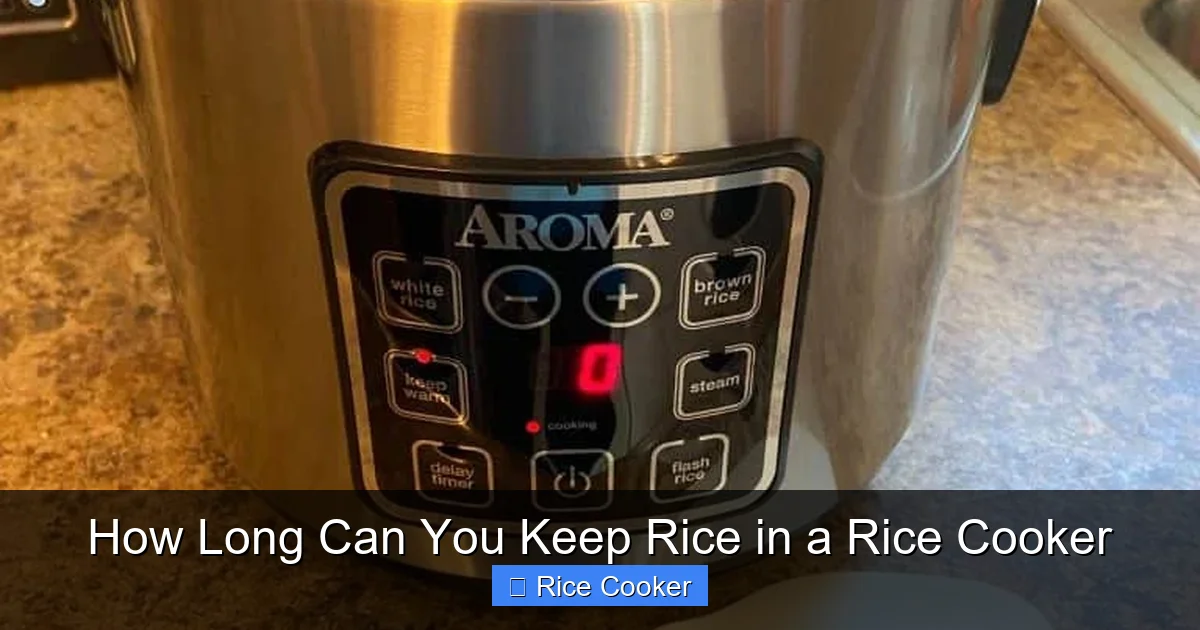
Most rice cookers have a “warm” function that maintains a constant temperature to keep food ready for serving. But this feature is best used for short-term holding—like during a dinner party or meal prep session—not for storage.
Here’s what the experts say:
– **Do not leave rice in the rice cooker overnight.** The warm setting keeps rice between 140–160°F, which is ideal for bacterial growth.
– **Limit warm-time storage to no more than 2 hours**, ideally 1 hour or less.
– **Once rice cools below 140°F, it leaves the danger zone**, but if it was already contaminated, reheating may not help.
Let’s say you’re hosting a small gathering and want to serve rice alongside your main dishes. You cook it ahead of time, turn off the cooker, and let it sit under the warm plate until serving. That’s okay—as long as you serve it within 1–2 hours and don’t reheat it later.
But if you forget to serve it and leave it sitting there for 3 or 4 hours, it’s best to discard it. The longer it sits in the danger zone, the higher the risk.
Safety Tips for Using Your Rice Cooker
Visual guide about How Long Can You Keep Rice in a Rice Cooker
Image source: ricearray.org
To protect yourself and your family, follow these practical tips when using your rice cooker:
– **Turn off the warm function immediately after cooking.** Don’t rely on it to keep rice safe.
– **Transfer rice to a shallow container within 1 hour.** Wide containers help cool faster.
– **Place the container in the refrigerator within 1 hour of cooking.**
– **Label and date your containers** so you know when they were made.
– **Avoid tasting rice before reheating**—if it looks or smells off, throw it out.
– **Use a food thermometer** to ensure reheated rice reaches 165°F (74°C).
These steps may seem strict, but they’re worth it to avoid food poisoning. Think of it like this: rice cookers are great tools, but they’re not designed for long-term food storage. Their primary job is to cook rice—not preserve it.
How to Safely Store Cooked Rice
Once your rice is cooked and cooled, proper storage makes all the difference. Here’s how to do it right:
Cooling Fast
Speed is crucial. The slower rice cools, the longer it spends in the danger zone. To cool rice quickly:
– Use a wide, shallow container (like a glass dish or plastic tub).
– Stir the rice every few minutes to release heat.
– Place the container in a bowl of ice water for the first 10 minutes (optional but effective).
– Never cover the rice tightly while it’s still hot—this traps steam and slows cooling.
Storing in the Fridge
Once rice is cooled to room temperature (within 1 hour), seal it in an airtight container or wrap it tightly with foil or plastic wrap. This prevents moisture loss and keeps odors from seeping in.
Refrigerated rice lasts **3–4 days**. Beyond that, the texture starts to degrade, and the risk of spoilage increases.
Storing in the Freezer
Want to extend rice’s life even further? Freeze it! Properly frozen rice can last **up to 1 month**.
To freeze:
– Cool rice completely.
– Divide into portions (about 1–2 cups per container).
– Label with date and contents.
– Thaw in the fridge overnight or reheat directly from frozen (adding a splash of water helps prevent drying).
Keep in mind: frozen rice may become slightly softer or grainier when reheated, but it’s still safe to eat. Just adjust your expectations for texture.
Can You Reheat Rice Multiple Times?
This is a tricky one. While it’s technically possible to reheat rice more than once, it’s not recommended.
Each time you reheat rice, you introduce new risks:
– The rice dries out and loses flavor.
– Bacteria can multiply again if the rice isn’t cooled and stored properly between reheats.
– Cross-contamination becomes more likely if you use the same utensils or surfaces.
Best practice: reheat only what you plan to eat immediately. If you have leftovers, divide them into smaller portions and reheat just enough for one meal.
Also, never reheat rice that has been left at room temperature for more than 2 hours—even if it looks fine.
Signs Your Rice Has Gone Bad
Even with careful storage, rice can spoil. Here’s how to tell:
– **Smell:** If it smells sour, fermented, or off, it’s spoiled.
– **Texture:** Slimy or sticky rice is a red flag.
– **Mold:** Any visible mold means throw it out immediately.
– **Color:** Discoloration (like gray or green patches) indicates spoilage.
– **Taste:** If it tastes bitter or metallic, don’t eat it.
When in doubt, remember: **when in doubt, throw it out.** It’s better to lose a small amount of food than risk getting sick.
Special Cases: Fried Rice and Leftover Meals
What if you’re making fried rice with mixed ingredients? Does that change how long you can keep rice?
Yes—and no. Fried rice contains other foods like eggs, vegetables, and sauces, which can affect both safety and shelf life. These ingredients may increase the risk of bacterial growth or alter how rice behaves over time.
General rules for fried rice:
– Eat it within **1–2 days** if refrigerated.
– Avoid leaving it out for more than **1 hour**.
– Reheat thoroughly to 165°F (74°C).
– Watch for off-smells or sliminess—especially if eggs or dairy are involved.
Also, be cautious with high-risk ingredients like mayonnaise-based dishes, which should not be combined with rice unless handled very carefully.
Myths About Rice Storage
There are several myths floating around about rice storage. Let’s clear them up:
– **“Boiling rice kills all bacteria.”** True for cooking, but not for storage. Spores survive boiling and can regrow.
– **“You can safely reheat rice once.”** Not true. Repeated reheating increases risk.
– **“Rice cooker warm function is safe for all day.”** No—it’s for short-term holding only.
– **“Leftover rice is always safe.”** Only if stored and handled correctly.
Stick to evidence-based practices, and you’ll avoid unnecessary risks.
Conclusion: Keep It Simple, Keep It Safe
So, how long can you keep rice in a rice cooker? **Not long at all if left at room temperature.** Cooked rice should be refrigerated within 1 hour and consumed within 3–4 days. The rice cooker’s warm setting is convenient, but it’s not a food safety tool—it’s a convenience feature.
By following simple steps—cooling fast, storing properly, reheating thoroughly—you can enjoy rice safely without fear. Whether you’re meal prepping, cooking for guests, or just saving leftovers, these guidelines will help you make smart choices.
Remember: rice cookers are fantastic appliances, but they require responsible handling. Treat your cooked rice like any other perishable food, and you’ll avoid problems down the line.
Stay safe, eat well, and happy cooking!
Frequently Asked Questions
How long can cooked rice be left at room temperature?
Cooked rice should not be left at room temperature for more than 2 hours—ideally, no more than 1 hour. Beyond that, bacteria like Bacillus cereus can multiply quickly, increasing the risk of food poisoning. Always refrigerate rice within 1 hour of cooking.
Is it safe to eat rice that’s been in the rice cooker for 3 hours?
No, it’s not safe. After 3 hours in the rice cooker, rice remains in the danger zone and may harbor harmful bacteria. Even if it smells or looks normal, reheating won’t eliminate toxins produced by Bacillus cereus. Discard it to avoid illness.
How long does cooked rice last in the refrigerator?
Cooked rice lasts 3–4 days when stored in an airtight container in the refrigerator. After that, the risk of spoilage and bacterial growth increases. For best quality and safety, eat it within 4 days.
Can you reheat rice from the rice cooker safely?
Yes, but only if it was stored properly. Reheat rice to an internal temperature of at least 165°F (74°C) to kill any bacteria. Never reheat rice that has been left at room temperature for more than 2 hours, even if it looks fine.
Why shouldn’t you leave rice in the rice cooker on warm mode?
The warm mode keeps rice between 140–160°F, which is within the “danger zone” for bacterial growth. This creates ideal conditions for Bacillus cereus to multiply and produce toxins. For safety, turn off the warm function and refrigerate rice within 1 hour.
Does freezing rice change its texture?
Yes, freezing can make rice slightly softer or grainier when thawed. However, it remains safe to eat if stored properly. To minimize texture changes, add a splash of water when reheating frozen rice and stir gently.