

Yes, a rice cooker can set off a fire alarm, but it’s not because of flames—it’s usually from steam, smoke, or overheating. Most modern rice cookers are designed to prevent fires, but user error or malfunctions can trigger alarms. Understanding how your appliance works helps you avoid unnecessary disruptions.
Key Takeaways
- Rice cookers can emit steam and smoke: During cooking, especially with brown rice or recipes involving oil, the release of steam or slight smoke may activate smoke-sensitive fire alarms.
- Overheating is rare but possible: Faulty heating elements or blocked vents can cause excessive heat buildup, potentially triggering thermal alarms.
- Smoke detectors vary in sensitivity: Photoelectric detectors respond well to smoldering fires (like burnt food), while ionization types react faster to fast-burning flames.
- Proper ventilation matters: Using a rice cooker in a small, enclosed space without airflow increases the chance of smoke accumulation and alarm activation.
- Modern safety features help prevent fires: Many rice cookers include automatic shut-off, temperature sensors, and non-stick coatings to reduce fire risks.
- Regular maintenance prevents issues: Cleaning the interior, checking the lid seal, and inspecting cords reduces the likelihood of malfunctions that could spark alarms.
📑 Table of Contents
- Can a Rice Cooker Set Off a Fire Alarm?
- The Science Behind Fire Alarms and Kitchen Appliances
- How Rice Cookers Work: From Water to Warm Rice
- Common Scenarios Where Rice Cookers Trigger Alarms
- Safety Features in Modern Rice Cookers
- Practical Tips to Prevent False Alarms
- What to Do When Your Alarm Goes Off
- When to Call a Professional
- Final Thoughts: Rice Cookers Are Safe—With Care
Can a Rice Cooker Set Off a Fire Alarm?
Have you ever been enjoying a cozy evening at home, only to hear that piercing wail of a fire alarm? You glance around, wondering what caused it—only to realize your rice cooker is still running. It wasn’t smoking or burning. It was just doing its job. But why did the alarm go off?
This is a surprisingly common experience for many homeowners, renters, and even apartment dwellers. While rice cookers are beloved kitchen staples—especially in busy households—they can sometimes trigger fire alarms, much to everyone’s surprise. So, let’s dive into the science, safety, and practical tips behind this kitchen mystery.
Rice cookers are simple machines. They heat water, cook rice, and keep it warm—all with minimal human supervision. But like any appliance, they interact with their environment in ways that might not be obvious. One such interaction is with smoke and heat sensors in modern fire detection systems.
Most fire alarms aren’t reacting to actual flames. Instead, they’re picking up on tiny particles in the air: smoke from burnt food, steam, or even dust stirred up by cooking. And yes—rice cookers can produce all of these things during normal use.
But don’t panic. We’re not saying your rice cooker is dangerous. Far from it. In fact, today’s models are packed with safety features designed to prevent accidents. However, understanding how and why an alarm might go off helps you prevent it, stay safe, and enjoy your meals without interruptions.
In this article, we’ll explore the mechanics behind fire alarms, how rice cookers work, and the real reasons your alarm might blare. We’ll also share practical tips to minimize the risk—so you can cook rice with confidence, whether it’s jasmine, basmati, or wild riced.
Let’s clear up the confusion once and for all: can a rice cooker really set off a fire alarm?
The Science Behind Fire Alarms and Kitchen Appliances
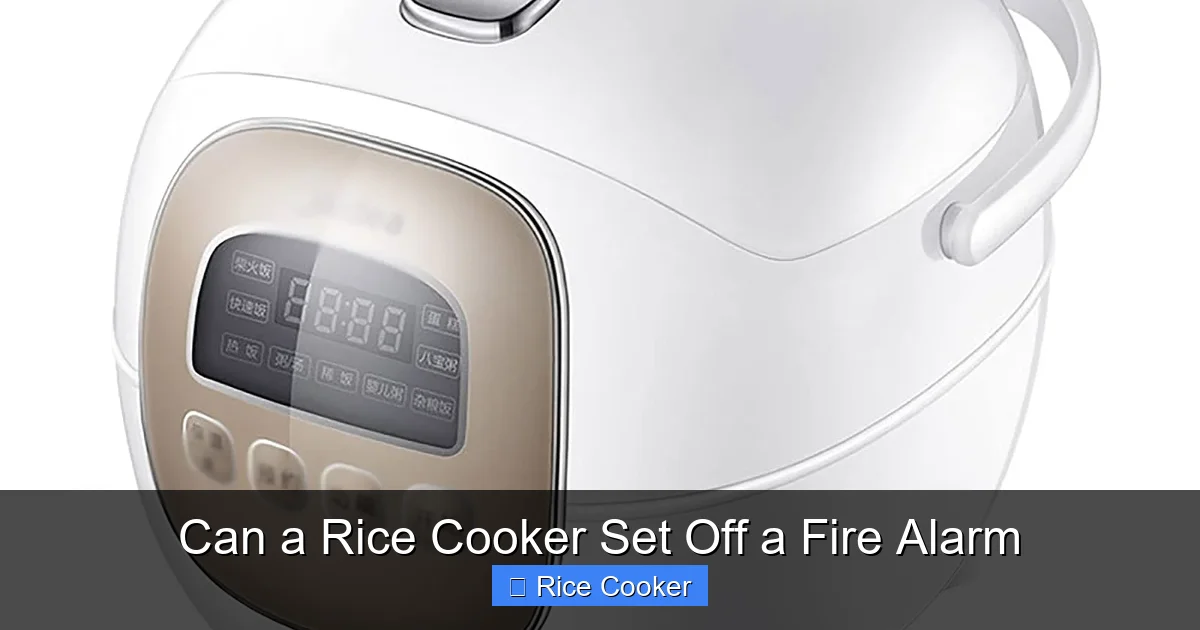
Visual guide about Can a Rice Cooker Set Off a Fire Alarm
Image source: m.media-amazon.com
Fire alarms come in two main types: ionization and photoelectric. Each responds to different kinds of fires and airborne particles.
Ionization vs. Photoelectric Detectors
Ionization smoke alarms use a small amount of radioactive material to ionize the air inside a chamber. When smoke enters, it disrupts the electrical current, triggering the alarm. These are great for detecting fast-flaming fires—like grease fires in stovetops—but they’re less sensitive to smoldering fires.
Photoelectric alarms, on the other hand, use a light beam and a sensor. When smoke scatters the light, the sensor detects the change and sounds the alarm. These are better at catching slow-burning or smoldering fires—common in kitchens when food burns or overcooks.
Most modern homes now use dual-sensor alarms that combine both technologies. That means they’re more likely to catch a wider range of hazards—including the kind of smoke or steam that might come from a rice cooker.
What Triggers a Fire Alarm?
Fire alarms don’t need open flames to sound. They detect:
– Smoke particles (from burning food)
– Steam or condensation (especially in humid environments)
– Cooking oils and vapors
– Dust or debris stirred into the air
Even something as innocent as boiling rice can release enough moisture to affect certain types of alarms—especially if the kitchen is small or poorly ventilated.
Now, here’s the key: most rice cookers don’t produce smoke or flames. But under certain conditions—like using the wrong liquid ratio, overfilling, or cooking certain types of rice—they can generate enough steam or even slight smoke to confuse a sensitive alarm.
That doesn’t mean your rice cooker is faulty. It just means the alarm is doing its job—detecting potential hazards before they become serious.
How Rice Cookers Work: From Water to Warm Rice
Before we talk about alarms, let’s understand how rice cookers operate. Knowing the process helps explain why they might trigger sensors.
The Basic Cooking Cycle
A typical rice cooker follows these steps:
1. **Add water and rice** – The ideal ratio is usually 1:1.5 (rice to water), though this varies by grain.
2. **Heat phase** – The inner pot heats up, turning water into steam.
3. **Boiling** – Once the water boils, steam builds pressure.
4. **Switch to “keep warm”** – Most models automatically switch modes once cooking is complete.
5. **Maintain temperature** – A thermostat keeps the rice warm without boiling.
During this cycle, steam is constantly released through small vents or the lid. This is normal—and necessary. Without steam release, pressure would build and damage the appliance.
Why Steam Might Trigger an Alarm
Steam itself isn’t a problem. But if the kitchen is small, enclosed, or has poor airflow, steam can linger and mix with other particles. In some cases, especially with high-humidity environments or older alarms, this can be misinterpreted as smoke.
Additionally, if you’re cooking brown rice or adding ingredients like eggs or meat, the mixture can produce more vapor or even small amounts of smoke if overcooked.
It’s rare, but it happens. And when it does, a sensitive photoelectric alarm might go off.
Common Scenarios Where Rice Cookers Trigger Alarms
Let’s look at real-life situations where a rice cooker might cause an alarm to sound—even when everything’s working correctly.
Using Brown Rice
Brown rice takes longer to cook and produces more steam than white rice. Its bran layer absorbs moisture differently, leading to higher vapor output. If you’ve ever cooked a large batch, you’ve probably seen thick clouds of steam pouring from the lid.
In a small apartment or condo with tight HVAC systems, that steam can travel toward the ceiling where the alarm sits. Over time, it might accumulate enough moisture or tiny food particles to trigger a false alarm.
Cooking with Oil or Fats
Some recipes call for oil or butter in the rice cooker—especially Asian-style dishes like fried rice or congee. When oil heats up, it can smoke slightly, especially if the temperature gets too high.
While modern rice cookers have temperature controls to prevent this, older models or those used improperly might allow oil to overheat. That smoke, even faint, can be enough for a sensitive alarm to react.
Overfilling the Cooker
Manufacturers specify maximum rice and water levels for a reason. Overfilling can block steam vents, trap moisture, and even cause the rice to spill into the heating element.
When rice spills, it can create smoke when reheated. Plus, excess moisture can lead to mold or bacterial growth, which might produce odors that confuse sensors.
Using the Wrong Water Ratio
Too little water leads to dry, burnt rice. Too much causes mushy, overflowing grains. Both extremes can alter how steam behaves. Burnt rice emits smoke; wet rice creates dense steam plumes.
If you’ve ever left rice on the “warm” setting too long, you might notice a burnt smell—this is another source of alarm-triggering particles.
Malfunctioning or Older Models
Like any appliance, rice cookers can develop faults. A damaged thermostat might keep the heating element on past the cooking phase. Cracked pots or warped lids can leak steam unpredictably.
In rare cases, electrical issues could lead to overheating—though this is uncommon due to built-in safety mechanisms.
Safety Features in Modern Rice Cookers
The good news? Today’s rice cookers are safer than ever. Most include multiple layers of protection to prevent fires and malfunctions.
Automatic Shut-Off
Once the rice is cooked, the cooker switches to “keep warm” mode. After a few hours, it shuts off entirely. This prevents overcooking and reduces fire risk.
Temperature Sensors
These monitor internal heat and adjust power accordingly. If the temperature gets too high, the sensor cuts power to prevent damage.
Non-Stick Coating
High-quality non-stick surfaces reduce the chance of rice sticking and burning—a major source of smoke.
Lid Locks and Seals
Proper sealing ensures steam stays contained while allowing controlled venting. This prevents pressure buildup and accidental spills.
Indicator Lights and Sounds
Many models alert you when cooking is done or if there’s an issue. This lets you intervene before problems escalate.
Despite these safeguards, user behavior still plays a big role. Even the safest appliance can behave unexpectedly if misused.
Practical Tips to Prevent False Alarms
You don’t have to give up rice cookers—or your peace of mind. Here’s how to enjoy them without waking the neighborhood.
Ventilate Your Kitchen
Open a window or turn on the exhaust fan when cooking. Good airflow disperses steam and prevents particle buildup near the ceiling.
Avoid Overfilling
Follow the manufacturer’s guidelines for rice and water ratios. Use measuring cups for accuracy.
Clean Regularly
Food residue can clog vents or create odors. Wipe the inside after each use and deep-clean monthly.
Check the Lid Seal
A cracked or warped lid can leak steam. Replace it if needed.
Use the Right Rice Type
White rice produces less steam than brown or wild rice. Choose based on your setup and alarm type.
Test Your Alarm
Press the test button monthly to ensure it’s functioning. Consider replacing alarms older than 10 years.
Keep a Safe Distance
Don’t place the rice cooker directly under the alarm. Leave at least 6 feet of clearance.
What to Do When Your Alarm Goes Off
If your fire alarm activates due to your rice cooker:
1. **Stay calm.** Turn off the cooker.
2. **Check for smoke or fire.** If none, it’s likely steam or minor particles.
3. **Open windows and fans.** Ventilate the room.
4. **Reset the alarm.** Press the button until it stops.
5. **Inspect the cooker.** Look for spills, burnt spots, or unusual smells.
6. **Review your settings.** Were you within safe limits?
If the alarm keeps going off, investigate further. There could be a deeper issue—like a wiring fault or sensor malfunction.
When to Call a Professional
Contact an electrician or appliance technician if you notice:
– Sparks or burning smells from the cooker
– Frequent overheating
– Inconsistent cooking performance
– Damage to the cord or plug
Never ignore warning signs. Safety always comes first.
Final Thoughts: Rice Cookers Are Safe—With Care
So, can a rice cooker set off a fire alarm? Yes—but not because it’s dangerous. It’s because it interacts with its environment in ways that can confuse sensitive sensors.
The vast majority of rice cookers won’t cause alarms if used properly. But in tight spaces, with certain rice types, or during malfunctions, steam, smoke, or particles can trigger a response.
By understanding how both your appliance and your alarm work, you can prevent false alarms and cook with confidence.
Remember: a sounding alarm doesn’t always mean danger. Sometimes, it just means your rice cooker is doing exactly what it’s supposed to do—cooking your dinner.
Stay safe, stay smart, and keep on cooking.
Frequently Asked Questions
Can a rice cooker actually start a fire?
While extremely rare, a rice cooker can start a fire if used improperly—such as overfilling, using damaged parts, or leaving it unattended with oil. Most modern models have safety features like automatic shut-off and temperature control to prevent this. Following the manufacturer’s instructions greatly reduces any risk.
Why do smoke detectors go off when I cook rice?
Smoke detectors often go off due to steam, condensation, or tiny food particles released during cooking. Rice cookers produce significant steam, especially with brown rice or when overfilled. In small, enclosed spaces, this can accumulate near the detector and trigger it—particularly photoelectric models sensitive to smoldering particles.
Are newer rice cookers less likely to trigger alarms?
Yes, newer rice cookers typically have improved safety features like better sealing, automatic shut-off, and precise temperature control. These reduce steam leaks and prevent overheating, lowering the chance of triggering alarms. However, user habits—like overfilling or poor ventilation—still play a major role.
Should I unplug my rice cooker when not in use?
Unplugging isn’t strictly necessary if the cooker is working properly and has automatic shut-off. But unplugging when not in use adds an extra layer of safety, especially during power outages or if you’re away for long periods. It also prevents any rare electrical issues from developing.
Can steam from a rice cooker damage my fire alarm?
Repeated exposure to high humidity or steam won’t permanently damage modern fire alarms. However, it can reduce their lifespan or cause false alarms over time. Keeping the area well-ventilated helps protect both the appliance and the detector.
How far should a rice cooker be from a smoke detector?
It’s best to place the rice cooker at least 6 feet away from the ceiling where the smoke detector is mounted. This distance helps prevent direct exposure to steam or particles. If space is limited, consider using a different cooking method for rice or upgrading to a more advanced detector with better filtering.