
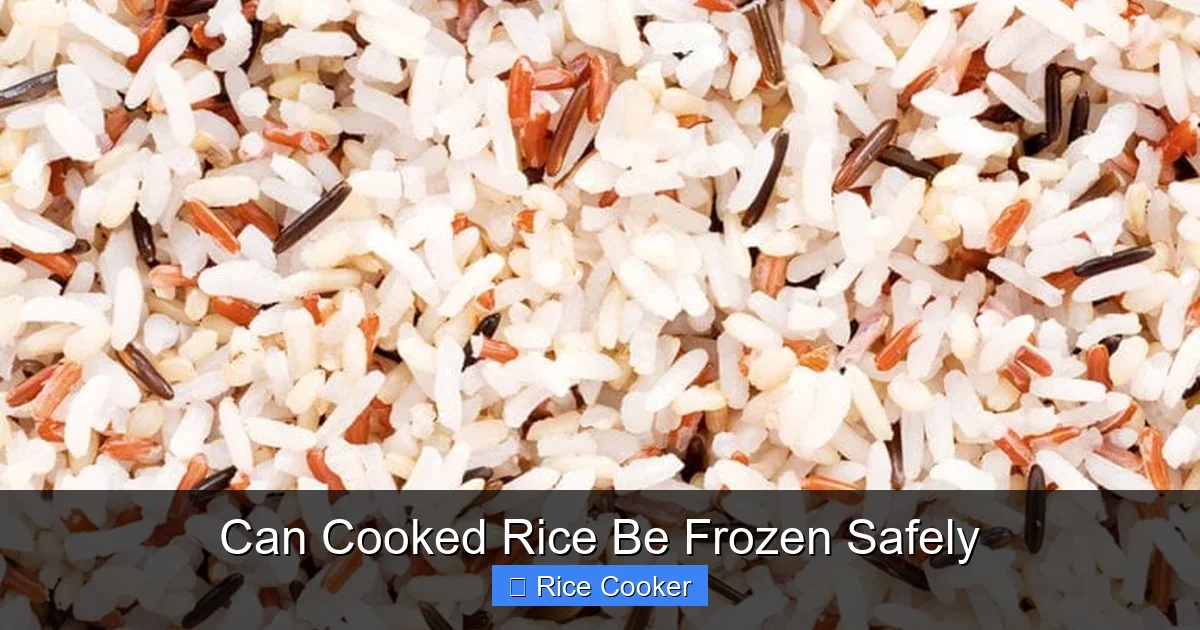
Cooked rice can absolutely be frozen safely when stored properly in airtight containers or freezer bags. This method preserves nutrients, reduces food waste, and saves time during busy weeks. With the right steps—cooling quickly, using shallow containers, and labeling clearly—you’ll enjoy fresh-tasting rice every time you reheat it.
Key Takeaways
- Freezing cooked rice is safe and effective: When done correctly, freezing extends shelf life up to 6 months while maintaining quality.
- Proper cooling prevents bacterial growth: Cool rice quickly within two hours of cooking to avoid temperature danger zone risks.
- Use airtight containers or freezer-safe bags: This minimizes exposure to air and prevents freezer burn and flavor transfer.
- Label with date and contents: Clear labeling helps track freshness and ensures you use older batches first.
- Thaw safely in the fridge or microwave: Avoid thawing at room temperature to maintain safety and texture.
- Reheat thoroughly until steaming hot: Always reheat to 165°F (74°C) to kill any potential bacteria like Bacillus cereus.
- Meal prepping becomes effortless: Freezing portions makes it easy to grab-and-go meals without sacrificing taste or nutrition.
[FEATURED_IMAGE_PLACEHOLDER]
## Can Cooked Rice Be Frozen Safely?
Have you ever found yourself with too much perfectly cooked rice after a big dinner? Or maybe you just want to prepare meals ahead of time but worry about leftovers going bad? If so, you’re not alone. Many home cooks face this dilemma, especially when trying to reduce food waste or simplify their weekly meal plans. The good news? Yes—cooked rice can be frozen safely, and doing it right means you’ll still get delicious, fluffy results when you reheat it.
But before you toss that leftover bowl into the freezer, there are some important details to keep in mind. Freezing changes the texture of rice slightly, and improper handling can lead to sogginess, ice crystals, or even foodborne illness if bacteria multiply during storage or thawing. So let’s dive into everything you need to know: from why freezing works, to step-by-step instructions, best practices, common mistakes to avoid, and creative ways to use your frozen rice later.
Whether you’re using a rice cooker, stovetop, or Instant Pot, these tips apply across all methods. Plus, we’ll cover how long rice stays good in the freezer, what kinds freeze best (white vs. brown, basmati, jasmine, etc.), and how to revive frozen rice so it tastes almost as good as fresh. By the end of this article, you’ll feel confident turning everyday leftovers into future meals—without any guesswork.
—
## Why You Should Consider Freezing Cooked Rice
Cooked rice is incredibly versatile—it pairs with stir-fries, salads, soups, casseroles, and more. But its short shelf life in the refrigerator (usually only 3–4 days) often leads to wasted food. According to the USDA, Americans throw away nearly 30% of all edible food each year, and grains like rice contribute significantly to that statistic. Freezing cooked rice offers a simple yet powerful solution.
When stored properly, frozen rice retains most of its nutritional value, including complex carbohydrates, fiber (especially in brown rice), and small amounts of protein and B vitamins. It also cuts down on kitchen clutter and saves time—no need to cook a new batch every time you crave fried rice or rice bowls. For families, meal preppers, or anyone who cooks large quantities, freezing is a game-changer.
Another benefit? Consistency. Rice cooked from scratch can vary in texture depending on water ratio, heat level, or resting time. But frozen rice allows you to standardize portion sizes and ensure uniform results every time you defrost and reheat it.
Of course, not all rice is created equal when it comes to freezing. While most types—white, brown, basmati, jasmine, wild—can be frozen successfully, some may lose ideal texture faster than others. We’ll explore those differences below.
—
## How Long Can You Keep Cooked Rice in the Freezer?
The short answer: up to 6 months. However, quality gradually declines over time due to freezer burn, oxidation, and moisture loss. Most experts agree that rice maintains peak flavor and texture for about 1–3 months when frozen properly.
After three months, you might notice subtle changes:
– Slight dryness or toughness in texture
– Loss of aroma and freshness
– Possible development of off-flavors from prolonged exposure
That said, rice is generally safe to eat beyond six months if kept at 0°F (-18°C) or colder. Just remember: “Safe” doesn’t always mean “Tasty.” Always trust your senses—if it smells off, feels gritty, or has visible mold, discard it immediately.
For optimal results, label your containers with the date and contents. Use a marker or waterproof label; avoid tape that can fall off. Also consider dividing larger batches into smaller portions. Why? Because once you open a container to take out one serving, the rest gets exposed to air again—which increases the risk of freezer burn.
—
## Best Practices for Freezing Cooked Rice
Follow these steps to freeze cooked rice safely and effectively:
### 1. Cool Quickly Within Two Hours
This is critical. Bacteria grow rapidly between 40°F and 140°F (the “danger zone”). To prevent spoilage or contamination by *Bacillus cereus* (a common cause of food poisoning linked to improperly cooled rice), cool your rice quickly.
Here’s how:
– Spread it in a thin layer on a baking sheet or shallow dish.
– Cover loosely with plastic wrap or foil to prevent drying.
– Refrigerate or place in an ice bath (mix equal parts cold water and ice cubes).
– Stir occasionally to speed up heat transfer.
Once cooled to room temperature (within 2 hours), proceed to packaging.
### 2. Portion Into Shallow Containers
Use freezer-safe containers with tight lids or heavy-duty resealable plastic bags. Fill them no more than halfway—rice expands as it freezes, so leave headspace for expansion.
Shallow containers freeze faster and thaw more evenly. Think quart-sized Ziploc bags or small glass jars instead of deep tubs.
### 3. Press Out Air Before Sealing
If using bags, squeeze out as much air as possible before sealing. Extra air = freezer burn. For rigid containers, fill to the recommended fill line (usually 1–2 inches below the rim).
### 4. Label and Date Everything
Write clearly: “White Rice – 1 cup – Oct 25” or “Brown Rice – 2 cups – Nov 1.” Include quantity so you don’t accidentally double-use.
### 5. Store Flat in the Freezer
Lay bags flat or stack containers neatly. This maximizes freezer space and allows for quicker thawing.
—
## What Types of Rice Freeze Best?
Most common rices freeze well, but performance varies slightly:
– White rice (jasmine, basmati, long-grain): Excellent freezer candidates. Maintains fluffiness well.
– Brown rice: Can become slightly chewier after thawing, but still perfectly usable in dishes like stir-fries or casseroles where texture isn’t critical.
– Wild rice: Has a unique texture and holds up decently, though it may darken slightly.
– Instant/packaged rice: Usually already precooked and dried—not ideal for refreezing unless intended for specific recipes (like risotto).
Avoid freezing rice mixed with creamy sauces, dairy, or mayonnaise-based dressings—they separate or spoil faster.
—
## Thawing and Reheating Frozen Rice Safely
The key to great frozen rice is proper thawing and reheating:
### Thaw in the Fridge (Recommended)
Transfer from freezer to refrigerator 12–24 hours before use. This slow method keeps temperatures out of the danger zone and preserves texture better than microwave thawing.
### Microwave Thawing (Quick Option)
Place rice in a microwave-safe dish, cover with vented plastic wrap or a damp paper towel, then microwave on 50% power in 30-second intervals, stirring between bursts. Stop when warm throughout.
Never thaw rice at room temperature—this invites bacterial growth.
### Reheat Thoroughly
Always reheat until steaming hot (165°F internally). Options include:
– Microwave: Add a splash of water, cover, and heat 1–2 minutes per cup.
– Stovetop: Place in saucepan with a teaspoon of butter or oil, cover, and simmer while stirring occasionally.
– Oven: Spread on baking sheet, cover with foil, bake at 350°F (175°C) for 10–15 minutes, flipping halfway.
Adding liquid helps combat dryness. A tablespoon of broth or water per cup usually suffices.
—
## Common Mistakes to Avoid
Even experienced cooks make errors when freezing rice. Steer clear of these pitfalls:
– Leaving rice out too long: Don’t let it sit overnight before freezing.
– Using non-freezer-safe containers: Regular Tupperware may warp or leach chemicals.
– Overfilling bags/containers: Causes cracking and uneven freezing.
– Not labeling: Leads to confusion and premature disposal.
– Thawing incorrectly: Room-temperature thawing is unsafe.
– Reheating without adding moisture: Results in gummy or dry rice.
Also, avoid refreezing rice that’s already been thawed and partially cooked—it increases bacterial risk.
—
## Creative Ways to Use Frozen Rice
Don’t just stick to plain reheated rice! Frozen rice shines in these applications:
– Fried rice: Heat oil, add veggies, scramble in eggs, then add rice and seasonings.
– Rice pudding or baked rice puddings: Mix with milk, sugar, cinnamon, and raisins before baking.
– Risotto: Simmer slowly with broth for creamy perfection.
– Stuffed peppers or bellies: Combine with ground meat, beans, and spices.
– Pilafs or grain bowls: Toast in butter with onions and herbs before adding liquids.
– Bread stuffing or dumpling fillings: Use in savory bakes or steamed buns.
These methods mask minor texture changes from freezing and turn leftover rice into restaurant-quality dishes.
—
## Nutritional Impact of Freezing Cooked Rice
Does freezing destroy nutrients? Not really—but yes, some changes occur over time.
Studies show that freezing preserves water-soluble vitamins (like vitamin C and B-complex) better than refrigeration. That’s because low temperatures slow degradation reactions. Fiber and minerals remain largely intact regardless.
However, repeated freeze-thaw cycles can break down cell walls slightly, making nutrients marginally easier to absorb—though this effect is negligible for most people.
Bottom line: Frozen rice is nutritionally comparable to freshly cooked rice, especially when consumed within 3 months.
—
## Comparing Freezing vs. Refrigeration
| Factor | Refrigerated Rice | Frozen Rice |
|———————-|————————-|—————————-|
| Shelf Life | 3–4 days | Up to 6 months |
| Texture Preservation | Good | Fair (may soften slightly) |
| Convenience | Immediate use | Requires thawing/reheating |
| Nutrient Retention | Declines after day 3 | Stable for months |
| Waste Reduction | Limited | High |
Freezing wins for bulk storage, meal prep, and minimizing spoilage.
—
## Special Considerations: Brown Rice vs. White Rice
Brown rice contains bran layers rich in fiber and oils that oxidize over time—even in the freezer. This can lead to rancidity if stored improperly.
To maximize brown rice quality:
– Freeze in airtight, oxygen-barrier bags.
– Minimize opening the container.
– Consume within 2–3 months.
White rice, being refined, resists oxidation better and typically lasts 4–6 months frozen.
Both types freeze well, but white rice edges out slightly in texture preservation.
—
## Final Thoughts
Yes—cooked rice can be frozen safely, and with today’s knowledge, you’re fully equipped to do it right. Whether you’re batch-cooking for the week, preserving holiday leftovers, or simply reducing kitchen waste, freezing is a smart, science-backed strategy.
Remember: Speed matters when cooling; airtight matters when storing; labeling matters when organizing; and reheating matters when enjoying. By following these guidelines, you’ll transform ordinary leftovers into convenient, tasty meals—every single time.
So next time you have extra rice, don’t hesitate. Grab a bag, pop it in the freezer, and thank yourself later when you pull out perfectly usable rice for dinner. Your future self will thank you!
—
How long does frozen rice last?
Frozen rice is safe for up to 6 months, though best quality lasts 1–3 months. After that, texture and flavor may decline, but it remains edible if stored properly at 0°F or lower.
Can I freeze rice from a rice cooker?
Absolutely. Whether your rice cooker makes fluffy white rice or tender brown rice, just cool it quickly, portion it, and store in freezer-safe containers before freezing.
Is it safe to reheat frozen rice in the microwave?
Yes, but always add a little water or broth and cover with a damp paper towel to prevent drying. Microwave in short bursts, stirring in between, until steaming hot throughout.
Why does my frozen rice get mushy?
Mushiness usually results from improper cooling (letting rice sit too long before freezing), overfilling containers, or insufficient reheating. Ensure rapid cooling and add liquid when reheating.
Can I freeze rice with sauce or toppings?
Only if the sauce is water-based and stable in the freezer (like tomato sauce or broth). Dairy-based sauces (creamy, mayo-based) should be avoided—they separate and spoil faster.
Does freezing change the taste of rice?
Slightly—after several months, you might notice reduced aroma or mild dryness. However, in cooked dishes like fried rice or casseroles, the difference is minimal and often unnoticeable.
This is a comprehensive guide about can cooked rice be frozen safely.
Key Takeaways
- Understanding can cooked rice be frozen safely: Provides essential knowledge
Frequently Asked Questions
What is can cooked rice be frozen safely?
can cooked rice be frozen safely is an important topic with many practical applications.