
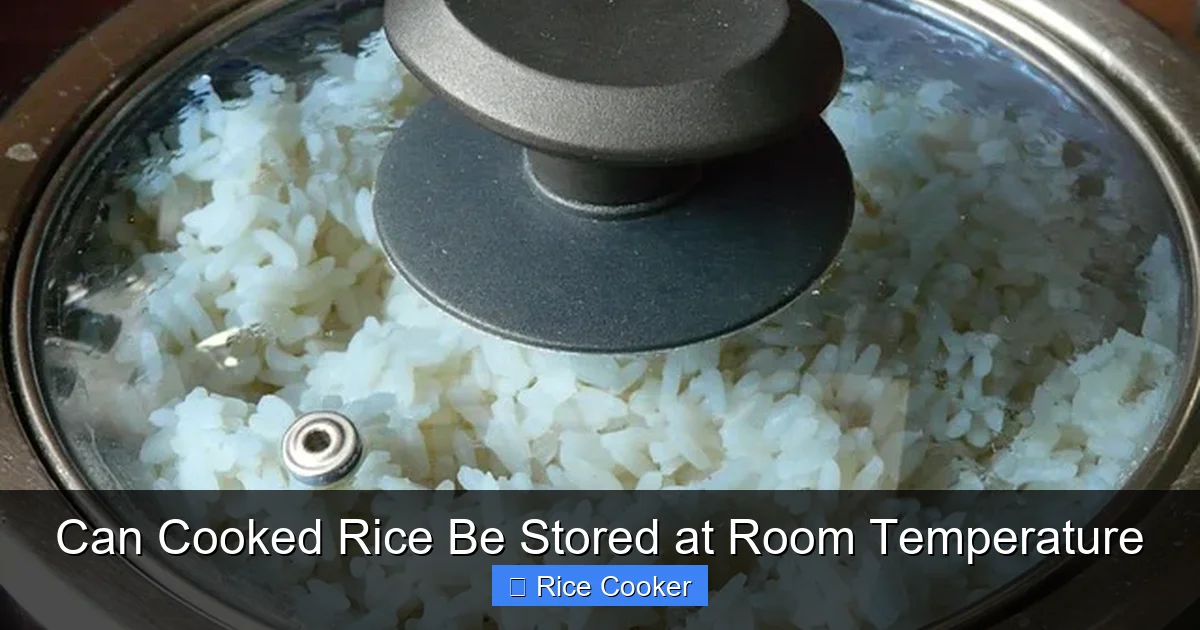
Can cooked rice be stored at room temperature? No—leaving cooked rice out for more than two hours increases the risk of harmful bacteria growth. To stay safe, always refrigerate cooked rice within one hour of cooking and consume it within 3–4 days. Proper storage is key to maintaining flavor, texture, and food safety when using your rice cooker.
Key Takeaways
- Room temperature storage is unsafe: Cooked rice left out for over two hours can harbor Bacillus cereus, a dangerous bacteria that causes food poisoning.
- Refrigeration is essential: Store cooked rice in an airtight container and refrigerate within one hour to slow bacterial growth.
- Shelf life in the fridge: Refrigerated cooked rice is safe for up to 3–4 days when stored properly.
- Reheating matters: Always reheat rice to at least 165°F (74°C) to kill any potential bacteria.
- Freezing extends shelf life: Frozen cooked rice can last up to 6 months if sealed tightly.
- Use a rice cooker wisely: Many modern rice cookers have keep-warm functions, but they’re not designed for long-term storage.
- Signs of spoilage: Discard rice if it smells off, has an unusual texture, or shows mold—even if it’s still cold.
[FEATURED_IMAGE_PLACEHOLDER]
Introduction: The Rice Dilemma – Can Cooked Rice Be Stored at Room Temperature?
Picture this: You just finished making a big pot of fluffy jasmine rice with your favorite rice cooker. The aroma fills the kitchen, and you’re excited to enjoy it with dinner. But what happens after? Do you leave it on the counter overnight? Put it back in the rice cooker’s keep-warm setting? Or rush it into the fridge?
These are common questions many home cooks face—especially those who rely on their rice cooker for daily meals. After all, rice is a staple in diets around the world, from Asian stir-fries to American fried rice. But behind its innocent appearance lies a hidden danger: bacteria.
You might think that since rice is cooked, it’s safe. But here’s the catch—cooking doesn’t always kill every microbe. In fact, certain bacteria, like *Bacillus cereus*, can survive high heat and produce spores that thrive in warm, moist environments. And that’s where the problem begins.
So, can cooked rice be stored at room temperature? The short answer is no. Leaving cooked rice out at room temperature—even for just a few hours—can create ideal conditions for bacteria to multiply rapidly. This increases the risk of foodborne illness, which can cause symptoms like nausea, vomiting, diarrhea, and stomach cramps.
In this comprehensive guide, we’ll explore everything you need to know about storing cooked rice safely. Whether you’re using a traditional rice cooker, an electric model with advanced features, or even cooking on the stovetop, these principles apply. We’ll cover how long rice can sit at room temperature, the science behind bacterial growth, and practical tips to keep your rice safe and delicious.
By the end of this article, you’ll know exactly how to handle leftover rice like a pro—so you can enjoy every bite without worry.
The Science Behind Bacterial Growth in Cooked Rice
Understanding why cooked rice shouldn’t be left at room temperature starts with biology. Let’s break it down.
When rice is cooked, its starches gelatinize, giving it that soft, tender texture we love. But during this process, tiny spores from bacteria like *Bacillus cereus* can become active. These spores are tough—they can survive boiling temperatures and don’t die easily.
Once the rice cools, especially if it sits out for a while, the environment becomes perfect for germination. Warmth, moisture, and time are the three ingredients bacteria need to grow. Room temperature (around 70–80°F or 21–27°C) is ideal for this kind of activity.
Here’s how it works:
– After cooking, rice begins to cool.
– If left uncovered or in a warm place, moisture evaporates slowly, creating a damp surface.
– Within two hours, *Bacillus cereus* can start reproducing.
– In just six hours, the population can reach dangerous levels—enough to cause food poisoning.
The toxins produced by these bacteria aren’t destroyed by reheating. So even if you boil the rice again, you won’t eliminate the risk. That’s why proper storage is so critical.
Why Room Temperature Is Especially Dangerous
Most people don’t realize that the danger zone for food—the temperature range where bacteria multiply fastest—is between 40°F and 140°F (4°C and 60°C). Room temperature falls squarely within this range.
When you leave cooked rice out:
– It cools slowly, staying in the danger zone for longer.
– Condensation may form inside the container or pot, adding extra moisture.
– Stirring or serving the rice exposes it to air, which can introduce more bacteria.
Even if the rice looks and smells fine, harmful bacteria may already be present. That’s why relying on your senses isn’t enough. Safety must come first.
How Long Can Cooked Rice Sit at Room Temperature?
Now that we understand the risks, let’s talk timing.
According to the U.S. Department of Agriculture (USDA), perishable foods like cooked rice should not be left out at room temperature for more than two hours. If the ambient temperature is above 90°F (32°C), this drops to just one hour.
That means if you’ve just finished cooking a pot of rice and plan to eat it later today, it’s safest to refrigerate it within that window. Even if you’re eating it right away, consider how long it’ll sit before consumption.
For example:
– If you cook rice at 6 p.m. and eat it at 9 p.m., that’s three hours at room temperature—too long.
– If you serve rice immediately but plan to store leftovers, transfer them to the fridge within one hour.
These guidelines aren’t arbitrary—they’re based on decades of food safety research.
What About the Rice Cooker’s Keep-Warm Feature?
Many modern rice cookers come with a “keep-warm” function that maintains the rice at around 170°F (77°C). At first glance, this might seem safe. After all, it’s hot!
But here’s the issue: the keep-warm setting isn’t meant for long-term storage. Most models cycle the heating element on and off, which can lead to temperature fluctuations. Sometimes the rice cools slightly between cycles, dipping into the danger zone.
Plus, prolonged exposure to warmth encourages starch retrogradation—a process that makes rice dry and hard. Over time, this can also promote bacterial growth, especially if moisture collects.
So while the keep-warm feature is convenient for short periods (like waiting for guests to arrive), it’s not a substitute for refrigeration. Use it only for immediate service, not storage.
Safe Storage Practices for Cooked Rice
If room temperature is unsafe, what’s the best way to store cooked rice?
The answer is simple: refrigerate promptly and store properly.
Here’s how to do it right:
Step 1: Cool Quickly (Optional but Helpful)
While you don’t need to rush, cooling the rice slightly before refrigerating helps speed up the process. You can spread it in shallow containers or divide it into smaller portions. This increases the surface area, allowing heat to escape faster.
Avoid using a blender or food processor to cool rice—it can introduce air and bacteria. Just transfer it carefully into clean, airtight containers.
Step 2: Use Airtight Containers
Plastic containers with tight-fitting lids are ideal. Glass jars work well too, especially if you’re reheating them in the microwave.
Never store rice in open bowls, uncovered pots, or paper bags. Exposure to air invites contamination.
Step 3: Label and Date
Write the date on the container. This helps you track how long it’s been stored and ensures you use it within the recommended timeframe.
Step 4: Refrigerate Immediately
Place the container in the refrigerator as soon as possible—ideally within one hour of cooking. The colder the better!
Step 5: Reheat Thoroughly
When ready to eat, reheat rice to at least 165°F (74°C). Microwave in short bursts, stirring between each, or steam it gently on the stove. Adding a splash of water can help restore moisture.
Never reheat rice more than once. Each cycle raises the risk of bacterial regrowth.
How Long Does Cooked Rice Last in the Fridge?
Refrigerated cooked rice is generally safe for 3 to 4 days. Some sources say up to 5 days, but sticking to 4 gives you a safer margin.
After that, the rice may begin to lose quality—texture becomes dry, flavor fades, and there’s a higher chance of spoilage.
To maximize freshness:
– Don’t mix old rice with new batches.
– Store in single-serving portions for easier reheating.
– Avoid opening and closing the container repeatedly, which introduces air and moisture.
If you’re unsure whether rice is still good, follow the “smell test”—but remember, harmful bacteria often don’t change the appearance or smell of food.
Signs Your Rice Has Gone Bad
Even with proper storage, rice can spoil. Watch for these red flags:
– Unpleasant odor: Sour, foul, or ammonia-like smells indicate bacterial growth.
– Mold: White, green, or black fuzzy spots mean discard immediately.
– Texture changes: Slimy or overly sticky rice is a warning sign.
– Discoloration: Dark patches or grayish hues suggest contamination.
If you see any of these, throw the rice away—no exceptions.
Freezing Cooked Rice: A Game-Changer for Meal Prep
Want to extend the shelf life of cooked rice even further? Try freezing it.
Frozen rice can last up to 6 months when stored correctly. This is especially useful for meal prep enthusiasts, busy families, or anyone who likes to cook in bulk.
How to Freeze Cooked Rice Properly
1. Let the rice cool completely at room temperature (about 30–60 minutes).
2. Divide into portion-sized servings using freezer-safe containers or resealable plastic bags.
3. Remove as much air as possible from bags to prevent freezer burn.
4. Label with the date and contents.
5. Place in the freezer.
Thaw frozen rice in the refrigerator overnight or reheat directly from frozen (adding a little water if needed).
Benefits of Freezing Rice
– Reduces food waste.
– Saves time during weeknight dinners.
– Maintains nutritional value when handled correctly.
– Ideal for batch cooking and storing leftovers.
Just remember: frozen rice may have a slightly softer texture after thawing, so adjust seasoning when reheating.
Practical Tips for Everyday Rice Handling
Storing rice safely doesn’t have to be complicated. With a few simple habits, you can protect yourself and your family.
Tip 1: Plan Ahead
Cook only as much rice as you’ll eat within 24–48 hours. Leftover rice from takeout or restaurants should be refrigerated immediately—don’t wait.
Tip 2: Use Clean Utensils
Always use clean spoons or chopsticks when serving rice. Never dip dirty utensils into the container.
Tip 3: Separate Servings Early
Instead of scooping multiple times from one pot, portion the rice into individual containers right after cooking. This minimizes repeated exposure.
Tip 4: Invest in Quality Containers
Look for BPA-free, leak-proof containers with secure seals. Mason jars with snap lids are another great option.
Tip 5: Educate Household Members
Make sure everyone in your home knows the rules: rice goes straight into the fridge unless eaten immediately.
Common Misconceptions About Cooked Rice Storage
There are plenty of myths floating around about rice storage. Let’s clear them up.
Myth 1: “If I reheat it, it’s automatically safe.”
False. As mentioned earlier, reheating doesn’t destroy *Bacillus cereus* toxins. Improper storage before reheating is the root problem.
Myth 2: “Rice from sushi is fine because it’s cold.”
Not necessarily. While raw rice used in sushi is rinsed and cooled quickly, leftover cooked rice—even if chilled—can still harbor bacteria if not handled properly.
Myth 3: “All rice cookers are the same.”
Different models have different features. Some have delay timers, others offer steaming functions. But regardless of brand, the storage rules remain the same.
Myth 4: “I’ve eaten room-temperature rice before—nothing happened.”
Lucky you! But one-time incidents don’t prove safety. Foodborne illness can be mild or severe, and some people are more vulnerable than others.
Special Considerations: Rice in Different Cultures
Rice is central to cuisines worldwide, and storage practices vary.
In Japan, leftover rice (*okoge*) is often cooled quickly and served cold or warmed lightly. Restaurants use industrial chillers to bring rice down to safe temperatures fast.
In India, basmati rice is sometimes stored in clay pots with cloth covers—but even then, refrigeration is recommended for leftovers.
Regardless of tradition, modern food safety standards apply. What worked for generations may not be safe today due to increased bacterial strains and food distribution practices.
Takeaway: Tradition vs. Science
While cultural methods have value, they shouldn’t override scientific evidence. When in doubt, prioritize safety over convenience.
Conclusion: Keep It Safe, Keep It Delicious
So, can cooked rice be stored at room temperature? Absolutely not—not safely, anyway.
Leaving cooked rice out creates a breeding ground for dangerous bacteria. Even if it looks and tastes fine, you could still get sick. The good news? With simple steps—refrigerate within one hour, use airtight containers, reheat thoroughly—you can enjoy rice safely for days.
Whether you’re using a basic rice cooker or a high-tech model with smart controls, the principles remain the same. Cooking rice is easy; storing it safely is just as important.
Next time you make a big batch, remember: treat it like any other perishable food. Cool it fast, chill it early, and reheat it well. Your taste buds and tummy will thank you.
And if you want to go further, freeze portions for future meals. It’s a small effort that pays off in convenience and peace of mind.
Stay safe, eat well, and enjoy every grain.
This is a comprehensive guide about can cooked rice be stored at room temperature.
Key Takeaways
- Understanding can cooked rice be stored at room temperature: Provides essential knowledge
Frequently Asked Questions
Can cooked rice be left out overnight?
No, cooked rice should never be left out overnight. Bacteria like Bacillus cereus can grow rapidly at room temperature, leading to food poisoning. Always refrigerate cooked rice within one hour.
Is it safe to eat rice that’s been sitting out for 3 hours?
No, it’s not safe. According to food safety guidelines, cooked rice should not be left out for more than two hours—especially in warm environments. After three hours, the risk of harmful bacteria increases significantly.
Can I leave cooked rice in the rice cooker?
Only for a short time. The keep-warm feature is convenient for immediate service but isn’t designed for storage. Leaving rice in the cooker for extended periods can allow bacteria to grow. Transfer it to the fridge within one hour.
How long does cooked rice last in the fridge?
Cooked rice stays safe in the refrigerator for 3 to 4 days when stored in an airtight container. Beyond that, the risk of spoilage increases, and the quality declines.
Can you reheat rice more than once?
It’s not recommended. Reheating rice more than once increases the chance of bacterial growth. Only reheat what you plan to eat, and ensure it reaches at least 165°F (74°C).
Does freezing rice kill bacteria?
Freezing slows bacterial growth but doesn’t kill existing bacteria or their toxins. However, properly frozen rice can remain safe for up to 6 months. Just reheat thoroughly before eating.