
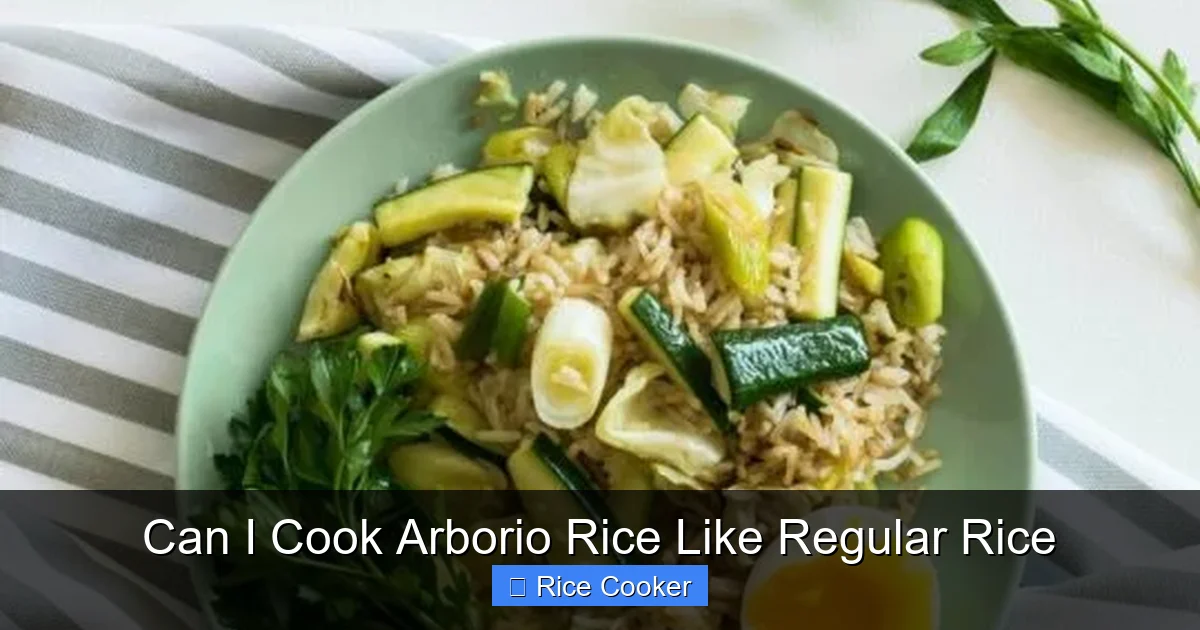
Arborio rice is not a substitute for regular rice when cooked the same way. While both are types of rice, arborio’s high starch content makes it ideal for creamy risottos but results in mushy, overcooked grains if boiled like white or brown rice. You can adjust ratios and techniques to mimic regular rice, but flavor, texture, and purpose differ. Whether you’re using a rice cooker or stovetop, understanding arborio’s unique properties ensures better meals every time.
Key Takeaways
- Arborio rice has a higher starch content than regular rice, which gives risotto its signature creaminess but causes it to become gluey if cooked like long-grain varieties.
- It’s not recommended to cook arborio rice the same way as jasmine or basmati rice. The difference lies in absorption rates and grain structure—arborio swells more and releases more starch during cooking.
- Using a rice cooker for arborio requires adjusting water ratios and settings. Most rice cookers aren’t optimized for risotto-style cooking, so monitoring is essential.
- You can partially cook arborio in a rice cooker and finish on the stove for better control. This hybrid method balances convenience with authentic texture.
- Substituting arborio for regular rice affects dish outcomes significantly. A stir-fry or pilaf will be too sticky, while a creamy risotto may turn out thin and watery.
- Toasting arborio before adding liquid enhances depth of flavor. This step is skipped in regular rice dishes but adds richness to risottos.
- Always taste and adjust seasoning after simmering arborio. Its creamy base absorbs salt differently than firmer rice grains.
📑 Table of Contents
Can I Cook Arborio Rice Like Regular Rice?
Imagine you’ve just bought a bag of Arborio rice—famous for its role in making rich, velvety risotto—and you’re wondering: “Can I cook Arborio rice like regular rice?” Maybe you’re trying to save time, or perhaps you simply want to use up this versatile grain in a stir-fry or casserole. The short answer is no, not exactly—but with some adjustments, you can make it work. Understanding why Arborio behaves differently than your average white or brown rice is the first step toward mastering it.
Arborio rice comes from the same family as other Italian short-grain varieties, but its high amylopectin starch content sets it apart. This starch doesn’t gel easily when heated, which means Arborio releases moisture gradually during cooking instead of absorbing it all at once. That’s perfect for building layers of creaminess in risotto, but disastrous if you’re aiming for fluffy, separate grains like those in a classic pilaf. So while you can technically cook Arborio like regular rice, doing so without modification leads to a disappointing, soupy mess.
In this guide, we’ll walk through everything you need to know about cooking Arborio rice—whether you’re using a rice cooker or stovetop—so you can decide when to embrace its creamy potential and when to swap it out for something more suitable. Let’s dive into the science, tips, and real-world examples that’ll make your next rice dish unforgettable.
The Science Behind Arborio Rice
What Makes Arborio Different?
Arborio rice is classified as a medium-to-short grain variety native to Italy’s Po River Valley. Unlike long-grain rices such as Jasmine or Basmati, which elongate during cooking and remain distinct, short-grain varieties like Arborio expand outward rather than upward. This shape contributes to their ability to retain moisture and bind together—key traits for creating cohesive textures in desserts (like rice pudding) and savory dishes (like risotto).
Visual guide about Can I Cook Arborio Rice Like Regular Rice
Image source: recipeofbangladesh.com
The real magic happens inside each grain. Arborio contains about 70% amylopectin starch, compared to only 20–30% in long-grain types. Amylopectin breaks down into sugars and gums when exposed to heat and agitation, releasing a milky liquid that thickens the cooking environment. In risotto, chefs take advantage of this by continuously stirring, slowly coaxing out starch until the mixture becomes luxuriously smooth. But if you skip the stirring and let Arborio sit unattended—say, in a rice cooker set to “white rice” mode—you’ll end up with clumpy, overcooked grains that lose all structural integrity.
How Does It Compare to Other Rices?
Let’s compare Arborio side-by-side with common rice varieties you might already have in your pantry:
- Jasmine Rice: Long-grain, aromatic, slightly sticky when cooked. Best for Thai curries and fried rice. Not ideal for creamy sauces.
- Basmati Rice: Also long-grain, known for its nutty aroma and separation after cooking. Perfect for biryanis and pilafs.
- Bomba Rice: Another premium Italian short-grain used for risotto, even more absorbent than Arborio.
- Calrose Rice: A U.S.-grown short-grain often used as a substitute for sushi rice; works decently in risottos but lacks complexity.
None of these behave like Arborio under standard boiling conditions. Even though they’re all rice, their starches interact differently with heat and liquid. That’s why recipes call for specific techniques—not just different amounts of water.
Cooking Arborio Rice on the Stovetop
The Classic Risotto Method
If you want authentic results, start by toasting the Arborio in olive oil or butter over medium heat. This step caramelizes the surface proteins, deepening flavor and helping grains adhere to one another during simmering. Stir constantly for about 1 minute until you notice a nutty aroma—don’t rush this!
Next, add your aromatics (onion, garlic, shallot) and cook until translucent. Then begin adding warm broth—about 1 cup at a time—stirring frequently. Each addition should be absorbed before the next goes in. Total cooking time is usually 18–22 minutes, ending with a slow simmer and occasional stirs. The final texture should be al dente: each bite firm yet yielding, with a creamy sauce clinging to the edges.
Tips for Success
- Use warm broth instead of cold—it keeps the cooking process steady and prevents temperature shock.
- Stir constantly but gently; over-stirring can break grains and create excessive starch release.
- Reserve some pasta water (if applicable) to adjust consistency at the end—its starch helps bind ingredients.
- Taste midway to check doneness. Overcooked Arborio loses its bite and turns mushy.
Can You Use a Rice Cooker for Arborio?
Pros and Cons
Rice cookers offer convenience, especially for busy weeknights. But most models aren’t designed for risotto-style cooking. Here’s what to consider:
- Pros: Hands-off operation, consistent heating, automatic shutoff.
- Cons: Lack of manual stirring, variable water absorption, risk of uneven cooking.
Many modern rice cookers have a “risotto” or “porridge” setting—but these still rely on automated timing and pressure, which doesn’t match the gradual, interactive process of traditional risotto.
Best Practices for Rice Cooker Cooking
If you insist on using your rice cooker, follow this hybrid approach:
- Toast Arborio in a skillet with butter/olive oil until golden (5 minutes).
- Add broth and bring to a boil on the stove.
- Pour mixture into the rice cooker, switch to “cook” mode, and let it run.
- After 15 minutes, open the lid and stir vigorously. Continue cooking for another 5–8 minutes, checking every 2 minutes.
This method mimics hand-stirring while leveraging the cooker’s even heat distribution. However, results won’t be as creamy as stovetop risotto—just accept that trade-off for speed.
Water Ratios for Rice Cooker Arborio
Standard ratio: 2 cups liquid per 1 cup dry Arborio. But because Arborio absorbs less than long-grain rice, reduce water slightly if you prefer firmer texture. Always err on the drier side—you can always add more broth, but adding extra water dilutes flavor.
Substituting Arborio for Regular Rice
When It Works
There are limited scenarios where substituting Arborio for regular rice makes sense:
- Rice Pudding: Arborio’s starch creates a naturally thickened custard without constant stirring.
- Sushi Rice Alternatives: When combined with vinegar and sugar, it forms a clingy base for rolls.
- Casseroles: Mixed with vegetables and cheese, it binds well despite stickiness.
When It Fails
Avoid Arborio in dishes requiring separated, fluffy grains:
- Fried rice (clumps together)
- Spanish paella (needs long-grain rice for crisp bottom)
- Curried rice (becomes gluey)
- Vegetable pilaf (loses definition)
If your recipe calls for “rice” and lists no special instructions, it’s safest to use the recommended type. Don’t force Arborio where it doesn’t belong—it ruins the dish.
Health Benefits and Nutritional Profile
Is Arborio Healthier Than Regular Rice?
Arborio is nearly identical nutritionally to other short-grain white rices. Both provide carbohydrates, modest protein, and trace minerals like selenium and magnesium. Fiber content is low since bran is removed during milling. Brown Arborio exists too—it retains more nutrients and fiber, making it a slightly better choice for whole grains.
However, the real health consideration isn’t the grain itself but how it’s prepared. Adding heavy cream, butter, or cheese increases saturated fat and calories. For heart-healthy meals, opt for lighter preparations or pair with roasted vegetables and lean proteins.
Dietary Notes
- Vegan-friendly if made without dairy.
- Gluten-free (naturally).
- Suitable for keto diets in moderation due to carb load.
Storage and Shelf Life
Proper Storage Tips
Keep Arborio in an airtight container away from light, heat, and humidity. Unopened bags last 1–2 years; opened ones stay fresh for 6–12 months. Never store near spices or strong-smelling foods—rice absorbs odors easily.
Signs of Spoilage
- Mold or unusual smell
- Discoloration (gray or green spots)
- Presence of insects or larvae
Discard any rice showing these signs immediately.
Frequently Asked Questions
Can I soak Arborio rice before cooking?
No significant benefit exists. Unlike long-grain rice, soaking Arborio doesn’t reduce cooking time or improve texture. In fact, excess moisture may encourage premature starch release, leading to mushiness.
What’s the best broth to use for risotto?
Chicken, vegetable, or mushroom broth all work well. Avoid fish stock unless making seafood risotto—it can overpower delicate flavors. Homemade broths offer richer taste, but store-bought low-sodium versions are acceptable.
How do I fix overcooked Arborio?
Turn it into a mash or soup! Blend half the rice with remaining broth and seasonings for a quick purée. Or fold it into scrambled eggs, quiches, or gnocchi dough.
Can I freeze leftover risotto?
Yes! Cool completely, portion into containers, and freeze for up to 3 months. Reheat gently on the stove with a splash of broth to restore creaminess.
Is Arborio rice expensive?
Generally yes—it’s considered a specialty ingredient. Prices range from $5–$10 per pound depending on quality. Bulk purchases or generic brands can reduce cost without sacrificing performance.
Does Arborio rice contain arsenic?
Like all rice, short-grain types tend to accumulate more inorganic arsenic than long-grain varieties. Rinse thoroughly and limit intake, especially for children. Alternatives like quinoa or barley offer lower-risk options.
Final Thoughts
So, back to our original question: Can I cook Arborio rice like regular rice? Technically, yes—but only if you understand its unique behavior and are willing to tweak methods. For everyday meals requiring fluffy, separate grains, stick to the recommended rice type. But if you’re craving something creamy, comforting, or indulgent, Arborio shines when treated with care.
Whether you’re whipping up a restaurant-quality risotto or experimenting with new recipes, remember this rule: respect the grain. Toast it, stir it, add broth gradually, and trust the process. And if you’re using a rice cooker? Embrace the hybrid technique—it’s not perfect, but it saves time without sacrificing much.
Now go ahead—grab that bag of Arborio, fire up your stove, and discover why this little grain has earned its reputation as a kitchen superstar.
Frequently Asked Questions
Can I cook Arborio rice like regular rice?
No, not effectively. Arborio rice has a high starch content that makes it ideal for creamy dishes like risotto but results in mushy, overcooked grains if boiled like long-grain rice.
What happens if I cook Arborio rice the same way as regular rice?
It will likely become gluey, overly soft, and lack structure. Regular rice methods don’t account for Arborio’s slow starch release, leading to poor texture and wasted ingredients.
Can I use a rice cooker to cook Arborio rice?
Yes, but with modifications. Most rice cookers aren’t designed for risotto-style cooking. Use a hybrid method: toast the rice on the stove first, then finish in the cooker while stirring occasionally.
How much water should I use for Arborio rice in a rice cooker?
Use a ratio of 2 cups liquid per 1 cup dry Arborio rice. Adjust slightly based on desired consistency—less water yields firmer grains, more gives creamier results.
Is Arborio rice good for making fried rice?
Not ideal. Fried rice requires separate, slightly chewy grains, and Arborio tends to clump together due to its sticky nature. Stick to long-grain varieties like Jasmine or Basmati.
Can I substitute Arborio for white rice in a curry?
Only if you enjoy a thicker, creamier sauce. Otherwise, regular long-grain rice maintains better texture and doesn’t absorb spices as heavily, preserving flavor balance.