

Can you cook brown rice the same as white rice? Not exactly—but with a few simple adjustments, you can use similar methods in your rice cooker. While both grains start with the same process, brown rice takes longer to cook due to its intact bran layer. With the right water ratio and timing, you’ll get fluffy, nutritious results every time. This guide breaks down everything you need to know to cook brown rice like a pro—no confusion, no guesswork.
Key Takeaways
- Brown rice requires more water and longer cooking time than white rice. Because it retains its bran and germ, brown rice absorbs more moisture and needs patience during the cooking process.
- Standard white rice settings on your rice cooker won’t work for brown rice. Most rice cookers have a “white rice” or “quick cook” mode that’s too short for brown rice to fully soften.
- Using the right water-to-rice ratio is essential. A common starting point is 1.5 cups of water per 1 cup of brown rice, but this may vary depending on your cooker and rice type.
- Soaking brown rice before cooking can reduce cooking time and improve texture. A 30-minute soak helps the grains absorb water evenly, leading to more consistent results.
- Storing and reheating brown rice differs from white rice. Brown rice tends to dry out faster, so proper storage and gentle reheating are key to maintaining flavor and texture.
- Different types of brown rice (like jasmine or basmati) may require slight adjustments. Long-grain varieties often cook faster than short-grain or black rice.
- Your rice cooker model matters—check the manual for brown rice settings. Many modern rice cookers now include a dedicated “brown rice” or “whole grain” program.
📑 Table of Contents
- Can I Cook Brown Rice the Same as White Rice?
- The Science Behind Brown vs. White Rice
- Choosing the Right Rice Cooker for Brown Rice
- How to Cook Brown Rice in a Rice Cooker: Step-by-Step Guide
- Water Ratios and Cooking Times for Different Brown Rice Types
- Troubleshooting Common Brown Rice Problems
- Storing and Reheating Brown Rice
- Health Benefits of Brown Rice vs. White Rice
- Tips for Perfect Brown Rice Every Time
- Conclusion: Yes, You Can Cook Brown Rice—But Not Exactly Like White
Can I Cook Brown Rice the Same as White Rice?
If you’re standing in front of your rice cooker, wondering whether you can just pop in some brown rice and hit the same button you use for white rice, you’re not alone. After all, both start with a grain, right? But here’s the truth: while brown and white rice share a common origin, they don’t behave the same way in the kitchen. And when it comes to cooking them in a rice cooker, assuming they’re interchangeable can lead to mushy, undercooked, or dry results.
Brown rice is essentially unpolished rice—meaning it still has the bran and germ layers intact. These layers give it a richer, nuttier flavor and more fiber, but they also slow down the cooking process. White rice, on the other hand, has been stripped of these outer layers, making it softer and quicker to cook. So, while the basic principle of using heat and water remains the same, the execution for brown rice requires a little more attention.
In this article, we’ll walk through everything you need to know about cooking brown rice in a rice cooker. From adjusting water ratios to choosing the right cooker settings, we’ve got you covered. Whether you’re new to brown rice or just looking to refine your technique, let’s dive in and turn you into a brown rice expert—effortlessly.
The Science Behind Brown vs. White Rice
What Makes Brown Rice Different?
To understand why brown rice doesn’t cook the same as white rice, it helps to look at their structure. Brown rice consists of three parts: the bran (the outer protective layer), the germ (the nutrient-rich core), and the endosperm (the starchy middle). White rice has had the bran and germ removed, leaving only the endosperm. This simple difference has big effects on how the rice behaves when cooked.
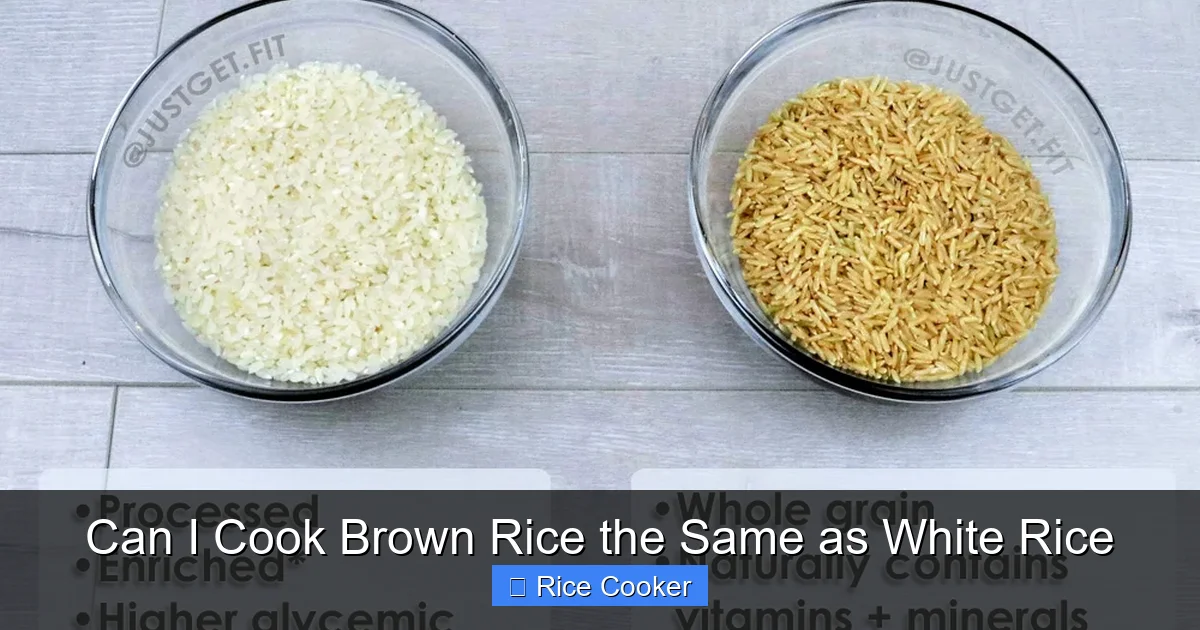
Visual guide about Can I Cook Brown Rice the Same as White Rice
Image source: justget.fit
The bran layer in brown rice acts like a tiny sponge—it absorbs water slowly and holds onto it longer. As a result, brown rice needs more water and more time to fully hydrate and soften. If you treat it like white rice and use less water or a shorter cook cycle, the outer layers might soften, but the center could remain hard and chalky. That’s why using the wrong method leads to inconsistent results.
Why Cooking Time Matters
Cooking time isn’t just about softening the rice—it’s about allowing each grain to reach the right internal temperature and moisture level. Brown rice typically takes 45 to 60 minutes to cook fully, compared to 20 to 30 minutes for white rice. Most standard rice cooker settings are designed with white rice in mind, so switching to brown rice without adjustment often means half-cooked grains.
Modern rice cookers with multiple programs can help bridge this gap. Some models even have a dedicated “brown rice” setting that uses longer cooking times and lower heat to gently cook the grain without overdoing it. But if you’re using an older model or one without specialized settings, you’ll need to take control manually.
Choosing the Right Rice Cooker for Brown Rice
Built-In Brown Rice Settings
If you want the easiest path to perfect brown rice, invest in a rice cooker that has a dedicated brown rice function. These models use longer cook cycles, sometimes with intermittent steaming or warming phases, to ensure the rice cooks evenly from edge to center. They also often have a higher water capacity to accommodate the increased absorption rate of brown rice.
Popular brands like Zojirushi, Tiger, and Instant Pot offer advanced models with multiple cooking modes. For example, the Zojirushi NS-ZCC10 offers a “brown rice” setting that automatically adjusts time and temperature. These are ideal if you cook brown rice regularly and want consistent results with minimal effort.
Manual Adjustments on Standard Models
Not everyone needs (or wants) a high-end rice cooker. If you’re using a basic model with only “white rice” or “quick cook” settings, don’t worry—you can still cook brown rice successfully. The key is to override the default settings by increasing the water and extending the cook time manually.
Here’s how: instead of pressing “start” and walking away, set a timer for 50–60 minutes. Use a slightly higher water ratio (see next section), and consider soaking the rice first. Then, after the cook cycle ends, let the rice sit in the pot for 10–15 minutes with the lid on. This “steaming” phase helps finish the cooking process and fluff the grains.
How to Cook Brown Rice in a Rice Cooker: Step-by-Step Guide
Ingredients and Tools You’ll Need
- 1 cup uncooked brown rice
- 1.5 to 2 cups water (adjust based on rice type)
- Rice cooker with measuring cup and strainer (optional but helpful)
- Fine-mesh strainer (for rinsing)
- Timer (if your cooker lacks one)
Step 1: Rinse the Rice
Before cooking, rinse your brown rice under cold water using a fine-mesh strainer. This removes excess starch and prevents the rice from becoming gummy. Swirl the rice gently in the strainer for about 1–2 minutes until the water runs clear. While not mandatory, rinsing improves texture and reduces stickiness.
Step 2: Soak the Rice (Optional but Recommended)
Place the rinsed rice in a bowl and cover it with water. Let it soak for 30 minutes to an hour. Soaking softens the bran layer and helps the rice cook more evenly. It also reduces overall cooking time by up to 10–15 minutes. After soaking, drain any excess water before adding it to the rice cooker.
Step 3: Add Water and Rice
Transfer the rice to the inner pot of your rice cooker. Add water according to the ratio below:
- Long-grain brown rice: 1.5 cups water per 1 cup rice
- Short-grain or sushi brown rice: 1.75 cups water per 1 cup rice
- Wild or black rice: 2.5–3 cups water per 1 cup rice
Use the measuring cup that came with your rice cooker for accuracy. Too much water = mushy rice. Too little = undercooked and hard.
Step 4: Start Cooking
Close the lid and press the “brown rice” button if your cooker has one. If not, select the “white rice” setting and plan to check the rice after 45 minutes. Avoid opening the lid frequently—steam escapes and can disrupt the cooking process.
Step 5: Rest and Fluff
Once the cycle ends, let the rice sit for 10–15 minutes with the lid closed. This allows residual steam to finish cooking the grains and makes fluffing easier. After resting, open the lid and gently fluff the rice with a fork or rice paddle. Avoid stirring too vigorously to prevent breaking the grains.
Water Ratios and Cooking Times for Different Brown Rice Types
The exact water ratio and cooking time can vary depending on the variety of brown rice you’re using. Here’s a quick reference guide to help you adjust your method based on the grain:
Long-Grain Brown Rice (e.g., Calrose, Jasmine)
- Water ratio: 1.5 cups water per 1 cup rice
- Cooking time: 50–55 minutes
- Best for: Fried rice, salads, pilafs
Short-Grain Brown Rice (e.g., Sushi Brown, Arborio-style)
- Water ratio: 1.75–2 cups water per 1 cup rice
- Cooking time: 55–60 minutes
- Best for: Risotto, onigiri, desserts
Black Rice (Forbidden Rice)
- Water ratio: 2.5 cups water per 1 cup rice
- Cooking time: 50–60 minutes (soak for 30 minutes first)
- Note: Black rice is denser and requires extra hydration. It turns deep purple when cooked.
Wild Rice (Technically a Grass Seed)
- Water ratio: 3 cups water per 1 cup rice
- Cooking time: 55–60 minutes
- Tip: Wild rice often needs to be soaked overnight for best results.
Always taste a grain before serving to check doneness. It should be tender but still have a slight bite—not crunchy, not mushy.
Troubleshooting Common Brown Rice Problems
Mushy or Sticky Rice
This usually happens when too much water is used or the rice is overcooked. To fix this, measure carefully and avoid pressing down on the rice during fluffing. If it’s already cooked too soft, spread it out on a baking sheet and warm it in the oven at 300°F (150°C) for 10 minutes to dry it out slightly.
Hard or Undercooked Center
If the outer grains are soft but the center is still hard, the rice didn’t get enough time or water. Next time, increase the water ratio slightly or extend the cook time by 5–10 minutes. Also, avoid lifting the lid during cooking—this causes temperature drops and uneven heating.
Gummy Texture
Excess starch can make rice gummy, especially if it’s not rinsed properly. Always rinse brown rice before cooking. Also, don’t stir the rice while it’s cooking—this releases more starch and leads to stickiness.
Bitter or Off Taste
Sometimes brown rice can taste bitter, especially if the bran layer wasn’t rinsed well or if old rice is used. Store brown rice in an airtight container in the fridge or freezer to preserve freshness. Buy small batches to ensure optimal flavor.
Storing and Reheating Brown Rice
Proper Storage
Unlike white rice, brown rice contains natural oils that can go rancid over time. To keep it fresh, store cooked brown rice in an airtight container in the refrigerator for up to 5 days. For longer storage, freeze it in portion-sized containers for up to 3 months. Label the containers with the date to track freshness.
Reheating Techniques
Reheating brown rice is different from white rice because it dries out faster. To revive it:
- Microwave method: Place rice in a microwave-safe dish, add 1–2 tablespoons of water, cover with a damp paper towel, and heat in 30-second intervals until warm.
- Steam method: Put rice in a steamer basket over boiling water for 5–7 minutes. This keeps it moist and fluffy.
- Oven method: Spread rice on a baking sheet, sprinkle with water, cover with foil, and warm at 300°F (150°C) for 10–15 minutes.
Avoid reheating in the microwave without adding moisture—this leads to dry, tough grains.
Health Benefits of Brown Rice vs. White Rice
Switching from white to brown rice isn’t just about better texture—it’s a nutritional upgrade. Brown rice retains the bran and germ, which are rich in fiber, vitamins, and antioxidants. Here’s how they compare:
- Fiber: Brown rice has 3.5 grams of fiber per cup (vs. 0.6 in white rice). This supports digestion and helps stabilize blood sugar.
- Vitamins: Brown rice contains B vitamins, vitamin E, and magnesium—nutrients often lost in white rice processing.
- Minerals: It’s a good source of selenium, phosphorus, and manganese, which support immune function and bone health.
- Glycemic index: Brown rice has a lower glycemic index, meaning it causes slower rises in blood sugar.
For people managing diabetes, weight loss, or heart health, brown rice is the smarter choice. And thanks to modern rice cookers, enjoying it is easier than ever.
Tips for Perfect Brown Rice Every Time
- Use a timer: Set your phone or watch to remind you to check the rice after 45 minutes.
- Experiment with salt: Adding a pinch of salt or a splash of broth instead of water can enhance flavor.
- Try coconut milk for richness: Replace some water with light coconut milk for a creamy, tropical twist.
- Cool and refrigerate promptly: Cool cooked rice quickly to prevent bacterial growth.
- Flavor before cooking: Sauté rice with garlic, onion, or spices for added depth.
With practice, you’ll develop a feel for your rice cooker and rice type. Keep notes on what works best for you—every cooker and rice brand can behave slightly differently.
Conclusion: Yes, You Can Cook Brown Rice—But Not Exactly Like White
So, can you cook brown rice the same as white rice in a rice cooker? The short answer is no—but that doesn’t mean it’s harder. With the right water ratio, timing, and a little patience, you can enjoy perfectly cooked, nutritious brown rice using many of the same techniques. Modern rice cookers make this easier than ever, but even basic models can handle brown rice if you adjust accordingly.
The key is understanding that brown rice is a different animal—literally. Its intact bran layer requires more time and moisture, but the payoff is worth it. Better texture, more nutrients, and a richer flavor await those willing to tweak their routine.
Next time you’re meal prepping, consider swapping white rice for brown. Your body will thank you, and your taste buds might too. And remember: cooking brown rice isn’t about perfection—it’s about progress. Even slightly undercooked rice is better than no rice at all. Keep experimenting, stay curious, and soon, you’ll be serving up restaurant-quality brown rice from your own kitchen.
Frequently Asked Questions
Can I use the same water ratio for brown and white rice?
No, brown rice needs more water than white rice because it absorbs moisture more slowly. A general rule is 1.5 cups of water per 1 cup of brown rice, compared to 1.25 cups for white rice.
Do I need to soak brown rice before cooking?
Soaking is optional but recommended. It softens the bran layer and reduces cooking time by 10–15 minutes. Aim for 30–60 minutes of soaking before cooking.
Why is my brown rice always undercooked?
Most likely, you’re not using enough water or not cooking long enough. Brown rice typically needs 45–60 minutes. Check the center of a grain—it should be tender with no hard spots.
Can I cook brown rice in a pressure cooker?
Yes! In a pressure cooker, use 1.5 cups of water per 1 cup of rice and cook on high pressure for 25–30 minutes. Let the pressure release naturally for 10 minutes.
Is brown rice safe to eat raw?
While not toxic, eating raw brown rice is not recommended. It’s hard, difficult to digest, and lacks flavor. Always cook it thoroughly before eating.
How do I prevent brown rice from turning mushy?
Use the correct water ratio, avoid over-stirring, and don’t lift the lid during cooking. Let it rest after cooking to allow steam to distribute evenly.