
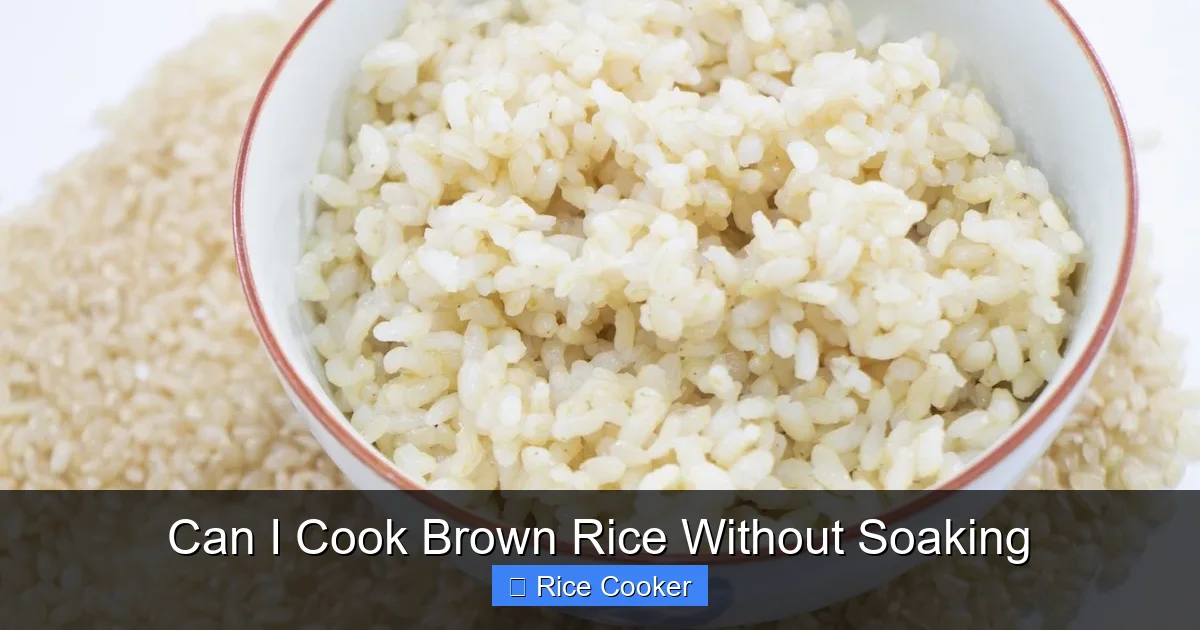
You absolutely can cook brown rice without soaking it first! While soaking is optional and can help reduce cooking time or improve texture, skipping this step won’t ruin your meal. Using the right water ratio, a rice cooker, and proper timing ensures perfectly cooked brown rice—no pre-soak needed.
Key Takeaways
- Soaking is optional: You don’t need to soak brown rice before cooking—it’s not required for flavor or safety, just convenience.
- Rice cookers make it easy: Most modern rice cookers handle brown rice beautifully with preset modes that account for its denser grain structure.
- Water ratio matters: Brown rice needs more water than white rice—typically 1:2.5 (rice to water)—to cook evenly without being mushy.
- Cooking time increases: Expect longer cook times (40–50 minutes), so plan ahead if you’re in a hurry.
- Resting helps: Let cooked brown rice sit covered for 10–15 minutes after cooking; this allows steam to distribute evenly.
- Fluffing prevents clumping: Use a fork gently to fluff the rice once done—never stir vigorously, which breaks apart the grains.
- Storage is simple: Leftovers store well in the fridge for up to 5 days or freeze for longer use—just reheat with a splash of water.
📑 Table of Contents
- Can I Cook Brown Rice Without Soaking?
- Why People Think Soaking Is Necessary
- The Science Behind Cooking Brown Rice
- How to Cook Brown Rice Without Soaking (Step-by-Step)
- Common Mistakes When Cooking Brown Rice Without Soaking
- Tips for Perfect Brown Rice Every Time
- Brown Rice vs. White Rice: What’s the Difference?
- Frequently Asked Questions
- Final Thoughts: Soaking Is Optional, Not Required
Can I Cook Brown Rice Without Soaking?
If you’ve ever stared into your pantry at 8 a.m., craving a warm bowl of brown rice but realizing you forgot to soak it overnight, you’re not alone. The internet is full of conflicting advice: some swear by soaking for better texture, others insist it’s totally unnecessary. So what’s the truth?
Can I cook brown rice without soaking? The short answer? Absolutely yes. But let’s dig deeper into why people soak, how to do it right (or skip it entirely), and most importantly, how to get consistently great results every time—even on your busiest days.
Brown rice is a whole grain packed with fiber, vitamins, and minerals, making it a healthier alternative to refined white rice. However, its outer bran layer makes it denser and chewier than white rice. This also means it takes longer to cook and doesn’t absorb liquid as quickly. That’s where soaking comes in—but only if you want to speed things up or soften the texture slightly.
In this guide, we’ll walk through everything you need to know about cooking brown rice without soaking: from choosing the right method (hello, rice cooker!) to mastering water ratios, avoiding mushiness, and turning out fluffy, restaurant-quality grains every single time. No overnight prep required.
Why People Think Soaking Is Necessary
Before we dismiss soaking altogether, let’s understand why it’s often recommended. Soaking brown rice—usually for 30 minutes to several hours—softens the outer hull, allowing water to penetrate faster during cooking. This reduces total cooking time by 10–20 minutes and can result in less gritty or chewy bites.
But here’s the catch: soaking isn’t magic. It doesn’t change the nutritional content, alter flavor, or make unsafe rice suddenly edible. In fact, many traditional cooking methods—like those used in East Asian households—skip soaking entirely and still produce excellent rice.
So why does soaking exist at all? Primarily for efficiency and texture preference. If you’re short on time or have sensitive digestion, soaking might help. But if you’re using a reliable rice cooker and following proper ratios, soaking becomes optional—not mandatory.
The Science Behind Cooking Brown Rice
To truly master brown rice—soaked or not—you need to understand what happens when you cook it.
Brown rice consists of three parts: the bran (outer protective layer), the germ (nutrient-rich core), and the endosperm (starchy center). Unlike white rice, which has the bran removed, brown rice retains the bran and germ. These layers slow down water absorption and starch gelatinization, meaning the rice takes longer to soften.
When you add water to brown rice and heat it, moisture slowly seeps into the grains. Over time, the starches inside the endosperm swell and gelatinize, turning the raw grain into tender, edible rice. Because the bran acts like a barrier, this process takes longer than with polished white rice.
This is why standard white rice cookers sometimes fail with brown rice—they’re programmed for quicker cook times. But modern machines come with dedicated settings that adjust pressure, temperature, and timing specifically for whole grains.
How to Cook Brown Rice Without Soaking (Step-by-Step)
Ready to ditch the sink full of soaking bowls? Follow these simple steps to cook perfect brown rice in under an hour—no overnight wait required.
Gather Your Ingredients & Tools
You’ll need:
– 1 cup uncooked brown rice
– 2½ cups water (or broth for extra flavor)
– A fine-mesh strainer (optional, for rinsing)
– Measuring cup
– Pot with tight-fitting lid OR electric rice cooker
Pro tip: Always rinse brown rice before cooking. Even though it’s whole grain, it can contain dust, debris, or excess starch that affects taste and texture. A quick rinse removes impurities without removing nutrients.
Measure Water Accurately
The golden rule: **1 part rice to 2½ parts water**. White rice uses 1:1.5, but brown rice needs more because of its dense structure. Too little water = undercooked, chalky centers. Too much = soggy, mushy rice.
For reference:
– ½ cup brown rice → 1¼ cups water
– 1 cup → 2½ cups
– 2 cups → 5 cups
If you’re cooking larger batches, stick to the ratio. Consistency is key.
Choose Your Cooking Method
You have two main options:
Stovetop Method:
1. Rinse rice in cold water until runoff is clear.
2. Add rice and water to a medium saucepan.
3. Bring to a boil over high heat.
4. Reduce heat to low, cover tightly, and simmer for 40–50 minutes.
5. Turn off heat and let sit, covered, for 10–15 minutes.
6. Fluff gently with a fork before serving.
Rice Cooker Method (Recommended):
1. Rinse rice briefly.
2. Add rice and water to the inner pot.
3. Select “Brown Rice” or “Whole Grain” setting (most models have one).
4. Press start. Total cycle time: ~50–60 minutes.
5. Allow natural release for 10 minutes after beep.
6. Open lid, fluff, and serve.
Rice cookers are ideal because they maintain steady heat and automatically switch to “warm” mode once done—no babysitting required.
Common Mistakes When Cooking Brown Rice Without Soaking
Even experienced cooks make these errors—and they’re easy to fix once you know what to watch for.
Mistake #1: Using the Wrong Water Ratio
Too little water leads to hard, undercooked centers. Too much creates gluey, soupy rice. Stick to 2½ cups per 1 cup rice, and adjust only if your altitude differs significantly (higher elevations may need slightly more water).
Mistake #2: Not Rinsing the Rice
Skipping the rinse leaves behind dirt, chaff, or excess starch. While not dangerous, it can affect flavor and lead to clumping. A quick 30-second rinse fixes this easily.
Mistake #3: Stirring During Cooking
Once boiling starts, resist the urge to peek or stir. Opening the lid releases steam, extending cook time. And stirring breaks apart the delicate structure of brown rice, leading to uneven texture.
Mistake #4: Ignoring the Rest Period
Letting rice rest after cooking allows residual steam to finish softening the grains. Skipping this step results in firmer, less tender rice—even if it looks done.
Mistake #5: Using Old or Poor-Quality Rice
Expired rice loses moisture and flavor. Buy fresh, store it in an airtight container away from light and heat, and use within 6 months for best results.
Tips for Perfect Brown Rice Every Time
Want fluffy, separate grains instead of a sticky mass? Try these pro tips—even without soaking.
Use Room-Temperature Water
Cold water slows cooking; lukewarm water helps distribute heat evenly. Warm water also prevents shocking the rice when added to a cold pan.
Add a Pinch of Salt or Fat
A dash of salt enhances flavor, while a teaspoon of oil or butter prevents sticking and adds richness. Olive oil works well, but neutral oils like canola or avocado keep the taste mild.
Try the “Lift and Drain” Technique (Optional)
After the initial boil, lift the lid slightly and tilt the pan to drain excess steam. Replace lid immediately—this helps regulate internal moisture without cooling the rice too much.
Double-Check Doneness Before Serving
Cut open a grain with a spoon. It should be tender but still have a slight bite (al dente). If too hard, cover and cook 5 more minutes. If mushy, you likely used too much water.
Store Properly for Reheating
Cool rice completely before refrigerating. Store in shallow containers to speed chilling. To reheat, sprinkle 1–2 tablespoons of water over leftovers, cover, and microwave 1–2 minutes until warmed through.
Brown Rice vs. White Rice: What’s the Difference?
Many people ask: “Is brown rice really that different?” Yes—and not just in color.
Nutrition
Brown rice retains its bran and germ, giving it more fiber (3.5g per cup vs. 0.6g in white), plus B vitamins, magnesium, and antioxidants. White rice is stripped of these during processing.
Texture & Flavor
Brown rice has a nuttier, chewier texture and earthier taste. White rice is softer, milder, and faster to cook.
Cooking Time
White rice cooks in 15–20 minutes; brown rice needs 40–50 minutes. Again, soaking can shave off 10 minutes—but isn’t essential.
Best Uses
Use brown rice in grain bowls, salads, pilafs, or as a side dish. White rice shines in sushi, risotto, or creamy desserts.
Ultimately, choose based on your recipe goals and dietary needs—not fear of soaking.
Frequently Asked Questions
Does soaking brown rice make it healthier?
No. Soaking doesn’t enhance nutrition—it may even leach out some water-soluble vitamins like vitamin C and B-complex. It mainly improves texture and reduces cook time.
Visual guide about Can I Cook Brown Rice Without Soaking
Image source: ediblenosh.com
Can I soak brown rice for just 10 minutes?
Yes! Any amount of soaking (even 10 minutes) will slightly reduce cook time and soften the bran layer. But 30+ minutes yields the biggest difference.
Why is my brown rice always gummy?
Most likely too much water or not resting long enough. Also, avoid stirring during cooking. Use a fork to fluff only after it’s done.
Can I cook brown rice in a pressure cooker?
Absolutely. Use the same 1:2.5 ratio, set to high pressure for 22–25 minutes, then natural release for 10 minutes. No soaking needed.
Is brown rice safe to eat raw?
Raw brown rice contains phytic acid, which can inhibit mineral absorption—but it won’t make you sick. Cooking neutralizes this compound and makes the rice digestible.
How do I convert white rice recipes to brown rice?
Increase water by 50% and double the cook time. For example, replace 1 cup white rice + 1.5 cups water with 1 cup brown rice + 2.5 cups water and cook 45 minutes.
Final Thoughts: Soaking Is Optional, Not Required
At the end of the day, **you can absolutely cook brown rice without soaking it**—and still enjoy tender, flavorful results. Whether you’re using a trusty stovetop pot or a smart rice cooker, the key lies in measuring water accurately, resisting the urge to stir, and letting the rice rest after cooking.
Soaking offers convenience and minor texture benefits, but it’s not a prerequisite for success. Skip it when pressed for time, embrace it when you want a head start, but never feel guilty about going straight to the stove.
With these tips, you’ll turn brown rice from a time-consuming chore into a quick, healthy staple—perfect for busy weeknights or meal prep Sundays. Next time you reach for that bag of brown rice, remember: no soak, no problem.
And if you’ve got questions, comments, or your own brown rice hacks? Drop them below—we’d love to hear how you make it work in your kitchen!
Frequently Asked Questions
Does soaking brown rice make it healthier?
No. Soaking doesn’t enhance nutrition—it may even leach out some water-soluble vitamins like vitamin C and B-complex. It mainly improves texture and reduces cook time.
Can I soak brown rice for just 10 minutes?
Yes! Any amount of soaking (even 10 minutes) will slightly reduce cook time and soften the bran layer. But 30+ minutes yields the biggest difference.
Why is my brown rice always gummy?
Most likely too much water or not resting long enough. Also, avoid stirring during cooking. Use a fork to fluff only after it’s done.
Can I cook brown rice in a pressure cooker?
Absolutely. Use the same 1:2.5 ratio, set to high pressure for 22–25 minutes, then natural release for 10 minutes. No soaking needed.
Is brown rice safe to eat raw?
Raw brown rice contains phytic acid, which can inhibit mineral absorption—but it won’t make you sick. Cooking neutralizes this compound and makes the rice digestible.
How do I convert white rice recipes to brown rice?
Increase water by 50% and double the cook time. For example, replace 1 cup white rice + 1.5 cups water with 1 cup brown rice + 2.5 cups water and cook 45 minutes.