
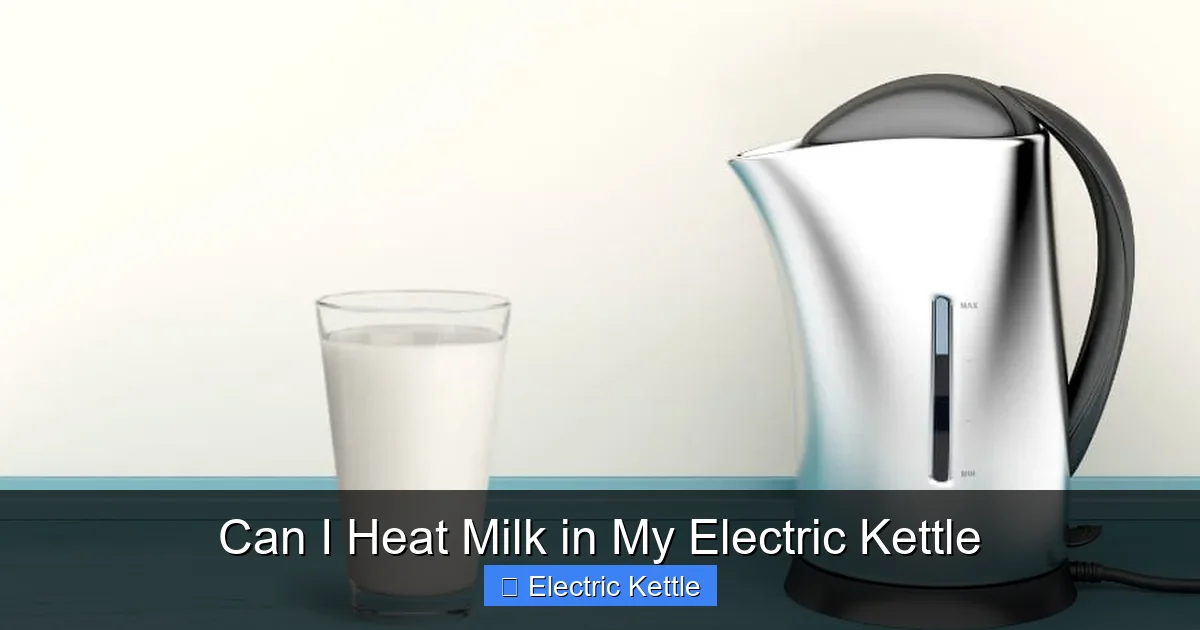
Heating milk in an electric kettle is possible but comes with risks like scorching, overflow, and damage to your kettle. While some modern kettles are designed for it, most standard models aren’t—so caution and proper technique are essential to avoid messes or malfunctions.
This is a comprehensive guide about can i heat milk in my electric kettle.
Key Takeaways
- Not all electric kettles are designed for milk: Most standard kettles are built for water only, and heating milk can cause buildup, odors, and damage.
- Milk can scorch and burn: Due to its protein and fat content, milk heats unevenly and can stick to heating elements, leading to burnt flavors and cleaning headaches.
- Overflow is a real risk: Milk foams and expands when heated, increasing the chance of boiling over and creating a sticky mess inside your kettle.
- Some kettles have a “milk mode”: A few advanced models include temperature control or specialized settings for heating milk safely—check your user manual.
- Cleaning is crucial after use: Residual milk can spoil and cause bad odors or bacterial growth if not cleaned immediately and thoroughly.
- Alternative methods are often safer: Using a saucepan, microwave, or dedicated milk frother is usually more reliable and less risky than using an electric kettle.
- Always monitor the process: Never leave milk unattended while heating, whether in a kettle or on the stove.
[FEATURED_IMAGE_PLACEHOLDER]
Can I Heat Milk in My Electric Kettle?
If you’ve ever stood in your kitchen with a carton of milk in one hand and your trusty electric kettle in the other, wondering if you can skip the stove and heat your milk directly in the kettle—you’re not alone. It’s a common question, especially for people who love quick cups of hot chocolate, creamy coffee, or warm milk before bed. The idea is tempting: press a button, wait a few minutes, and enjoy. But is it really that simple?
The short answer is: yes, you *can* heat milk in an electric kettle—but whether you *should* is a different story. While some modern kettles are designed to handle milk, most standard models are built exclusively for water. Heating milk in a water-only kettle can lead to a range of problems, from burnt flavors and sticky residue to potential damage to the heating element or even electrical issues. Milk behaves very differently than water when heated. It contains proteins, fats, and sugars that can scorch, foam, and stick to surfaces, making it a tricky liquid to manage in appliances not specifically made for it.
In this guide, we’ll explore the ins and outs of heating milk in an electric kettle. We’ll look at the risks, the exceptions, the best practices, and safer alternatives. Whether you’re a busy parent making nighttime bottles, a student craving a quick latte, or just someone who loves convenience, this article will help you make an informed decision—without ruining your kettle or your drink.
Why Most Electric Kettles Aren’t Designed for Milk
To understand why heating milk in an electric kettle can be problematic, it helps to know how these appliances work. Most electric kettles are engineered with one primary purpose: to boil water quickly and efficiently. They use a concealed or exposed heating element that rapidly heats the liquid to boiling point, often with an automatic shut-off feature once the water reaches 212°F (100°C). This design is perfect for water, which heats evenly, doesn’t foam, and leaves minimal residue.
Milk, on the other hand, is a complex liquid. It contains proteins (like casein and whey), fats, and lactose (milk sugar). When heated, these components react in ways that water simply doesn’t. Proteins can denature and coagulate, fats can separate, and sugars can caramelize—especially if the milk gets too hot or heats unevenly. This leads to several issues:
Scorching and Burning
One of the biggest problems with heating milk in a standard electric kettle is scorching. Because the heating element is usually at the bottom of the kettle, milk can overheat in that area before the rest of the liquid warms up. This creates hot spots where milk proteins burn onto the surface, leaving a burnt, yellowish layer that’s hard to remove. Not only does this affect the taste of your milk (imagine sipping hot chocolate with a hint of burnt plastic), but it can also damage the kettle over time.
Foaming and Overflow
Milk tends to foam when heated, especially as it approaches boiling point. This foam can rise quickly and overflow the kettle, spilling hot liquid onto your countertop or, worse, into the electrical base. This is not just a mess—it’s a safety hazard. Water is easy to clean up, but spilled milk is sticky, smelly, and can attract bacteria if not wiped immediately. Plus, if milk gets into the electrical components, it could cause short circuits or permanent damage.
Residue and Odor Buildup
Even if you manage to heat milk without burning or overflowing, residual milk can cling to the interior of the kettle. Over time, this buildup can harden, leading to unpleasant odors and affecting the taste of future drinks—even water. Cleaning a kettle that’s been used for milk requires more effort than a simple rinse. You’ll need to soak it, scrub it, and possibly use vinegar or baking soda to remove stubborn stains and smells.
Lack of Temperature Control
Most standard electric kettles don’t have temperature settings—they just boil. But milk doesn’t need to reach boiling point to be warm. In fact, boiling milk can destroy some of its nutrients and create a skin on the surface. Ideal milk temperatures for drinking or frothing are usually between 140°F and 160°F (60°C–71°C). Without precise temperature control, you risk overheating your milk, which defeats the purpose of a gentle, creamy warmth.
When It Might Be Safe: Kettles with Milk-Friendly Features
While the risks are real, there are exceptions. Some modern electric kettles are specifically designed to handle milk or other dairy-based liquids. These models often come with features that make the process safer and more effective.
Kettles with Temperature Control
One of the most important features to look for is variable temperature control. These kettles allow you to set specific temperatures, such as 140°F for warm milk or 160°F for frothing. This prevents overheating and reduces the risk of scorching. Brands like Breville, Cuisinart, and Fellow offer kettles with precise temperature settings, often used by coffee enthusiasts for pour-over brewing—but they can also be great for heating milk.
Milk or Frothing Modes
A few high-end kettles include a dedicated “milk” or “frothing” mode. These settings typically heat the liquid more gently and may include a slower ramp-up in temperature to prevent boiling over. Some even have built-in frothers or whisk attachments. For example, the Smeg Electric Kettle with Milk Frother has a separate compartment and whisk for frothing milk, making it ideal for lattes and cappuccinos.
Non-Stick or Easy-Clean Interiors
Kettles with non-stick coatings or smooth, seamless interiors are easier to clean after milk use. Look for models with removable lids and wide openings that allow you to reach inside with a sponge or brush. Some kettles even have self-cleaning functions or are dishwasher-safe (though always check the manual first).
Transparent or Viewing Windows
A viewing window or transparent body lets you monitor the milk as it heats. This is crucial because you can see when foam starts to rise and stop the heating process before it overflows. It also helps you avoid overfilling, which is a common cause of spills.
If your kettle has one or more of these features, heating milk becomes a much safer option. However, even with these upgrades, it’s still important to follow best practices—like not overfilling, staying nearby, and cleaning immediately after use.
Step-by-Step Guide: How to Heat Milk Safely (If You Must)
If you’ve checked your kettle and it has milk-friendly features—or you’re willing to take the risk with a standard model—here’s how to heat milk as safely as possible.
1. Check Your Kettle’s Manual
Before doing anything, consult your user manual. Some manufacturers explicitly state whether the kettle can be used with milk. If it says “water only,” it’s best to avoid milk altogether. Even if it doesn’t mention milk, look for clues like temperature settings or cleaning instructions that suggest dairy use.
2. Use the Right Amount
Never fill the kettle beyond the minimum or maximum markings. For milk, it’s even better to stay below the max line—aim for no more than 75% full. This leaves room for foam to expand without spilling over. Overfilling is one of the most common causes of milk overflow.
3. Choose the Right Temperature
If your kettle has temperature control, set it between 140°F and 160°F (60°C–71°C). This is warm enough for drinking or frothing but not hot enough to scorch or boil. If your kettle only boils, consider heating the milk in short bursts (30–60 seconds) and checking the temperature with a food thermometer.
4. Stay Nearby and Monitor
Never walk away while heating milk. Stay in the kitchen and keep an eye on the kettle. Milk can go from warm to boiling over in seconds. If you see foam rising, turn off the kettle immediately.
5. Stir Gently (If Possible)
Some kettles allow you to stir the milk with a long spoon through the spout. Gentle stirring helps distribute heat and reduces the risk of hot spots. However, be careful not to scratch the interior or touch the heating element.
6. Clean Immediately After Use
As soon as you’ve poured the milk, rinse the kettle with warm water. Use a soft sponge and mild detergent to remove any residue. For stubborn stains, soak the kettle in a mixture of water and white vinegar (1:1 ratio) for 15–30 minutes, then scrub and rinse thoroughly. Dry completely before storing.
7. Avoid Repeated Use
Even if you clean well, using your kettle for milk regularly can lead to long-term buildup and odor. If you plan to heat milk often, consider investing in a dedicated milk frother or a kettle designed for dairy.
Risks and Consequences of Heating Milk in a Standard Kettle
While the idea of heating milk in your electric kettle might seem convenient, the potential downsides are significant—especially if your kettle isn’t designed for it.
Damage to the Heating Element
Milk residue can coat the heating element, reducing its efficiency and potentially causing it to overheat. Over time, this can lead to malfunction or complete failure. In severe cases, burnt milk can create a crust that insulates the element, preventing proper heat transfer and triggering safety shut-offs.
Unpleasant Odors and Tastes
Even after cleaning, milk can leave behind a sour or burnt smell that lingers in the kettle. This odor can transfer to water used later, giving your tea or coffee an off-putting taste. Some users report that their kettle “never quite smells right” after heating milk once.
Increased Cleaning Effort
Cleaning a milk-used kettle takes more time and effort than a water-only one. You’ll need to soak, scrub, and possibly use special cleaners. If you’re in a rush or forget to clean it right away, dried milk can become nearly impossible to remove.
Safety Hazards
Spilled milk near electrical components can cause short circuits, sparks, or even fires. While rare, it’s a real risk—especially if the kettle is old or poorly maintained. Additionally, hot milk that overflows can cause burns, particularly if you’re not expecting it.
Voided Warranty
Using your kettle for purposes other than intended (like heating milk in a water-only model) may void the manufacturer’s warranty. If something goes wrong, you could be left with a broken appliance and no support.
Safer Alternatives to Heating Milk in an Electric Kettle
Given the risks, it’s often wiser to use alternative methods for heating milk. Here are some safer, more reliable options:
Use a Saucepan on the Stove
This is the classic method. Pour milk into a small saucepan, heat over low to medium heat, and stir frequently to prevent scorching. Use a thermometer to monitor temperature. It takes a bit longer than a kettle, but it’s far more controlled and safe.
Microwave in a Microwave-Safe Container
For quick warming, microwave milk in a glass or ceramic mug. Heat in 15–30 second intervals, stirring in between, until warm. Be careful not to overheat—microwaves can create hot spots that burn your mouth.
Invest in a Milk Frother
Electric milk frothers are affordable and designed specifically for heating and frothing milk. They often have temperature controls and non-stick interiors, making them ideal for lattes, hot chocolate, or warm milk drinks. Some models even double as kettles.
Use a Double Boiler
For delicate tasks like making custard or warming baby formula, a double boiler provides gentle, even heat. It’s slower but minimizes the risk of burning.
Pre-Heat with Hot Water
If you’re making a drink that combines milk and hot water (like chai or matcha), boil water in your kettle first, then add it to the milk in a separate cup. This avoids putting milk in the kettle altogether.
Conclusion: Should You Heat Milk in Your Electric Kettle?
So, can you heat milk in your electric kettle? Technically, yes—but it’s not always a good idea. While some advanced kettles with temperature control, milk modes, and easy-clean interiors can handle it safely, most standard models are not built for dairy. The risks of scorching, overflow, odor buildup, and appliance damage are real and can outweigh the convenience.
If you’re determined to try it, make sure your kettle is compatible, follow safe practices, and clean it immediately. But for most people, using a saucepan, microwave, or dedicated milk frother is a smarter, safer choice. These methods give you better control, reduce mess, and protect your kettle from long-term damage.
Ultimately, your electric kettle is a reliable tool for boiling water—not a multi-purpose kitchen appliance. Treat it with care, and it will serve you well for years. But when it comes to milk, sometimes the old-fashioned way is still the best.
FAQs
Can I heat milk in any electric kettle?
Not all electric kettles are safe for milk. Most standard models are designed for water only and can be damaged by milk residue, scorching, or overflow. Check your user manual or look for features like temperature control or milk modes before attempting.
What happens if I boil milk in my kettle?
Boiling milk can cause it to scorch, foam over, and leave stubborn residue inside the kettle. This can lead to bad odors, altered tastes in future drinks, and potential damage to the heating element or electrical components.
How do I clean my kettle after heating milk?
Rinse immediately with warm water, then scrub with a soft sponge and mild detergent. For tough stains, soak in a 1:1 vinegar-water solution for 15–30 minutes, scrub, and rinse thoroughly. Dry completely before storing.
Can I use my kettle for water after heating milk?
Yes, but only if you clean it thoroughly. Residual milk can cause odors or off-flavors in water. If the kettle still smells or tastes odd after cleaning, it may be best to reserve it for water only.
Are there electric kettles made specifically for milk?
Yes, some high-end models include milk or frothing modes, temperature control, and non-stick interiors. Brands like Breville, Smeg, and Fellow offer kettles designed for dairy use.
Is it safe to heat milk in a kettle with a stainless steel interior?
Stainless steel is easier to clean than plastic, but it can still scorch if milk overheats. Safety depends more on the kettle’s features (like temperature control) than the material alone. Always monitor the process and clean promptly.
Frequently Asked Questions
What is can i heat milk in my electric kettle?
can i heat milk in my electric kettle is an important topic with many practical applications.