
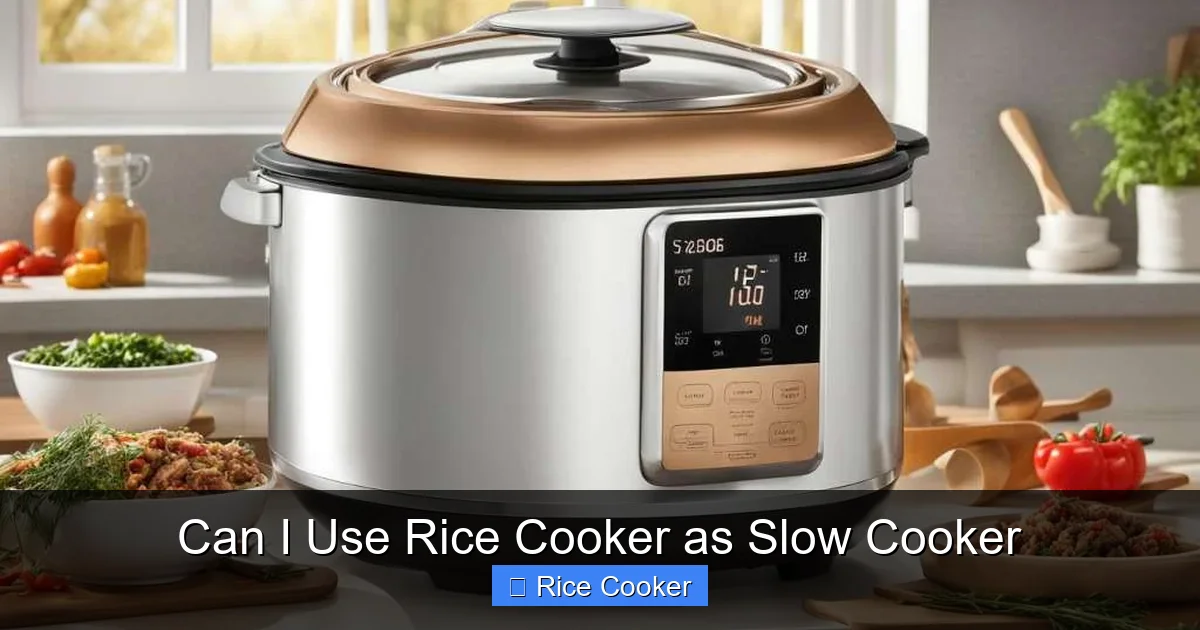
Can I use a rice cooker as a slow cooker? Yes, but with important differences. While both appliances cook food slowly over time, rice cookers lack precise temperature control and extended low-heat settings found in dedicated slow cookers. However, with some adjustments, you can still make stews, soups, and grains in your rice cooker. Understanding these limitations helps you get the best results.
Key Takeaways
- Rice cookers and slow cookers serve different primary purposes. Rice cookers are designed specifically for cooking rice, while slow cookers excel at long, gentle cooking of meats and vegetables.
- Temperature control is limited in most rice cookers. They typically cycle between high and low heat without maintaining a steady “keep warm” mode like a slow cooker.
- You can adapt recipes for rice cooker use. Adjust cooking times and liquid amounts to suit your appliance’s design.
- Some modern rice cookers have multi-function modes. Look for models labeled “slow cook,” “soup,” or “porridge” for added versatility.
- Safety and food texture matter. Overcooking or using too much liquid can ruin dishes when substituting one appliance for another.
- Cleaning and maintenance are easier in rice cookers. Their non-stick inner pots make cleanup simpler than slow cooker crocks.
- Experiment with small batches first. Test new recipes to understand how your specific rice cooker behaves under different cooking conditions.
📑 Table of Contents
- Can I Use Rice Cooker as Slow Cooker? A Complete Guide
- Understanding the Differences Between Rice Cookers and Slow Cookers
- The Short Answer: Yes, But With Limitations
- How to Adapt Slow Cooker Recipes for Your Rice Cooker
- Can Modern Rice Cookers Handle Long-Cooking Dishes?
- Creative Ways to Use Your Rice Cooker Beyond Rice
- Common Mistakes When Using a Rice Cooker as a Slow Cooker
- When to Stick With a Dedicated Slow Cooker
- Final Thoughts: Should You Use a Rice Cooker as a Slow Cooker?
Can I Use Rice Cooker as Slow Cooker? A Complete Guide
Have you ever found yourself staring into the kitchen cupboard, wondering what to make for dinner, only to realize you don’t have a slow cooker? Or maybe you bought a rice cooker thinking it could do everything, only to find out it doesn’t quite match the performance of a dedicated slow cooker? If so, you’re not alone. Many home cooks are curious: can I use a rice cooker as a slow cooker?
At first glance, both appliances look similar—they sit on countertops, have lids, and cook food over time. But appearances can be deceiving. Understanding the differences between a rice cooker and a slow cooker is essential before deciding to swap one for the other. While they share some similarities, their designs, functions, and cooking methods are tailored for very different purposes.
In this comprehensive guide, we’ll explore whether you can use a rice cooker as a slow cooker, what limitations you might face, and how to adapt your favorite slow cooker recipes to work in your rice cooker. Whether you’re short on kitchen gadgets or just looking to expand your cooking options, this article will help you make informed decisions and get the most out of your appliances.
Understanding the Differences Between Rice Cookers and Slow Cookers
Before diving into whether you can use a rice cooker as a slow cooker, it’s important to understand what each appliance is designed to do. While both cook food over time, their core functions and mechanisms differ significantly.
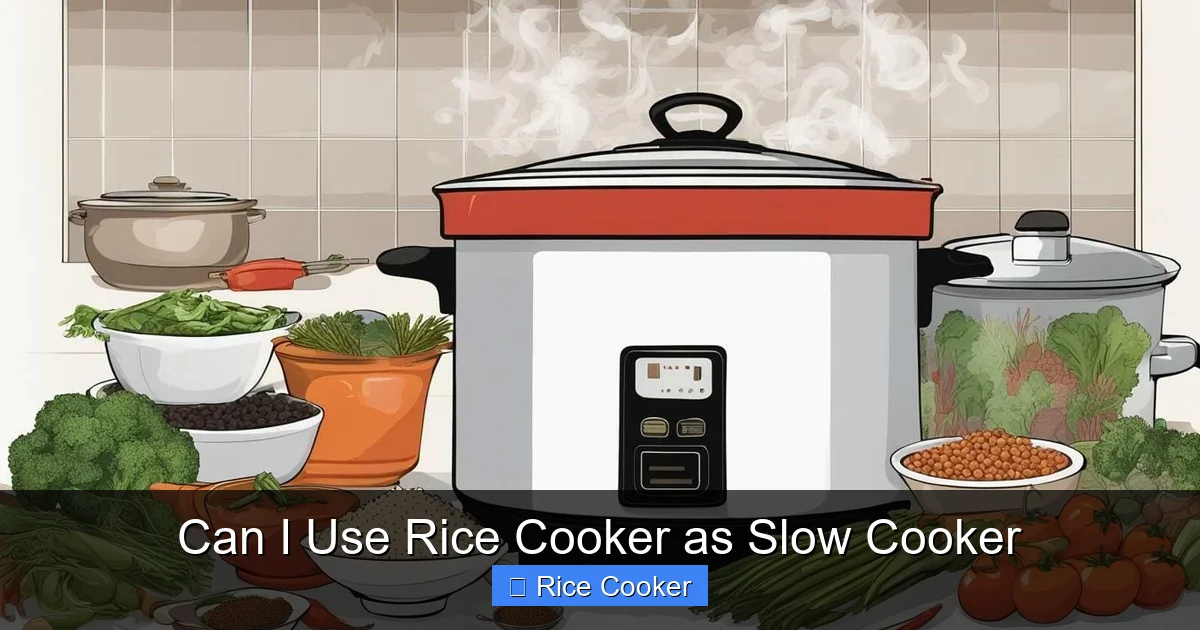
Visual guide about Can I Use Rice Cooker as Slow Cooker
Image source: ricearray.org
What Is a Rice Cooker?
A rice cooker is an electric appliance specifically engineered to cook rice. It uses a combination of heat and steam to transform raw rice grains into fluffy, perfectly cooked meals. Most rice cookers feature a simple control system: press the button, and it automatically switches from heating to “warm” mode once the rice is done.
Modern rice cookers often include additional features like:
- Multiple cooking settings (white rice, brown rice, porridge, steaming)
- Timer functions
- Non-stick inner pots
- Keep-warm functionality
These features make rice cookers incredibly convenient for quick, hands-off meals. But can they handle the demands of slow-cooked dishes like stews or braised meats? Let’s find out.
What Is a Slow Cooker?
A slow cooker, also known as a Crock-Pot, is designed for long, low-temperature cooking. It allows you to add ingredients in the morning and come home to a fully cooked meal. The key advantage of a slow cooker is its ability to maintain a consistent low heat (usually between 170°F and 280°F) for hours without burning or drying out food.
Slow cookers typically include:
- A ceramic or stoneware insert that retains heat evenly
- Lid locks to trap moisture
- Simple dial controls for low, high, and off settings
- No automatic shutoff during active cooking (only safety cutoffs)
Because of these features, slow cookers are ideal for tough cuts of meat, beans, and hearty stews. But again, can a rice cooker do the same?
The Short Answer: Yes, But With Limitations
The straightforward answer to can I use a rice cooker as a slow cooker is yes—but with caveats. Most basic rice cookers aren’t built for the long, steady cooking required for slow cooker recipes. However, advanced models with multiple settings may offer enough flexibility to mimic slow cooking in some cases.
Let’s break down the pros and cons of using a rice cooker instead of a slow cooker.
Pros of Using a Rice Cooker as a Slow Cooker
Despite their differences, rice cookers can be surprisingly versatile. Here’s why someone might consider using one as a slow cooker:
- Compact Size: Rice cookers take up less space than slow cookers, making them ideal for small kitchens.
- Easy Cleanup: The non-stick inner pot is usually dishwasher-safe and easier to clean than a slow cooker’s heavy ceramic insert.
- Quick Heat-Up: Rice cookers reach full temperature faster than slow cookers, which can save time for certain recipes.
- Versatile Settings: Some modern rice cookers include “soup,” “porridge,” or even “slow cook” modes that allow for longer cooking times.
- Consistent Results: Once you learn how your rice cooker behaves, you can achieve reliable outcomes with practice.
Cons of Using a Rice Cooker as a Slow Cooker
While there are benefits, there are also significant drawbacks to keep in mind:
- Limited Temperature Control: Most rice cookers cycle between high and low heat rather than maintaining a steady low setting.
- Shorter Cooking Time: Rice cookers aren’t designed for 6–8 hour simmering; they typically cook in 20–45 minutes.
- Lack of Moisture Retention: The design isn’t optimized for trapping steam and moisture like a slow cooker.
- Risk of Burning: Without constant stirring or low-and-slow cooking, food can scorch at the bottom.
- Smaller Capacity: Standard rice cookers hold 3–10 cups of rice—enough for small families but not large gatherings.
If you’re serious about slow cooking, a dedicated slow cooker is still the better choice. But if you’re in a pinch or want to experiment, a rice cooker can be a useful alternative—with some smart adjustments.
How to Adapt Slow Cooker Recipes for Your Rice Cooker
So, if you decide to try using your rice cooker as a slow cooker, how do you adapt your recipes? The key is understanding your rice cooker’s behavior and making strategic changes to ingredients and timing.
Choose the Right Recipes
Not every slow cooker recipe will translate well. Opt for dishes that:
- Cook quickly (under 1 hour)
- Use minimal liquid (to avoid overflow)
- Include tender ingredients (like chicken breast, ground beef, or soft vegetables)
- Don’t require constant stirring or browning
Examples of good candidates include:
- Chicken and rice casseroles
- Beef and barley soup
- Mushroom risotto
- Oatmeal or cream-based porridge
- Steamed dumplings or vegetables
Adjust Liquid Levels
One of the biggest challenges when using a rice cooker for non-rice dishes is managing liquid. Rice cookers rely on absorbing water, so adding too much liquid can cause overflow or mushy textures.
Tips for managing liquids:
- Reduce liquid by 10–20% compared to slow cooker recipes.
- Use broth or stock instead of water for richer flavor.
- Add delicate ingredients (like spinach or pasta) near the end of cooking.
- Monitor closely during the first few trials to fine-tune ratios.
Prep Ingredients Ahead of Time
Unlike slow cookers, rice cookers don’t allow for last-minute additions. Chop all vegetables, cut meat into uniform pieces, and measure spices beforehand. This ensures even cooking and prevents undercooked or overcooked components.
Use the “Cook” Cycle, Not “Warm”
Avoid leaving food in the “warm” setting for long periods. Instead, use the active “cook” cycle and check periodically. If your rice cooker has a timer, set it for the estimated cooking time and monitor after 20–30 minutes.
Stir Gently Midway
To prevent sticking and ensure even cooking, open the lid and stir gently halfway through. Be careful—hot steam will escape, but this helps distribute heat and ingredients.
Can Modern Rice Cookers Handle Long-Cooking Dishes?
If you own a newer rice cooker, you might wonder if it has enough power to handle slow-cooked meals. The answer depends on the model and its features.
Multi-Function Rice Cookers
Many modern rice cookers now include multiple cooking modes such as:
- White rice
- Brown rice
- Porridge/Congee
- Soup
- Steam
- Slow cook
- Yogurt
These advanced models often come with programmable timers and sensors that adjust cooking cycles based on food type. Some even simulate slow cooking by alternating between high and low heat to mimic a slow cooker’s effect.
If your rice cooker has a “slow cook” or “soup” setting, it’s more likely to succeed with long-cooking recipes. Check your manual to see if this applies to your model.
Limitations of Multi-Function Models
Even with extra settings, multi-function rice cookers still have limits:
- They may not maintain a true low temperature for 6+ hours.
- Capacity is still smaller than most slow cookers.
- They lack the heavy-duty insulation of a slow cooker’s ceramic insert.
For occasional use, these models are fine. For daily slow cooking, a dedicated appliance is still preferable.
Creative Ways to Use Your Rice Cooker Beyond Rice
Even if you can’t fully replace your slow cooker, your rice cooker can still be a kitchen star. Here are some creative ideas to expand its use:
Make Congee (Rice Porridge)
Congee is a comforting rice porridge popular in Asian cuisines. Simply combine rice, water (or broth), and salt in your rice cooker. Set it on the “porridge” or “congee” setting, and let it simmer for 45–60 minutes until thick and creamy.
Additions like ginger, scallions, egg, or lean pork can turn congee into a full meal.
Cook Oats or Quinoa
Instead of boiling oats on the stove, try making them in the rice cooker. Use a 1:2 ratio of oats to liquid (water or milk) and cook for 25–30 minutes on the “grain” or “porridge” setting.
This method saves energy and reduces cleanup.
Bake Simple Desserts
Some rice cookers can bake cakes, steamed puddings, or even mug cakes. Line the inner pot with parchment paper, mix batter as usual, and bake on the highest setting for 30–40 minutes.
Note: This works best with rice cookers that have a “bake” or “steam” function.
Steam Vegetables and Dumplings
Use the steaming tray (if included) to cook broccoli, carrots, or Chinese steamed buns. Steam for 10–15 minutes depending on thickness.
Prepare Yogurt or Fermented Foods
Advanced rice cookers with yogurt settings can ferment milk into yogurt. Just add plain milk and let it incubate for 6–12 hours on the yogurt mode.
Common Mistakes When Using a Rice Cooker as a Slow Cooker
If you’re experimenting with your rice cooker for non-traditional uses, watch out for these common pitfalls:
- Using Too Much Liquid: This can lead to overflow or a watery dish. Always start with less liquid than a slow cooker recipe calls for.
- Skipping Browning: Some recipes benefit from searing meat first. While not always necessary, browning adds depth of flavor.
- Ignoring Stirring: Rice cookers don’t circulate heat like slow cookers. Stirring midway helps prevent burning.
- Overfilling the Pot: Leave room for expansion. Never fill beyond 2/3 capacity.
- Leaving Food on “Warm” Too Long: The “warm” setting is for keeping food hot, not continuing to cook it. Use the “cook” cycle instead.
When to Stick With a Dedicated Slow Cooker
While it’s tempting to use a rice cooker as a slow cooker, there are situations where a dedicated appliance is worth the investment:
- You cook slow meals regularly (3+ times per week)
- You need to prepare large quantities for family or events
- You prefer hands-off cooking for 6–8 hours
- You want consistent, reliable results every time
If any of these apply, a slow cooker is the better tool. But if you’re just starting out or want to save money, a rice cooker can be a functional alternative—especially if it has multiple settings.
Final Thoughts: Should You Use a Rice Cooker as a Slow Cooker?
So, back to the original question: can I use a rice cooker as a slow cooker? The answer is yes—but with important qualifications. While basic rice cookers aren’t ideal for long, low-heat cooking, many modern models with multiple settings can handle some slow-cooked dishes, especially those that cook faster than traditional slow cooker meals.
If you’re short on time, space, or budget, repurposing your rice cooker can be a practical solution. Just be mindful of its limitations, adjust recipes accordingly, and don’t expect the same results as a dedicated slow cooker.
Ultimately, both appliances have their place in the kitchen. A rice cooker excels at quick, simple meals like rice, porridge, and steamed veggies. A slow cooker shines when you want rich, deep flavors from long-simmered stews and braises. By understanding their strengths and weaknesses, you can make the most of whichever tools you have—and maybe even discover new favorite dishes along the way.
Happy cooking!
Frequently Asked Questions
Can I cook a stew in a rice cooker?
Yes, but only for shorter cooking times (30–60 minutes). Use less liquid than a slow cooker recipe and monitor closely. Choose tender ingredients like chicken or ground beef.
Do all rice cookers have slow cook settings?
No. Only newer, multi-function rice cookers include settings like “soup,” “porridge,” or “slow cook.” Check your model’s manual to confirm available functions.
Is it safe to leave food in a rice cooker all day?
It’s not recommended. The “warm” setting keeps food hot but doesn’t continue cooking. Leaving food unattended for hours can pose food safety risks.
Can I brown meat in a rice cooker?
Not effectively. Rice cookers don’t get hot enough to sear meat like a skillet. For best flavor, brown meat separately before adding it to the rice cooker.
What’s the difference between a rice cooker and a pressure cooker?
A pressure cooker uses high pressure and steam to cook food quickly (15–30 minutes), while a rice cooker uses dry heat and steam for gentler cooking. They serve different purposes.
Can I use my rice cooker to make yogurt?
Only if it has a yogurt setting. Add plain milk and let it incubate for 6–12 hours on the yogurt mode. Otherwise, use a dedicated yogurt maker.