
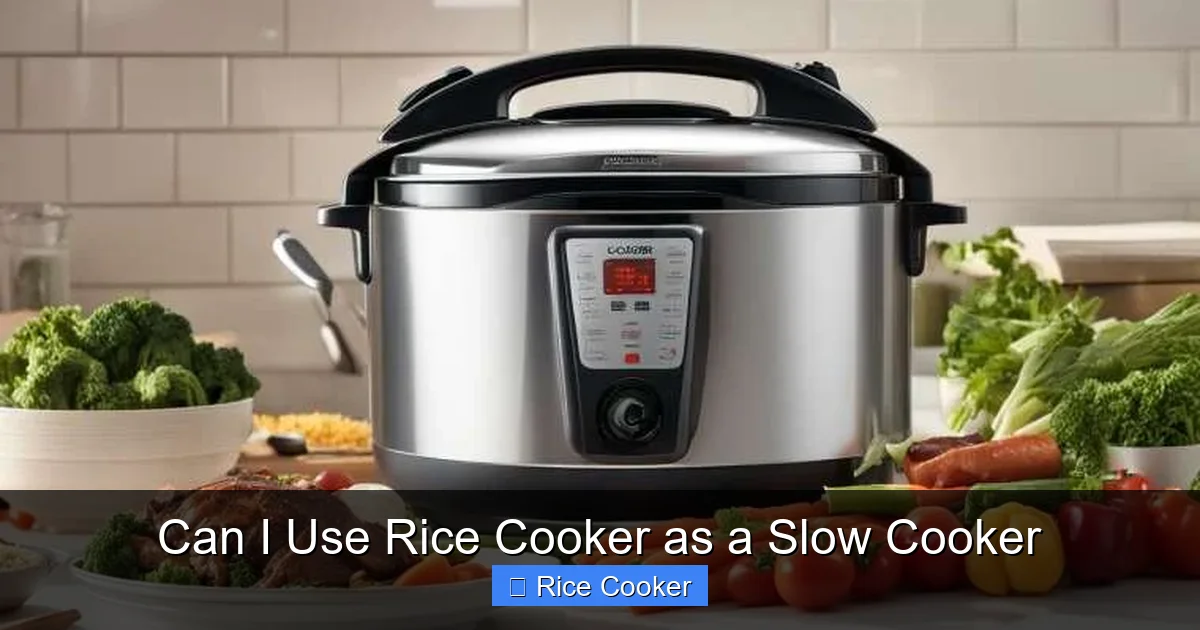
Can I use a rice cooker as a slow cooker? Yes, in many cases—especially with modern rice cookers that offer slow cooking functions. While not identical to traditional slow cookers, rice cookers can prepare stews, soups, and braises using low-heat settings over several hours. However, they lack precise temperature control and extended durations, which may affect results for certain recipes. With the right techniques and timing, you can enjoy convenient, hands-off meals using your trusty rice cooker.
Key Takeaways
- Functionality Overlap: Many rice cookers now include slow cooking modes, allowing them to mimic slow cooker behavior.
- Temperature Limitations: Rice cookers typically max out around 212°F (100°C), limiting their ability to maintain lower, more precise temperatures ideal for slow cooking.
- Timer & Programmability: Modern rice cookers often have programmable timers, enabling unattended cooking similar to slow cookers.
- Moisture Management: Rice cookers are sealed environments, helping retain moisture—ideal for dishes like stews and curries.
- Recipe Adaptation: Use liquid-heavy recipes and adjust cooking times to suit rice cooker capabilities.
- Not Ideal for All Dishes: Delicate proteins or dishes requiring browning may not turn out as well without extra steps.
- Safety First: Always monitor initial stages when experimenting, especially with high-fat or dairy-based recipes.
📑 Table of Contents
- Introduction: The Versatile Kitchen Companion
- Understanding the Core Differences Between Rice Cookers and Slow Cookers
- Modern Rice Cookers: Built-In Slow Cooking Capabilities
- Can You Repurpose an Old Rice Cooker Without a Slow Cook Setting?
- Practical Tips for Maximizing Your Rice Cooker’s Potential
- Limitations and When to Stick with a Traditional Slow Cooker
- Creative Recipes to Try in Your Rice Cooker
- Maintenance and Safety Considerations
- Conclusion: A Smart, Space-Saving Solution
Introduction: The Versatile Kitchen Companion
Have you ever found yourself staring into the pantry, wondering what to make for dinner—only to realize you don’t have a slow cooker? Or maybe you do own one, but it’s buried under a pile of holiday decorations or just too far away from your stove? If so, you’re not alone. Many home cooks rely on a single appliance to multitask, saving counter space and energy. Enter the humble rice cooker—a kitchen staple for perfect rice every time. But here’s the exciting twist: can I use a rice cooker as a slow cooker?
The answer is yes—and increasingly, yes with confidence. Thanks to modern technology, many rice cookers now come equipped with multiple cooking functions, including slow cooking. These models blur the line between two once-distinct appliances. Still, even if your rice cooker doesn’t have a dedicated slow cook setting, there are clever workarounds. In this comprehensive guide, we’ll explore how to transform your rice cooker into a slow cooker, what limitations you might face, and when it’s worth the effort.
Understanding the Core Differences Between Rice Cookers and Slow Cookers
Before diving into how to use a rice cooker as a slow cooker, it’s important to understand how these two appliances differ at their core. While both cook food slowly, their design and purpose are quite distinct.
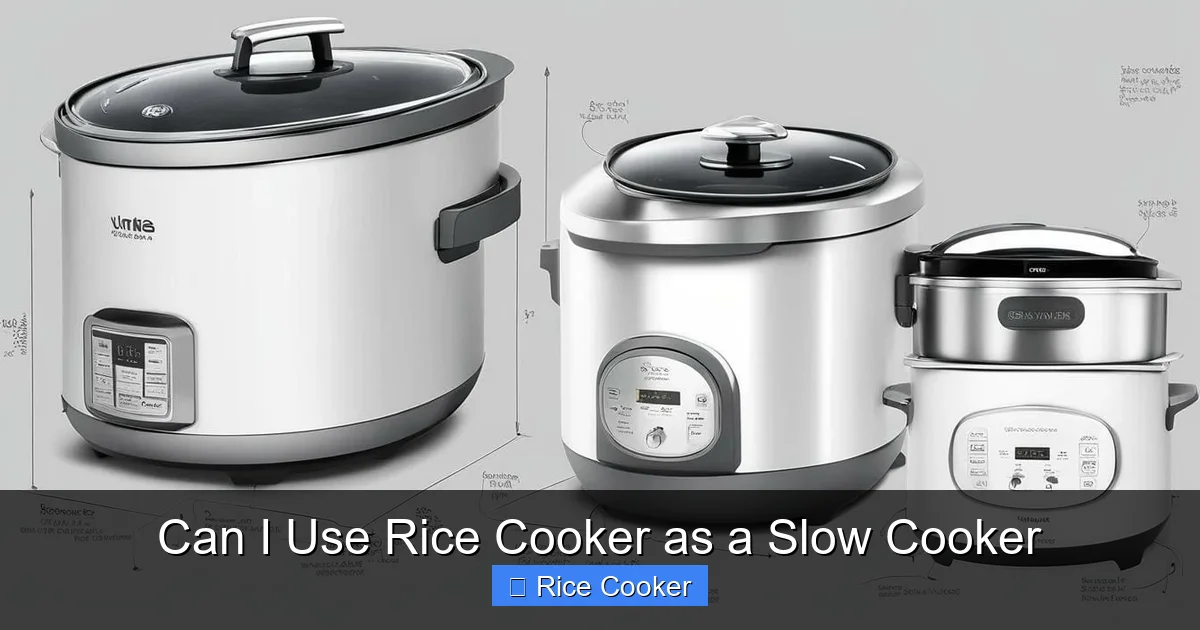
Visual guide about Can I Use Rice Cooker as a Slow Cooker
Image source: ricearray.org
Rice Cookers: Precision for Grains
Rice cookers are engineered specifically for cooking grains—rice, quinoa, barley, and more. They use a thermostat-controlled heating element and a thermal sensor to detect when the water has been absorbed and the cooking cycle is complete. Most rice cookers operate at high heat initially to bring water to a boil, then switch to a keep-warm mode. The internal lid is usually sealed, preventing steam escape and maintaining consistent moisture.
Traditional rice cookers lack long-duration low-temperature settings. Their primary goal isn’t to simmer meat or vegetables over hours—it’s to cook rice perfectly every time. That said, newer models are changing this narrative.
Slow Cookers: Long, Low Heat for Tough Cuts
Slow cookers, also known as crock-pots, are designed to cook food slowly over 4–10 hours at temperatures between 170°F and 280°F (77°C–138°C). This gentle, prolonged heat breaks down collagen in tough cuts of meat, turning them into tender, flavorful meals. They also allow for hands-free cooking—add ingredients in the morning, and return to a ready-to-eat dinner by evening.
Unlike rice cookers, slow cookers typically have open lids or minimal sealing, allowing some evaporation. They’re built for stews, pot roasts, chili, and casseroles.
Key Functional Differences
- Temperature Range: Slow cookers go lower (up to 280°F), while rice cookers rarely exceed 212°F.
- Cooking Duration: Slow cookers run for hours; rice cookers usually cycle every 20–30 minutes.
- Lid Design: Rice cookers seal tightly; slow cookers often have vented lids.
- Heat Distribution: Slow cookers circulate heat gently; rice cookers heat from below with a single element.
Modern Rice Cookers: Built-In Slow Cooking Capabilities
Here’s where things get interesting. Many contemporary rice cookers—especially those marketed as “multi-cookers” or “smart rice cookers”—now include a slow cooking function. Brands like Zojirushi, Instant Pot, Aroma, and Panasonic have expanded their offerings to include options such as “keep warm,” “slow cook,” “steam,” and even “bake.”
How Slow Cook Modes Work
A slow cook setting on a rice cooker typically simulates the same principles as a traditional slow cooker: low, steady heat over an extended period. These models often feature:
- Programmable timers (up to 24 hours)
- Adjustable heat levels (low, medium, high)
- Sealed inner pots for moisture retention
- Auto shut-off after cooking completes
These features make them surprisingly capable of handling slow-cooked dishes like pulled pork, chicken curry, or beef stew.
Popular Models with Slow Cook Functions
- Instant Pot Duo Plus: Offers a dedicated slow cook setting with customizable timers.
- Zojirushi Neuro Fuzzy: Includes a “Slow Cook” option with fuzzy logic for temperature management.
- Aroma Housewares 8-Cup: Budget-friendly model with basic slow cooking capability.
- Ninja Foodi: Combines pressure cooking and slow cooking in one unit.
If you already own one of these, you’re in luck—your rice cooker is essentially a hybrid appliance.
Can You Repurpose an Old Rice Cooker Without a Slow Cook Setting?
Don’t worry if your rice cooker is an older model or lacks a slow cook function. It’s still possible to use it as a makeshift slow cooker. The key is understanding its limitations and adapting your cooking technique accordingly.
The Science Behind the Method
Most rice cookers have two main settings: “Cook” and “Keep Warm.” When you press “Cook,” the heating element turns on. Once the water evaporates or is absorbed, the thermostat detects dryness and switches to “Keep Warm” mode—usually around 150–190°F (65–88°C). This creates a cycle of heating and cooling that can simulate slow cooking over time.
Step-by-Step Guide: Using Your Rice Cooker Like a Slow Cooker
- Add Liquid-Based Recipes: Use recipes that are mostly liquids—stews, soups, or saucy dishes. Avoid dry grains or legumes unless soaked first.
- Preheat the Inner Pot: Add a small amount of oil or broth and heat on the “Cook” setting for 2–3 minutes before adding ingredients. This helps prevent sticking.
- Add Ingredients: Place meat, vegetables, and seasonings in the pot. Cover and select “Cook.”
- Let It Cycle: Allow the rice cooker to go through multiple cook/keep-warm cycles. For example, if you need 6 hours of cooking time, plan for about 12–15 cycles.
- Monitor Progress: After 2–3 hours, check doneness. If needed, continue cycling until tender.
- Use a Timer: Set reminders to avoid overcooking. Some users place a note on the timer or use a phone alarm.
Example: Chicken and Vegetable Stew in a Rice Cooker
Ingredients: chicken thighs, carrots, potatoes, onions, garlic, broth, herbs.
Method: Brown chicken in a bit of oil (optional), add all ingredients except potatoes, cover, and cook on “Cook” for 2 hours. Add potatoes, continue cooking until tender. Total time: 3–4 hours. The result? Tender chicken and flavorful vegetables—just like a slow cooker!
Practical Tips for Maximizing Your Rice Cooker’s Potential
If you’re committed to using your rice cooker as a slow cooker, here are some pro tips to improve results and avoid common pitfalls.
Choose the Right Recipes
Not every dish translates well. Stick to:
- Stews and braises
- Curries and soups
- Meat-based dishes with sauce
- One-pot meals with tender vegetables
Avoid recipes that require searing or browning, as rice cookers aren’t designed for high-heat Maillard reactions.
Prep Ingredients Properly
Tough cuts of meat benefit from longer cooking times. Trim excess fat, cut into uniform pieces, and use bone-in cuts for added flavor. Soak beans and dried grains if using them.
Layer Ingredients Wisely
Place hard vegetables (carrots, potatoes) at the bottom, meat in the middle, and delicate veggies (leafy greens, zucchini) on top near the end. This ensures even cooking.
Use a Thermometer for Accuracy
Insert a food thermometer occasionally to check internal temperatures. Poultry should reach 165°F (74°C), ground meats 160°F (71°C), and whole cuts 145°F (63°C).
Don’t Overfill the Pot
Leave at least 1–2 inches of headspace. Overfilling can cause spills during the cook cycle and uneven heating.
Cleanliness Is Key
Always clean the inner pot and lid after each use. Starchy residues from rice can gum up the mechanism and affect future cooking.
Limitations and When to Stick with a Traditional Slow Cooker
While rice cookers can handle many slow-cooked dishes, they’re not perfect substitutes. Here’s when you might want to grab your slow cooker instead.
Low-Temperature Cooking Needs
Some recipes—like yogurt, custards, or delicate fish—require temperatures below 180°F (82°C). Rice cookers can’t reliably maintain these levels and may overheat or cycle unpredictably.
Longer Than 6–8 Hours
Even with multiple cycles, rice cookers aren’t designed for 10+ hour cooking sessions. The heating element may degrade over time, and food safety becomes a concern if left unattended too long.
Recipes Requiring Browning
If a recipe calls for searing meat before slow cooking, use a skillet on the stove first. Rice cookers lack the high heat needed for proper browning.
Dairy or Egg-Based Dishes
Adding milk, cream, or beaten eggs too early can cause curdling in a rice cooker due to temperature fluctuations. Add these toward the end of cooking.
Delicate Textures
Dishes like risotto or creamy pasta require constant stirring and precise temperature control—something rice cookers can’t provide.
Creative Recipes to Try in Your Rice Cooker
Ready to experiment? Here are five delicious, easy recipes that work beautifully in a rice cooker.
1. Hearty Beef Stew
Ingredients: chuck roast, potatoes, carrots, onions, garlic, beef broth, tomato paste, thyme.
Method: Cut beef into cubes, brown in oil (optional), add all ingredients, cover, and cook for 3–4 hours on “Cook.” Stir halfway through. Serve with crusty bread.
2. Thai Green Curry
Ingredients: chicken or tofu, green curry paste, coconut milk, bamboo shoots, bell peppers, basil.
Method: Combine all ingredients in the pot, cover, and cook for 2–3 hours. Garnish with fresh basil and jasmine rice on the side.
3. Chicken and Rice Soup
Ingredients: chicken breasts, rice, carrots, celery, onion, chicken broth, parsley.
Method: Add everything to the pot, cover, and cook for 2.5 hours. Shred chicken before serving.
4. Pulled Pork Sloppy Joes
Ingredients: pork shoulder, BBQ sauce, ketchup, vinegar, spices.
Method: Mix all ingredients, cover, and cook for 4–5 hours. Shred with forks and serve on buns.
5. Lentil and Vegetable Soup
Ingredients: red lentils, tomatoes, onions, spinach, vegetable broth, cumin.
Method: Cook for 2–3 hours until lentils are soft. Add spinach in the last 10 minutes.
Maintenance and Safety Considerations
Using your rice cooker beyond rice means paying attention to maintenance and safety.
Regular Cleaning
After each use, wash the inner pot with warm, soapy water. Wipe the exterior and lid with a damp cloth. Avoid submerging the base in water.
Check the Heating Element
If your rice cooker starts making strange noises, takes longer to heat, or fails to switch to “Keep Warm,” it may be time to replace it. Don’t force it to cook for extended periods.
Food Safety Tips
- Never leave cooked food in the rice cooker overnight unless it’s on “Keep Warm” for less than 2 hours.
- Refrigerate leftovers within 2 hours of cooking.
- Avoid cross-contamination—use separate utensils for raw and cooked foods.
Use a Backup Timer
Since rice cookers don’t always indicate exact cooking duration, use a kitchen timer or smartphone app to track progress. This prevents overcooking, especially with starchy ingredients.
Conclusion: A Smart, Space-Saving Solution
So, can I use a rice cooker as a slow cooker? The answer is a resounding yes—with caveats. Modern rice cookers with slow cook functions are powerful tools for hands-off meal prep. Even older models can be repurposed with patience and smart techniques. While they may not match the precision of a dedicated slow cooker, they’re excellent for stews, soups, and one-pot meals.
By choosing the right recipes, monitoring cooking times, and maintaining your appliance properly, you can expand your culinary repertoire without buying another kitchen gadget. Whether you’re meal prepping for the week or cooking for a crowd, your rice cooker can be more than just a grain-cooker—it can be your new go-to slow cooker.
Next time you’re short on time or space, skip the search for your slow cooker. Just grab your rice cooker, toss in some hearty ingredients, and let science (and a little creativity) do the rest.
Frequently Asked Questions
Can a rice cooker replace a slow cooker completely?
No, not entirely. While modern rice cookers with slow cook functions can handle many dishes, they lack the precise low-temperature control and long-duration stability of traditional slow cookers. Use them for simpler, liquid-based recipes.
What types of food can I cook in a rice cooker like a slow cooker?
You can cook stews, soups, curries, braised meats, and one-pot vegetarian dishes. Avoid dry grains, delicate proteins, or recipes requiring browning without prior searing.
Do I need to sear meat before using my rice cooker as a slow cooker?
It’s optional but recommended. Searing adds flavor through the Maillard reaction. Do it in a skillet on the stove before adding ingredients to the rice cooker.
How long can I leave food in a rice cooker on “Keep Warm”?
Only up to 2 hours. After that, bacteria can grow. If cooking for longer, use the “Cook” cycle in intervals or transfer food to a cooler immediately.
Are rice cookers safer than slow cookers for long cooking?
Rice cookers are generally safe due to automatic shut-offs, but they’re not designed for 8+ hour cooking. Slow cookers are built for that purpose and offer better temperature consistency.
Can I use my rice cooker to make yogurt or cheese?
Technically yes, but with difficulty. Yogurt requires precise temperatures (180°F–190°F) and a sealed, insulated environment. Most rice cookers can’t maintain this consistently, making slow cookers or yogurt makers better choices.