
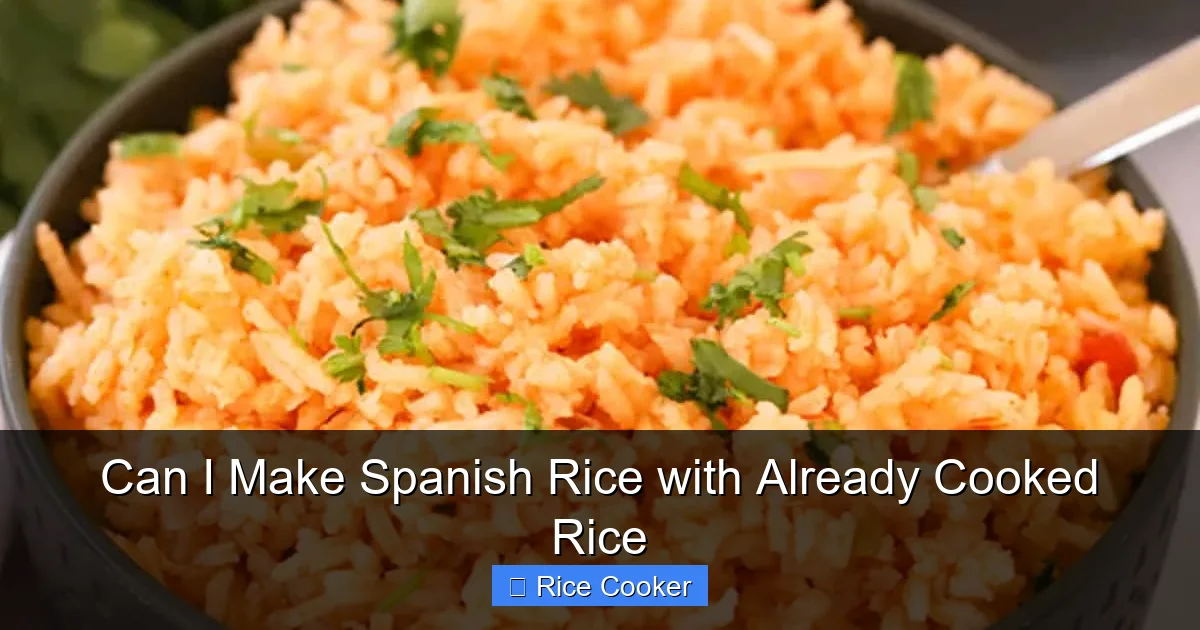
Can you make Spanish rice with already cooked rice? Absolutely! With just a few simple steps, leftover rice can be transformed into delicious, flavorful Spanish rice. Whether you’re using a rice cooker, stovetop, or microwave, this quick method saves time while delivering rich tomato, onion, and spice notes. It’s perfect for busy weeknights when you crave comfort food without extra prep.
Have you ever had leftover white rice from dinner last night and wondered what to make for lunch today? Or maybe you’re planning a fiesta-themed meal but don’t want to start from scratch? The good news is: yes, you absolutely can make Spanish rice with already cooked rice. In fact, using pre-cooked rice is not only totally fine — it’s often quicker and easier than starting with raw grains. Whether you’re using a rice cooker, stovetop, or even a microwave, transforming leftover rice into vibrant, aromatic Spanish rice is simpler than you might think.
Spanish rice, also known as Mexican rice or arroz rojo, is a staple side dish across Latin American cuisine. It’s typically made with long-grain white rice, sautéed onions, garlic, tomatoes (or tomato sauce), broth, and spices like cumin and paprika. Traditionally, the rice is cooked from scratch in a process that involves toasting the grains in fat before adding liquid. But here’s the secret most home cooks don’t tell you: you can skip that step entirely if you’re using already cooked rice. The result? A fast, flavorful dish that still tastes just as good — if not better — than the traditional version.
In this guide, we’ll walk you through everything you need to know about making Spanish rice with already cooked rice. We’ll cover the best methods, tools (including how to use your rice cooker), ingredient swaps, flavor tips, and even how to turn it into a full meal. So grab that container of leftover rice — because it’s about to become something new and delicious.
Key Takeaways
- Yes, you can use pre-cooked rice — it simplifies the process and reduces cooking time significantly.
- A rice cooker makes the job easier — just add seasonings and let the appliance do the work.
- Flavor is key — sauté onions and garlic, then deglaze with broth or water to infuse taste.
- Texture matters — avoid overcooking to prevent mushiness; stir gently and heat through.
- Add-ins boost nutrition — toss in peas, corn, diced tomatoes, or shredded chicken for a complete meal.
- Storage-friendly — leftover Spanish rice reheats beautifully and stays fresh for days.
- Customizable spice level — adjust paprika, cumin, or chili powder to suit your taste.
📑 Table of Contents
- Why Use Already Cooked Rice for Spanish Rice?
- What You’ll Need: Ingredients and Tools
- Method 1: Making Spanish Rice in a Rice Cooker
- Method 2: Stovetop Version (Quick & Flavorful)
- Flavor Tips: Elevating Your Spanish Rice
- Meal Prep and Storage: Make It Ahead!
- Troubleshooting Common Issues
- Creative Variations and Add-Ins
- Conclusion: Yes, You Can — And Should!
Why Use Already Cooked Rice for Spanish Rice?
Using already cooked rice for Spanish rice might sound unconventional at first, but it comes with real advantages. First and foremost, it saves time. Traditional Spanish rice requires toasting the raw rice in oil or butter, which adds depth of flavor but takes extra minutes. When you use cooked rice, you bypass that step and go straight to building flavor with aromatics and seasonings.
Another benefit is consistency. Raw rice can vary in texture depending on how well it was cooked originally. Sometimes it’s too dry, sometimes too sticky. With pre-cooked rice, you already know what you’re working with — usually fluffy and ready to absorb new flavors. Plus, it’s perfect for meal prep. If you cook a big batch of rice at the beginning of the week, you can repurpose it into Spanish rice, tamales, fried rice, or even casseroles throughout the week.
Let’s be honest: life gets busy. Between work, school, and family responsibilities, who has time to toast rice every single day? Using already cooked rice lets you enjoy a restaurant-quality side dish without the hassle. And the best part? It tastes surprisingly close to the real deal — especially when you follow the right technique.
What You’ll Need: Ingredients and Tools
Visual guide about Can I Make Spanish Rice with Already Cooked Rice
Image source: i.pinimg.com
Before diving into the recipe, let’s talk supplies. Making Spanish rice with already cooked rice doesn’t require fancy equipment. In fact, you probably have everything in your kitchen already.
Essential Ingredients
– **Already cooked long-grain white rice** — about 2 cups (uncooked rice would yield roughly 4 cups cooked)
– **Vegetable or chicken broth** — 1–1½ cups (water works in a pinch, but broth adds richness)
– **Olive oil or butter** — 2 tablespoons (for sautéing)
– **Onion** — 1 medium, finely chopped
– **Garlic** — 2–3 cloves, minced
– **Tomato sauce or crushed tomatoes** — ½ cup (canned is convenient)
– **Spices** — ½ teaspoon ground cumin, ½ teaspoon smoked paprika (or regular paprika), salt and pepper to taste
– **Optional add-ins** — frozen peas, corn kernels, diced green chilies, shredded cheese, cooked chicken
Recommended Tools
– **Rice cooker** — ideal for hands-off cooking
– **Large skillet or saucepan** — for stovetop method
– **Measuring cups and spoons**
– **Wooden spoon or spatula**
– **Cutting board and knife**
If you own a rice cooker, now’s the time to put it to work. These appliances are designed to handle more than just plain rice — they can also cook sauces, steam vegetables, and yes, even Spanish rice. We’ll show you exactly how in the next section.
Method 1: Making Spanish Rice in a Rice Cooker
One of the easiest ways to make Spanish rice with already cooked rice is by using a rice cooker. This method is foolproof, requires minimal stirring, and delivers consistent results every time.
Start by heating olive oil or butter in the inner pot of your rice cooker over medium heat. Add the chopped onion and sauté for 3–4 minutes until soft and translucent. Stir in the minced garlic and cook for another 30 seconds — don’t let it burn.
Next, add the tomato sauce (or crushed tomatoes) and stir to combine. Let it simmer for 1–2 minutes to mellow the acidity. Now, here’s the magic: instead of adding raw rice and water, pour in your already cooked rice. Gently mix everything together so the rice absorbs the flavors.
Add your broth or water — about ½ cup per cup of cooked rice. Season with cumin, paprika, salt, and pepper. Give it a good stir, then close the lid and press the “Cook” button. Most rice cookers will switch to “Keep Warm” mode once done, which helps maintain warmth without drying out the rice.
Once the cycle finishes, fluff the rice with a fork and taste for seasoning. Adjust if needed — maybe a pinch more salt or a splash of lime juice for brightness. Serve hot, topped with fresh cilantro or a squeeze of lime.
Pro tip: If your rice cooker has a “Brown Rice” or “Multi-Grain” setting, use that instead of “White Rice.” It can help the rice absorb more flavor during the keep-warm phase.
Method 2: Stovetop Version (Quick & Flavorful)
Not everyone owns a rice cooker, and that’s okay. The stovetop method is equally effective and gives you more control over texture and timing.
Begin by heating 2 tablespoons of oil or butter in a large skillet or deep saucepan over medium heat. Toss in the chopped onion and cook until golden brown — about 5–7 minutes. This slow caramelization builds deep, sweet flavor. Add the garlic and stir for 30 seconds.
Now, add the tomato sauce or crushed tomatoes. Cook for 2–3 minutes, letting the mixture reduce slightly. Then, add your already cooked rice directly into the pan. Use a wooden spoon to break up any clumps and distribute the sauce evenly.
Pour in 1–1½ cups of broth (or water), then sprinkle in the cumin, paprika, salt, and pepper. Bring everything to a gentle simmer, then reduce the heat to low. Cover the pan and let it cook for 5–8 minutes, stirring occasionally. The goal is to let the rice warm through and absorb all those delicious flavors.
Once the liquid is mostly absorbed and the rice is heated through, remove the pan from heat. Let it sit, covered, for 2–3 minutes. This resting period allows residual heat to finish cooking any uncooked spots and helps the rice firm up slightly.
For a richer dish, stir in ½ cup of grated Monterey Jack or cheddar cheese at the end. The heat melts the cheese into creamy pockets throughout the rice.
Flavor Tips: Elevating Your Spanish Rice
The difference between good Spanish rice and amazing Spanish rice often comes down to flavor. Since you’re using already cooked rice, your chance to influence taste lies in the sautéed base and seasonings. Here’s how to take yours from basic to bold.
First, don’t skimp on the onions. Sauté them slowly until golden — this builds sweetness and complexity. Same goes for garlic: cook it just long enough to release its aroma without burning it.
Use quality tomato products. While crushed tomatoes work, tomato sauce (like Hunts or Del Monte) has less water content and thicker consistency, which means better flavor concentration. You can also roast cherry tomatoes with garlic and herbs for a homemade twist.
Spice wisely. Smoked paprika adds a smoky depth that regular paprika lacks. Cumin brings earthiness. For heat, consider adding a pinch of chili powder or a diced jalapeño early in the sauté process.
Don’t forget acid. A splash of lime juice or white vinegar at the end brightens the whole dish and balances the richness. Think of it as dressing — essential for flavor balance.
Finally, texture plays a role. Overcooking rehydrated rice can lead to mushiness. Keep an eye on it and remove from heat as soon as the rice is heated through and slightly firm.
Meal Prep and Storage: Make It Ahead!
One of the best things about making Spanish rice with already cooked rice is how well it holds up. You can prepare it ahead of time and store it for several days.
After cooking, let the Spanish rice cool completely at room temperature. Then transfer it to an airtight container and refrigerate for up to 4–5 days. Reheat in the microwave with a splash of broth or water to restore moisture, or warm it on the stovetop over low heat, stirring frequently.
You can also freeze it! Portion cooled Spanish rice into freezer-safe containers or zip-top bags. Label with the date and freeze for up to 3 months. Thaw overnight in the fridge, then reheat gently on the stove or in the microwave.
This makes it perfect for busy weeks. Cook a big batch on Sunday, then pull out servings throughout the week for tacos, burritos, or solo bowls.
Troubleshooting Common Issues
Even with the best intentions, things can go wrong. Here’s how to fix common problems when making Spanish rice with already cooked rice.
**Problem: Rice is too wet or soggy.**
Solution: Drain excess liquid before adding rice to the pan. Also, avoid covering the pot immediately after adding liquid — let it boil briefly to evaporate some moisture.
**Problem: Rice is dry and crumbly.**
Solution: Add a bit more broth or water when reheating. Cover the pan while heating to trap steam.
**Problem: Flavor is bland.**
Solution: Taste as you go. Add salt, pepper, or a squeeze of lime at the end. More cumin or smoked paprika can wake up dull flavors.
**Problem: Rice sticks together.**
Solution: Break up clumps gently with a fork after removing from heat. Don’t over-stir during cooking.
**Problem: Sauce separates from rice.**
Solution: Stir constantly while reheating. The starches in rice help bind liquids.
Remember: practice makes perfect. Each time you make Spanish rice, you’ll learn what works best for your kitchen and preferences.
Creative Variations and Add-Ins
Want to jazz up your Spanish rice? There are countless ways to customize it based on what you have on hand.
Try **Mexican-inspired versions**: Add black beans, corn, diced bell peppers, and shredded rotisserie chicken. Top with avocado slices, salsa, and sour cream.
Go **vegetarian or vegan**: Skip meat, boost veggies like zucchini, mushrooms, or spinach, and use vegetable broth.
Make it **spicy**: Add diced jalapeños, a dash of chipotle powder, or drizzle with hot sauce at the end.
Create a **cheesy delight**: Stir in shredded cheddar, Monterey Jack, or queso fresco just before serving.
Or go **fusion-style**: Mix in cooked lentils, diced mango, or even a touch of coconut milk for a tropical twist.
The beauty of using already cooked rice is flexibility. It’s a blank canvas waiting for your favorite flavors.
Conclusion: Yes, You Can — And Should!
So, can you make Spanish rice with already cooked rice? The answer is a resounding yes. Not only is it possible, but it’s practical, efficient, and yields delicious results every time. Whether you’re using a rice cooker, stovetop, or even a microwave, the process is straightforward and adaptable.
By leveraging leftover rice, you reduce waste and save time — two big wins for any home cook. Plus, with the right seasonings and techniques, you can achieve that authentic, restaurant-worthy flavor without the fuss.
Next time you have cooked rice sitting in your fridge, don’t pitch it. Turn it into Spanish rice instead. It’s a tasty solution for leftovers, meal prep, or anytime you crave something warm, comforting, and full of flavor. Your taste buds (and your schedule) will thank you.
Frequently Asked Questions
Can I make Spanish rice with cold leftover rice?
Absolutely! Cold or room-temperature rice works perfectly. Just make sure it’s not clumped — break apart any lumps gently before cooking. The stovetop method is especially forgiving with cold rice.
Do I need to rinse the rice before adding it to Spanish rice?
No, rinsing isn’t necessary when using already cooked rice. Rinsing is typically done with raw rice to remove starch, but since your rice is already cooked, skipping this step saves time without affecting flavor.
How much broth should I use per cup of cooked rice?
Use about ½ cup of broth or water per cup of cooked rice. This helps rehydrate the grains and infuse them with flavor. Adjust slightly if your rice is very dry or very moist.
Can I use brown rice instead of white rice?
Yes, but keep in mind that brown rice takes longer to cook and may have a chewier texture. If using already cooked brown rice, reduce the liquid slightly and watch closely to avoid mushiness.
Is it okay to use instant rice or pre-cooked rice packets?
Yes, but choose high-quality instant rice labeled “long-grain white.” Avoid overly processed or pre-seasoned varieties, as they may contain additives or lack proper texture for Spanish rice.
How do I prevent my Spanish rice from turning into mush?
Don’t overcook. Heat the rice through quickly over medium-low heat, and avoid constant stirring. Let it rest off the heat for a couple of minutes after cooking to firm up slightly. Also, don’t add too much liquid.