
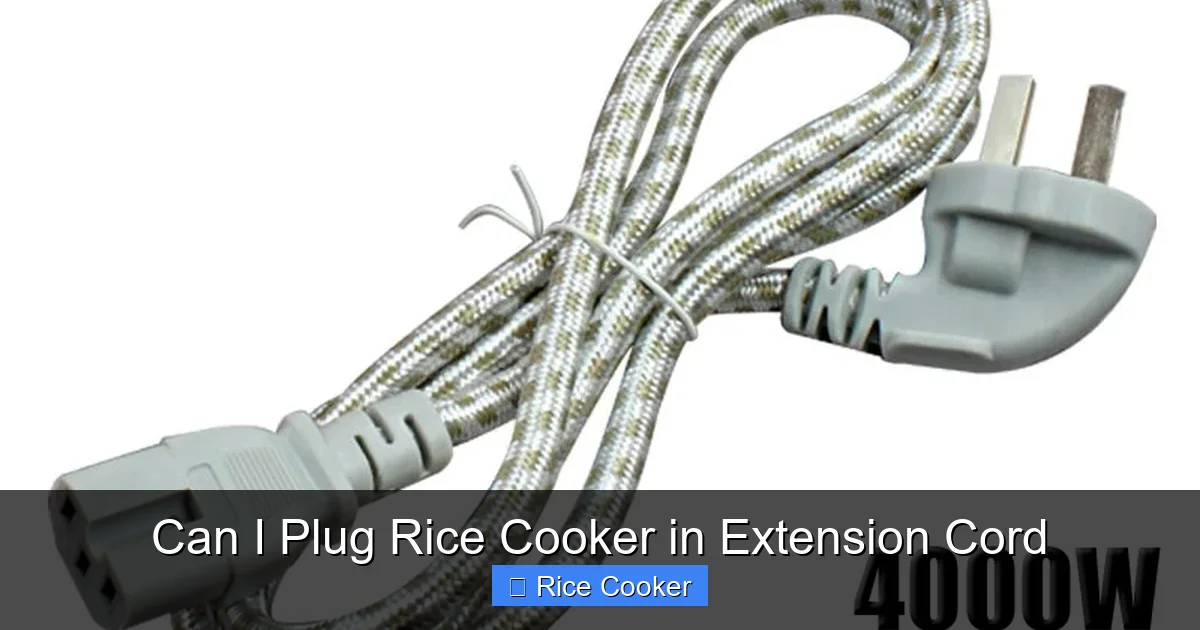
Plugging a rice cooker into an extension cord is generally not recommended unless the cord is heavy-duty and meets the appliance’s wattage needs. Using a thin or low-rated extension cord can overheat, damage the appliance, or even start a fire. For safety and performance, always connect high-power kitchen appliances directly to a wall outlet.
Key Takeaways
- Rice cookers draw significant power: Most rice cookers use 300–1000 watts, requiring a robust power source that standard extension cords may not support.
- Extension cord gauge matters: Thicker wires (14-gauge or lower) handle more current; thinner cords (16- or 18-gauge) can overheat when used with high-wattage appliances.
- Fire and damage risk: Using undersized extension cords with rice cookers increases the chance of overheating, melting insulation, or damaging the appliance.
- Check the manufacturer’s guidelines: Always consult your rice cooker manual—some brands explicitly prohibit using extension cords.
- Safety certifications are key: Only use extension cords labeled UL Listed, ETL, or CSA—these meet safety standards for indoor appliance use.
- Consider alternatives: Plug appliances directly into outlets or use a surge-protected power strip rated for continuous kitchen use.
- Monitor usage: If you must use an extension cord, keep it short, uncoiled, and avoid running it under rugs or through doorways.
📑 Table of Contents
- Can I Plug Rice Cooker in Extension Cord? A Safety-First Guide
- Understanding Rice Cooker Power Requirements
- Is It Safe to Use an Extension Cord with a Rice Cooker?
- Risks of Using Extension Cords with Rice Cookers
- When Is It Okay to Use an Extension Cord?
- Better Alternatives to Extension Cords
- How to Test an Extension Cord Before Use
- Final Thoughts: Prioritize Safety Over Convenience
Can I Plug Rice Cooker in Extension Cord? A Safety-First Guide
You’re standing in your kitchen, ready to make a perfect pot of jasmine rice for dinner. Your rice cooker is plugged in, the water is added, and everything seems fine—until you realize the only nearby outlet is too far away for your current power cord. Frustrated, you reach for an extension cord. But before you plug it in, pause. The question isn’t just about convenience—it’s about safety.
Plugging a rice cooker into an extension cord might seem like a simple fix, but doing so without proper precautions can lead to serious risks. Rice cookers draw a lot of power, especially during the heating phase. When that power flows through a weak or improperly rated extension cord, it can cause overheating, damage your appliance, or worse—start a fire. In this comprehensive guide, we’ll break down everything you need to know about using extension cords with rice cookers, including when it’s safe, what to look for, and better alternatives.
Understanding Rice Cooker Power Requirements
Before deciding whether to use an extension cord, it’s essential to understand how much power your rice cooker actually uses. Unlike small gadgets like blenders or coffee makers, rice cookers are considered high-wattage kitchen appliances. Most household rice cookers operate between 300 to 1000 watts, depending on size and model. For example, a 5-cup rice cooker typically uses around 400–600 watts, while larger models or those with additional functions (like slow cooking or steaming) can exceed 700 watts.
Visual guide about Can I Plug Rice Cooker in Extension Cord
Image source: images.nexusapp.co
Why Wattage Matters
The wattage tells you how much energy the appliance consumes per hour. Higher wattage means more heat and faster cooking—but also greater demand on your electrical system. When you plug a rice cooker into an extension cord, that cord becomes part of the circuit. If the cord isn’t designed to handle that level of current, it starts to act like a resistor. This resistance generates heat, which can melt the cord’s insulation, damage connected devices, or create a dangerous fire hazard.
Let’s say you have a 600-watt rice cooker and a standard 15-foot indoor extension cord rated for 10 amps (120 volts). That cord can theoretically handle up to 1200 watts—so why not plug it in? Because real-world conditions matter. Cords get compressed, coiled, or placed near heat sources. Over time, even a slightly undersized cord can degrade and fail.
What About Voltage Drop?
Another technical concern is voltage drop—the reduction in voltage as electricity travels through a wire. Longer cords or thinner wires increase resistance, lowering the voltage at the appliance end. A rice cooker needs consistent voltage to heat properly. If the voltage drops too much (e.g., from 120V to 110V), the heating element won’t work efficiently, leading to longer cook times or unevenly cooked rice. Worse, inconsistent power flow can stress internal components.
Is It Safe to Use an Extension Cord with a Rice Cooker?
The short answer: only if the extension cord is heavy-duty and specifically rated for the appliance’s power needs. Not all extension cords are created equal. Many consumer-grade cords sold for lamps, phone chargers, or small electronics are not suitable for high-wattage kitchen appliances.
Safe Extension Cord Qualities
To safely use an extension cord with a rice cooker, look for these features:
- Heavy-duty construction: Look for cords labeled “indoor/outdoor” or “appliance-grade.” These are thicker and built to handle more current.
- Proper gauge (AWG): Use at least 14-gauge wire for cords over 5 feet long. For shorter cords (under 5 feet), 16-gauge may suffice, but 14-gauge is safer.
- High amp rating: Choose a cord rated for at least 15 amps (the standard for U.S. outlets). Some heavy-duty cords are rated for 20 amps.
- Certified safety marks: Ensure the cord bears a label such as UL Listed, ETL, or CSA. These mean it has passed third-party safety tests.
- Short length preferred: The shorter the cord, the less resistance and voltage drop. A 6-foot cord is ideal—long enough to reach, short enough to stay safe.
Example: What Works vs. What Doesn’t
Imagine you have a 5-cup rice cooker drawing 500 watts. Here’s how different cords stack up:
- ❌ Thin indoor lamp cord (18-gauge, 10-amp): Too thin and weak. Can overheat within minutes of use.
- ✅ Heavy-duty outdoor extension cord (14-gauge, 15-amp, UL Listed): Acceptable for occasional use if kept cool and uncoiled.
- ⚠️ Medium-duty indoor/outdoor cord (16-gauge, 13-amp): Risky for frequent use. May work in a pinch, but not recommended long-term.
Even if the math works out (e.g., 15 amps × 120 volts = 1800 watts capacity), practical factors like ambient temperature, cord placement, and age still matter.
Risks of Using Extension Cords with Rice Cookers
While some extension cords may technically handle a rice cooker’s load, there are real dangers to consider. These risks aren’t theoretical—they’ve led to fires, damaged appliances, and even property loss.
Overheating and Fire Hazards
When current passes through a wire, it generates heat. The amount depends on the wire’s thickness and length. Thin extension cords act like resistors, converting electrical energy into heat. If that heat builds up, the cord’s plastic coating can melt, exposing bare wires. Sparks can fly, igniting nearby materials like curtains, cabinets, or paper towels.
In 2020, the U.S. Consumer Product Safety Commission reported over 1,000 fires linked to extension cord misuse—many involving kitchen appliances. Rice cookers are particularly vulnerable because they run continuously for 20–40 minutes, keeping the cord energized and warm.
Appliance Damage
Beyond fire risks, improper power delivery can harm your rice cooker. Voltage fluctuations or insufficient current can cause the heating plate to cycle on/off erratically. This puts extra strain on the thermostat and control board, shortening the appliance’s lifespan. Some users report error codes or complete failure after years of using extension cords.
Code Violations and Insurance Issues
If an extension cord causes a fire, your homeowner’s insurance may deny the claim—especially if it determines the incident resulted from improper use of electrical equipment. Additionally, some building codes prohibit using extension cords as permanent wiring solutions. Running them across walkways, under rugs, or through walls violates safety standards.
When Is It Okay to Use an Extension Cord?
Despite the risks, there are limited situations where using an extension cord with a rice cooker is acceptable—if done correctly. Let’s explore those scenarios.
Temporary Outdoor Use
If you’re cooking outside on a patio or deck, an outdoor-rated extension cord might be necessary. In this case, choose one that’s:
- Made for outdoor use (water-resistant jacket)
- At least 14-gauge
- Rated for 15+ amps
- Kept dry and off the ground
Never use indoor-only cords outdoors—moisture drastically increases shock and fire risks.
Short-Term Indoor Use
If you absolutely must use an indoor extension cord (e.g., no outlet nearby), limit it to short durations and follow these rules:
- Use only a heavy-duty, indoor/outdoor cord
- Keep the cord straight and off the floor
- Avoid placing it near stoves, sinks, or other heat sources
- Unplug immediately after use
- Don’t daisy-chain multiple cords together
Remember: “Temporary” doesn’t mean “safe forever.” Repeated use increases wear and tear.
Manufacturer Approval
Some modern rice cookers come with detachable power cords or offer universal plug adapters. Check your user manual. If the manufacturer explicitly allows extension cord use (and specifies which types), you’re covered. But many brands—especially Japanese and Korean manufacturers—prohibit this practice due to liability concerns.
Better Alternatives to Extension Cords
Instead of relying on extension cords, consider these safer and often more convenient options.
Install a New Outlet
The most reliable solution is having an electrician install a dedicated outlet near your kitchen workspace. This takes seconds to plug in and eliminates any guesswork about cord compatibility. Plus, it adds resale value to your home.
Use a Surge Protector with USB Ports
If space is tight, a high-quality surge protector can serve as a power hub. Choose one rated for continuous kitchen use (look for “continuous duty” labeling). Avoid cheap strips with flimsy sockets—they can’t handle sustained loads.
Upgrade Your Kitchen Layout
Many kitchens have underused outlets (e.g., behind refrigerators or in corners). Rearranging furniture or adding GFCI outlets in unused areas can solve outlet shortages without risking safety.
Portable Power Stations (For Off-Grid Use)
For RVs, cabins, or camping trips, consider a portable power station with AC outlets. These units store solar or grid energy and deliver clean, stable power—ideal for rice cookers without extension cords.
How to Test an Extension Cord Before Use
If you’re unsure whether your extension cord is safe, here’s a quick test:
- Inspect visually: Look for cracks, fraying, or melted spots. Never use damaged cords.
- Feel it while plugged in: After 5–10 minutes of use, gently touch the cord near the plug and appliance end. It should feel lukewarm—not hot or burning.
- Check the label: Verify UL, ETL, or CSA markings and gauge size.
- Try with a lighter device first: Plug in a lamp or fan to see if the cord heats up abnormally.
If anything feels off—smoke, sparks, excessive heat—unplug immediately and replace the cord.
Final Thoughts: Prioritize Safety Over Convenience
Yes, it’s tempting to grab that extension cord when the outlet is far away. But rice cookers are powerful appliances that deserve direct, reliable power. The minor inconvenience of finding a closer outlet pales compared to the risk of fire, injury, or costly repairs.
When in doubt, don’t use an extension cord. Invest in a new outlet, upgrade your power strip, or rearrange your kitchen layout. Your rice cooker—and your peace of mind—will thank you.
And remember: if your rice cooker stops working after years of extension cord use, the damage might already be done. Always prioritize safety, efficiency, and long-term reliability over short-term convenience.
Frequently Asked Questions
Can I use any extension cord with my rice cooker?
No, not all extension cords are safe for rice cookers. You need a heavy-duty cord rated for at least 14-gauge wire and 15 amps, preferably UL-listed. Thin or low-rated cords can overheat and pose fire risks.
How do I know if my extension cord is thick enough?
Check the gauge printed on the label. For rice cookers, use at least 14-gauge wire. Thicker wires (lower AWG numbers) carry more current safely. Also, look for “heavy-duty” or “appliance-grade” labels.
What happens if I use a thin extension cord with a rice cooker?
It can overheat, melt the insulation, damage your rice cooker, or start a fire. Thin cords resist electrical flow, generating excess heat that compromises safety.
Are outdoor extension cords okay for indoor rice cookers?
Only if they’re also rated for indoor use and meet gauge/amp requirements. Many outdoor cords are thicker but lack indoor safety certifications—check for UL Listed or CSA approval.
Can I plug multiple appliances into one extension cord?
Generally no. Even if the total wattage is within limits, combining appliances increases heat buildup. Each high-wattage device like rice cookers should have its own direct outlet.
What if my rice cooker has a very short power cord?
Then an extension cord is even riskier due to added resistance. Consider moving the appliance closer to an outlet or installing a new one instead of stretching the cord.