
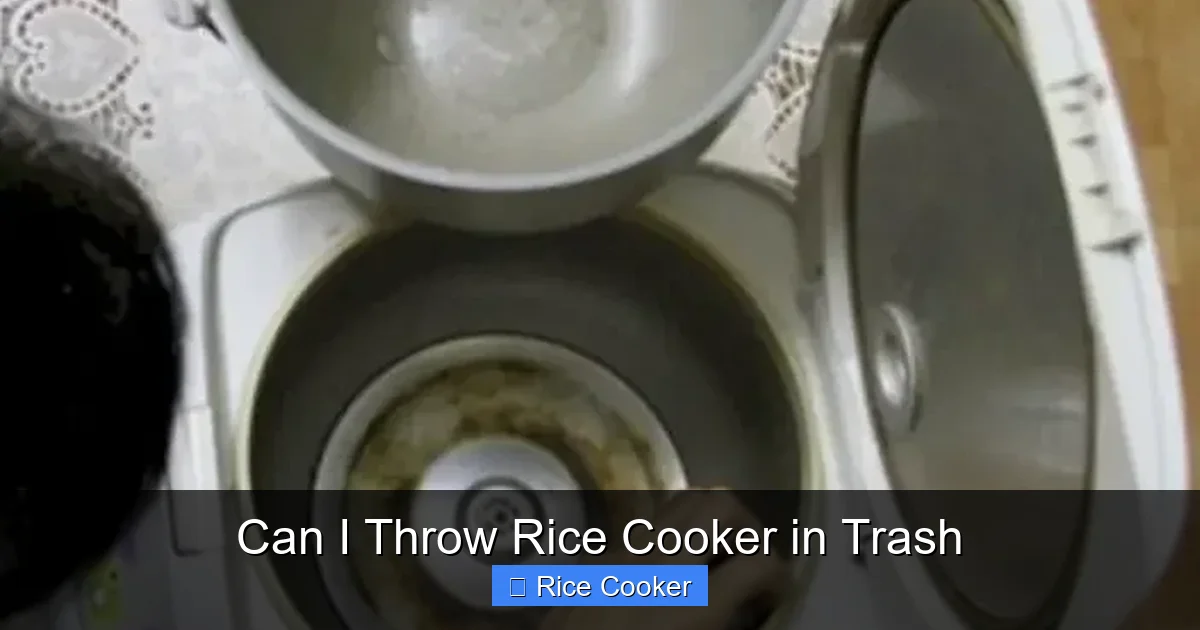
Can I throw a rice cooker in the trash? The answer depends on your model and local regulations. While some parts may be recyclable, improper disposal can harm the environment. This guide covers safe, legal, and sustainable ways to dispose of your old rice cooker.
Key Takeaways
- Check local e-waste policies: Many areas require electronic appliances like rice cookers to be recycled separately from regular trash.
- Disassemble when possible: Remove plastic lids, metal components, or non-stick coatings for easier recycling.
- Donate or sell if functional: A working rice cooker can help others or earn you cash instead of going to landfill.
- Avoid tossing intact units: Whole rice cookers often end up in landfills where they contribute to non-biodegradable waste.
- Look for manufacturer take-back programs: Some brands offer free recycling for old appliances during new purchases.
- Never burn or bury: These methods release toxic chemicals and pollute soil and air.
- Consider secondhand reuse: Thrift stores, community boards, or online platforms like Facebook Marketplace can give your rice cooker a second life.
📑 Table of Contents
Can I Throw Rice Cooker in Trash? Understanding Your Options
Have you ever looked at an old rice cooker gathering dust in the back of your kitchen cupboard and wondered: *Should I just toss it in the trash?* It seems simple enough—after all, it’s just a piece of kitchenware. But before you drop it into your garbage bag, pause. Rice cookers aren’t like paper plates or banana peels; they contain materials that can harm the environment if not handled properly.
In this complete guide, we’ll walk through everything you need to know about disposing of a rice cooker responsibly. From checking local laws to finding creative reuse ideas, you’ll learn how to make a smart choice that protects both people and the planet. Whether your rice cooker is cracked, outdated, or simply replaced by a newer model, let’s figure out what’s best.
Why Rice Cookers Matter When It Comes to Waste
Modern rice cookers are more than just simple pots with timers—they’re small appliances packed with technology. Inside, you’ll find circuit boards, heating elements, plastics, metals, and sometimes even non-stick coatings. When thrown into a regular trash bin, these items don’t break down naturally. Instead, they sit in landfills for decades, slowly releasing chemicals and taking up valuable space.
Moreover, many communities now classify small electronics as “e-waste” due to their complex composition. In fact, according to the Environmental Protection Agency (EPA), only about 20% of electronic waste gets recycled in the U.S. That means millions of devices—including rice cookers—end up buried underground every year.
The Risks of Improper Disposal
Tossing a rice cooker in the trash might seem harmless, but it’s far from ideal. Here’s why:
– **Toxic Materials**: Plastics and certain metals can leach harmful substances into groundwater.
– **Resource Loss**: Valuable materials like copper, aluminum, and steel go to waste instead of being reused.
– **Landfill Overload**: Small appliances take up surprisingly large amounts of space and contribute to overflowing dump sites.
– **Missed Opportunities**: Functional appliances could be donated, saving money for someone else.
Even if your rice cooker isn’t broken, consider this: one household discarding a few appliances each year adds up quickly. By making thoughtful decisions now, you help reduce long-term environmental damage.
How to Tell If Your Rice Cooker Is Still Useful
Before deciding to throw away your rice cooker, ask yourself: *Is it still working?*
If yes, great news! You have multiple eco-friendly options:
– **Donate it** to shelters, churches, or food banks that accept kitchen appliances.
– **Sell or trade** it on platforms like eBay, Craigslist, or Facebook Marketplace.
– **Give it away** to friends, family, or neighbors who might appreciate a free appliance.
Many low-income families rely on donated goods to stretch their budgets. A working rice cooker can mean hot meals for someone struggling to make ends meet. Even if it’s slightly outdated or has minor scratches, most people will gladly take it off your hands.
On the other hand, if your rice cooker is cracked, leaking steam, or no longer heats evenly, then repair or replacement makes sense. But again—don’t rush to trash it without exploring alternatives first.
Local Laws and Recycling Programs
This is perhaps the most important factor in determining whether you can throw a rice cooker in the trash. Regulations vary widely by city, county, and country.
In some places, small electronics must be taken to designated e-waste collection centers. Others allow curbside pickup for certain items. For example:
– **California** requires retailers to accept old electronics when customers buy new ones.
– **New York City** runs a robust e-waste program through its Department of Sanitation.
– **Canada** encourages manufacturers to participate in take-back schemes under extended producer responsibility (EPR) laws.
To find out what applies to you:
1. Search online using your location + “electronics recycling near me.”
2. Check your local government website’s waste management page.
3. Call your sanitation department directly.
Ignoring these rules isn’t just bad for the environment—it could also result in fines or penalties in stricter regions.
DIY Recycling: What Can Be Salvaged?
Even if your municipality doesn’t collect small appliances, you can still recycle parts of your rice cooker yourself. Here’s how:
**Plastic Parts**: Lids, handles, and outer casings are often made of recyclable plastics (#5 or #7). Clean them thoroughly and place in your curbside recycling bin—but check your local guidelines first, as not all facilities accept mixed plastics.
**Metal Components**: Inner pots made of stainless steel or aluminum can usually be melted down and reused. Scrape off any food residue, wash well, and drop off at scrap metal yards or appliance recyclers.
**Non-Stick Coating**: Avoid sanding or grinding surfaces with Teflon or ceramic finishes—these release fumes when heated. Instead, leave coated pans intact unless sending to a certified hazardous waste facility.
**Wiring and Electronics**: Never try to extract internal wiring yourself unless trained. Circuit boards contain heavy metals and should be handled by professionals.
By separating usable pieces, you maximize recovery value while minimizing landfill impact.
Manufacturer and Retailer Take-Back Initiatives
Several companies now offer convenient ways to recycle old appliances when buying new ones. Brands like Zojirushi, Panasonic, Cuisinart, and Instant Pot frequently run “trade-in” promotions. Here’s how it typically works:
– Purchase a new rice cooker from participating stores.
– Bring your old unit to the store or schedule a pickup.
– The retailer sends it to a certified recycler—often at no extra cost.
Some even mail-in programs let you ship your old cooker using prepaid labels. Always confirm participation status before purchasing, though—not all models qualify.
Retailers like Best Buy, Home Depot, and Lowe’s also accept e-waste during delivery of new items. Just bring your old rice cooker along when ordering online.
These programs make responsible disposal easy and often reward you with discounts or rebates.
Creative Alternatives to Trashing
Not ready to part with your rice cooker—even if it’s broken? Try repurposing it!
– **Planter**: Drill drainage holes in the bowl and use it to grow herbs or succulents.
– **Storage Container**: Store craft supplies, office supplies, or pantry items in the inner pot.
– **Pet Feeder**: For cats or small dogs (ensure no sharp edges remain).
– **Compost Bin**: Use the lid as a mini compost tumbler for kitchen scraps.
While these uses extend the appliance’s life, remember they’re temporary solutions. Eventually, wear and tear will catch up, so plan for proper recycling afterward.
What Happens During Professional Recycling?
When you drop off your rice cooker at a certified e-waste facility, trained technicians follow strict protocols:
1. **Visual Inspection**: Determine if any parts can be resold or refurbished.
2. **Disassembly**: Plastic shells, metal bodies, and internal components are separated.
3. **Material Recovery**: Metals are smelted; plastics are shredded and reprocessed; circuit boards are treated for hazardous substances.
4. **Data Destruction**: Any memory chips (rare in basic rice cookers) are wiped clean.
5. **Safe Landfill Disposal**: Only non-recyclable residues go to secure landfills lined to prevent contamination.
Certified recyclers comply with standards like R2 (Responsible Recycling) or e-Stewards, ensuring ethical labor practices and minimal pollution.
Choosing a reputable facility guarantees your appliance won’t end up exported illegally to developing countries, where informal workers face dangerous conditions.
Environmental Impact: Numbers You Should Know
Understanding scale helps motivate change. Consider these facts:
– An average rice cooker contains about 0.8 pounds of steel, 0.3 pounds of aluminum, and 0.2 pounds of plastic.
– Recovering aluminum saves up to 95% of the energy needed to produce new aluminum from raw ore.
– One million discarded smartphones could recover over 35 thousand tons of copper.
– Landfills receive roughly 60 million tons of e-waste annually worldwide.
Your single rice cooker may seem insignificant, but collective action transforms individual choices into meaningful results.
Tips for Future Sustainability
Want to avoid this dilemma next time?
– **Buy durable brands** known for longevity (e.g., Zojirushi, Tiger).
– **Keep receipts and manuals**—some warranties include free repairs.
– **Maintain regularly**: Clean coils, check seals, replace worn parts promptly.
– **Upgrade wisely**: Trade-in old models when purchasing new ones.
– **Educate others**: Share knowledge about e-waste with friends and family.
Small habits today prevent bigger problems tomorrow.
Conclusion: Choose Smart, Not Simple
Visual guide about Can I Throw Rice Cooker in Trash
Image source: makerworld.bblmw.com
So, can you throw a rice cooker in the trash? Technically, maybe—but ethically and environmentally, it’s rarely the right answer. With growing awareness around electronic waste, cities, companies, and consumers are finding better paths forward.
Whether you donate, recycle, or repurpose your old rice cooker, every step toward mindful disposal helps preserve resources and protect ecosystems. Start by checking your local rules, reaching out to recyclers, or exploring reuse options. You don’t need to solve the entire e-waste crisis alone—just do your part, one appliance at a time.
Frequently Asked Questions
Can I throw a rice cooker in the trash if it’s broken?
Not necessarily. Many communities require small electronics like rice cookers to be recycled separately due to their material composition. Check your local e-waste regulations before throwing it away.
Do all rice cookers contain hazardous materials?
Most modern rice cookers contain plastics, metals, and sometimes non-stick coatings, but they aren’t universally classified as hazardous. However, internal wiring or damaged units may pose risks, so professional handling is safest.
Where can I recycle my old rice cooker?
Look for certified e-waste facilities, manufacturer take-back programs, or retail stores with recycling initiatives. Search online using your location plus “electronics recycling” for nearby options.
Can I recycle just the inner pot of my rice cooker?
Yes, stainless steel or aluminum inner pots are often recyclable. Clean thoroughly and check if your local facility accepts metal components. Avoid sending coated pans unless directed otherwise.
Is it worth selling or donating a slightly used rice cooker?
Absolutely! Even outdated models can benefit someone in need or fetch a few dollars online. Donation centers, thrift shops, and community groups often welcome functional kitchen appliances.
What if my area doesn’t have e-waste collection?
In such cases, contact your city hall or waste management office for guidance. If no program exists, consider storing the appliance until one launches, or look for private recyclers willing to accept small appliances.